We report the results of Fourier-accelerated HMC simulations of 2D SU(N) X SU(N) principal chiral models for N = 2, 3, 4, 6, 9. These models share several key properties with 4D QCD, such as asymptotic freedom and dynamical mass generation. Even for modest correlation lengths, we find integrated autocorrelation times are decreased by an order of magnitude relative to standard HMC, with relatively little computational overhead. Our results also suggest that the relative advantage of Fourier Acceleration over traditional HMC decreases as N increases, possibly due to the enlarged group space associated with larger N. Our Monte Carlo results agree with the mass spectra and continuum scaling behaviour predicted by the exact solution obtained using the Bethe ansatz.
Motivated by the similarity to QCD, specifically the property of asymptotic freedom, we simulate the dynamics of the SU(2) × SU(2) model in two dimensions using the Hybrid Monte Carlo algorithm. By introducing Fourier Acceleration, we show that critical slowing down is largely avoided and increases the simulation efficiency by up to a factor of 300. This yields numerical predictions at a precision exceeding that of existing studies and allows us to verify the onset of asymptotic scaling.
W e study analytically the com putationalcostofthe G eneralised Hybrid M onte Carlo (G HM C)algorithm for free eld theory. W e calculate the autocorrelation functions ofoperators quadratic in the elds,and optim ise the G HM C m om entum m ixing angle,the trajectory length,and the integration stepsize. W e show that long trajectories are optim alfor G HM C,and that standard HM C is m uch m ore e cient than algorithm s based on the Second O rderLangevin (L2M C) or K ram ers Equation. W e show thatcontrary to naive expectations HM C and L2M C have the sam e volum e dependence,but their dynam icalcriticalexponents are z = 1 and z = 3=2 respectively.
We present physical results obtained from simulations using 2+1 flavors of domain wall quarks and the Iwasaki gauge action at two values of the lattice spacing a, (a −1 = 1.73 (3) GeV and a −1 = 2.28 (3) GeV). On the coarser lattice, with 24 3 × 64× 16 points (where the 16 corresponds to Ls, the extent of the 5 th dimension inherent in the domain wall fermion (DWF) formulation
We present the first results for neutral-kaon mixing using (2+1)-flavors of domain-wall fermions. A new approach is used to extrapolate to the physical up and down quark masses from our numerical studies with pion masses in the range 240-420 MeV; only SU(2)_{L}xSU(2)_{R} chiral symmetry is assumed and the kaon is not assumed to be light. Our main result is B_{K};{MS[over ]}(2 GeV)=0.524(10)(28) where the first error is statistical and the second incorporates estimates for all systematic errors.
We have simulated QCD using 2+1 flavors of domain wall quarks on a (2.74fm)3 volume with an inverse lattice scale of a?1=1.729(28) GeV. The up and down (light) quarks are degenerate in our calculations and we have used four values for the ratio of light quark masses to the strange (heavy) quark mass in our simulations: 0.217, 0.350, 0.617 and 0.884. We have measured pseudoscalar meson masses and decay constants, the kaon bag parameter BK and vector meson couplings. We have used SU(2) chiral perturbation theory, which assumes only the up and down quark masses are small, and SU(3) chiral perturbation theory to extrapolate to the physical values for the light quark masses. While next-to-leading order formulae from both approaches fit our data for light quarks, we find the higher order corrections for SU(3) very large, making such fits unreliable. We also find that SU(3) does not fit our data when the quark masses are near the physical strange quark mass. Thus, we rely on SU(2) chiral perturbation theory for accurate results. We use the masses of the ? baryon, and the ? and K mesons to set the lattice scale and determine the quark masses. We then find f?=124.1(3.6)stat(6.9)systMeV, fK=149.6(3.6)stat(6.3)systMeV and fK/f?=1.205(0.018)stat(0.062)syst. Using non-perturbative renormalization to relate lattice regularized quark masses to RI-MOM masses, and perturbation theory to relate these to MS¯ we find mMS¯ud(2GeV)=3.72(0.16)stat(0.33)ren(0.18)systMeV and mMS¯s(2GeV)=107.3(4.4)stat(9.7)ren(4.9)systMeV.
We present results for the couplings of light vector mesons to vector and tensor currents and on the low moments of the light-cone distribution amplitudes of the pion and kaon. The calculations are performed on the RBC and UKQCD collaborations' ensembles generated with the Iwasaki gauge action and with 2+1 flavours of domain wall fermions. The (preliminary) results for the ratios of the couplings of the vector meson to the vector and tensor currents (f_V and f^T_V respectively) in the MSbar scheme at 2GeV are: f_\rho^T/f_\rho=0.681(20); f_{K^\ast}^T/f_{K^\ast}=0.712(11) and f_\phi^T/f_\phi=0.751(9). For the first moment of the kaon's distribution amplitude we find (in the same scheme and at the same scale) _K=0.029(2) and for the second moment _\pi=0.28(3) and _K=0.27(2).
We present results for the couplings of light vector mesons to vector and tensor cu rrents and on the low moments of the light-cone distribution amplitudes of the pion and kaon. The calc ulations are performed on the RBC and UKQCD collaborations’ ensembles generated with the Iwasa ki g uge action and with 2+1 flavours of domain wall fermions. The (preliminary) results for the ra ios of the couplings of the vector meson to the vector and tensor currents ( fV and f T V respectively) in the MS scheme at 2 GeV are: f T ρ / fρ = 0.681(20); f T K∗/ fK∗ = 0.712(11) and f T φ / fφ = 0.751(9). For the first moment of the kaon’s distribution amplitude we find (in the same scheme and a t the s me scale)〈ξ 〉K = 0.029(2) and for the second moment 〈ξ 2 〉π = 0.28(3) and〈ξ 2 〉K = 0.27(2) .
We present results for the couplings of light vector mesons t vector and tensor currents and on the low moments of the light-cone distribution amplitudes of th e pion and kaon. The calculations are performed on the RBC and UKQCD collaborations’ ensembles ge nerated with the Iwasaki gauge action and with 2+1 flavours of domain wall fermions. The (pre liminary) results for the ratios of the couplings of the vector meson to the vector and tensor cur rents (fV and f T V respectively) in the MS scheme at 2 GeV are: f T ρ / fρ = 0.681(20); f T K∗/ fK∗ = 0.712(11) and f T φ / fφ = 0.751(9). For the first moment of the kaon’s distribution amplitude we find ( in the same scheme and at the same scale)〈ξ 〉K = 0.029(2) and for the second moment 〈ξ 2 〉π = 0.28(3) and〈ξ 2 〉K = 0.27(2) .
(RBC and UKQCD Collaborations) Department of Physics, University of Wales Swansea, Swansea SA2 8PP, UK SUPA, School of Physics, The University of Edinburgh, Edinburgh EH9 3JZ, UK RIKEN-BNL Research Center, Brookhaven National Laboratory, Upton, NY 11973, USA Physics Department, University of Connecticut, Storrs, Connecticut 06269-3046, USA Physics Department, Columbia University, New York, NY 10027, USA Center for Computational Science, 3 Cummington Street, Boston University, MA 02215, USA Institute for Theoretical Physics, Kanazawa University, Kakuma, Kanazawa, 920-1192, Japan Radiation Laboratory, RIKEN, Wako, Saitama 351-0198, Japan School of Physics and Astronomy, University of Southampton, Southampton SO17 1BJ, UK Brookhaven National Laboratory, Upton, NY 11973, USA EPCC, School of Physics, The University of Edinburgh, Edinburgh EH9 3JZ, UK Institute of Particle and Nuclear Studies, KEK, Ibaraki 305-0801, Japan The Graduate University for Advanced Studies (Sokendai), Tsukuba, Ibaraki 305-0801, Japan Department of Physics, University of Tokyo, Hongo 7-3-1, Bunkyo-ku, Tokyo 113, Japan SUPA, Department of Physics & Astronomy, University of Glasgow, Glasgow G12 8QQ, UK (Dated: January 18, 2007)
We present results for light meson masses and pseudoscalar decay constants from the first of a series of lattice calculations with 2+1 dynamical flavors of domain wall fermions and the Iwasaki gauge action. The work reported here was done at a fixed lattice spacing of about 0.12 fm on a 16(3)x32 lattice, which amounts to a spatial volume of (2 fm)(3) in physical units. The number of sites in the fifth dimension is 16, which gives m(res)=0.00308(4) in these simulations. Three values of input light sea quark masses, m(l)(sea)approximate to 0.85m(s), 0.59m(s) and 0.33m(s) were used to allow for extrapolations to the physical light quark limit, while the heavier sea quark mass was fixed to approximately the physical strange quark mass m(s). The exact rational hybrid Monte Carlo algorithm was used to evaluate the fractional powers of the fermion determinants in the ensemble generation. We have found that f(pi)=127(4) MeV, f(K)=157(5) MeV and f(K)/f(pi)=1.24(2), where the errors are statistical only, which are in good agreement with the experimental values.
Preliminary results for some of the light baryon masses and their excited states in 2+1 flavour domain wall QCD are presented. The spectrum was determined on two volumes, 16 3 × 32 and 24 3 × 64, both with L S = 16. The degenerate light quark mass is less than a third of the strange quark mass. All data was produced jointly by the RBC and UKQCD collaborations on QCDOC machines.
We present results for the light meson masses, the bare strange quark mass and preliminary non-perturbative renormalisation of B_K in 2+1 flavour domain wall QCD. The ensembles used were generated with the Iwasaki gauge action and have a volume of 16^3 x 32 with a fifth dimension size of 16 and an inverse lattice spacing of 1.6 GeV. These ensembles have u and d masses as low as one quarter of the strange quark mass. All data were generated jointly by the UKQCD and RBC collaborations on QCDOC machines.
Results for nucleon matrix elements (arising from moments of structure functions) and form factors from a mixture of runs using Wilson, clover and overlap fermions (both quenched and unquenched) are presented and compared in an effort to explore the size of the chiral ‘regime’, lattice spacing errors and quenching artefacts. While no run covers this whole range of effects the partial results indicate a picture of small lattice spacing errors, small quenching effects and only reaching the chiral regime at rather light quark masses.
We present first results from a simulation of quenched overlap fermions with improved gauge field action. Among the quantities we study are the spectral properties of the overlap operator, the chiral condensate and topological charge, quark and hadron masses, and selected nucleon matrix elements. To make contact with continuum physics, we compute the renormalization constants of quark bilinear operators in perturbation theory and beyond.
We study analytically the computational cost of the Generalised Hybrid Monte Carlo (GHMC) algorithm for free field theory. We calculate the autocorrelation functions of operators quadratic in the fields, and optimise the GHMC momentum mixing angle, the trajectory length, and the integration stepsize. We show that long trajectories are optimal for GHMC, and that standard HMC is much more efficient than algorithms based on the Second Order Langevin (L2MC) or Kramers Equation. We show that contrary to naive expectations HMC and L2MC have the same volume dependence, but their dynamical critical exponents are z = 1 and z = 3/2 respectively.
We investigate instability and reversibility within hybrid Monte Carlo simulations using a nonperturbatively improved Wilson action. We demonstrate the onset of instability as tolerance parameters and molecular dynamics step sizes are varied. We compare these findings with theoretical expectations and present limits on simulation parameters within which a stable and reversible algorithm is obtained for physically relevant simulations. Results of optimization experiments with respect to tolerance parameters are also presented.
We present details of our investigations of the parallel tempering algorithm. We consider the application of action matching technology to the selection of parameters. We then present a simple model of the autocorrelations for a particular parallel tempered system. finally we present results from applying the algorithm to lattice QCD with O(a)-improved dynamical Wilson fermions for twin sub-ensemble systems. [S0556-2821(99)08109-6].
We present a quantum mechanical description of a free electron gas making transitions from a continuous to a discrete set of momentum states. The theory can be used to model quantised resistance phenomena in electroformed metal–a-Si:H–metal structures. The model predicts a temperature dependent smearing of the quantised resistance-steps in these structures.
 Tony Kennedy合作论文数School of Physics and Astronomy, The University of Edinburgh20
 Richard Kenway合作论文数School of Physics and Astronomy, The University of Edinburgh16
 Sebastian T Meyer合作论文数10
 K. C. Bowler合作论文数10R. J. Tweedie合作论文数10
 Christopher T. Sachrajda合作论文数Department of Physics and Astronomy, University of Southampton8Chris M. Maynard合作论文数School of Physics;University of Edinburgh;School of Physics, University of Edinburgh8C. R. Allton合作论文数8D. J. Antonio合作论文数7Chris Dawson合作论文数7
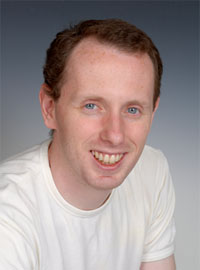 Peter Boyle合作论文数University of Edinburgh7Andreas Jüttner合作论文数School of Physics and Astronomy, University of Southampton7
 Mei-Feng Lin合作论文数Department of Physics;Columbia University;Department of Physics, Columbia University7Stephen Booth合作论文数7a soni合作论文数6
 Chulwoo Jung合作论文数Columbia University6T. Blum合作论文数6Robert D. Mawhinney合作论文数Columbia University6
 Norman H. Christ合作论文数Department of Physics, Columbia University6
 Shigemi Ohta合作论文数Institute for Particle and Nuclear Studies6Taku Izubuchi合作论文数6S. Li合作论文数5
 Roger Horsley合作论文数School of Physics, University of Edinburgh5J. Noaki合作论文数5
 Bio Joo合作论文数5
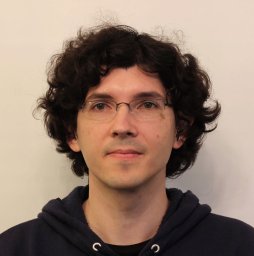 Saul D. Cohen合作论文数Department of Physics;University of Maryland;Department of Physics, University of Maryland5Enno E. Scholz合作论文数5T. Yamazaki合作论文数4Min Li合作论文数4A. Yamaguchi合作论文数4James M. Zanotti合作论文数School of Physics;University of Edinburgh;School of Physics, University of Edinburgh4
 M. A. Clark合作论文数4
 Jonathan Flynn合作论文数University of Southampton4
 David Henty合作论文数4David G. Richards合作论文数Jefferson Lab4A. D. Simpson合作论文数3S. Sasaki合作论文数3Duncan Roweth合作论文数3Robert Sugar合作论文数Department of Physics, University of California, Santa Barbara3
 Michael Donnellan合作论文数3Alistair Hart合作论文数3
 Christopher Michael合作论文数Department of Mathematical Sciences, University of Liverpool3
 Doug Toussaint合作论文数Department of Physics, College of Science, University of Arizona3Alan C. Irving合作论文数3
 Steven A. Gottlieb合作论文数Department of Physics, College of Arts and Sciences, University Graduate School, Indiana University Bloomington3Simon Duane合作论文数National Physical Laboratory3D. Galletly合作论文数2R. M. Baxter合作论文数2Jn Simone合作论文数2




