We have studied the ${\ensuremath{\pi}}^{*}$ and ${\ensuremath{\sigma}}^{*}$ threshold structures in the C $1s$ x-ray absorption spectrum of graphite using core level autoionization spectroscopy. We confirm that the ${\ensuremath{\sigma}}^{*}$ threshold feature is an exciton. We find that the prominent ${\ensuremath{\pi}}^{*}$ feature is also excitonic, though it lies approximately 1 eV above the ${\ensuremath{\pi}}^{*}$ threshold. This excited state is localized on a time scale of fs, even though it is degenerate with propagating states of the crystal.
The Al2O3NiAl(110) system with and without Pd clusters on the surface has been studied using photoemission of both core and valence levels. Pd has been deposited under various conditions, and changes in the spectra due to differences in growth modes are discussed. The C 1s spectra for CO adsorbed on deposited Pd clusters of increasing size can be viewed as showing the evolution from a deposited carbonyl-like species to CO adsorbed on a metallic surface. Heating of CO-saturated clusters to 300 K leads to desorption of more than half of the CO, which allows for a stronger interaction between the remaining molecules and the Pd clusters.
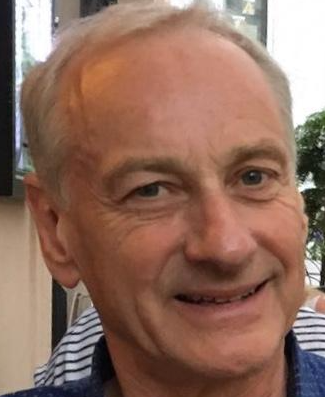 Nils Mårtensson合作论文数Department of Physics and Astronomy, Uppsala University2
 Stefan Andersson合作论文数2Paul a Bruhwiler合作论文数2J. Libuda合作论文数1
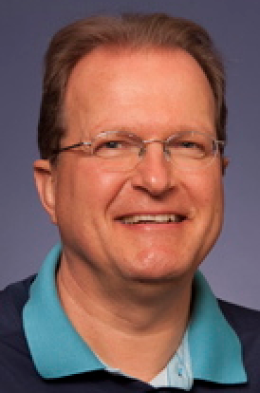 Anders Nilsson合作论文数Chemical Physics Division, Department of Physics, Stockholm University1
 Anders Sandell合作论文数Department of Radiation Physics, University of Lund1
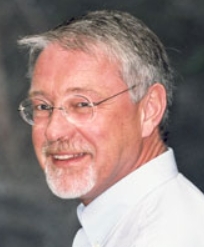 Hajo Freund合作论文数Fritz-Haber-Institut, Max-Planck-Gesellschaft1
 Marcus Bäumer合作论文数Institute for Applied and Physical Chemistry, University Bremen1
 Carla Puglia合作论文数1




