This paper discusses research conducted to explore student perceptions of problem based learning (PBL) as used in a concurrent degree programme of primary teacher education in Scotland. The research sought to understand the extent to which problem-based learning supported students to make links between educational theory and professional practice. This was of particular interest given that a theory-practice divide is attested to in the literature on initial teacher education. The study concludes that the majority of the students who took part in the research perceive that PBL enables them to make links between theory and practice. However the construction of the PBL scenarios is important in supporting them to do this, as is the reflexive aspect of the PBL approach.
This paper discusses factors that enhance induction experiences for beginning teachers. It reports the findings from case studies that explore the impact of new entrants to the teaching profession in Scotland. The data suggest that the most supportive induction processes mix both formal and informal elements, but that the informal elements such as collegiality, good communication and a welcoming workplace environment should not be underestimated. The study also highlights the potential benefits of a more collegiate environment for teachers across the career phases. Experienced teachers and new entrants had a range of experience to offer each other, thus creating more cohesive professional working which was supportive of early career teachers while encouraging reflection on practice among the more experienced professionals.
Problem-based learning (PBL) is not new; in one form or another, it has been around for considerable time. Indeed, as Menon (1997) points out, it may be seen as originating with Dewey at the turn of the century. In this article I examine definitions of PBL, and some of the challenges and problems it presents. I look at the evolution of PBL, and some of the applications of this methodology - together with some of the detailed research which has been undertaken in this field. I also discuss the current United Kingdom models of initial teacher education, outline possible uses of PBL in this area, and describe research carried out in the University of Glasgow. Finally, I provide some discussion about the applicability of PBL in the area of initial teacher education.
In England, Scotland and other countries, policy‐makers often depict the targeted recruitment of men to the teaching profession as a panacea for male underachievement and disaffection from school. It is commonly assumed that the gender gap in achievement stems from the dearth of male role models in teaching, especially at primary level. Giving particular attention to recent literature on the influence of teacher gender on classroom interaction and educational outcomes, the paper begins by scrutinizing the policy's evidence‐base. We move on to examine the findings of a qualitative study conducted in English primary schools. Drawing upon data from semi‐structured interviews with teachers of 7‐ to 8‐year‐olds (25 men, 26 women), an attempt is made to assess their responses to the policy of targeted male recruitment and perceptions of the benefits of same‐gender matching. The paper (an earlier version of which paper was presented at the European Educational Research Association's Annual Conference at the University of Ghent, September 2007) concludes by tentatively exploring the implications of this small‐scale study for policy and practice.
The research reported here was commissioned by the Scottish Negotiating Committee for Teachers (SNCT) in August 2005. The overall aim of the research was to provide the SNCT with evidence on whether commitments on teachers’ working week have been met, following the agreement reached in response to the McCrone Report. The research indicates that the amount of time needed to undertake tasks associated with carrying out a teaching role is in excess of 35 hours. Moreover, a significant number of respondents expressed the concern that their work load was unsustainable.
For some time there has been debate about differing perspectives on musical gift and musical intelligence. One view is that musical gift is innate: that it is present in certain individuals from birth and that the task of the teacher is to develop the potential which is there. A second view is that musical gift is a complex concept which includes responses from individuals to different environments and communities (Howe and Sloboda, 1997). This then raises the possibility that musical excellence can be taught. We have already explored this idea with practising musicians ( Stollery and McPhee, 2002 ). Our research has now expanded to include music teachers in formation, and, in this paper, we look at the influences in their musical development which have either ‘crystallised’ or ‘paralysed’ the musical talent which they possess. Our research has a comparative dimension, being carried out in Scotland and in Australia. We conclude that there are several key influences in the musical development of the individual, including home and community support, school opportunities and teaching styles and that there may be education and culture-specific elements to these influences.
In recent years there have been changes made to the conceptualisation of continuing professional development for teachers in both the Scottish and English systems of education. These changes have been instigated by successive United Kingdom governments (and, more recently, by the Scottish Executive), together with the General Teaching Council for Scotland (GTCS) and the General Teaching Council for England (GTCE). This article argues that these changes have not provided a clear rationale for CPD, but instead have introduced tensions between the concept of teacher education and that of training. The need for a less confused understanding of CPD and its purposes is underlined, as is the need for school-based approaches to continuing teacher education. Arguably, teacher education must move from technicist emphases to a model that integrates the social processes of change within society and schools with the individual development and empowerment of teachers.
 Christine Forde合作论文数8
 Fiona Patrick合作论文数Queen Elizabeth Hospital, University Hospital Birmingham Foundation NHS Trust8
 Peter J. Stollery合作论文数Department of Music, University of Aberdeen4
 ros mcmillan合作论文数3
 Margery Mcmahon合作论文数3
 Moira Hulme合作论文数University of Glasgow3
 George Head合作论文数3Rae Condie合作论文数3Jean Kane合作论文数3
 Dely Elliot合作论文数3
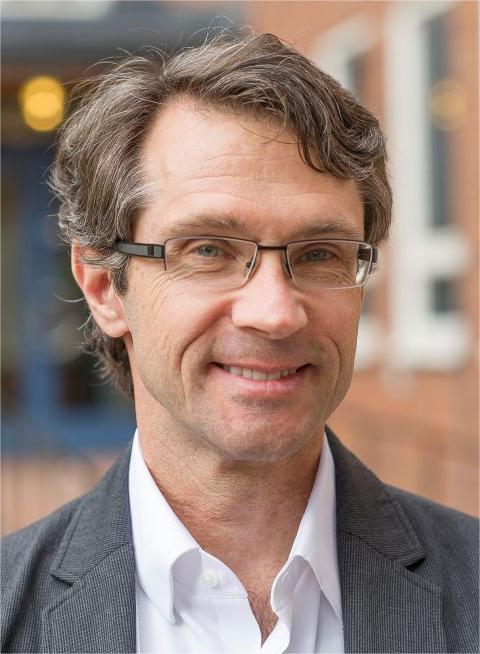 Patrick F. Sullivan合作论文数Sullivan Lab, Department of Genetics, School of Medicine, University of North Carolina at Chapel Hill;Center for Psychiatric Genetics, School of Medicine, University of North Carolina at Chapel Hill;Department of Medical Epidemiology and Biostatistics, Karolinska Institutet2Alison M. Devlin合作论文数2Fiona Skelton合作论文数2Archie D Mcphee合作论文数1Ian Menter合作论文数1
 Walter Humes合作论文数1Bruce Carrington合作论文数1F. Skelton合作论文数1




