The Sima de los Huesos (SH) and Gran Dolina-TD6 sites in Sierra de Atapuerca ( Spain) have each yielded an impressive fossil hominin sample representing Middle Pleistocene and Late Lower Pleistocene European populations, respectively. Paleontological evidence, paleomagnetic analyses, and radiometric dates (U/Th) suggest an interval of 400 to 500 ky for the SH hominins. At Gran Dolina, radiometric dates (ESR and U-series) combined with paleomagnetic analyses and fossil evidence indicate an age range between 780 and 860 ky for the Aurora Stratum of the TD6 level where the fossil hominins were found. We have assigned the SH hominins to the Homo heidelbergensis species, whereas the TD6 hominins are representative of Homo antecessor, the species named in 1997 (Bermudez de Castro et al., 1997) to accommodate the variability observed in the TD6 fossil human assemblage. Dental collections of the SH and TD6 sites include more than five hundred deciduous and permanent teeth. The detailed description and morphological comparison of the Atapuerca dental samples will be published elsewhere in a near future, but the examination of an extensive human fossil record, has already revealed some dental characters we consider crucial for phylogenetic studies. We describe those characters and provide an overview of their distribution across the hominin fossil dental record. On the basis of these traits we explore some questions about the phylogenetic relationship between TD6 and SH hominins as well as the evolutionary scenario of these two populations.
Mandibular premolars are increasingly used in taxon-specific diagnostic analyses of hominins. Among the principal difficulties in these evaluations is the absence of discrete, discernible, and comparable anatomical structures for rigorous quantitative assessment. Previous research has addressed either internal crown surface features (such as cusps and fossae) or the morphology of the crown outline. In the present paper, we integrate both types of information in the examination of morphological variation of lower P4s (n = 96) among various fossil hominin species with an emphasis on genus Homo. We use a set of 34 2D landmarks combining coordinate data from four classical dental landmarks on the occlusal surface and 30 sliding semilandmarks of the crown outline. Our results indicate that external shape variation is closely related to the configuration of the occlusal morphological features and influenced by dental size. The external and internal shapes of P4 are polymorphic but still useful in depicting a primitive-derived gradient. The primitive pattern seems to have been an asymmetrical contour with a mesially displaced metaconid, development of a bulging talonid, and a broad occlusal polygon. The trend toward dental reduction during the Pleistocene produced different morphological variants with a reduced occlusal polygon and decreased lingual occlusal surface in later Homo species. Homo heidelbergensis/neanderthalensis have fixed plesiomorphic traits in high percentages, whereas in modern humans a symmetrical outline with a centered metaconid and talonid reduction evolved.
En el Estrato Aurora del nivel TD6 del yacimiento pleistoceno de Gran Dolina (Trinchera del Ferrocarril, Sierra de Atapuerca, Burgos) se han obtenido más de cien restos fósiles de homininos de la especie Homo antecessor, que pertenecen a un mínimo (NMI) de nueve individuos. En este trabajo realizamos la determinación del NMI y de la edad de muerte de los individuos, empleando datos observados en los restos de mandíbula, maxilar y dientes. El análisis tafonómico previo concluyó que el origen de la acumulación de los restos de homininos fue un acto puntual o recurrente de canibalismo de tipo «gastronómico ». Nuestro análisis revela que la mayor parte de los individuos (n = 7) son inmaduros, de entre tres y trece años, mientras que dos son adultos jóvenes, de entre quince y dieciocho años. En función de esta peculiar distribución de mortalidad se discuten hipótesis alternativas sobre los escenarios en los que los homininos fueron aprehendidos y las implicaciones que ello conlleva para el comportamiento de las poblaciones del Pleistoceno inferior.
This article analyzes the mortality profiles of two Middle Pleistocene hominin samples, one from the Sima de los Huesos (SH) site in the Sierra de Atapuerca (Spain) (MNI = 28), and another (MNI = 26) selected from various other European sites. In the SH mortality distribution, 64 percent of the individuals died between the ages of 11 and 20 years, but there is only one individual under the age of 10. In the sample from other European sites, there are four individuals under 10, but the number of individuals in the 11-20 year range is lower (39 percent) than in the SH sample. In both samples, the percentage of individuals who died after the age of 30 is very similar (14.3 percent in SH and 11.5 percent at the other sites), and the differences between both distributions (when infants and children are excluded) are not statistically significant. This article considers whether these mortality distributions follow a catastrophic or an attritional pattern. The discussion is presented in the framework of our current knowledge of the life history pattern of the Homo heidelbergensis species and the age structure and mortality profile of living foraging groups.
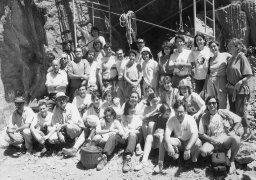 Susana Sarmiento合作论文数Museo Nacional de Ciencias Naturales, CSIC5
 Marcos Martinón-Torres合作论文数Department of Archaeology, University of Cambridge4
 José María Bermúdez de Castro Risueño合作论文数Centro Nacional de Investigación sobre la Evolución Humana4
 Ana M. Gómez合作论文数).2
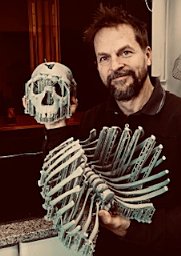 Markus Bastir合作论文数Departamento de Antropologia, Facultad de Ciencias y Tecnologı́a de la Universidad de Coimbra;Facultad de Ciencias y Tecnologı́a, de la Universidad de Coimbra2
 Juan Luis Arsuaga Ferreras合作论文数Departamento de Geodinámica, Estratigrafía y Paleontología, Facultad de Ciencias Geológicas, Universidad Complutense Madrid2
 Ana Mateos合作论文数1
 Jesus Rodriguez Huertas合作论文数1jose maria bermudez de castro risueno合作论文数1
 Aida Gomez-Robles合作论文数Department of Anthropology, University College London1
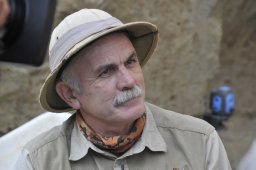 Eudald Carbonell合作论文数IPHES, Institut Català de Paleoecologia Humana i Evolució Social, c/Marcelli Domingo s/n, Campus Sescelades URV, Edifici W3, 43007 Tarragona, Spain1
 Marina Lozano合作论文数Unitat d'Investigació Associada, Àrea de Prehistòria (;Institut d'Estu;Universitat Rovira i Virgili;Institut d'Estu, Universitat Rovira i Virgili1
 María Martinón-Torres合作论文数Centro Nacional de Investigación sobre la Evolución Humana;Anthropology Department, University College London1




