The Zebrafish Information Network (ZFIN, zfin.org) is the database resource for genetic, genomic, and phenotypic data from research using zebrafish, Danio rerio. ZFIN curates information about genetic perturbations, gene expression, phenotype, gene function, and human disease models from zebrafish research publications and makes these data available to researchers worldwide. Over the past 20 years, zebrafish have increasingly been used to investigate the effects of environmental exposures, becoming an ideal model to study toxicity, phenotypic outcomes, and gene-chemical interactions. Despite this, database resources supporting zebrafish toxicology and environmental exposure research are limited. To fill this gap, ZFIN has expanded functionality to incorporate and convey toxicology data better. ZFIN annotations for gene expression, phenotype, and human disease models include information about genotypes and experimental conditions used. One type of experimental condition the database captures is the application of chemicals to zebrafish. ZFIN annotates chemicals using the Chemical Entities of Biological Interest Ontology (ChEBI) along with the Zebrafish Experimental Conditions Ontology (ZECO) to denote route of exposure and other experimental conditions. These features allow researchers to search phenotypes and human disease models linked to chemicals more efficiently. Here we discuss how experimental conditions are displayed on ZFIN web pages, the data displayed on chemical term pages, and how to search and download data associated with chemical exposure experiments.
Danio rerio is a model organism used to investigate vertebrate development. Manipulation of the zebrafish genome and resultant gene products by mutation or targeted knockdown has made the zebrafish a good system for investigating gene function, providing a resource to investigate genetic contributors to phenotype and human disease. Phenotypic outcomes can be the result of gene mutation, targeted knockdown of gene products, manipulation of experimental conditions, or any combination thereof. Zebrafish have been used in various genetic and chemical screens to identify genetic and environmental contributors to phenotype and disease outcomes. The Zebrafish Information Network (ZFIN) is the central repository for genetic, genomic, and phenotypic data that result from research using Danio rerio . Here we describe how ZFIN annotates phenotype, expression, and disease model data across various experimental designs, how we computationally determine wild-type gene expression, the phenotypic gene, and how these results allow us to propagate gene expression, phenotype, and disease model data to the correct gene, or gene related entity.
The Zebrafish Information Network (zfin.org) is the central repository for Danio rerio genetic and genomic data. The Zebrafish Information Network has served the zebrafish research community since 1994, expertly curating, integrating, and displaying zebrafish data. Key data types available at the Zebrafish Information Network include, but are not limited to, genes, alleles, human disease models, gene expression, phenotype, and gene function. The Zebrafish Information Network makes zebrafish research data Findable, Accessible, Interoperable, and Reusable through nomenclature, curatorial and annotation activities, web interfaces, and data downloads. Recently, the Zebrafish Information Network and 6 other model organism knowledgebases have collaborated to form the Alliance of Genome Resources, aiming to develop sustainable genome information resources that enable the use of model organisms to understand the genetic and genomic basis of human biology and disease. Here, we provide an overview of the data available at the Zebrafish Information Network including recent updates to the gene page to provide access to single-cell RNA sequencing data, links to Alliance web pages, ribbon diagrams to summarize the biological systems and Gene Ontology terms that have annotations, and data integration with the Alliance of Genome Resources.
Ray-finned fishes comprise more than half the *60,000 known vertebrate species, and are pivotal to the functionality of aquatic ecosystems and success of global multibillion dollar industries. Understanding ray-finned fish immune systems is essential to predicting how species will respond to known or emergent pathogens as well as to the development of effective vaccines for aquaculture. However, the diversity of species, including in aquaculture, necessitates that immunology and translational medicine research groups investigating the immune system in one or a number of species employ a common language for describing homologous immune components. Unfortunately for Immunoglobulin (Ig) genes that encode antibodies, this has not been the case. Ig genes are restricted to jawed vertebrates (gnathostomes) with all lineages encoding common heavy chains IgM and IgD (aka IgW in cartilaginous fish, lungfish, and coelacanths). Before 2005, it was believed that bony fish encoded only IgM and IgD. In 2005, Hansen et al. described a new Ig heavy chain encoded within the rainbow trout heavy chain locus and named it IgT for ‘‘teleost.’’ However, during the
The Zebrafish Information Network (ZFIN) (https://zfin.org/) is the database for the model organism, zebrafish (Danio rerio). ZFIN expertly curates, organizes, and provides a wide array of zebrafish genetic and genomic data, including genes, alleles, transgenic lines, gene expression, gene function, mutant phenotypes, orthology, human disease models, gene and mutant nomenclature, and reagents. New features at ZFIN include major updates to the home page and the gene page, the two most used pages at ZFIN. Data including disease models, phenotypes, expression, mutants and gene function continue to be contributed to The Alliance of Genome Resources for integration with similar data from other model organisms.
The Zebrafish Information Network (ZFIN) (https://zfin.org/) is the database for the model organism, zebrafish (Danio rerio). ZFIN expertly curates, organizes and provides a wide array of zebrafish genetic and genomic data, including genes, alleles, transgenic lines, gene expression, gene function, mutant phenotypes, orthology, human disease models, nomenclature and reagents. New features at ZFIN include increased support for genomic regions and for non-coding genes, and support for more expressive Gene Ontology annotations. ZFIN has recently taken over maintenance of the zebrafish reference genome sequence as part of the Genome Reference Consortium. ZFIN is also a founding member of the Alliance of Genome Resources, a collaboration of six model organism databases (MODs) and the Gene Ontology Consortium (GO). The recently launched Alliance portal (https://alliancegenome.org) provides a unified, comparative view of MOD, GO, and human data, and facilitates foundational and translational biomedical research.
The Zebrafish Model Organism Database (ZFIN; http: //zfin.org)is the central resource for zebrafish (Danio rerio) genetic, genomic, phenotypic and developmental data. ZFIN curators provide expert manual curation and integration of comprehensive data involving zebrafish genes, mutants, transgenic constructs and lines, phenotypes, genotypes, gene expressions, morpholinos, TALENs, CRISPRs, antibodies, anatomical structures, models of human disease and publications. We integrate curated, directly submitted, and collaboratively generated data, making these available to zebrafish research community. Among the vertebrate model organisms, zebrafish are superbly suited for rapid generation of sequence-targeted mutant lines, characterization of phenotypes including gene expression patterns, and generation of human disease models. The recent rapid adoption of zebrafish as human disease models is making management of these data particularly important to both the research and clinical communities. Here, we describe recent enhancements to ZFIN including use of the zebrafish experimental conditions ontology, ' Fish' records in the ZFIN database, support for gene expression phenotypes, models of human disease, mutation details at the DNA, RNA and protein levels, and updates to the ZFIN single box search.
The Zebrafish Model Organism Database (ZFIN; zfin.org) serves as the central repository for genetic and genomic data produced using zebrafish (Danio rerio). Data in ZFIN are either manually curated from peer-reviewed publications or submitted directly to ZFIN from various data repositories. Data types currently supported include mutants, transgenic lines, DNA constructs, gene expression, phenotypes, antibodies, morpholinos, TALENs, CRISPRs, disease models, movies, and images. The rapidly changing methods of genomic science have increased the production of data that cannot readily be represented in standard journal publications. These large data sets require web-based presentation. As the central repository for zebrafish research data, it has become increasingly important for ZFIN to provide the zebrafish research community with support for their data sets and guidance on what is required to submit these data to ZFIN. Regardless of their volume, all data that are submitted for inclusion in ZFIN must include a minimum set of information that describes the data. The aim of this chapter is to identify data types that fit into the current ZFIN database and explain how to provide those data in the optimal format for integration. We identify the required and optional data elements, define jargon, and present tools and templates that can help with the acquisition and organization of data as they are being prepared for submission to ZFIN. This information will also appear in the ZFIN wiki, where it will be updated as our services evolve over time.
High-throughput sequencing of miRNAs has revealed the diversity and variability of mature and functional short noncoding RNAs, including their genomic origins, biogenesis pathways, sequence variability, and newly identified products such as miRNA-offset RNAs (moRs). Here we review known cases of alternative mature miRNA-like RNA fragments and propose a revised definition of miRNAs to encompass this diversity. We then review nomenclature guidelines for miRNAs and propose to extend nomenclature conventions to align with those for protein-coding genes established by international consortia. Finally, we suggest a system to encompass the full complexity of sequence variations (i.e., isomiRs) in the analysis of small RNA sequencing experiments.
Summary The Zebrafish Model Organism Database (ZFIN; http://zfin.org ) is the central resource for genetic and genomic data from zebrafish ( Danio rerio ) research. ZFIN staff curate detailed information about genes, mutants, genotypes, reporter lines, sequences, constructs, antibodies, knockdown reagents, expression patterns, phenotypes, gene product function, and orthology from publications. Researchers can submit mutant, transgenic, expression, and phenotype data directly to ZFIN and use the ZFIN Community Wiki to share antibody and protocol information. Data can be accessed through topic‐specific searches, a new site‐wide search, and the data‐mining resource ZebrafishMine ( http://zebrafishmine.org ). Data download and web service options are also available. ZFIN collaborates with major bioinformatics organizations to verify and integrate genomic sequence data, provide nomenclature support, establish reciprocal links, and participate in the development of standardized structured vocabularies (ontologies) used for data annotation and searching. ZFIN‐curated gene, function, expression, and phenotype data are available for comparative exploration at several multi‐species resources. The use of zebrafish as a model for human disease is increasing. ZFIN is supporting this growing area with three major projects: adding easy access to computed orthology data from gene pages, curating details of the gene expression pattern changes in mutant fish, and curating zebrafish models of human diseases. genesis 53:498–509, 2015. © 2015 Wiley Periodicals, Inc.
ZFIN, the Zebrafish Model Organism Database (http://zfin.org), is the central resource for zebrafish genetic, genomic, phenotypic and developmental data. ZFIN curators manually curate and integrate comprehensive data involving zebrafish genes, mutants, transgenics, phenotypes, genotypes, gene expressions, morpholinos, antibodies, anatomical structures and publications. Integrated views of these data, as well as data gathered through collaborations and data exchanges, are provided through a wide selection of web-based search forms. Among the vertebrate model organisms, zebrafish are uniquely well suited for rapid and targeted generation of mutant lines. The recent rapid production of mutants and transgenic zebrafish is making management of data associated with these resources particularly important to the research community. Here, we describe recent enhancements to ZFIN aimed at improving our support for mutant and transgenic lines, including (i) enhanced mutant/transgenic search functionality; (ii) more expressive phenotype curation methods; (iii) new downloads files and archival data access; (iv) incorporation of new data loads from laboratories undertaking large-scale generation of mutant or transgenic lines and (v) new GBrowse tracks for transgenic insertions, genes with antibodies and morpholinos.
ZFIN, the Zebrafish Model Organism Database, http://zfin.org, serves as the central repository and web-based resource for zebrafish genetic, genomic, phenotypic and developmental data. ZFIN manually curates comprehensive data for zebrafish genes, phenotypes, genotypes, gene expression, antibodies, anatomical structures and publications. A wide-ranging collection of web-based search forms and tools facilitates access to integrated views of these data promoting analysis and scientific discovery. Data represented in ZFIN are derived from three primary sources: curation of zebrafish publications, individual research laboratories and collaborations with bioinformatics organizations. Data formats include text, images and graphical representations. ZFIN is a dynamic resource with data added daily as part of our ongoing curation process. Software updates are frequent. Here, we describe recent additions to ZFIN including (i) enhanced access to images, (ii) genomic features, (iii) genome browser, (iv) transcripts, (v) antibodies and (vi) a community wiki for protocols and antibodies.
The publication of a research article is the beginning of the digital life of its associated data. In this article, we will present an overview of how data are incorporated into ZFIN, with a particular emphasis on helping researchers make their work accessible to online databases.
UDP-xylose synthase (Uxs1) is strongly conserved from bacteria to humans, but because no mutation has been studied in any animal, we do not understand its roles in development. Furthermore, no crystal structure has been published. Uxs1 synthesizes UDP-xylose, which initiates glycosaminoglycan attachment to a protein core during proteoglycan formation. Crystal structure and biochemical analyses revealed that an R233H substitution mutation in zebrafish uxs1 alters an arginine buried in the dimer interface, thereby destabilizing and, as enzyme assays show, inactivating the enzyme. Homozygous uxs1 mutants lack Alcian blue-positive, proteoglycan-rich extracellular matrix in cartilages of the neurocranium, pharyngeal arches, and pectoral girdle. Transcripts for uxs1 localize to skeletal domains at hatching. GFP-labeled neural crest cells revealed defective organization and morphogenesis of chondrocytes, perichondrium, and bone in uxs1 mutants. Proteoglycans were dramatically reduced and defectively localized in uxs1 mutants. Although col2a1a transcripts over-accumulated in uxs1 mutants, diminished quantities of Col2a1 protein suggested a role for proteoglycans in collagen secretion or localization. Expression of col10a1, indian hedgehog, and patched was disrupted in mutants, reflecting improper chondrocyte/perichondrium signaling. Up-regulation of sox9a, sox9b, and runx2b in mutants suggested a molecular mechanism consistent with a role for proteoglycans in regulating skeletal cell fate. Together, our data reveal time-dependent changes to gene expression in uxs1 mutants that support a signaling role for proteoglycans during at least two distinct phases of skeletal development. These investigations are the first to examine the effect of mutation on the structure and function of Uxs1 protein in any vertebrate embryos, and reveal that Uxs1 activity is essential for the production and organization of skeletal extracellular matrix, with consequent effects on cartilage, perichondral, and bone morphogenesis.
The Zebrafish Information Network (ZFIN, http://zfin.org), the model organism database for zebrafish, provides the central location for curated zebrafish genetic, genomic and developmental data. Extensive data integration of mutant phenotypes, genes, expression patterns, sequences, genetic markers, morpholinos, map positions, publications and community resources facilitates the use of the zebrafish as a model for studying gene function, development, behavior and disease. Access to ZFIN data is provided via web-based query forms and through bulk data files. ZFIN is the definitive source for zebrafish gene and allele nomenclature, the zebrafish anatomical ontology (AO) and for zebrafish gene ontology (GO) annotations. ZFIN plays an active role in the development of cross-species ontologies such as the phenotypic quality ontology (PATO) and the gene ontology (GO). Recent enhancements to ZFIN include (i) a new home page and navigation bar, (ii) expanded support for genotypes and phenotypes, (iii) comprehensive phenotype annotations based on anatomical, phenotypic quality and gene ontologies, (iv) a BLAST server tightly integrated with the ZFIN database via ZFIN-specific datasets, (v) a global site search and (vi) help with hands-on resources.
Understanding how developmental systems evolve after genome amplification is important for discerning the origins of vertebrate novelties, including neural crest, placodes, cartilage and bone. Sox9 is important for the development of these features, and zebrafish has two co-orthologs of tetrapod SOX9 stemming from an ancient genome duplication event in the lineage of ray-fin fish. We have used a genotype-driven screen to isolate a mutation deleting sox9b function, and investigated its phenotype and genetic interactions with a sox9a null mutation. Analysis of mutant phenotypes strongly supports the interpretation that ancestral gene functions partitioned spatially and temporally between Sox9 co-orthologs. Distinct subsets of the craniofacial skeleton, otic placode and pectoral appendage express each gene, and are defective in each single mutant. The double mutant phenotype is additive or synergistic. Ears are somewhat reduced in each single mutant but are mostly absent in the double mutant. Loss-of-function animals from mutations and morpholino injections, and gain-of-function animals injected with sox9a and sox9b mRNAs showed that sox9 helps regulate other early crest genes, including foxd3, sox10, snai1b and crestin, as well as the cartilage gene col2a1 and the bone gene runx2a;however, tfap2a was nearly unchanged in mutants. Chondrocytes failed to stack in sox9a mutants, failed to attain proper numbers in sox9b mutants and failed in both morphogenetic processes in double mutants. Pleiotropy can cause mutations in single copy tetrapod genes, such as Sox9, to block development early and obscure later gene functions. By contrast, subfunction partitioning between zebrafish co-orthologs of tetrapod genes, such as sox9a and sox9b, can relax pleiotropy and reveal both early and late developmental gene functions.
The pufferfish skeleton lacks ribs and pelvic fins, and has fused bones in the cranium and jaw. It has been hypothesized that this secondarily simplified pufferfish morphology is due to reduced complexity of the pufferfish Hox complexes. To test this hypothesis, we determined the genomic structure of Hox clusters in the Southern pufferfish Spheroides nephelus and interrogated genomic databases for the Japanese pufferfish Takifugu rubripes (fugu). Both species have at least seven Hox clusters, including two copies of Hoxb and Hoxd clusters, a single Hoxc cluster, and at least two Hoxa clusters, with a portion of a third Hoxa cluster in fugu. Results support genome duplication before divergence of zebrafish and pufferfish lineages, followed by loss of a Hoxc cluster in the pufferfish lineage and loss of a Hoxd cluster in the zebrafish lineage. Comparative analysis shows that duplicate genes continued to be lost for hundreds of millions of years, contrary to predictions for the permanent preservation of gene duplicates. Gene expression analysis in fugu embryos by in situ hybridization revealed evolutionary change in gene expression as predicted by the duplication-degeneration-complementation model. These experiments rule out the hypothesis that the simplified pufferfish body plan is due to reduction in Hox cluster complexity, and support the notion that genome duplication contributed to the radiation of teleosts into half of all vertebrate species by increasing developmental diversification of duplicate genes in daughter lineages.
Half of all vertebrate species are teleost fish. What accounts for this explosion of biodiversity? Recent evidence and advances in evolutionary theory suggest that genomic features could have played a significant role in the teleost radiation. This review examines evidence for an ancient whole-genome duplication (tetraploidization) event that probably occurred just before the teleost radiation. The partitioning of ancestral subfunctions between gene copies arising from this duplication could have contributed to the genetic isolation of populations, to lineage-specific diversification of developmental programs, and ultimately to phenotypic variation among teleost fish. Beyond its importance for understanding mechanisms that generate biodiversity, the partitioning of subfunctions between teleost co-orthologs of human genes can facilitate the identification of tissue-specific conserved noncoding regions and can simplify the analysis of ancestral gene functions obscured by pleiotropy or haploinsufficiency. Applying these principles on a genomic scale can accelerate the functional annotation of the human genome and understanding of the roles of human genes in health and disease.
 Monte Westerfield合作论文数Department of Biology, College of Arts and Sciences, University of Oregon;Institute of Neuroscience, Office of the Vice President for Research and Innovation, University of Oregon;Zebrafish International Resource Center, University of Oregon17
 John Postlethwait合作论文数Institute of Neuroscience, University of Oregon;Department of Biology, College of Arts and Sciences, University of Oregon13
 David Fashena合作论文数12Yvonne Bradford合作论文数12Ceri E Van Slyke合作论文数11Yi-Lin Yan合作论文数Postlethwait Zebrafish Genetics Laboratory, Institute of Neuroscience, University of Oregon11Sridhar Ramachandran合作论文数11Leyla Ruzicka合作论文数11
 Douglas G Howe合作论文数11Ken Frazer合作论文数11Christian Pich合作论文数10Holly Paddock合作论文数10
 Martin Ryan合作论文数School of Biology, University of St Andrews9Kevin Schaper合作论文数8Xiang Shao合作论文数8Sierra Taylor Moxon合作论文数8Anne E. Eagle合作论文数7Prita Mani合作论文数6
 Sabrina Toro合作论文数Laboratory for Molecular Biology and Genetic Engineering, University of Liège5
 Angel Amores合作论文数Institute of Neuroscience, University of Oregon5Patrick Kalita合作论文数4John Willoughby合作论文数4
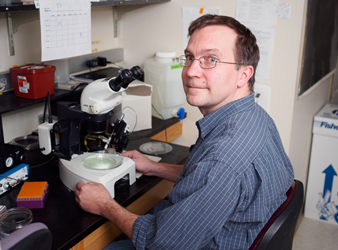 Craig T. Miller合作论文数Genetics, Genomics & Development Faculty, Department of Molecular and Cell Biology, University of California, Berkeley4
 Charles Kimmel合作论文数Department of Biology, College of Arts and Sciences, University of Oregon4Jonathan Knight合作论文数4P Haffter合作论文数3Tom Conlin合作论文数3Draper Bruce W合作论文数3
 Bon-Chu Chung (鍾邦柱)合作论文数Institute of Molecular Biology, Academia Sinica3Barbara J. Ruef合作论文数3
 Robert M Nissen合作论文数3Brock Sprunger合作论文数3Anette Kirn合作论文数2Adam Amsterdam合作论文数2
 Ryan C. Taylor合作论文数Department of Biological Sciences, Salisbury University2
 Eugene Berezikov合作论文数Faculty of Medical Sciences, University of Groningen2
 Liu Dong合作论文数Co-innovation Center of Neuroregeneration, Nantong University2Batzel Peter合作论文数2
 Thomas Desvignes合作论文数Department of Biology, College of Arts and Sciences, University of Alabama at Birmingham2
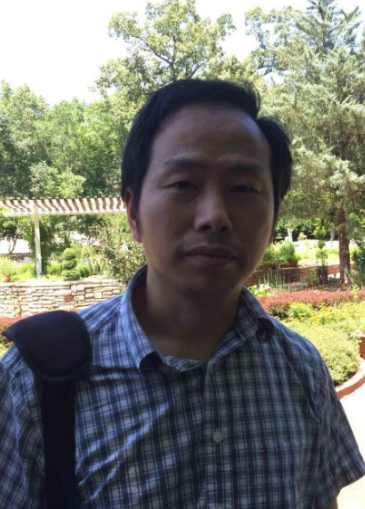 Dong Liu (刘东)合作论文数College of Fisheries and Life Science, Shanghai Ocean University2
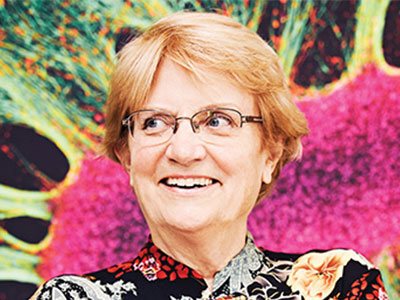 Nancy Hopkins合作论文数MIT Department of Biology2Judy Sprague合作论文数2
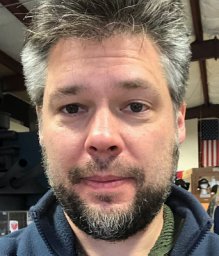 Nathan Dunn合作论文数University of Oregon2Adriana Rodríguez-Marí合作论文数2
 Karen Eilbeck合作论文数Department of Molecular and Cellular Biology, University of California2Michael F. Criscitiello合作论文数1Jonathan B Muyskens合作论文数1Monica McAndrews合作论文数1Adriana Donovan合作论文数1




