Because of significant challenges posed by space exploration missions, experiments in simulation chambers could shed light on certain planetary processes of interest to support mission design and mission data interpretation, as well as for testing science payloads for missions. Here we present our planetary environment simulation system built at Washington University in St. Louis. The system includes a two-layer vacuum baking chamber for sample preparation and a vacuum reaction chamber (upgraded planetary environment and analysis chamber, PEACh) featuring controllable temperature, pressure, and gas composition. The upgraded PEACh can simulate water-rock interaction via a water injection port, and it can simulate space weathering by using an energetic electron impact (EEI) accessory. In addition, this vacuum reaction chamber is equipped with in-situ monitoring probes, including Raman spectroscopy and plasma spectroscopy, as well as a video camera. The whole system is mainly designed for simulating water-regolith interactions in the lunar polar regions, but it can also simulate other planetary environments, such as conditions at the martian surface.
Some oxidized compounds in Martian soils may form through heterogeneous electrochemistry (HEC) stimulated by electrostatic discharge (ESD) during dust storms and dust devils. To test this hypothesis, we conducted medium-strength ESD experiments in a Mars simulation chamber and analyzed the Cl, O, and C isotopic compositions of the resulting chloride, (per)chlorate, and carbonate products. These ESD products exhibit substantial mass-dependent depletions in heavy isotopes relative to the reactants: 837Cl from -11.3 %o to +2.0 %o, 818O from -34.5 %o to -12.9 %o, and 813C around -11.4 %o. These results, when compared with isotopic measurements from recent Mars missions (ESA's ExoMars Trace Gas Orbiter and the Sample Analysis at Mars (SAM) instrument package aboard NASA's Curiosity rover) and Martian meteorites, indicate that HEC induced by Martian dust activities can account for a substantial portion of the (per)chlorates and carbonates identified at the surface of Mars and the HCl in its atmosphere.
Methane (CH4) on Mars is of high scientific importance, particularly for its generation and destruction mechanisms. With an estimated photochemical lifetime of approximately 300 years, sporadic methane plumes observed on Mars by orbital, landed missions, and Earth-based telescopes suggest the presence of unknown destruction processes. Here, we present an experiment to examine CH4 destruction through heterogeneous electrochemistry (HEC) triggered by Martian dust activities. We performed a series of mid-strength electrostatic discharge (ESD) experiments in mixtures of CO2 and CH4 under conditions relevant to the Martian near-surface atmosphere. We characterized (1) the free radicals produced from the breakdown of CH4 and CO2; (2) the gaseous and solid products of CH4 and CO2 decomposition; and (3) the half-life of CH4 in this experiment. Based on a newly reported mission observation of electric discharge during a dust devil (DD) on Mars, we extrapolated the experimentally derived half-life to an approximate dust-devil-effective half-life of CH4 on Mars, with uncertainties spanning orders of magnitude. The result demonstrates that dust-driven HEC can cause CH4 destruction at rates hundreds to thousands of times faster than photochemistry. In future missions to Mars, if the knowledge gaps in the E-properties of dust activity are filled through regular measurements, this experimental finding may imply that Martian dust activity could be the primary factor reducing methane's lifetime, thereby contributing to understanding methane loss in the Martian atmosphere.
Sulfur-containing species are suggested as the UV-absorbers in Venus's atmosphere, which can be generated by photochemistry or electrochemistry. Here we report an electrical discharge experiment in gas mixtures of SO2 with CO2 and N-2, under the pressure and temperature conditions relevant to the Venus cloud layer. We directly observed the primary breakdown products of SO2 as free radicals SO*, S-I*, S-II*, S-2*, O-I*, O-II* using plasma spectroscopy; and the stable ending products as S-8 particles and H2SO4 droplets using Raman spectroscopy. Their co-exhibitions after a few minutes of electrical discharge imply the formation of short-lived intermediate phases (from the radicals as precursors), including polysulfur and sulfur-oxides, both are recognized candidates for the mysterious UV-absorber. The simultaneous observations of plasma lines of SO*and S-2* under all experimental conditions suggest that the two major breakdown paths of SO2, which require similar electron energy, are likely to occur simultaneously. In Venus's cloud layer where electric activity may occur, the high breakdown rate of SO2 by glow-to-arc electric discharge would generate various S-bearing radicals with very high transient density regionally, similar to 3 orders of magnitude higher than the global mixing ratio of similar species from photochemistry. The high density of reactive S-species from regional electrochemistry could be responsible for the inhomogeneous distribution and temporal changes of dark features in Venus UV images.
Ferric sulfate minerals have been identified by orbital and landed missions at multiple locations on Mars and are the most common minerals in the Acid Mine Drainage (AMD) system on Earth. The occurrences and the speciation of ferric sulfates are very sensitive to variations in environmental conditions, such as temperature (T), relative humidity (RH%), redox potential (Eh), and potential of hydrogen ions (pH). In this study, two phase boundaries among kornelite, paracoquimbite, and ferricopiapite were experimentally derived in T-RH% space, using the well-established humidity buffer technique. The phase transformation and phase identification during experiments were determined by the gravimetric measurements and laser Raman spectroscopy, respectively. The two new phase boundaries clearly defined the edges of the stable fields of paracoquimbite that were ambiguously determined in a previous study. From the experimental data, we derived the entropy, enthalpy, and Gibbs free energy of the two reactions, and calculated the enthalpy changes and Gibbs free energy changes for each water of crystallization (either enter or escape from the structure) of these hydrous ferric sulfates. When compared with the same parameters of hydrous metal (Fe3+, Fe2+, Cu2+, Mg2+, Ni2+, Zn2+, Co2+, Mn2+, Cd2+, and Na+) sulfates derived by previous hydration/dehydration studies, we found a strong consistency, especially the Gibbs free energy changes. This finding implies the very consistent energetic barriers for the hydration/dehydration of those sulfates, post their first hydration/dehydration, regardless of their difference in cation and crystal structure.
The metal-rich CH carbonaceous chondrites contain abundant xenolithic clasts originating from different regions of the Solar System. In the CH3 chondrite Acfer 182, we identified two phosphide spherules (one 95-mu m in diameter and the other 50 mu m x 60 mu m) of schreibersite ((Fe,Ni)3P) and barringerite ((Fe,Ni)2P) with kamacite eutectic structures. These objects are likely to have formed during an impact between planetesimals during the debris-disk phase of the protoplanetary disk before being incorporated into the CH chondrite parent body. In the same sample we identified a 130 mu m x 60 mu m heideite grain (iron-titanium sulfide: (Fe,Cr)1.15(Ti,Fe)2S4) with exsolution lamellae of calcium-rich titanium oxide. Thin veins of shock-induced kamacite cross-cut the oxide lamellae, suggesting that it was ejected into the protoplanetary debris disk during an impact event before eventually being accreted by the CH chondrite parent body. This assemblage is distinct from heideite grains found in enstatite chondrites, aubrites, and the Kaidun meteorite. We propose that this object originated from a highly-reduced planetesimal in the inner Solar System that may have been similar to proto-Mercury.
A new Venus‐ESD‐Chamber (VEC) and peripheral systems were designed and built to simulate Venus lightning. It consists of three subsystems (a) electrostatic discharge (ESD) generation, (b) environmental pressure, temperature, gas composition control & monitoring, and (c) optical and non‐optical sensors. We conducted arc discharge experiments in air, in CO 2 , and in Venus major gas mixture (CO 2 ‐N 2 , 96.5% ± 1.5%:3.5% ± 1.5%) under 10, 350, 700, and 1,000 mbar pressures, that correspond to the 50–75 km altitude range in the cloud layer of Venus. Plasma and Raman spectra, plus gas sensors, and GC‐MS were used to identify the ESD products and to semi‐quantify CO and O 3 generated by ESD. We have found all species of free radicals that have been found in previous simulation studies using different discharge technologies, including some important species in CO 2 ‐N 2 system, nitrogen oxides and CN. In addition, we found three species (O 3 , N 2 + , and C 2 ) that have not been previously reported. Our results suggest that electron flux and kinetic energy are the determining factors for the type of generated free radical species and gas pressure plays a less important role. We found that the quantity of CO changes with the type of ESD. The detection of O 3 in this study suggests that lightning might be one of the sources of O 3 observed in the Venusian atmosphere. O I emission line at 777.4 nm is the most prominent line in our plasma spectra of FD, consistent with the intense optical flash observed by the Lightning and Airglow Camera (LAC) on the Akatsuki mission.
Abstract Heterogeneous electrochemistry induced by Martian dust activity is an important type of atmosphere‐surface interaction that affects geochemical processes at the Martian surface and in the Martian atmosphere. We have experimentally demonstrated that heterogeneous electrochemistry stimulated by mid‐strength dust events can decompose common chloride salts, which is accompanied by the release of chlorine atoms into the atmosphere and the generation of (per)chlorates (chlorates and perchlorates) and carbonates. In this study, we present quantitative analyses on the above products from 26 heterogeneous electrochemical experiments on chloride salts. Based on these quantifications, our calculation indicates that such atmosphere‐surface interaction during a portion of Amazonian period could accumulate the observed abundance of (per)chlorates, carbonates, and HCl by landed and orbital missions, and thus can be considered as a major driving force of the global chlorine‐cycle on Mars. This study emphasizes the importance of measuring the electrical properties of dust activity on Mars.
Abstract Planetary spectroscopy uses physical methods to study the chemical properties of the geological materials on the planetary bodies in our solar system. This article will present twelve types of spectroscopy frequently used in planetary explorations. Their energy (or wavelength) varies from γ-ray (keV) to far-infrared (μm), which involves the transitions of nuclei, atoms, ions, and molecules in planetary materials. The article will cover the basic concept of the transition for each of the twelve types of spectroscopy, along with their legendary science discoveries made during the past planetary exploration missions by the international planetary science and engineering community. The broad application of spectroscopy in planetary exploration is built upon the fact that only limited extraterrestrial materials were collected (meteorites, cosmic dust, and the returned samples by missions) that enabled the detailed investigations of their properties in laboratories, while spectroscopic measurements can be made on the objects of our solar system remotely and robotically, such as during the flyby, orbiting, lander, and rover missions. In this sense, the knowledge obtained by planetary spectroscopy has contributed to a major portion of planetary sciences. In the coming era of space explorations, more powerful spacecraft will be sent out by mankind, go to deep space, and explore exotic places. Generations of new planetary science payloads, including planetary spectrometers, will be created and will fly. New sciences will be revealed.
X-ray diffraction patterns of Martian mudstones acquired by Chemistry & Mineralogy X-Ray Diffraction (CheMin) aboard Mars Science Laboratory (MSL) suggest that the smectites detected in Gale crater have poor crystallinity. This finding poses an urgent question about the structural ordering of phyllosilicates found globally by Visible/ Near-Infrared (VIS-NIR) spectroscopic orbital remote sensing on Mars, linked to their formation conditions. In this study, we synthesized saponite (Nz+ (x/z)[M-6][Si8-xAlx]O-20(OH)(4)center dot nH(2)O, where M and N correspond to the divalent octahedral cations and the interlayer cations, respectively) with variable crystallinity, which bear structural similarities to the smectite discovered at Gale crater. Synthetic saponite was characterized using Field Emission Scanning Electron Microscopy (FE-SEM), powder X-ray diffraction (XRD), then studied the spectral features of these samples using nuclear magnetic resonance spectroscopy (NMR), Raman spectroscopy, and VIS-NIR reflectance spectroscopy. Our study revealed that the crystallinity of these saponite samples increased (as shown in the FWHM of XRD (060) peak), and is accompanied by (1) improved T-O-T layer stacking along the c axis (specified by the intensity and width of the XRD (001) peak); (2) increased uniformity of the SiO4 unit in tetrahedral sheets (based on the peak widths of Raman spectra and the well-resolved Si-29 NMR peaks); (3) improved regularity in the distribution of Mg2+ in octahedral sites and thus the regularity of metal-OH bonds in octahedral sheet (based on the resolution of the NIR 2.2-2.4 mu m band and the peak width of the XRD (060,330) peak); and (4) the increased Al in tetrahedral sites and decrease of Al in octahedral sites (the width of Al-27 NMR peak), the crystallinity of saponite raised. Based on experimental observations, the first derivative spectra of metal-OH absorptions were proposed as a crystallinity index for smectite on Mars. Our results indicate that different vibration spectroscopy techniques can constrain the structural ordering of smectite on Mars and provide insight into their formation conditions.
CHARACTERIZING VARIABLE CRYSTALLINE PHYLLOSILICATES ON MARS. Lingxi Zhang1, Xiaohui Fu1*, Alian Wang2, Zongcheng Ling1 1 Shandong Provincial Key Laboratory of Optical Astronomy and SolarTerrestrial Environment, Institute of Space Sciences, Shandong University, Weihai, China. (fuxh@sdu.edu.cn), 2 Department of Earth and Planetary Sciences and The McDonnell Center for the Space Sciences and McDonnell Center for Space Sciences, Washington University, St. Louis, MO, USA.
Mars exploration motivates the search for extraterrestrial life, the development of space technologies, and the design of human missions and habitations. Here, we seek new insights and pose unresolved questions relating to the natural history of Mars, habitability, robotic and human exploration, planetary protection, and the impacts on human society. Key observations and findings include: – high escape rates of early Mars' atmosphere, including loss of water, impact present-day habitability; – putative fossils on Mars will likely be ambiguous biomarkers for life; – microbial contamination resulting from human habitation is unavoidable; and – based on Mars' current planetary protection category, robotic payload(s) should characterize the local martian environment for any life-forms prior to human habitation. Some of the outstanding questions are: – which interpretation of the hemispheric dichotomy of the planet is correct; – to what degree did deep-penetrating faults transport subsurface liquids to Mars' surface; – in what abundance are carbonates formed by atmospheric processes; – what properties of martian meteorites could be used to constrain their source locations; – the origin(s) of organic macromolecules; – was/is Mars inhabited; – how can missions designed to uncover microbial activity in the subsurface eliminate potential false positives caused by microbial contaminants from Earth; – how can we ensure that humans and microbes form a stable and benign biosphere; and – should humans relate to putative extraterrestrial life from a biocentric viewpoint (preservation of all biology), or anthropocentric viewpoint of expanding habitation of space? Studies of Mars' evolution can shed light on the habitability of extrasolar planets. In addition, Mars exploration can drive future policy developments and confirm (or put into question) the feasibility and/or extent of human habitability of space.
Lunar-Laser-Lab for Volatiles INvestigation (L3VIN) is a laser-induced breakdown spectroscopy (LIBS) instrument under development that incorporates spatial mapping and imaging optical assemblies into a compact package that can be integrated into small rovers or landers to enable geochemical investigations on natural unprepared samples. L3VIN uses active laser beam steering technology developed by our team under several NASA Small Business Innovation Research (SBIR) awards, enabling return of 20 × 20 cm maps of elemental composition, including ISRU-relevant materials, at 1 m distance, targeting 1 mm/pixel resolution with detection limits of 1% wt/wt. Combined with a near-infrared reflectance instrument, L3VIN would enable geochemical and mineralogical information to be obtained from the same spot on the lunar regolith, providing ground-truth characterization and information regarding the distribution of lunar materials (hydrated/hydrous compounds, minerals, metals, and volatiles) in locations of high interest in the south polar region and the Gruithuisen Domes. This paper presents the L3VIN design and prototype instrument, and results from early testing.
1 , Yuanchao Yan 1 , Jen Houghton 1 , Bradley Jolliff 1 , Andrew Jackson 2 , Neil Sturchio 3 , Michael Smith 4 , and Kevin Olsen 5 , 1 Dept. Earth & Planetary Sciences and McDonnell Center for the Space Sciences, Washington University in St. Louis, MO, 63130, USA; 2 Dept. Civil, Environmental, and Construction Engineering, Texas Tech University, USA; 3 Dept. Earth Science, University of Delaware, USA; 4 NASA Goddard Space Flight Center, USA, 5 Dept. Physics, Oxford University, UK; (alianw@levee.wustl.edu)
Ordinary γ‐CaSO4 is a metastable calcium sulfate, while γ‐CaSO4 from the hyperarid region on Earth and from Mars has been found with abnormally high stability. In this study, we used multiple microanalyses to characterize the chemical and structural properties of two such γ‐CaSO4: one from Atacama soil (#10‐d30) and the other from Martian meteorite MIL03346,168. Silicon was determined to be quasi‐homogeneously distributed in Atacama γ‐CaSO4, while both silicon and phosphorus were detected in Martian γ‐CaSO4. We found the abnormally high stability of those γ‐CaSO4 from hyperarid environments was due to the chemical impurities which filled their structural tunnels and blocked the entrance of atmospheric H2O, with non‐detectable structural distortion. We propose that the γ‐CaSO4 with Si or Si and P impurities could have igneous origin or evaporative origin. Due to the extreme similarity in the structures of bassanite and γ‐CaSO4, their XRD patterns are almost non‐distinguishable; thus some martian “bassanite” minerals identified by Curiosity's CheMin instrument at Gale crater can actually be γ‐CaSO4. The structural tunnels in γ‐CaSO4 would allow ions and ionic groups to fill, thus providing meaningful insights about the geological and geochemical processes experienced by it during the formation and transformation. The Raman spectrometer carried by the Perseverance and by ExoMars rovers will help the selection of samples enriched in γ‐CaSO4 at Jezero Crater and Oxia Planum, which should be sampled for in‐depth analysis on Mars and back to Earth.
Hongkun Qu , Alian Wang, and Zongcheng Ling, Shandong Key Laboratory of Optical Astronomy and SolarTerrestrial Environment, School of Space Science and Physics, Institute of Space Sciences, Shandong University, Weihai, Shandong, 264209, China. (quhongkun@mail.sdu.edu.cn ). Dept. of Earth and Planetary Sciences and the McDonnell Center for the Space Sciences, Washington University in St. Louis, One Brookings Drive, St. Louis, MO, 63130, USA (alianw@levee.wustl.edu ).
Introduction: The CH chondrite Acfer 182 contains abundant fine-grained clastic debris, along with chondrules, CAIs, metal (up to 20%), and rare sulfides (<1 vol. %) [1]. The exogenous material present in CH chondrites seems to mostly have originated in carbonaceous-chondrite-like parent bodies. Here, we report three objects which likely were liberated by impact from reduced, inner Solar System bodies: a 100⇥50 μm heideite (iron-titanium sulfide) grain with FeTi-oxide exsolution lamellae and Fe-Ni metal shock veins, and two 50–100 μm schreibersite spherules with Fe-Ni metal inclusions. Samples and Methods: We acquired high-resolution BSE and X-ray maps of an Acfer 182 thin section using techniques described in [2] (https://presolar.physics.wustl.edu/maps/Acfer182_X.html). We noticed a region bright in both Ti and S in these maps, as well as two circular P-rich areas which showed unusual textures. We investigated these three objects in more detail with SEM-EDS and EPMA (JEOL JXA-8200, 15 kV, 25 nA). We removed the carbon coating with 1-μm diamond polish and analyzed the sulfide grain with Raman spectroscopy (inVia Raman imaging spectrometer, 532 nm laser, 0.5–5 mW).
 Bradley L. Jolliff合作论文数Electron Microprobe Laboratory, Department of Earth, Environmental, and Planetary Sciences, College of Arts & Sciences, Washington University in St. Louis;McDonnell Center for the Space Sciences, College of Arts & Sciences, Washington University in St. Louis60
 Larry A. Haskin合作论文数32Karla E. Kuebler合作论文数28
 Zongcheng Ling (凌宗成)合作论文数Center for Planetary Sciences, Institute of Space Sciences, Shandong University;School of Space Science and Technology, Shandong University25L. Haskin合作论文数22
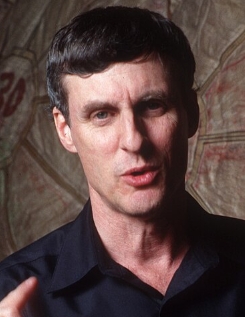 Steven W Squyres合作论文数Blue Origin22
 Raymond E. Arvidson合作论文数Department of Earth, Environmental, and Planetary Sciences, College of Arts & Sciences, Washington University in St. Louis;NASA18
 Jim Bell合作论文数School Of Earth and Space Exploration, Arizona State University;MILO Space Science Institute;Department of Astronomy, Cornell University15John Freeman合作论文数15
 L. S. Crumpler合作论文数15
 Harry Y. McSween合作论文数Department of Earth, Environmental, and Planetary Sciences, College of Arts and Sciences, The University of Tennessee, Knoxville13
 Randy L. Korotev合作论文数Department of Earth and Planetary Sciences, Washington University in St. Louis;McDonnell Center for the Space Sciences, Washington University in St. Louis13
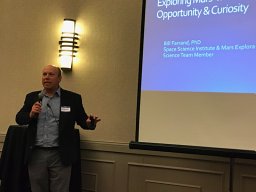 William Farrand合作论文数Space Science Institute13
 Steven Ruff合作论文数School of Earth and Space Exploration, Arizona State University12
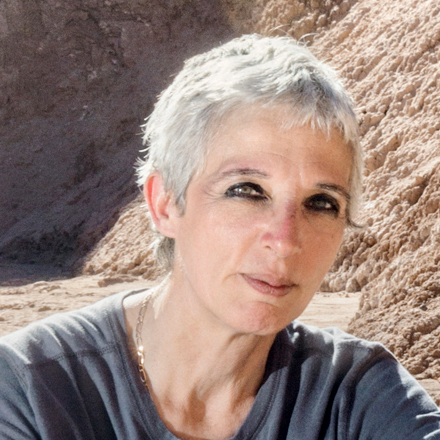 Nathalie Cabrol合作论文数Carl Sagan Center for Research, SETI Institute11Ralf Gellert合作论文数Department of Physics, University of Guelph11
 Douglas Ming合作论文数Johnson Space Center, National Aeronautics and Space Administration10
 Pablo Sobron合作论文数9James R Johnson合作论文数9
 Diana L. Blaney合作论文数9
 Xiaohui Fu (付晓辉)合作论文数School of Space Science and Technology, Shandong University8RV Morris合作论文数8
 Scott M. McLennan合作论文数Department of Geosciences, College of Arts and Sciences, Stony Brook University8
 Nicholas Tosca合作论文数Department of Earth Sciences, University of Cambridge8John A. Grant合作论文数Center for Earth and Planetary Studies;National Air and Space;Smithsonian Institution;Center for Earth and Planetary Studies, Smithsonian Institution8
 Pierre Haenecour合作论文数McDonnell Center for the Space Sciences, Washington University7
 Christine Floss合作论文数Laboratory for Space Sciences, Washington University7
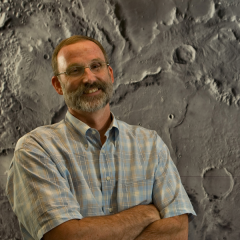 Philip Christensen合作论文数School of Earth and Space Exploration, Arizona State University7Jeffrey Edward Moersch合作论文数Department of Earth and Planetary Sciences;University of Tennessee;Department of Earth and Planetary Sciences, University of Tennessee7
 David Wettergreen合作论文数Mechanical Engineering Department, College of Engineering, Carnegie Mellon University;The Robotics Institute, School of Computer Science, Carnegie Mellon University;Mesh Robotics LLC7
 Jack D. Farmer合作论文数School Of Earth and Space Exploration, Arizona State University7NA Cabrol合作论文数6
 Erbin Shi合作论文数Shandong Prov Key Lab Opt Astron & Solar Terr Env, Shandong Univ6h wanke合作论文数6
 WeiGang Kong (孔维刚)合作论文数中国地质科学院6
 Fanjing Kong (孔凡晶)合作论文数Institute of Mineral Resources, Chinese Academy of Geological Sciences6
 Des Marais合作论文数NASA Ames Research Center;NASA Astrobiology Institute6
 Yang Liu (刘洋)合作论文数National Space Science Center, Chinese Academy of Sciences;University of Chinese Academy of Sciences6
 Ronald Greeley合作论文数Ronald Greeley Center for Planetary Studies, Arizona State University;School of Earth and Space Exploration, Arizona State University6A. Yen合作论文数6B. C. Clark合作论文数6
 James H. Lambert合作论文数Center for Risk Management of Engineering Systems, University of Virginia;School of Engineering and Applied Science, University of Virginia;Department of Systems & Information Engineering, University of Virginia;Department of Civil & Environmental Engineering, University of Virginia6
 Paulo de Souza合作论文数CVRD Rio de Janeiro6
 Joel A. Hurowitz合作论文数6
 I-Ming Chou合作论文数6A. T. Knudson合作论文数5R. Li合作论文数5
 Yuanchao Yan合作论文数5




