We report on a seismic isolator with a relatively compact 3 m stack, combining new passive isolation techniques. It consists of three cascaded passive 3D isolator stages suspended from an Ultra Low Frequency (ULF) horizontal Robert linkage stage which itself is suspended from a ULF 3D pre-isolator. The 3D isolators use self-damping pendulums and Euler springs for the horizontal and vertical stages respectively, while the 3D pre-isolator is the combination of an inverse pendulum which provides low frequency horizontal pre-isolation, and a LaCoste linkage for low frequency vertical pre-isolation. Two isolators suspending mirror test masses have been built to form a 72 m optical cavity in order to test their performance. We report results which demonstrate residual motion at nanometer level at frequencies above 1 Hz.
In this article a vacuum control system for the Australian International Gravitational Observatory (AIGO) research facility is described. The very large UHV vacuum system requires ultra-low hydrocarbon partial pressures and must be protected in order to prevent contaminations due to accidents. The system utilizes an Ethernet based remote automated system and supports dynamic monitoring of the entire vacuum system from any work station on the Local Area Network. The control system uses simple hardware and can be easily expanded for the proposed 4km AIGO detector.
The High Optical Power Test Facility for Advanced Interferometry has been built by the Australian Consortium for Interferometric Gravitational Astronomy north of Perth in Western Australia. An 80 m suspended cavity has been prepared in collaboration with LIGO, where a set of experiments to test suspension control and thermal compensation will soon take place. Future experiments will investigate radiation pressure instabilities and optical spring effects in a high power optical cavity with ∼200 kW circulating power. The facility combines research and development undertaken by all consortium members, whose latest results are presented.
The Australian Consortium for Gravitational Astronomy has built a High Optical Power Test Facility north of Perth, Western Australia. Current experiments in collaboration with LIGO are testing thermal lensing compensation, and suspension control on an 80m baseline suspended optical cavity. Future experiments will test radiation pressure instabilities and optical spring in a high power optical cavity with similar to200kW circulating power. Once issues of operation and control have been resolved, the facility will go on to assess the noise performance of the high optical power technology through operation of an advanced interferometer with sapphire tests masses, and high performance suspension and isolation systems. The facility combines research and development undertaken by all consortium members, which latest results are presented.
Advanced laser interferometer detectors utilizing more than 100 W of laser power and with ∼106 W circulating laser power present many technological problems. The Australian Consortium for Interferometric Gravitational Astronomy (ACIGA) is developing a high power research facility in Gingin, north of Perth, Western Australia, which will test techniques for the next generation interferometers. In particular it will test thermal lensing compensation and control strategies for optical cavities in which optical spring effects and parametric instabilities may present major difficulties.
Two very low frequency pre-isolation stages can greatly reduce the residual motion of suspended optical components. In a mode cleaner this can reduce the control forces required on the mirrors, simplifying lock acquisition and reducing noise injection through control forces. This paper describes a 12 m triangular suspended mode cleaner under construction for the AIGO high optical power interferometer. A novel and very compact multistage isolator supports the cavity mirrors. It combines an inverse pendulum in series with a low-mass Roberts linkage, both with pendulum frequencies below 0.1 Hz. The suspension chain is connected to the Roberts linkage via a Euler spring stage and a cantilever spring assembly for vertical isolation. We present an analysis of the mode cleaner, emphasizing the advantage of the improved mode-cleaner suspension and its power-handling capability. The effect of seismic noise on the residual velocity of the mirrors and the predicted frequency stability of the optical cavity are presented.
An enormous effort is underway worldwide to attempt to detect gravitational waves. If successful, this will open a new frontier in astronomy. An essential portion of this effort is being carried out in Australia by the Australian Consortium for Interferometric Gravitational Astronomy (ACIGA), with research teams working at the Australia National University, University of Western Australia, and University of Adelaide involving scientists and students representing many more institutions and nations. ACIGA is developing ultrastable high-power continuous-wave lasers for the next generation interferometric gravity wave detectors; researching the problems associated with high optical power in resonant cavities; opening frontiers in advanced interferometry configurations, quantum optics, and signal extraction; and is the world's leader in high-performance vibration isolation and suspension design. ACIGA has also been active in theoretical research and modelling of potential astronomical gravitational wave sources, and in developing data analysis detection algorithms. ACIGA has opened a research facility north of Perth, Western Australia, which will be the culmination of these efforts. This paper briefly reviews ACIGA's research activities and the prospects for gravitational wave astronomy in the southern hemisphere.
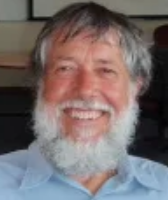 David Blair合作论文数School of Physics, Maths and Computing, The University of Western Australia7
 P. Barriga合作论文数6
 Li Ju (鞠莉)合作论文数Department of Physics, University of Western Australia6A. Brooks合作论文数4A Searle合作论文数4K T Lee合作论文数4J S Jacob合作论文数4J-C. Dumas合作论文数4B Cusack合作论文数4
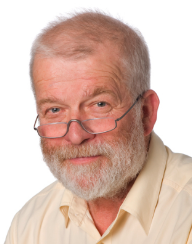 Jesper Munch合作论文数The University of Adelaide4P. Veitch合作论文数4
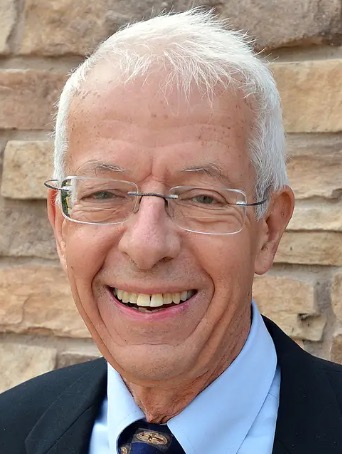 David H. Coward合作论文数Stanford Linear Accelerator Center, Stanford University4
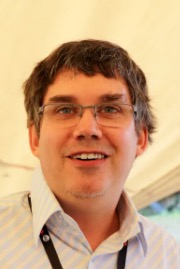 Jerome Degallaix合作论文数Laboratoire des Matériaux Avancés, CNRS4
 Susan Scott合作论文数Physics Education Centre, Research School of Physics, College of Science, Australian National University;Centre for Gravitational Astrophysics, Australian National University4de Vine, G.合作论文数4Eric Howell合作论文数4D. Hosken合作论文数4
 Slawomir Gras合作论文数Kavli Institute for Astrophysics and Space Research, Massachusetts Institute of Technology4John Winterflood合作论文数4R. Burman合作论文数4Damien Mudge合作论文数4R. B. Burston合作论文数4E J Chin合作论文数4
 Sascha Schediwy合作论文数School of Physics;University of Western;School of Physics, University of Western4C Mow-Lowry合作论文数3CN Zhao合作论文数3A Lun合作论文数3Cy Lee合作论文数3M Hamilton合作论文数3M. Gray合作论文数3
 Kirk McKenzie合作论文数Department of Quantum Science, Research School of Physics, College of Science, The Australian National University3Lan Kelly合作论文数3
 Joe H. Chow (周祖康)合作论文数Center for Ultra-Wide-Area Resilient Electric Energy Transmission Networks, Rensselaer Polytechnic Institute;Department Electrical, Computer, and Systems Engineering, School of Engineering, Rensselaer Polytechnic Institute3A. Moylan合作论文数2M. Barton合作论文数2M Feat合作论文数2Bh Lee合作论文数2
 Bs Sheard合作论文数2Benjamin S Sheard合作论文数2Z. Yan合作论文数2
 D. E. McClelland合作论文数OzGrav, Australian National University2
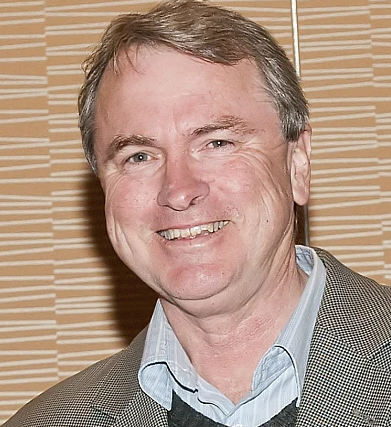 David McClelland合作论文数Centre for Gravitational Astrophysics, Research School of Physics, Australian National University2
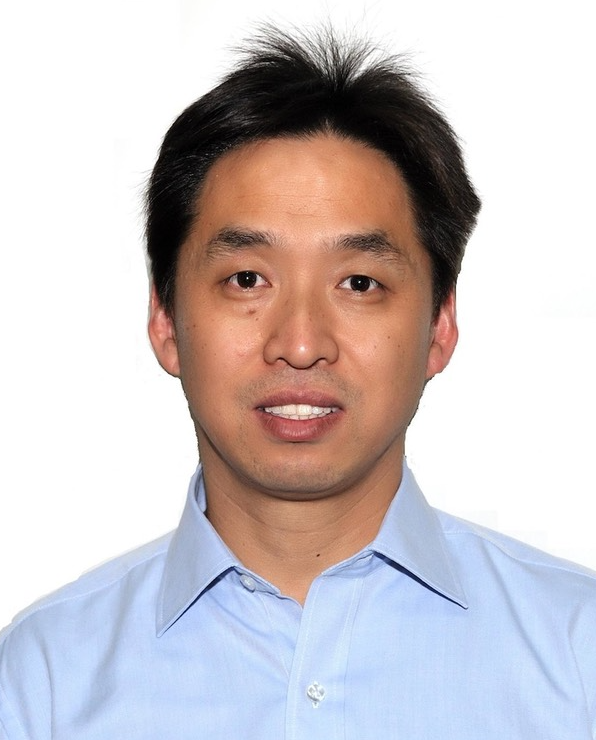 Chunsheng Zhao (赵春生)合作论文数Department of Atmospheric and Oceanic Sciences, School of Physics, Peking University2
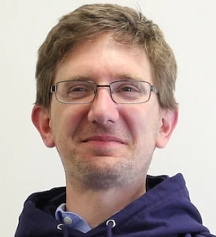 Bram Slagmolen合作论文数Centre for Gravitational Astrophysics, Research School of Physics, Australian National University2
 Zewu Yan合作论文数2
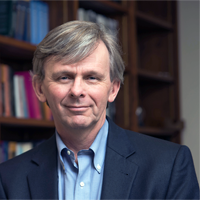 David H. Reitze合作论文数Laser Interferometer Gravitational-wave Observatory Laboratory, California Institute of Technology;The Division of Physics, Mathematics and Astronomy, California Institute of Technology2D. Rabeling合作论文数2Albert Romann合作论文数2
 Florin Garoi合作论文数2




