We have searched for gravitational waves (GWs) associated with the SGR 1806 (cid:1) 20 hyperflare of 27 December 2004. This event, originating from a Galactic neutron star, displayed exceptional energetics. Recent investigations of the x-ray light curve’s pulsating tail revealed the presence of quasiperiodic oscillations (QPOs) in the 30–2000 Hz frequency range, most of which coincides with the bandwidth of the LIGO detectors. These QPOs, with well-characterized frequencies, can plausibly be attributed to seismic modes of the neutron star which could emit GWs. Our search targeted potential quasimonochro-matic GWs lasting for tens of seconds and emitted at the QPO frequencies. We have observed no candidate signals above a predetermined threshold, and our lowest upper limit was set by the 92.5 Hz QPO observed in the interval from 150 s to 260 s after the start of the flare. This bound corresponds to a (90% confidence) root-sum-squared amplitude h 90%rss - det (cid:2) 4 : 5 (cid:3) 10 (cid:1) 22 strain Hz (cid:1) 1 = 2 on the GW waveform strength in the detectable polarization state reaching our Hanford (WA) 4 km detector. We illustrate the astrophysical significance of the result via an estimated characteristic energy in GW emission that we would expect to be able to detect. The above result corresponds to 7 : 7 (cid:3) 10 46 erg ( (cid:2) 4 : 3 (cid:3) 10 (cid:1) 8 M (cid:4) c 2 ), which is of the same order as the total (isotropic) energy emitted in the electromagnetic spectrum. This result provides a means to probe the energy reservoir of the source with the best upper limit on the GW waveform strength published and represents the first broadband asteroseismology measurement using a GW detector.
Strathprints is designed to allow users to access the research output of the University of Strathclyde. Unless otherwise explicitly stated on the manuscript, Copyright © and Moral Rights for the papers on this site are retained by the individual authors and/or other copyright owners. Please check the manuscript for details of any other licences that may have been applied. You may not engage in further distribution of the material for any profitmaking activities or any commercial gain. You may freely distribute both the url (https://strathprints.strath.ac.uk/) and the content of this paper for research or private study, educational, or not-for-profit purposes without prior permission or charge.
We report on an all-sky search with the LIGO detectors for periodic gravitational waves in the frequency range 50-1000 Hz and with the frequency's time derivative in the range -1.0E-8 Hz/s to zero. Data from the fourth LIGO science run (S4) have been used in this search. Three different semi-coherent methods of transforming and summing strain power from Short Fourier Transforms (SFTs) of the calibrated data have been used. The first, known as "StackSlide", averages normalized power from each SFT. A "weighted Hough" scheme is also developed and used, and which also allows for a multi-interferometer search. The third method, known as "PowerFlux", is a variant of the StackSlide method in which the power is weighted before summing. In both the weighted Hough and PowerFlux methods, the weights are chosen according to the noise and detector antenna-pattern to maximize the signal-to-noise ratio. The respective advantages and disadvantages of these methods are discussed. Observing no evidence of periodic gravitational radiation, we report upper limits; we interpret these as limits on this radiation from isolated rotating neutron stars. The best population-based upper limit with 95% confidence on the gravitational-wave strain amplitude, found for simulated sources distributed isotropically across the sky and with isotropically distributed spin-axes, is 4.28E-24 (near 140 Hz). Strict upper limits are also obtained for small patches on the sky for best-case and worst-case inclinations of the spin axes.
Received 29 February 2008DOI:https://doi.org/10.1103/PhysRevD.77.069903©2008 American Physical Society
The first simultaneous operation of the AURIGA detector and the LIGO observatory was an opportunity to explore real data, joint analysis methods between two very different types of gravitational wave detectors: resonant bars and interferometers. This paper describes a coincident gravitational wave burst search, where data from the LIGO interferometers are cross-correlated at the time of AURIGA candidate events to identify coherent transients. The analysis pipeline is tuned with two thresholds, on the signal-to-noise ratio of AURIGA candidate events and on the significance of the cross-correlation test in LIGO. The false alarm rate is estimated by introducing time shifts between data sets and the network detection efficiency is measured with simulated signals with power in the narrower AURIGA band. In the absence of a detection, we discuss how to set an upper limit on the rate of gravitational waves and to interpret it according to different source models. Due to the short amount of analyzed data and to the high rate of non-Gaussian transients in the detectors noise at the time, the relevance of this study is methodological: this was the first joint search for gravitational wave bursts among detectors with such different spectral sensitivity and the first opportunity for the resonant and interferometric communities to unify languages and techniques in the pursuit of their common goal.
We analyzed the available LIGO data coincident with GRB 070201, a short-duration, hard-spectrum -ray burst (GRB) whose electromagnetically determined sky position is coincident with the spiral arms of the Andromeda galaxy (M31). Possible progenitors of such short, hard GRBs include mergers of neutron stars or a neutron star and a 40 University of Southampton, Southampton SO17 1BJ, UK. 41 Northwestern University, Evanston, IL 60208. 42 National Astronomical Observatory of Japan, Tokyo 181-8588, Japan. 43 University of Strathclyde, Glasgow G1 1XQ, UK. 44 Loyola University, New Orleans, LA 70118. 45 Hobart and William Smith Colleges, Geneva, NY 14456. 46 Universitat de les Illes Balears, E-07122 Palma de Mallorca, Spain. 47 Rochester Institute of Technology, Rochester, NY 14623. 48 Andrews University, Berrien Springs, MI 49104. 49 Trinity University, San Antonio, TX 78212. 50 Southeastern Louisiana University, Hammond, LA 70402. 51 Louisiana Tech University, Ruston, LA 71272. 52 See http://www.ligo.org. 53 University of California, Berkeley, Space Sciences Lab, 7 Gauss Way, Berkeley, CA 94720. ABBOTT ET AL. 1420 Vol. 681
We report on a search for gravitational waves from the coalescence of compact binaries during the third and fourth LIGO science runs. The search focused on gravitational waves generated during the inspiral phase of the binary evolution. In our analysis, we considered three categories of compact binary systems, ordered by mass: (i) primordial black hole binaries with masses in the range 0.35 M(sun) < m1, m2 < 1.0 M(sun), (ii) binary neutron stars with masses in the range 1.0 M(sun) < m1, m2 < 3.0 M(sun), and (iii) binary black holes with masses in the range 3.0 M(sun)< m1, m2 < m_(max) with the additional constraint m1+ m2 < m_(max), where m_(max) was set to 40.0 M(sun) and 80.0 M(sun) in the third and fourth science runs, respectively. Although the detectors could probe to distances as far as tens of Mpc, no gravitational-wave signals were identified in the 1364 hours of data we analyzed. Assuming a binary population with a Gaussian distribution around 0.75-0.75 M(sun), 1.4-1.4 M(sun), and 5.0-5.0 M(sun), we derived 90%-confidence upper limit rates of 4.9 yr^(-1) L10^(-1) for primordial black hole binaries, 1.2 yr^(-1) L10^(-1) for binary neutron stars, and 0.5 yr^(-1) L10^(-1) for stellar mass binary black holes, where L10 is 10^(10) times the blue light luminosity of the Sun.
Received 29 February 2008DOI:https://doi.org/10.1103/PhysRevD.77.069905©2008 American Physical Society
Received 29 February 2008DOI:https://doi.org/10.1103/PhysRevD.77.069902©2008 American Physical Society
Received 29 February 2008DOI:https://doi.org/10.1103/PhysRevD.77.069904©2008 American Physical Society
The fourth science run of the LIGO and GEO 600 gravitational-wave detectors, carried out in early 2005, collected data with significantly lower noise than previous science runs. We report on a search for short-duration gravitationalwave bursts with arbitrary waveform in the 64–1600 Hz frequency range appearing in all three LIGO interferometers. Signal consistency tests, data quality cuts, and auxiliary-channel vetoes are applied to reduce the rate of spurious triggers. No gravitational-wave signals are detected in 15.5 days of live observation time; we set a frequentist upper limit of 0.15 per day (at 90% confidence level) on the rate of bursts with large enough amplitudes to be detected reliably. The amplitude sensitivity of the search, characterized using Monte Carlo simulations, is several times better than that of previous searches. We also provide rough estimates of the distances at which representative supernova and binary black hole merger signals could be detected with 50% efficiency by this analysis. PACS numbers: 04.80.Nn, 95.30.Sf, 95.85.Sz Submitted to Classical and Quantum Gravity
We present the results of a search for short-duration gravitational-wave bursts associated with 39 gamma-ray bursts (GRBs) detected by gamma-ray satellite experiments during LIGO's S2, S3, and S4 science runs. The search involves calculating the crosscorrelation between two interferometer data streams surrounding the GRB trigger time. We search for associated gravitational radiation from single GRBs, and also apply statistical tests to search for a gravitational-wave signature associated with the whole sample. For the sample examined, we find no evidence for the association of gravitational radiation with GRBs, either on a single-GRB basis or on a statistical basis. Simulating gravitational-wave bursts with sine-gaussian waveforms, we set upper limits on the root-sum-square of the gravitational-wave strain amplitude of such waveforms at the times of the GRB triggers. We also demonstrate how a sample of several GRBs can be used collectively to set constraints on population models. The small number of GRBs and the significant change in sensitivity of the detectors over the three runs, however, limits the usefulness of a population study for the S2, S3, and S4 runs. Finally, we discuss prospects for the search sensitivity for the ongoing S5 run, and beyond for the next generation of detectors.
We report on the methods and results of the first dedicated search for gravitational waves emitted during the inspiral of compact binaries with spinning component bodies. We analyze 788 hours of data collected during the third science run (S3) of the LIGO detectors. We searched for binary systems using a detection template family specially designed to capture the effects of the spin-induced precession of the orbital plane. We present details of the techniques developed to enable this search for spin-modulated gravitational waves, highlighting the differences between this and other recent searches for binaries with nonspinning components. The template bank we employed was found to yield high matches with our spin-modulated target waveform for binaries with masses in the asymmetric range 1.0M(circle dot) < m(1) < 3.0M(circle dot) and 12.0M(circle dot) < m(2) < 20.0M(circle dot) which is where we would expect the spin of the binary's components to have a significant effect. We find that our search of S3 LIGO data has good sensitivity to binaries in the Milky Way and to a small fraction of binaries in M31 and M33 with masses in the range 1.0M(circle dot) < m(1), m(2) < 20.0M(circle dot). No gravitational wave signals were identified during this search. Assuming a binary population with spinning components and Gaussian distribution of masses representing a prototypical neutron star-black hole system with m(1) similar or equal to 1.35M(circle dot) and m(2) similar or equal to 5M(circle dot), we calculate the 90%-confidence upper limit on the rate of coalescence of these systems to be 15.9 yr(-1) L-10(-1), where L-10 is 10(10) times the blue light luminosity of the Sun.
We report the observation of three-mode optoacoustic parametric interactions of the type predicted to cause parametric instabilities in a 77-m-long, high-optical-power cavity that uses suspended sapphire mirrors. Resonant interaction occurs between two distinct optical modes and an acoustic mode of one mirror when the difference in frequency between the two optical cavity modes is close to the frequency of the acoustic mode. Experimental results validate the theory of parametric instability in high-power optical cavities, and demonstrate tunable parametric gain similar to 10(-2) and more than 20 dB amplification of a high-order optical mode power generated by an applied acoustic signal.
 Jesper Munch合作论文数The University of Adelaide45
 P. Veitch合作论文数38D. Hosken合作论文数35
 David Blair合作论文数School of Physics, Maths and Computing, The University of Western Australia33
 Susan Scott合作论文数Physics Education Centre, Research School of Physics, College of Science, Australian National University;Centre for Gravitational Astrophysics, Australian National University30
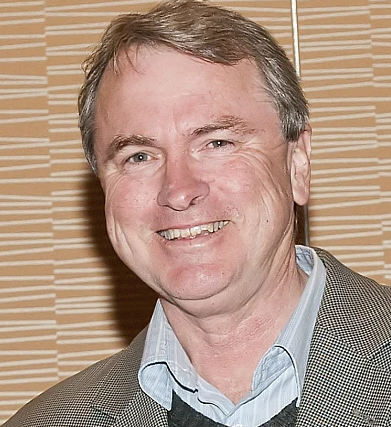 David McClelland合作论文数Centre for Gravitational Astrophysics, Research School of Physics, Australian National University30
 Li Ju (鞠莉)合作论文数Department of Physics, University of Western Australia30A. Brooks合作论文数29
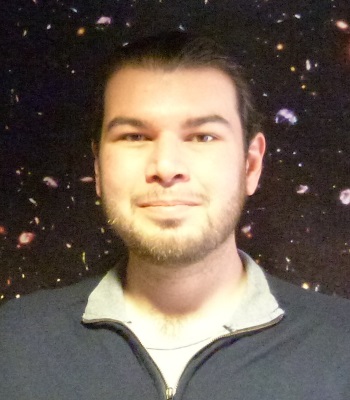 John Veitch合作论文数Institute for Gravitational Research, School of Physics and Astronomy, University of Glasgow29
 Bram Slagmolen合作论文数Centre for Gravitational Astrophysics, Research School of Physics, Australian National University29
 Sascha Schediwy合作论文数School of Physics;University of Western;School of Physics, University of Western29
 Jerome Degallaix合作论文数Laboratoire des Matériaux Avancés, CNRS28
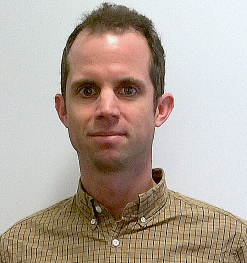 Kirk McKenzie合作论文数Department of Quantum Science, Research School of Physics, College of Science, The Australian National University28
 Slawomir Gras合作论文数Kavli Institute for Astrophysics and Space Research, Massachusetts Institute of Technology28A. Moylan合作论文数27J-C. Dumas合作论文数27P. Barriga合作论文数27D. Rabeling合作论文数27
 David H. Reitze合作论文数Laser Interferometer Gravitational-wave Observatory Laboratory, California Institute of Technology;The Division of Physics, Mathematics and Astronomy, California Institute of Technology26Eric Howell合作论文数25T. Meier合作论文数24C. Hanna合作论文数24R. Route合作论文数24H. Overmier合作论文数24P. Lindquist合作论文数24
 Garilynn Billingsley合作论文数California Institute of Technology24V. P. Mitrofanov合作论文数Department of Oscillations Physics, Lomonosov Moscow State University24
 David H. Coward合作论文数Stanford Linear Accelerator Center, Stanford University24Z. Yan合作论文数24D. Kasprzyk合作论文数24
 Jan Harms合作论文数Gran Sasso Science Institute24
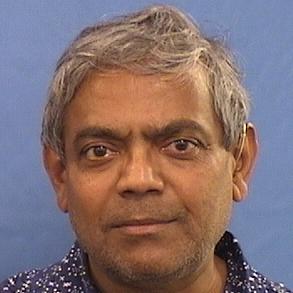 B. S. Sathyaprakash合作论文数Department of Physics, Eberly College of Science, Pennsylvania State University;Department of Astronomy and Astrophysics, Eberly College of Science, Pennsylvania State University24
 Kenneth G. Libbrecht合作论文数The Division of Physics, Mathematics and Astronomy, California Institute of Technology24V. Parameshwaraiah合作论文数24L. Sancho De La Jordana合作论文数24R. Rahkola合作论文数24Adrian C Melissinos合作论文数24L. Ruet合作论文数24M. Samidi合作论文数24
 Volker Leonhardt合作论文数24T. Hayler合作论文数24
 David Ottaway合作论文数School of Physics, Chemistry and Earth Sciences, Faculty of Sciences, Engineering and Technology, The University of Adelaide;Institute for Photonics and Advanced Sensing, The University of Adelaide24E. Harstad合作论文数24L. Ribichini合作论文数24Virginio Sannibale合作论文数ChromoLogic LLC23D. Meyers合作论文数23
 Richard Mittleman合作论文数Kavli Institute for Astrophysics and Space Research, Massachusetts Institute of Technology23W. Kells合作论文数23G. Mendell合作论文数23




