We study Le Potier’s strange duality on del Pezzo surfaces using quot schemes to construct independent sections of theta line bundles on moduli spaces of sheaves, one of which is the Hilbert scheme of n points. For n ≤ 7 , we use multiple point formulas to count the length of the quot scheme, which agrees with the dimension of the space of sections on the Hilbert scheme. When the surface is ℙ^2 and n is arbitrary, we use nice resolutions of general stable sheaves to show that the quot schemes that arise are finite and reduced. Combining our results, we obtain a lower bound on the rank of the strange duality map, as well as evidence that the map is injective when n ≤ 7 .
We prove that the Thaddeus flips of $L$-twisted sheaves constructed by Matsuki and Wentworth can be obtained via Bridgeland wall-crossing. Similarly, we realize the change of polarization for moduli spaces of 1-dimensional Gieseker semistable sheaves on a surface by varying a family of stability conditions.
is equal to d. The locus Cd is non-empty if and only if d ≡ 0, 2 (mod 6) and d > 6; moreover, in such a case, Cd is an irreducible divisor in the moduli space of cubic fourfolds, which can also be described purely in terms of Hodge theory and periods (by the Global Torelli Theorem [17] and the surjectivity of the period map [10, 13]; we refer to the book in progress [8] for the general theory of cubic fourfolds). The main result gives an actual surface defining the divisor Cd, for special values of d.
In this paper, we survey some recent developments on computing the cohomology of the moduli spaces of sheaves on surfaces and the Brill-Noether problem. We explain several applications to classifying stable Chern characters on Hirzebruch surfaces, classifying globally generated vector bundles on minimal rational surfaces, and constructing and classifying Ulrich bundles on surfaces. This paper grew out of the talks of the authors at the ICM Satellite Conference on Moduli Spaces in Algebraic Geometry and Applications.
We develop the foundations of a theory of algebraic geometry for semirings, concentrating mainly on the semiring of tropical polynomials. Replacing ideals with the more general notion of congruences, we establish a relationship between congruences on the semiring of tropical polynomials and subsets of tropical space. We ultimately establish analogues of the weak and strong forms of Hilbert's Nullstellensatz.
In this expository paper, we review and compare the local homeomorphisms from the manifold of Bridgeland stability conditions to the space of central charges in the cases of both P 1 \mathbb {P}^1 and local P 1 \mathbb {P}^1 .
Contemporary research in algebraic geometry is the focus of this collection, which presents articles on modern aspects of the subject. The list of topics covered is a roll-call of some of the most important and active themes in this thriving area of mathematics: the reader will find articles on birational geometry, vanishing theorems, complex geometry and Hodge theory, free resolutions and syzygies, derived categories, invariant theory, moduli spaces, and related topics, all written by leading experts. The articles, which have an expository flavour, present an overall picture of current research in algebraic geometry, making this book essential for researchers and graduate students. This volume is the outcome of the conference Recent Advances in Algebraic Geometry, held in Ann Arbor, Michigan, to honour Rob Lazarsfeld's many contributions to the subject on the occasion of his 60th birthday.
In this expository paper, we review and compare the local homeomorphisms from the manifold of Bridgeland stability conditions to the space of central charges in the cases of both P-1 and local P-1.
We apply a conjectured inequality on third Chern classes of stable two-term complexes on threefolds to Fujita's conjecture. More precisely, the inequality is shown to imply a Reider-type theorem in dimension three which in turn implies that K-X + 6L is very ample when L is ample, and that 5L is very ample when K-X is trivial.
We describe a close relation between wall crossings in the birational geometry of moduli space of Gieseker stable sheaves \(M_H(v)\) on \(\mathbb {P}^2\) and mini-wall crossings in the stability manifold \(Stab(D^b(\mathbb {P}^2))\).
We study rational double Hurwitz cycles, i.e. loci of marked rational stable curves admitting a map to the projective line with assigned ramification profiles over two fixed branch points. Generalizing the phenomenon observed for double Hurwitz numbers, such cycles are piecewise polynomial in the entries of the special ramification; the chambers of polynomiality and wall crossings have an explicit and “modular” description. A main goal of this paper is to simultaneously carry out this investigation for the corresponding objects in tropical geometry, underlining a precise combinatorial duality between classical and tropical Hurwitz theory.
We give a natural family of Bridgeland stability conditions on the derived category of a smooth projective complex surface S and describe ``wall-crossing behavior'' for objects with the same invariants as $\cO_C(H)$ when H generates Pic(S) and $C \in |H|$. If, in addition, S is a K3 or Abelian surface, we use this description to construct a sequence of fine moduli spaces of Bridgeland-stable objects via Mukai flops and generalized elementary modifications of the universal coherent sheaf. We also discover a natural generalization of Thaddeus' stable pairs for curves embedded in the moduli spaces.
In this paper, we study the birational geometry of the Hilbert scheme of n points on P^2. We discuss the stable base locus decomposition of the effective cone and the corresponding birational models. We give modular interpretations to the models in terms of moduli spaces of Bridgeland semi-stable objects. We construct these moduli spaces as moduli spaces of quiver representations using G.I.T. and thus show that they are projective. There is a precise correspondence between wall-crossings in the Bridgeland stability manifold and wall-crossings between Mori cones. For n at most 9, we explicitly determine the walls in both interpretations and describe the corresponding flips and divisorial contractions.
We study rational double Hurwitz cycles, i.e. loci of marked rational stable curves admitting a map to the projective line with assigned ramification profiles over two fixed branch points. Generalizing the phenomenon observed for double Hurwitz numbers, such cycles are piecewise polynomial in the entries of the special ramification; the chambers of polynomiality and wall crossings have an explicit and “modular” description. A main goal of this paper is to simultaneously carry out this investigation for the corresponding objects in tropical geometry, underlining a precise combinatorial duality between classical and tropical Hurwitz theory.
There is much concern regarding the genesis of acidic leachate by mine tailings and its potential impact on local water systems. Genesis of the leachate and its subsequent escape into the surrounding watershed is controlled by the primary distribution of facies within the tailings pond. Leachate generation and percolation is enhanced in high-sulphide coarse-grained sands, while percolation is restricted in fine-grained clays formed from bentonitic slimes. The Kidd Copper deposit, located on the South Range of the Sudbury Basin, was a typical offset dike nickel deposit, where mining took place between 1970 and 1990. Using a sequence of temporally separate aerial photographs dating from 1945 to 2002, it is possible to document the initial development of the mine, its closure and the subsequent degradation of the mine tailings waste that was produced during mining activity. Since the mine's closure, the resulting tailings deposit has progressively oxidized, generating acid-rich leachate. Leachate can escape from the tailings via surface run-off and subsurface flow. The spatial distribution of possible flow pathways was mapped using a combination of sub-centimetre-resolution real-time kinematic (RTK) GPS and individual, high-resolution, oriented photographs of subsurface pits. Lithologic mapping information of the Kidd Copper tailings deposit can provide an insight into the distribution of local aquifers and aquitards. Subsurface lithologic mapping was achieved using a combination of sub-centimetre-resolution RTK GPS and individual, high-resolution, oriented photographs of subsurface pits. The photograph of each pit provides lithologic information of a specific point in the tailings deposit, while the high-resolution GPS locates the individual photographs in three-dimensional (3D) geographic space. Combining these data allows us to identify continuous lithologic surfaces between pits, leading to the construction of a 3D model of the deposition of the tailings pond. Grain size and textural details extracted from the images of each lithology permit discrimination between aquifers and aquitards. The final geometric model could be used as input for estimating the hydrologic and chemical evolution of the tailings.
 Renzo Cavalieri合作论文数Department of Mathematics Weber Building, Colorado State University4
 Jie Wang (捷 王)合作论文数3
 Arend Bayer合作论文数School of Mathematics, The University of Edinburgh3
 Dan Abramovich合作论文数Department of Mathematics, Brown University3
 Holger Kley合作论文数3
 Daniele Arcara合作论文数3
 Emanuele Macrì合作论文数Laboratoire de mathématiques d'Orsay, Université Paris-Saclay3
 Lawrence Man Hou Ein合作论文数Department of Mathematics, Statistics, and Computer Science, College of Arts and Sciences, University of Illinois at Chicago3
 Michael Thaddeus合作论文数Department of Mathematics, Columbia University3
 Georgios Daskalopoulos合作论文数2
 Cristian Martinez合作论文数Dept Matemat, IMECC UNICAMP2
 Amanda Ellis合作论文数Department of Chemical Engineering, School of Chemical and Biomedical Engineering, Faculty of Engineering and Information Technology, The University of Melbourne2
 Rahul Pandharipande合作论文数Department of Mathematics, Eidgenossische Technische Hochschule Zurich2Hughes Elisha合作论文数2
 Katrin Becker合作论文数Mitchell Institute for Fundamental Physics & Astronomy, Texas A&M University;Department of Physics & Astronomy, College of Arts & Sciences, Texas A&M University2Ryan Hafen合作论文数2Steffen Marcus合作论文数2Richard A. Wentworth合作论文数Division of Nutritional Sciences, Cornell University2
 Hannah Markwig合作论文数Department of Mathematics, University of Michigan2
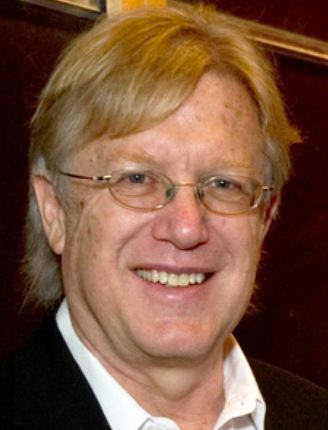 Jim Carlson合作论文数Department of Mathematics, College of Science, The University of Utah2Charlotte Erickson合作论文数2Gueorgui Todorov合作论文数2
 Izzet Coskun合作论文数Department of Mathematics, Statistics & Computer Science, College of Liberal Arts and Sciences, University of Illinois at Chicago2Jeremy Pecharich合作论文数2
 Robert Lazarsfeld合作论文数Department of Mathematics, Stony Brook University2Melanie Becker合作论文数2Bumsig Kim合作论文数Department of Mathematics, Pohang University of Science and Technology2Michael Purcell合作论文数2
 Benjamin Mckay合作论文数University College2William Malone合作论文数2Ludmil Katzarkov合作论文数2Thomas Goller合作论文数1Johnson Drew合作论文数1
 Daniel Erman合作论文数Department of Mathematics, College of Letters & Science, University of Wisconsin-Madison1
 Howard Nuer合作论文数Dept Math, Northeastern Univ1Jack Huizenga合作论文数Penn State Univ, University Pk1
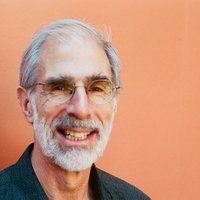 David Eisenbud合作论文数Department of Mathematics, University of California, Berkeley1
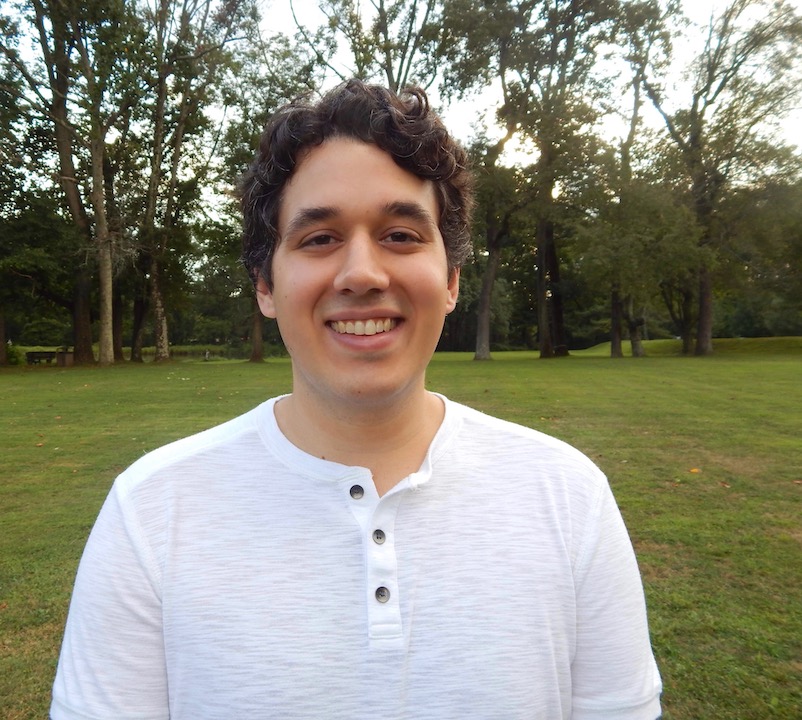 Alexander Perry合作论文数Department of Mathematics, University of Michigan1
 William Fulton合作论文数Department of Mathematics,University of Michigan1
 Julian Chan合作论文数Facebook1Christian Schnell合作论文数1
 Fabrizio Catanese合作论文数Mathematisches Institut, Fakultat fur Mathematik, Physik und Informatik, Universitat Bayreuth1
 Claire Voisin合作论文数Collège de France;Institut de Mathématiques de Jussieu-Paris rive gauche1Lindsay Oldershaw合作论文数1Sebastien Boucksom合作论文数Institut Fourier1Ira J. Papick合作论文数1Bill Morris合作论文数1Giuseppe Pareschi合作论文数Dipartamento di Matematica Tor Vergata, Università di Roma1Teresa Cawley合作论文数1




