We study fundamental forms of algebraic varieties using the sheaves of principal parts of line bundles and establish a vanishing theorem for any order fundamental forms. We also give connection of fundamental forms with the higher order Gauss map and higher order tangent varieties.
This note points out a gap in the proof of one of the technical results in the paper "Asymptotic Invariants of Base Loci", that appeared in Ann. Inst. Fourier (Grenoble) 56 (2006), 1701-1734. We provide a correct proof of this result.
We prove bounds on the saturation degrees of homogeneous ideals (and their powers) defining smooth complex projective varieties. For example, we show that a classical statement due to Macualay for zero-dimensional complete intersection ideals holds for any smooth variety. For curves, we bound the saturation degree of powers in terms of the regularity.
Griffiths and Harris showed in 1978 that if E is a rank n vector bundle on a smooth projective variety of dimension n, and if s is a section of E vanishing simply on a finite set Z, then any section of (K_X + det E) vanishing at all but one of the points of Z must also vanish on the remaining one. This generalizes the classical theorem of Cayley-Bacharach, which appears when E is a direct sum of line bundles on projective space. In a recent paper, Mu-Lin Li proposed an extension allowing for the possibility that the zero-locus of s has positive dimensional components, but his result requires a splitting hypothesis that in practice is rarely satisfied. We show that multiplier ideals lead to a quite clean statement in the case of excess vanishing. Along the way, we give some analogues, that seem to be new, of Cayley-Bacharach for finite determinantal loci.
We compute global sections of tensor products and symmetric products of several secant bundles of a nonsingular projective curve. We closely follow the approach of Gentiana Danila's work on the similar problem for nonsingular projective surfaces.
In this paper, we show that for a nonsingular projective curve and a positive integer $ k $, the $ k $-th secant bundle is the blowup of the $ k $-th secant variety along the $ (k-1) $-th secant variety. This answers a question raised in the recent paper of the authors on secant varieties of curves.
This is an introduction, aimed at a general mathematical audience, to recent work of Aprodu, Farkas, Papadima, Raicu and Weyman. These authors established a long-standing folk conjecture concerning the equations defining the tangent developable surface of a rational normal curve. This in turn led to a new proof of a fundamental theorem of Voisin on the syzygies of a general canonical curve. The present note, which is the write-up of a talk given by the second author at the Current Events seminar at the 2019 JMM, surveys this circle of ideas.
In recent years, the equations defining secant varieties and their syzygies have attracted considerable attention. The purpose of the present paper is to conduct a thorough study on secant varieties of curves by settling several conjectures and revealing interaction between singularities and syzygies. The main results assert that if the degree of the embedding line bundle of a nonsingular curve of genus g is greater than 2g+2k+p for nonnegative integers k and p , then the k -th secant variety of the curve has normal Du Bois singularities, is arithmetically Cohen–Macaulay, and satisfies the property N_k+2, p . In addition, the singularities of the secant varieties are further classified according to the genus of the curve, and the Castelnuovo–Mumford regularities are also obtained as well. As one of the main technical ingredients, we establish a vanishing theorem on the Cartesian products of the curve, which may have independent interests and may find applications elsewhere.
The Konno invariant of a projective variety X is the minimum geometric genus of the fiber of a rational pencil on X. It was computed by Konno for surfaces in P^3, and in general can be viewed as a measure of the complexity of X. We estimate Konno(X) for some natural classes of varieties, including sharp asymptotics for polarized K3 surfaces. In an appendix, we give a quick proof of a classical formula due to Deligne and Hoskin for the colength of an integrally closed ideal on a surface.
In this paper, we survey some recent developments on computing the cohomology of the moduli spaces of sheaves on surfaces and the Brill-Noether problem. We explain several applications to classifying stable Chern characters on Hirzebruch surfaces, classifying globally generated vector bundles on minimal rational surfaces, and constructing and classifying Ulrich bundles on surfaces. This paper grew out of the talks of the authors at the ICM Satellite Conference on Moduli Spaces in Algebraic Geometry and Applications.
In this paper, we establish an interpolation result involving higher-order conormal bundles of curves embedded by linear systems of large degree. As a consequence this gives evidence for the semistability conjecture due to Ein-Lazarsfeld.
This paper is a survey of recent work on the asymptotic behavior of the syzygies of a smooth complex projective variety as the positivity of the embedding line bundle grows. After a quick overview of results from the 1980s and 1990s concerning the linearity of the first few terms of a resolution, we discuss a non-vanishing theorem to the effect that from an asymptotic viewpoint, essentially all of the syzygy modules that could be non-zero are in fact non-zero. We explain the quick new proof of this result in the case of Veronese varieties due to Erman and authors, and we explore some results and conjectures about the asymptotics of Betti numbers. Finally we discuss the case of syzygies of weight one, and the gonality conjecture on the syzygies of curves of large degree. The exposition also discusses numerous open questions and conjectures.
If a morphism of germs of schemes induces isomorphisms of all local jet schemes, does it follow that the morphism is an isomorphism? This problem is called the local isomorphism problem. In this paper, we use jet schemes to introduce various closure operations among ideals and relate them to the local isomorphism problem. This approach leads to a partial solution of the local isomorphism problem, which is shown to have a negative answer in general and a positive one in several situations of geometric interest.
We study various measures of irrationality for hypersurfaces of large degree in projective space and other varieties. These include the least degree of a rational covering of projective space, and the minimal gonality of a covering family of curves. The theme is that positivity properties of canonical bundles lead to lower bounds on these invariants. In particular, we prove that if $X\subseteq \mathbf{P}^{n+1}$ is a very general smooth hypersurface of dimension $n$ and degree $d\geqslant 2n+1$ , then any dominant rational mapping $f:X{\dashrightarrow}\mathbf{P}^{n}$ must have degree at least $d-1$ . We also propose a number of open problems, and we show how our methods lead to simple new proofs of results of Ran and Beheshti–Eisenbud concerning varieties of multi-secant lines.
We give a quick new approach to proving the main cases of the nonvanishing theorems of the first and third authors concerning the asymptotic behavior of the syzygies of a projective variety as the positivity of the embedding line bundle grows.In particular, we recover and extend the statements for Veronese syzygies, and we establish an effective result for projectively Cohen-Macaulay varieties.
We define a version of multiplier ideals, the Mather multiplier ideals, on a variety with arbitrary singularities, using the Mather discrepancy and the Jacobian ideal. In this context we prove a relative vanishing theorem, thus obtaining restriction theorems and a subadditivity and summation theorems. The Mather multiplier ideals also satisfy a Skoda type result. As an application, we obtain a Briancon-Skoda type formula for the integral closures of ideals on a variety with arbitrary singularities.
Inspired by the methods of Voisin, the first two authors recently proved that one could read off the gonality of a curve C from the syzygies of its ideal in any one embedding of sufficiently large degree. This was deduced from from a vanishing theorem for the asymptotic syzygies associated to an arbitrary line bundle B on C. The present paper extends this vanishing theorem to a smooth projective variety X of arbitrary dimension. Specifically, given a line bundle B on X, we prove that if B is p-jet very ample (i.e. the sections of B separate jets of total weight p+1) then the weight one Koszul cohomology group K_{p,1}(X, B; L) vanishes for all sufficiently positive L. In the other direction, we show that if there is a reduced cycle of length p+1 that fails to impose independent conditions on sections of B, then the Koszul group in question is non-zero for very positive L.
We show that a small variant of the methods used by Voisin in her study of canonical curves leads to a surprisingly quick proof of the gonality conjecture of Green and the second author, asserting that one can read off the gonality of a curve C from its resolution in the embedding defined by any one line bundle of sufficiently large degree. More generally, we establish a necessary and sufficient condition for the asymptotic vanishing of the weight one syzygies of the module associated to an arbitrary line bundle on C.
The purpose of this paper is twofold. First, we present a conjecture to the effect that the ranks of the syzygy modules of a smooth projective variety become normally distributed as the positivity of the embedding line bundle grows. Then, in an attempt to render the conjecture plausible, we prove a result suggesting that this is in any event the typical behavior from a probabilistic point of view. Specifically, we consider a "random" Betti table with a fixed number of rows, sampled according to a uniform choice of Boij-Soderberg coefficients. We compute the asymptotics of the entries as the length of the table goes to infinity, and show that they become normally distributed with high probability.
As is well known, the "usual discrepancy" is defined for a normal Q-Gorenstein variety. By using this discrepancy we can define a canonical singularity and a log canonical singularity. In the same way, by using a new notion, Mather-Jacobian discrepancy introduced in recent papers we can define a "canonical singularity" and a "log canonical singularity" for not necessarily normal or Q-Gorenstein varieties. In this paper, we show basic properties of these singularities, behavior of these singularities under deformations and determine all these singularities of dimension up to 2.
 Robert Lazarsfeld合作论文数Department of Mathematics, Stony Brook University40
 Mircea Mustata合作论文数Department of Mathematics, College of Literature, Science, and the Arts, University of Michigan-Ann Arbor16
 Tommaso De Fernex合作论文数School of Mathematics Institute for Advanced Study 1 Einstein Drive Princeton NJ 08540 USA 1 Einstein Drive Princeton NJ 08540 USA8
 Michael Nakamaye合作论文数7Mihnea Popa合作论文数Department of Mathematics, University of Chicago5Wenbo Niu (牛文博)合作论文数School of Chemical Engineering, Hebei University of Technology5
 Shihoko Ishii合作论文数4
 Karen E. Smith合作论文数Department of Mathematics, University of Michigan, Ann Arbor3
 Jinhyung Park合作论文数NIS Centre of Excellence, Università di Torino3Aaron Bertram合作论文数University of Utah3
 Daniel Erman合作论文数Department of Mathematics, College of Letters & Science, University of Wisconsin-Madison2
 Ron Donagi合作论文数Department of Mathematics, School of Arts & Sciences, University of Pennsylvania2Steven Dale Cutkosky合作论文数Mathematics, University of Missouri2
 David Yang合作论文数Department of Mathematics, Massachusetts Institute of Technology1
 Howard Nuer合作论文数Dept Math, Northeastern Univ1
 Arend Bayer合作论文数School of Mathematics, The University of Edinburgh1
 David Eisenbud合作论文数Department of Mathematics, University of California, Berkeley1Nicholas Shepherd-Barron合作论文数1
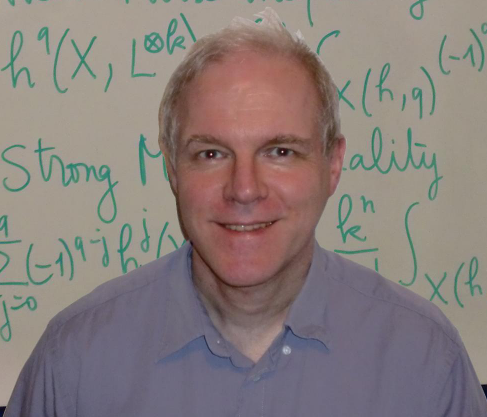 Jean-Pierre Demailly合作论文数Institut Fourier, Laboratoire de Mathematiques, UMR 5582 du CNRS1
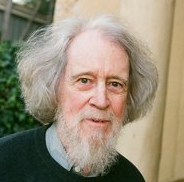 Robin Hartshorne合作论文数Department of Mathematics, University of California, Berkeley1
 Sheldon Katz合作论文数Department of Mathematics, College of Liberal Arts and Sciences, University of Illinois at Urbana-Champaign1
 Claire Voisin合作论文数Collège de France;Institut de Mathématiques de Jussieu-Paris rive gauche1Ignacio Sols合作论文数1Vladimir Masek合作论文数1
 Yusuf Mustopa合作论文数1
 Brooke Ullery合作论文数Department of Mathematics, Harvard University1
 Huy Tai Ha合作论文数tulane university1Bo Ilic合作论文数1Olivier Debarre合作论文数DMA1Dror Varolin合作论文数1
 Emanuele Macrì合作论文数Laboratoire de mathématiques d'Orsay, Université Paris-Saclay1
 Pietro De Poi合作论文数Dipartimento di Matematica e Informatica, Università degli Studî di Trieste1
 Takehiko Yasuda合作论文数Department of Mathematical Sciences, University of Tokyo Komaba1Francesco Bastianelli合作论文数1




