We treat the global-scale modelling and measurement activities of the SUNDIAL campaign of September 1986 and investigate averaged, quite-time, and dynamic ionospheric behavior. Treatment is given to developments in empirical and first-principle models; and we investigate various aspects of magnetospheric-thermospheric-ionospheric coupling mechanisms. Overall results point to good empirical model specification of averaged F-region behavior, with suggestions for improvements in specification of layer peak densities near and across the sunset terminator. We elucidate the difficulties in achieving a unique determination of electric fields, thermospheric winds, and plasmaspheric fluxes in first-principle model attempts to reproduce global observations of quiet-time F-region heights and densities. In this connection, and in our treatment of magnetospherically-imposed electric field influences on low-latitude F-region dynamics, we show a greater need for comprehensive measurements of auroral oval dynamics, thermospheric winds, electric fields, ion composition, and ionospheric layer heights and densities; and we discuss the growing importance of the lower regions of the ionosphere and thermosphere and the associated controls of dynamo-driven electric fields.
It was previously reported that tryptophol, 5-hydroxytryptophol and 5-methoxytryptophol induced sleep in mice, rats and cats. Evidence was presented in this report that both ethanol and pyrazole markedly potentiate tryptophol-induced sleep in mice. It was suggested that endogenous tryptophols and/or their corresponding aldehydes may play a role in physiological and drug-induced sleep.
Tryptophol, 5-hydroxytryptophol and 5-methoxytryptophol were found to induce sleep in mice. The onset of action was most rapid for tryptophol and 5-methoxytryptophol; 5-hydroxytryptophol had the slowest onset, probably due to difficulty of transport across the blood-brain barrier. Sleep times were shortest for tryptophol and 5-methoxytryptophol and longest for 5-hydroxytryptophol. It was suggested that the tryptophols or the corresponding aldehydes may play a role in physiological sleep mechanisms.
Ethanol was administered i.p, to rats 1 hr prior to sacrifice and 5-HTP-14C was administered i.p. 30 min prior to sacrifice. Multiple doses of ethanol increased 5-HTP-14C found in the brain, possibly due to decreased efflux. Multiple doses of ethanol also increased the ratio of 5-hydroxyindoleacetaldehyde and/or 5-hydroxytryptophol to 5-HIAA. The possibility was considered that the increased neutral fraction and decreased acid fraction was due to inhibition of aldehyde dehydrogenase and activation of alcohol dehydrogenase by virtue of an ethanol-induced increase in brain NADPH/NADP ratio. High doses of ethanol, 6 lg/kg, slightly inhibited decar☐ylase and monoamine oxidase. The possibility was considered that inhibition of decar☐ylase and monoamine oxidase was due to acetaldehyde derived from ethanol
A study was made of serotonin-14C metabolism in rat liver homogenates with and without exogenous NAD and NADH. Serotonin was converted to 5-hydroxy-indoleacetaldehyde by MAO; neither ethanol nor disulfiram inhibited MAO. The aldehyde was converted to 5-hydroxytryptophol by the NADH-linked alcohol dehydrogenase; neither ethanol nor disulfiram inhibited alcohol dehydrogenase. The 5-hydroxyindoleacetaldehyde was converted to 5-HIAA by the NAD-linked aldehyde dehydrogenase. Ethanol decreased 5-hydroxyindoleacetaldehyde with a concomitant increase in 5-hydroxytryptophol and decrease in 5-HIAA. Disulfiram increased 5-hydroxyindoleacetaldehyde with a concomitant increase in 5-hydroxytryptophol and decrease in 5-HIAA.
1. The metabolism of 5-hydroxyindoleacetaldehyde derived from 5-hydroxytryptamine incubated with tissue homogenates was studied as an indicator of aldehyde dehydrogenase and alcohol dehydrogenase activities.2. In liver and brain from rats, there were indications of the presence of one or more aldehyde dehydrogenases which were stimulated by NAD(+) to a greater extent than by NADP(+).3. In liver from rats, there were indications of the presence of one or more alcohol dehydrogenases, which were stimulated by NADH to a greater extent than by NADPH.4. In brain from rats, there were indications of the presence of one or more alcohol dehydrogenases which were stimulated by NADPH to a greater extent than by NADH.
The conversion of 5-HT to 5-methoxytryptamine in pineal and subsequent metabolic transformations to 5-methoxyindoleacetic acid and 5-methoxy tryptophol is in vivo metabolic pathway. The analogous pathway from 5-HT to 5-HIAA in pineal homogenates is demonstrated in this chapter. 5-Methoxytryptophol is isolated from pineal. The analogous pathway from 5-HT to 5-hydroxytryptophol by way of alcohol dehydrogenase predominates if NADPH2 is added to the pineal homogenates. It has now been established that 5-hydroxyindoleacetaldehyde may be metabolized not only to 5-hydroxyindoleacetic acid and 5-hydroxytryptophol but also to 5-hydroxyindolecarboxaldehyde and the corresponding 5-hydroxyindolecarboxylic acid. Further work is essential to validate this pathway both in vitro and in vivo.
A method was developed for the analyses of 5-hydroxytrptophan (5-HTP), serotonin, 5-hydroxyindoleacetic acid, and neutrals in rat brain after intraperitoneal injection of 5-HTP- 14 C. Phenelzine altered the metabolism of 5-HTP- 14 C by inhibition of monoamine oxidase and decarboxylase. The occurrence of convulsions as the dose of phenelyine was increased did not correlate with decarboxylase inhibition.
The metabolism of serotonin-C14 in rat liver homogenate was shown to produce 5-hydroxyindoleacetaldehyde, 5-hydroxytryptophol, and 5-HIAA. The addition of nicotinamide and NAD, coenzyme of aldehyde dehydrogenase, to the incubation mixture increased the rate of formation of 5-HIAA with a concomitant decrease in the remaining 5-hydroxyindoleacetaldehyde. The addition of NADH, coenzyme for alcohol dehydrogenase, increased the rate of formation of 5-hydroxytryptophol with a concomitant decrease in the remaining 5-hydroxyindoleacetaldehyde and 5-HIAA.
A method was developed for the analysis of 5-HTP-C14 and its metabolites in rat liver homogenate. 5-HIAA and neutrals were extracted from the acidified salt-saturated incubation mixture. 5-HIAA was separated from the neutrals by extraction into pH 10 salt-saturated borate buffer. After making the residual incubation mixture alkaline, serotonin was separated by acetylation and extraction into isopropyl acetate. The residual aqueous solution was acidified and the acetylated 5-HTP extracted into isopropyl acetate. The method was used to study the alteration of dl-5-HTP-C14 metabolism in rat liver homogenate by NAD and NADH. In the unfortified incubation mixture, 5-hydroxyindoleacetaldehyde was the major product; in the NAD incubation mixture, 5-HIAA was the major product; in the NADH incubation mixture, 5-hydroxytryptophol was the major metabolite.
 Oliver E Williamson合作论文数3Sidel C M合作论文数2r hanbaba合作论文数1K WONG合作论文数1EP SZUSZCZEWICZ合作论文数1K K WONG合作论文数1R. Vichnevetsky合作论文数1
 Benjaram Mahipal Reddy合作论文数Catalysis and Fine Chemicals Department, CSIR-Indian Institute of Chemical Technology1Robert Schunk合作论文数Center for Atmospheric & Space Sciences, College of Science, Utah State University;Department of Physics, College of Science, Utah State University1T. Bateman合作论文数1
 Takashi Kikuchi合作论文数1Joseph E Flaherty合作论文数1
 Robert Wolf合作论文数Stellarator Heating and Optimisation Division, Max Planck Institute of Plasma Physics;Greifswald Branch, Max Planck Institute of Plasma Physics1
 Phil Wilkinson合作论文数1
 Arthur D. Richmond (Art Richmond)合作论文数National Center for Atmospheric Research1
 Zdzislaw Jackiewicz合作论文数Department of Mathematics, School of Mathematical and Statistical Sciences, Arizona State University1Edmond C Roelof合作论文数1Paul Blanchard合作论文数1G. O. Walker合作论文数1Jorge Sobral合作论文数1Jo a Joselyn合作论文数1
 Mangalathayil Ali Abdu合作论文数Instituto Nacional de Pesquisas Espciais1
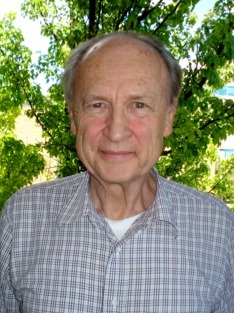 Bela G. Fejer (Bela Fejer)合作论文数Center for Atmospheric & Space Sciences, College of Science, Utah State University;Physics Department, College of Science, Utah State University1Barbara A. Emery合作论文数1M. Lester合作论文数Department of Physics and Astronomy;University of Leicester1
 Robert Sica合作论文数Department of Physics and Astronomy, Faculty of Science, Western University1R. Leitinger合作论文数1




