Artificial intelligence, whether embodied as robots or Internet of Things, or disembodied as intelligent agents or decision-support systems, can enrich the human experience. It will also fail and cause harms, including physical injury and financial loss as well as more subtle harms such as instantiating human bias or undermining individual dignity. These failures could have a disproportionate impact because strange, new, and unpredictable dangers may lead to public discomfort and rejection of artificial intelligence. Two possible approaches to mitigating these risks are the hard power of regulating artificial intelligence, to ensure it is safe, and the soft power of risk communication, which engages the public and builds trust. These approaches are complementary and both should be implemented as artificial intelligence becomes increasingly prevalent in daily life.
Since the attacks of 9/11 the search for effective counter- terror strategies has become an urgent priority for policy makers. Dr. Audrey Kurth Cronin, a Professor at the National War College, has argued that the United States has made numerous missteps in developing counter-terror strategies because of its limited experience with the phenomenon.i Quantitative tests on databases of terrorist activity can help us examine the effects of various strategies in order to determine their degree of impact. One strategy that is considered to be effective by conventional wisdom is “decapitation” – the tactic of removing the leadership of terrorist organizations. Besides its presumed efficacy, the decapitation strategy is also pursued as a matter of justice and in order to reassure the society targeted by terrorists that its government is taking action on its behalf. This paper tests the effectiveness of the decapitation strategy in terms of the reduction of terrorist activity.
The purpose of this paper is to consider the institutional needs of the U.S. government in responding to issues raised by autonomous systems. This paper is an evolution of a previous paper on robotics governance which presented a range of institutional options for addressing robotics issues. However, that paper was written from an internalist perspective of the bureaucracy that incorporated organizational analysis and bureaucratic politics. This paper attempts to supplement the discussion from an externalist perspective about how political decision-makers actually structure bureaucracies. The first part of this paper summarizes the first paper, describing U.S. government missions vis-à-vis robotics and then considering different institutional options to perform these missions. This is the internalist take. The second part of the paper describes the externalist perspective – that is the application of the New Institutionalism to public sector bureaucracies. The final section discusses a case study of how a past re-organization was used by political leaders to pursue their preferred policy goals and the implications of this approach on robotics policy.
Advance Praise for Indian Mujahideen: Computational Analysis and Public Policy This book presents a highly innovative computational approach to analyzing the strategic behavior of terrorist groups and formulating counter-terrorism policies. It would be very useful for international security analysts and policymakers. Uzi Arad, National Security Advisor to the Prime Minister of Israel and Head, Israel National Security Council (2009-2011) An important book on a complex security problem. Issues have been analysed in depth based on quality research. Insightful and well-balanced in describing the way forward. Naresh Chandra, Indian Ambassador to the USA (1996-2001) and Cabinet Secretary (1990-1992). An objective and clinical account of the origins, aims, extra-territorial links and modus-operandi, of a growingly dangerous terrorist organization that challenges the federal, democratic, secular and pluralistic ethos of Indias polity. The authors have meticulously researched and analysed the multi-faceted challenges that the Indian Mujahideen poses and realistically dwelt on the ways in which these challenges could be faced and overcome. G. Parthasarathy, High Commissioner of India to Australia (1995-1998) and Pakistan (1998-2000). This book provides the first in-depth look at how advanced mathematics and modern computing technology can influence insights on analysis and policies directed at the Indian Mujahideen (IM) terrorist group. The book also summarizes how the IM group is committed to the destabilization of India by leveraging links with other terror groups such as Lashkar-e-Taiba, and through support from the Pakistani Government and Pakistans intelligence service. Foreword by The Hon. Louis J. Freeh.
To destabilize terrorist organizations, the STONE algorithms identify a set of operatives whose removal would maximally reduce lethality.
This chapter describes the methodology and the algorithm used to automatically generate policy options. It provides a mathematical definition of a policy against IM. The chapter presents an algorithm to compute all policies (in accordance with the mathematical definition of policy) that have high probability of significantly reducing all types of attacks carried out by IM (except for attacks on holidays). We were able to find one such policy. This policy will be discussed in detail in Chap. 9 .
In this chapter, we discuss policy options towards IM. Our Policy Computation Algorithm (PCA) generated exactly one policy that has the potential to reduce terrorist attacks carried out by IM. This one policy, however, can be implemented in many different ways. This chapter presents the policy that the PCA generated, along with a set of options on how this one policy may be implemented as well as the pros and cons of these options and recommendations on the way forward.
Indian Mujahideen has carried out numerous attacks targeting public sites such as markets, sports stadiums, and hospitals. This chapter focuses on the circumstances under which IM has carried out these attacks and identifies key aspects of IM’s environment correlated with such attacks.
This paper focuses primarily on the Person Successor Problem (PSP): when a terrorist is removed from a terrorist network, who is most likely to take his place? We leverage the solution to PSP to predict a new terrorist network after removal of a set of terrorists and to answer the question: which set of k (k > 0) terrorists should be removed in order to minimize the lethality of the terrorist network? We propose a theoretical model to study these questions taking into account the fact that terrorists may have different individual capabilities. We develop an algorithm for PSP in which analysts can specify the conditions an individual needs to satisfy in order to replace another person. We test the correctness of our algorithm on a real-world partial network dataset for two terrorist groups: Al-Qaeda and Lashkar-e-Taiba where we have ground truth about who replaced who, as well as a synthetic dataset where experts estimate who replaced who. Building on the solution to PSP, we develop an algorithm to identify which set of k people to remove from a terrorist network to minimize the organization's efficiency (formalized as an objective function in some different ways).
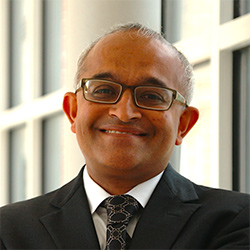 V.S. Subrahmanian合作论文数Roberta Buffett Institute of Global Affairs, Northwestern University;Department of Computer Science, McCormick School of Engineering, Northwestern University22
 Amy Sliva合作论文数University of Maryland12
 John P. Dickerson合作论文数Mozilla.ai;Arthur;Public Spend Forum11
 Jana Shakarian合作论文数11
 Jennifer Golbeck合作论文数College of Information Studies, University of Maryland;Department of Computer Science, University of Maryland;Merrill School of Journalism, University of Maryland8
 Animesh Roul合作论文数7r k raghavan合作论文数6
 James A. Hendler合作论文数Department of Computer Science, Rensselaer Polytechnic Institute3
 Francesca Spezzano合作论文数Boise State University2Mary Michael合作论文数1
 Yarden Katz合作论文数Harvard Medical School1Preetam Maloor合作论文数Preetam MaloorNo picture of Preetam Maloor available - click to provide one
No description available of Preetam Maloor1Bob Pokorny合作论文数1
Yarden Katz合作论文数Harvard Medical School1Preetam Maloor合作论文数Preetam MaloorNo picture of Preetam Maloor available - click to provide one
No description available of Preetam Maloor1Bob Pokorny合作论文数1 Jonathan Wilikenfeld合作论文数Department of Government and Politics, College of Behavioral & Social Sciences, University of Maryland;Institute for Advanced Computer Studies, University of Maryland1
 Praveen Paruchuri合作论文数Carnegie Mellon University1Amy Pate合作论文数1




