Provides society information that may include news, reviews or technical notes that should be of interest to practitioners and researchers.
Provides society information that may include news, reviews or technical notes that should be of interest to practitioners and researchers.
Provides society information that may include news, reviews or technical notes that should be of interest to practitioners and researchers.
Filter bank multicarrier (FBMC) is a modulation scheme which employs spectrally efficient prototype filters with fast side lobe roll-off. However, this typically comes at the cost of an increased intrinsic interference among neighbouring sub-carriers and requires complex signal processing for demodulation at the receiver. In this work, we present a generalized approach to design a prototype filter based on frequency sampling technique and minimization of intrinsic interference that arises because of the presence of inter-symbol interference (ISI) and inter-carrier interference (ICI) in a FBMC system. The approach proposed in this work can be used to design prototype filters for any given spectral efficiency. The frequency magnitude spectrum of the proposed filter is compared with that of existing filters in literature. We also examine how altering the number of sub-carriers affects the frequency magnitude response of the prototype filter.
Introduction – Project Connect (PC) is an immersive professional development program designed to increase the number of students from underrepresented groups in engineering who pursue careers in the microwave engineering and related fields. Most of the professionals in this area have been educated in the electrical engineering (EE) field with a focus on applied electromagnetics, antenna theory and communication systems. The electromagnetics class in a typical electrical engineering undergraduate programs involves vector calculus and abstract concepts without, in many cases, the right facilities or equipment to aid experiential learning. This leaves most students perplexed and disinterested in the field, while they do not fully realize the wealth of opportunities that lie beyond this course. This problem is even more pronounced for students from underrepresented groups as they may have less exposure to the professional and academic opportunities in microwave engineering. Project Connect was birthed out of the need to keep these students engaged in the field by exposing them to a broader view of the field and the impact that they can have on technology. Each year, the PC program is housed within the Institute of Electrical and Electronics Engineers (IEEE) International Microwave Symposium (IMS), a flagship conference based in North America with a typical attendance of over 9,000 and an industry exhibition with more than 700 companies. PC hosts approximately two dozen students for four days of community building and professional development, most of whom are juniors or seniors in undergraduate programs, along with a smaller cohort of first year students in graduate programs. The groups, consistently mixed in gender, get an opportunity for direct interaction of fellow PC participants, practitioners and academics, which is central to the success of the program. PC is sponsored jointly by the National Science Foundation and the IMS Organizing Committee, and has been in operation since 2014. Program – The agenda for the four-day event at the IMS combines professional development with fun activities intentionally programmed to incorporate the local culture of the IMS host city and the thematic focus of the conference. The goal of experiencing local culture is combined with a community building activity for the students on the first full day of the conference; typically, this includes a team-based scavenger hunt in an area of historical significance in the city. The bonding opportunity is effective at building comradery and dissipating anxiety in students, many of whom have limited or even no experience in this kind of professional setting. Many of the students participating in this program have not traveled beyond their home state and are anxious about the benefits of PC. By interacting with their peers and learning about a new city, they are able to open up to the new professional directions that they will be challenged to consider. The second and third days are a combination of participating in general conference activities and focused group sessions on professional development, involving the program coordinators, practicing engineers, and faculty. To facilitate the former, the students are given assignments to engage with specific types of companies, attend technical presentations, introduce themselves to conference organizers, and the like. The students are required to "connect" with graduate students who are currently engaged in the profession and learn about their experiences beyond an undergraduate degree. The technical aspect of the conference is reinforced by connecting at least one focused PC session to the conference theme, e.g. biomedical applications of microwave engineering. Students may then attend a panel session or meet key influencers associated with the theme. A PC reception is also held where VIPs of the conference and professional society meet with the students for one-on-one interaction. The professional network of organizers from industry, government, and academia are also invited to talk with students about career opportunities. The importance of network building is frequently reinforced, and this includes the development of effective 'elevator speeches' and strong encouragement for the students to participate in social events that accompany the conference. On the fourth and final day, the students present "IMS Through Our Eyes" videos, prepared generally at the end of Day 3 by working in groups of 2 or 3, to capture their experience. The team videos are also utilized by the organizing team to share with constituent groups to seed commitment for future meetings. The effectiveness of Project Connect can be attributed to it being embedded within the IMS conference setting. There are multiple generations of engineers in attendance, including graduate students, early-career professionals, managers and lab scientists, and high-level corporate officers. People at all of these stages welcome the opportunity to participate as panelists and engage directly with the students, providing a window into their career paths and the professional lives of working engineers. The large industry exhibition includes demonstrations of state-of-the-art microwave technology, and the showroom floor bristles with activity. With this backdrop and a carefully designed curriculum that utilizes the setting for engagement, the students have extra motivation to absorb what is shared with them about presenting themselves (the elevator speech) and ample opportunity to practice. Furthermore, the interaction with the panelists has the effect of shortening the perceived distance between a young student and a successful engineer, thereby improving the students' ability to interact comfortably with others at the conference. Moreover, the IMS is simply a vibrant and entertaining event with a constant stream of technical and social activities. Lessons Learned – The first five years of Project Connect were focused on defining, refining, and tuning the program curriculum content by the organizers to maximize linkages between the conference and the program and learning experiences. In year two, university housing incorporated as a cost-savings measure created an unexpected benefit. We observed better student interactions within the group of strangers due to the familiarity of the student housing platform and its convenient gathering spaces that fostered more social interactions than a hotel. In year four, a community building activity was added to learn about the local community. Since then, the community building activity has become a part of the curriculum where local environment is used to teach about culture and to have fun while learning about team work. The application process has been fine-tuned to include a 3-minute video, an electronic form with basic information, reference letter and transcript. This drives efficiency in both the application submission and review process. Because the program is specialty specific, we look for student interest, review transcripts to make sure the student has taken courses that allow them to understand at a basic level the content of the conference, and feedback from the reference letter that the student will engage and participate actively since the curriculum requires active teamwork on an extremely short time line. Recruiting Challenges – One on-going challenge has been recruitment. The program has received 30-50 preliminary applications each year, but often many of them are not completed. So recruitment has proven to be a two-part problem of first publicizing and attracting initial interest, and then having the students follow-through and complete the application process. To publicize the program, electronic flyers are sent to faculty in organizer networks, electrical engineering department heads, and friends of Project Connect who have expressed interest. These include various types of campuses with electrical engineering programs at predominantly white universities (PWIs), historically black college and universities (HBCUs), and minority serving institutions (MSIs). We have also informed local campus student groups (e.g. NSBE and SHPE) at our respective campuses, tried using the national level access to student groups occasionally, used social media platforms such as Facebook and Linked-in, as well as Project Connect Alumni. We have contacted minority program coordinators at PWIs, but microwave engineering, as a sub-discipline of electrical engineering, appears to be too specific for them to know if a student is interested. Contact with electrical engineering department advisors has been somewhat helpful for informing students, but in order to complete the application process students usually need guidance and support from someone who can explain the technical conference or the Project Connect program. Even the most productive recruiting channels, through faculty in our network and Project Connect alumni, have challenges. For undergraduate students, effective recruitment by faculty generally happens with advocates in our professional network who are actively teaching courses in our sub-discipline area thus providing access to potential PC participants. However, faculty roles often change over time, e.g. teaching a different set of courses or becoming more administrative, and this has caused access points to be broken and sometimes lost. In a similar way, the effectiveness of recruiting by PC alumni is limited since familiarity with other students in a program usually extends one year (e.g. from senior to junior) at best. On campuses where we don't have faculty advocates, those interested students may not know about the program or have the confidence to apply even if they do. Finally, the cost-savings trend that is leading to more students attending community college is making it more difficult for faculty to meet and re-meet students in their junior year. Therefore, students who may be transferring into the university may have less access to participation. For the graduate students who participate, they have self-identified interest in the sub-discipline but may not have clarity or committed fully to the specialty area. Some may also be unsure about whether they will pursue an MS only, or continue into a PhD program. Our aim is to provide them with more clarity to decide on an interest area and access to a network of people to keep them engaged and connected once they enter the workplace. We will be exploring ways to develop effective recruitment strategies in the future. We will leverage what works and explore how to make better connections to students on different university campuses. Given the new privacy laws and changing access points to under-represented students through various diversity officer/staff networks, this will be important information for professional societies to become aware of as employers strive to create a more diverse workplace with the help of professional societies. Program Evaluation – An external evaluator has been engaged with the past two PC events in order to determine how effectively the program is meeting its goals. Findings from the evaluation will be included in the full paper submission.
Lists future events that should be of interest to practitioners and researchers.
Presents information on the IMS 2022 Conference, events, and meetings.
The massive growth in mobile users and wireless technologies has resulted in increased data traffic and created demand for additional radio spectrum. This growing demand for radio spectrum has resulted in spectrum congestion and mandated the need for coexistence between radar and interfering communication emitters. To address the aforementioned issues, it is critical to review existing policies and evaluate new technologies that can utilize spectrum in an efficient and intelligent manner. Cognitive radio and cognitive radar are two promising technologies that exploit spectrum using dynamic spectrum access techniques. Additionally, introducing the bio-inspired concept ‘metacognition’ in a cognitive process has shown to increase the effectiveness and robustness of the cognitive radio and cognitive radar system. Metacognition is a high-order thinking agent that monitors and regulates the cognition process through a feedback and control process called the perception–action cycle. Extensive research has been done in the field of spectrum sensing in cognitive radio and spectral coexistence between radar and communication systems. This paper provides a detailed classification of spectrum sensing schemes and explains how dynamic spectrum access strategies share the spectrum between radar and communication systems. In addition to this, the fundamentals of cognitive radio, its architecture, spectrum management framework, and metacognition concept in radar are discussed. Furthermore, this paper presents various research issues, challenges, and future research directions associated with spectrum sensing in cognitive radar and dynamic spectrum access strategies in cognitive radar.
As engineers and scientists, it is our responsibility to learn lessons from the recent pandemic outbreak and see how public health policies can be effectively managed to reduce the severe loss of lives and minimize the impact on people's livelihood. Non-pharmaceutical interventions, such as in-place sheltering and social distancing, are typically introduced to slow the spread (flatten the curve) and reverse the growth of the virus. However, such approaches have the unintended consequences of causing economic activities to plummet and bringing local businesses to a standstill, thereby putting millions of jobs at risk. City administrators have generally resorted to an open loop, belief-based decision-making process, thereby struggling to manage (identify and enforce) timely and optimal policies. To overcome this challenge, this position paper explores a systematically designed, feedback-based strategy, to modulate parameters that control suppression and mitigation. Our work leverages advances in Bayesian Reinforcement Learning algorithms and known techniques in control theory, to stabilize and diminish the rate of propagation in pandemic situations. This paper discusses how offline exploitation using pre-trigger data, online exploration using observations from the environment, and a careful orchestration between the two using granular control of multiple on-off control signals can be used to modulate policy enforcement based on established metrics, such as reproduction number.
Describes the above-named upcoming conference event. May include topics to be covered or calls for papers.
Connected vehicles are set to define the future of transportation; however, this upcoming technology continues to be plagued with serious security risks. If these risks are not addressed in a timely fashion, then they could threaten the adoption and success of this promising technology. This article deals with a specific class of attacks in connected vehicles, namely tampering attacks caused due to compromise of on-board sensors. Current centralized solutions that employ trusted infrastructure to protect against adversarial manipulation of information cannot validate the correctness of the shared data and do not scale well. To overcome these issues, decentralized protection mechanisms by means of blockchain technology have emerged as a promising research direction. However, current permission-less, linear blockchain-based solutions have low transaction performance and high computational cost, thereby making it difficult to adopt them for security in connected vehicles. In this article, we present TangleCV, a directed acyclic graph–based distributed ledger technique for connected vehicles to address data tampering threats in connected vehicular networks. We describe new validation steps, tip selection strategies, and cumulative weight definition for TangleCV that not only meets the timing constraints of the connected vehicular networks but also secures the network against threats due to tampering attacks. We describe how the reputation of the network is established in TangleCV using trust factors calculated on the basis of ability, integrity, and benevolence of the nodes in the network. We present numerical results that demonstrate that the average value of the time to first approval decreases by more than 70% as the network evolves from a low load to a high load in the case of the nearest neighbor strategy. We observe that more than 60% of the nodes are approved in a low-load network and this number increases to 80% in a high-load network for the nearest neighbor strategy. The standard deviation of error measurements for nodes experiencing tampering attack is around 60% higher as compared to nodes that do not experience such an attack.
As the complexity of hardware (sensors, components, antennas) and software (algorithms) increases, it is practical and efficient to manage and process test configuration and data analysis as close to the testbed as possible (inline) instead of offline compute platforms. We present mmMoReEdge, a mmWave modular and reconfigurable testbed inspired by a smart edge networking and communication framework, typically found in IoT devices. In mmMoReEdge, complex signal processing is performed on the edge (local servers in close proximity) of a group of testbed nodes. mmMoReEdge offers modularity via configuration of phased-array antennas, RF front ends, ADC, and DAC, while the edge processing provides reconfigurability via scalable inline processing. Using a mathematical model for processing time (the proposed figure of merit), we present results which show that mmMoReEdge is 50% to 70% faster as compared to an offline general-purpose processor based architecture and is 30% to 40% faster as compared to a node-based architecture with one FPGA.
Software Defined Networking (SDN) is an emerging architecture providing services on a priority basis for real-time communication, by pulling out the intelligence from the hardware and developing a better management system for effective networking. Denial of service (DoS) attacks pose a significant threat to SDN, as it can disable the genuine hosts and routers by exhausting their resources. It is thus vital to provide efficient traffic management, both at the data layer and the control layer, thereby becoming more responsive to dynamic network threats such as DoS. Existing DoS prevention and mitigation models for SDN are computationally expensive and are slow to react. This paper introduces a novel biologically inspired architecture for SDN to detect DoS flooding attacks. The proposed biologically inspired architecture utilizes the concepts of the human immune system to provide a robust solution against DoS attacks in SDNs. The two layer immune inspired framework, viz innate layer and adaptive layer, is initiated at the data layer and the control layer of SDN, respectively. The proposed model is reactive and lightweight for DoS mitigation in SDNs.
Connected vehicles are designed to make informed safety-related decisions based on data/information they receive from various on-board sensors and other vehicles in the vicinity. However, attacks directed towards on-board sensors and network attacks on the wireless communication channels can adversely impact the correctness and integrity of this information and present a grave security and safety challenge to connected vehicles. Current centralized security solutions are not a good fit as they do not scale well and are unable to validate the correctness of the shared data. Decentralizing security provisioning in connected vehicles by means of the upcoming blockchain technology is an interesting alternative for overcoming these limitations. However, current permission-less linear hash-chain based blockchain solutions have low transaction throughput, high computational cost and are resource intensive, thereby making their adoption for designing a security solution for resource constrained connected cars difficult. In this paper, we present TangleCV, a decentralized technique for secure message sharing and recording for connected vehicles using an approach like Tangle, a directed acyclic graph based blockchain architecture. We introduce an initial design of TangleCV and describe how it provides improved efficiency and scalability against information correctness and information integrity attacks in connected vehicle networks.
The fifth generation (5G) cellular standards operating in various millimeter frequency bands, are the proposed next telecommunications standards beyond the current 4G standards. The specifications of 5G technology are currently being standardized by international regulatory agencies and they hold promise for a wide array of applications ranging from transportation to health. Testing of this standard across a matrix of specifications and applications presents a daunting challenge. To overcome this, a 5G testbed design which is based on reconfigurable components enabled by Software Defined Networks (SDNs) and Software Defined Radios (SDRs) has been presented in this paper. The reconfigurable measurement hardware has been designed such that it can be integrated across all the layers of TCP/IP protocol through an open-source software defined architecture. Programmability is a key feature of this architecture, and this has been addressed by a Software Development Kit (SDK). The SDK contains pre-built IP, a baseline end to end stack implementation, and an application programming interface (API) for accessing different features of the platform. The testbed has been designed with a modular hardware and scalable software architecture so that it can facilitate the development of numerous 5G applications in the long run, allowing multiple users to operate it, thus making the testbed self-sustainable over the years.
The impact of signal-to-noise ratio (SNR) of an additive white Gaussian noise (AWGN) channel on bit error rate (BER) has been extensively studied in the literature through theoretical, simulation-based, and experimental results. However, it is too simplistic to assume that BER in a real-world communication system is influenced by AWGN alone. The system's radio, which contributes both linear and nonlinear impairments, also impacts BER. This paper studies the impact of linear impairments, namely quadrature skew and gain imbalance, on the BER of an angular digital modulation scheme, such as M-ary phase shift keying (M-PSK). It presents a mathematical derivation of a technique to measure these impairments. It implements this technique on an experimentation system and presents statistical properties of these measurements. A novel contribution of this paper is a cross layer protocol through which the receiver shares these measured values with the transmitter. The transmitter uses this information to combat the effects of radio's impairments on BER, thereby improving system performance. This paper also presents a cost benefit analysis which proves that the idea proposed in this paper is feasible and practical to implement on real-world systems.
Electronic Warfare (EW) and Radio Detection and Ranging (Radar) are two of the many applications that rely on multi-channel and phase-coherent configurations for signal processing. We provide herein an overview of the complexities and requirements of a multi-channel phase-coherent measurement system. Multiple Input Multiple Output [MIMO] systems have to overcome key technical challenges related to phase, time and frequency synchronization in order to coherently receive and process the data acquired/generated from each input/output. In practical MIMO systems, the radio hardware should be capable of acquiring and/or generating such phase coherent signals across the multiple channels. Further, the systems need to be able to sustain the phase coherence over considerable duration of time, depending on the sensitivity of the system. However, drifts will occur owing to the effects like temperature, thermal expansion, mismatched cable lengths, uncorrelated phase noise, ADC sample clock phase noise and quantization noise. Thus, a calibration process is required to compensate for the drift, whenever it crosses a particular threshold value that defines the accuracy of the phase-coherent system. In this paper, an FPGA based software-defined calibration method is presented for synchronizing the phase and magnitude across multiple channels of a system. This method allows the phase/magnitude drift over time to be periodically monitored and calibrated, when there is a need. With the FPGA built into the system, the calibration can take place remotely without the need of connecting the system to an external calibration kit. Also, measurement results are provided for a state of the art super heterodyne receiver system to show that the phase drift is lesser than ±1 degree across a 500MHz - 26.5GHz frequency range at 23°C ± 5°C for 2 and 4 channels configurations. Such systems can find use in a variety of real-world MIMO implementations such as Direction Finding, Beam Steering, Passive Radars, MIMO and Phased-Array Radar Systems, where phase coherence, alignment and /or synchronization has added advantages to multi-channel systems.
Active Electronically Scanned Array (AESA) technology will enable next generation radars achieve better jamming resistance capability and low probability of intercept by spreading their emissions over a wide frequency range. These radars systems consist of a large number of transmit/receive modules (TRMs) which are electronically scanned in a tight time-synchronized manner. This requires digital control to move closer to the radio front end on the antennas. Other emerging technologies, such as cognitive radars and MIMO radars, will continue to drive the need for complex timing, synchronization, and high mix RF and digital measurement requirements. To meet these challenges, radar engineers will need a platform based approach which delivers capabilities such as multi-channel phase aligned measurements over wide bandwidths and high-throughput streaming. This paper discusses the fundamentals of AESA radars and trends in radar systems. It analyzes the impact of these trends on test system architecture and explains how the advances in PXI modular instrumentation can meet these challenging requirements.
 Heena Rathore合作论文数15
 Rhonda Franklin合作论文数Department of Electrical and Computer Engineering, College of Science and Engineering, University of Minnesota;Institute for Engineering in Medicine, Medical School, University of Minnesota8
 Tom Weller合作论文数7Netra Pillay合作论文数7
 Rashaunda Henderson合作论文数6
 Alex Christopher Stutts合作论文数Apple5
 sandeep yadav合作论文数3
 David Akopian合作论文数Department of Electrical and Computer Engineering, College of Engineering, The University of Texas at San Antonio3Rosalind Agasti合作论文数2pradeep kashyap合作论文数university of texas at san antonio2
 Shivansh Chaudhary合作论文数R&D, Natl Instruments2
 Murtuza Jadliwala合作论文数Univ of Texas at San Antonio2
 Venkataramana Badarla合作论文数Hamilton Institute, National University of Ireland Maynooth2
 George Koutitas合作论文数School of Science and Technology, International Hellenic University2C. L. Philip Chen合作论文数1erik luther合作论文数1Duane Harvey合作论文数1Michel Kornegay合作论文数1sandesh n chayapathy合作论文数1
 Murali krishna pavuluri合作论文数IIT Bombay1
 abhinav kumar合作论文数1Amr Said Mohamed合作论文数1
 Himanshu Aggrawal合作论文数Dept. of Electr. & Comput. Eng., Rice Univ.;c;Dept. of Electr. & Comput. Eng., Rice Univ.1
 Arpine Soghoyan合作论文数Univ. of Texas at San Antonio;c1
 Mythili Vutukuru合作论文数1
 Mohsen Guizani合作论文数Mohamed bin Zayed University of Artificial Intelligence1
 Tanim Taher合作论文数Department of Electrical and Computer Engineering, Illinois Institute of Technology1
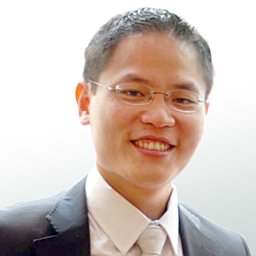 Grant Huang合作论文数1
 Vikram Gadre合作论文数Department of Electrical Engineering;Indian Institute of Technology;Department of Electrical Engineering, Indian Institute of Technology1
 Ian C. Wong合作论文数Wireless Networking and Communications Group;Dept . of Electrical and Computer Engineering;University of Texas at Austin;Wireless Networking and Communications Group, University of Texas at Austin1
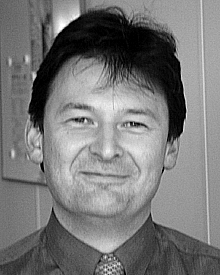 Marc Vanden Bossche合作论文数1
 Sam Shearman合作论文数National Instruments1
 Phani K. Sagiraju合作论文数1
 Frans Verbeyst合作论文数1
 Sapana Ranwa合作论文数1




