Abstract This study examines the effect of offering beneficiaries of conditional cash transfers in Chile the option to receive their transfers in bank accounts rather than in cash. Specifically, the article investigates how this option affects savings and transaction behavior for 33 months. It finds positive but temporary impacts on bank balances, up to 12 months after the offering, amounting to 0.7 percent of their annual income. It also finds an increase in transactional usage, suggesting greater financial inclusion when the account is used as a payment account rather than merely as a pass-through vehicle. Beneficiaries gradually increase their deposit frequency over time, for up to 24 months after the offering, consistent with increased financial inclusion, though this does not translate into sustained balance growth in the long run.
In 2018, Indonesia launched a new electronic voucher system for distribution of food subsidies in randomly selected districts. Banks were assigned the goal of operating at least two remote banking agents in each village in selected districts. We find that while then new banking agents did indeed process benefit transfers--beneficiaries for both this program and other government programs were indeed able to redeem their benefits at the agents--there were no detectable impacts on any other financial services for households. We do, however, find a small increase in the number of small neighborhood shops in affected locations.
Community-based targeting, in which communities allocate social assistance using local information about who is poor, in experimental settings leads to nuanced allocations that reflect local concepts of poverty. What happens when it is scaled up, by either by making the stakes high, or by replicating the process nationwide? We study this by examining community targeting in both a high-stakes experiment, in which villages determined who would receive the Indonesian conditional cash transfer program – worth almost USD 1,000 over 6 years – and in a nationwide scaleup, whereby Indonesia used community-based meetings to allocate COVID-transfers to over 8 million households. We find that both the experimental scale-up and the massive national scale-up had broadly similar performance to the original experimental study. We find strongly progressive targeting as measured by baseline household consumption, though – as in the pilot – not quite as strong as if they had used a fully up-to-date proxy means test. In both scale-ups, we also find that the villages gave additional weight to locally-valued characteristics beyond pure consumption, such as widowhood, recent illness, and food expenditure shares, again echoing the findings from pilots. The results suggest that community targeting can perform well at scale, as predicted by the experimental study.Institutional subscribers to the NBER working paper series, and residents of developing countries may download this paper without additional charge at www.nber.org.
We evaluate a large-scale set of interventions to increase demand for immunization in Haryana, India. The policies under consideration include the two most frequently discussed tools--reminders and incentives--as well as an intervention inspired by the networks literature. We cross-randomize whether (a) individuals receive SMS reminders about upcoming vaccination drives; (b) individuals receive incentives for vaccinating their children; (c) influential individuals (information hubs, trusted individuals, or both) are asked to act as "ambassadors" receiving regular reminders to spread the word about immunization in their community. By taking into account different versions (or "dosages") of each intervention, we obtain 75 unique policy combinations. We develop a new statistical technique--a smart pooling and pruning procedure--for finding a best policy from a large set, which also determines which policies are effective and the effect of the best policy. We proceed in two steps. First, we use a LASSO technique to collapse the data: we pool dosages of the same treatment if the data cannot reject that they had the same impact, and prune policies deemed ineffective. Second, using the remaining (pooled) policies, we estimate the effect of the best policy, accounting for the winner's curse. The key outcomes are (i) the number of measles immunizations and (ii) the number of immunizations per dollar spent. The policy that has the largest impact (information hubs, SMS reminders, incentives that increase with each immunization) increases the number of immunizations by 44% relative to the status quo. The most cost-effective policy (information hubs, SMS reminders, no incentives) increases the number of immunizations per dollar by 9.1%.
Individual behavioral biases can affect savings behavior. We conduct an experiment to evaluate different strategies to increase savings. We compare an automatic savings plan (or default rule), monthly reminders, and a rule-of-thumb savings package that appeals to careful spending. We find that rule-of-thumb and default rules can increase savings for one year after the intervention. In contrast, reminders can reduce account balances and debt levels. The increase in savings under the default rule is produced by a (mechanical) increase in deposits, but savings is later decreased by an increase in withdrawals.
In disseminating information, policymakers face a choice between broadcasting to everyone and informing a small number of "seeds" who then spread the message. While broadcasting maximises the initial reach of messages, we offer theoretical and experimental evidence that it need not be the best strategy. In a field experiment during the 2016 Indian demonetisation, we delivered policy information, varying three dimensions of the delivery method at the village level: initial reach (broadcasting versus seeding); whether or not we induced common knowledge of who was initially informed; and number of facts delivered. We measured three outcomes: the volume of conversations about demonetisation, knowledge of demonetisation rules, and choice quality in a strongly incentivised policy-dependent decision. On all three outcomes, under common knowledge, seeding dominates broadcasting; moreover, adding common knowledge makes seeding more effective but broadcasting less so. We interpret our results via a model of image concerns deterring engagement in social learning, and we support this interpretation with evidence on differential behaviour across ability categories.
Two years prior to elections, two-thirds of Delhi municipal councillors learned they had been randomly chosen for a preelection newspaper report card. Treated councillors in high-slum areas increased pro-poor spending, relative both to control counterparts and treated counterparts from low-slum areas. Treated incumbents ineligible to rerun in home wards because of randomly assigned gender quotas were substantially likelier to run elsewhere only if their report card showed a strong pro-poor spending record. Parties also benefited electorally from councillors’ high pro-poor spending. In contrast, in a cross-cut experiment, councillors did not react to actionable information that was not publicly disclosed. (JEL D72, D83, H75, J16, O15, O17, O18)
We explore a model of non-Bayesian information aggregation in networks. Agents noncooperatively choose among Friedkin-Johnsen-type aggregation rules to maximize payoffs. The DeGroot rule is chosen in equilibrium if and only if there is noiseless information transmission, leading to consensus. With noisy transmission, while some disagreement is inevitable, the optimal choice of rule amplifies the disagreement: even with little noise, individuals place substantial weight on their own initial opinion in every period, exacerbating the disagreement. We use this framework to think about equilibrium versus socially efficient choice of rules and its connection to polarization of opinions across groups.
This paper provides evidence of matching frictions in the Indian labor market. Using several methods to elicit genuine preferences of job-seekers over jobs, we show that: (a) there is substantial variation in job-seekers preferences over the same jobs; and (b) placement officers, responsible for placing job-seekers in jobs, have poor knowledge of it. Providing placement offers with this information improves matching of job-seekers to interviews, even after taking into account redistribution of jobs across job-seekers. Treated job-seekers get more preferred jobs and retain them in the short run (three months), but not in the longer run (six months).
Social protection programs have become increasingly widespread in low- and middle-income countries, with their own distinct characteristics to match the environments in which they are operating. This paper reviews the growing literature on the design and impact of these programs. We review how to identify potential beneficiaries given the large informal sector, the design and implementation of redistribution and income support programs, and the challenges and potential of social insurance. We use our frameworks as a guide for consolidating and organizing the existing literature, and also to highlight areas and questions for future research.
Research Papers: Using Gossips to Spread Information: Theory and Evidence from Two Randomized Co… Policymakers and businesses often rely on key individuals to spread new information to a community. However, obtaining the network data required to identify them can be time consuming and expensive. In this study, researchers conducted two randomized evaluations in India in which they identify effective individuals for information sharing ("gossips") through word-of-mouth. They found that information was disseminated more widely when shared by individuals nominated by others in their community, rather than village elders or randomly selected individuals
We compare how in-kind food assistance and an electronic voucher-based program affect the delivery of aid in practice. The Government of Indonesia randomized across 105 districts the transition from in-kind rice to approximately equivalent electronic vouchers redeemable for rice and eggs at a network of private agents. Targeted households received 46 percent more assistance in voucher areas. For the bottom 15 percent of households at baseline, poverty fell 20 percent. Voucher recipients received higher-quality rice, and increased consumption of eggs. The results suggest moving from a manual in-kind to electronic voucher-based program reduced poverty through increased adherence to program design. (JEL H53, I18, I32, I38, O12)
We examine the impact of offering conditional cash transfer (CCT) beneficiaries the choice to receive cash transfers in bank accounts instead of cash. We investigate the effects on savings behavior and downstream outcomes such as assets and trust. We find, on average, no significant impact on overall savings or downstream outcomes. However, among individuals with nonpositive balances prior to the offering, we observe an increase in balances in savings accounts and in the transactional accounts in which the subsidies were initially deposited. These findings underscore the potential of using bank accounts to encourage savings, particularly for individuals with limited prior savings.
We show that the entry of formal financial institutions can have far-reaching and long-lasting impacts on informal lending and social networks more generally. We first study the introduction of microfinance in 75 villages in Karnataka, India, 43 of which were exposed to microfinance. Using difference-in-differences, we show that networks shrank more in exposed villages. Moreover, links between households that were both unlikely to borrow from microfinance were at least as likely to disappear as links involving likely borrowers. We replicate these surprising findings in the context of a randomised controlled trial (RCT) in Hyderabad, where a microfinance institution randomly selected 52 of 104 neighbourhoods to enter first. Four years after all neighbourhoods were treated, households in early-entry neighbourhoods had credit access longer and had larger loans. We again find fewer social relationships between households in these neighbourhoods, even among those ex-ante unlikely to borrow. Because the results suggest global spillovers, atypical in usual models of network formation, we develop a new dynamic model of network formation that emphasizes chance meetings, where efforts to socialize generate a global network-level externality. Finally, we analyse informal borrowing and the sensitivity of consumption to income fluctuations. Households unlikely to take up microcredit suffer the greatest loss of informal borrowing and risk sharing, underscoring the global nature of the externality.
COVID-19 vaccines are widely available in wealthy countries, yet many remain unvaccinated. We report on two studies (United States and France) with millions of Facebook users that tested two strategies central to vaccination outreach: health professionals addressing common concerns and motivating “ambassadors” to encourage vaccination in their social networks. We can reject very small effects of any intervention on new first doses (0.16 pp, United States; 0.021 pp, France), with similar results for second doses and boosters (United States). During the Omicron wave, messaging aimed at the unvaccinated or those tasked with encouraging others did not change vaccination decisions.
We combine data from longitudinal surveys in seven low- and middle-income countries (plus the United States for comparison) to document that depressive symptoms among those aged 55 and above are prevalent in those countries and, unlike in the United States, increase sharply with age. Depressive symptoms in one survey wave are associated with a greater decline in ability to carry out basic daily activities and a higher probability of death in the next wave. Using additional data from a panel survey we conducted in Tamil Nadu with a focus on elderly living alone, we document that social isolation, poverty, and physical health challenges are strongly correlated with depression. We discuss potential policy interventions in these three domains, including some results from our randomized control trials in the Tamil Nadu sample.
 Esther Duflo合作论文数Department of Economics, Massachusetts Institute of Technology139
 Benjamin Olken合作论文数Department of Economics, Massachusetts Institute of Technology;Abdul Latif Jameel Poverty Action Lab;National Bureau of Economic Research36
 Arun G. Chandrasekhar合作论文数Department of Economics, School of Humanities and Sciences, Stanford University28
 Rema Hanna合作论文数Harvard Kennedy School, Harvard University26
 Emily L. Breza合作论文数Department of Economics, Harvard University;Littauer Center, Harvard University;Center for International Affairs, Harvard University24
 Sudarno Sumarto合作论文数SMERU Research Institute15
 Dean Karlan合作论文数Kellogg School of Management, Northwestern University;ImpactMatters;Innovations for Poverty Action14
 Philippe Aghion合作论文数Department of Economics, London School of Economics;Collège de France, INSEAD14
 Paul Goldsmith Pinkham合作论文数Yale School of Management11
 Marcella Alsan合作论文数Health Inequality Laboratory, Malcolm Wiener Center for Social Policy, John F. Kennedy School of Government, Harvard University11
 Maitreesh Ghatak合作论文数Department of Economics, London School of Economics and Political Science11
 Rachel Glennerster合作论文数MIT Department of Economics and Abdul Latif Jameel Poverty Action Lab, E52-252g, 50 Memorial Drive, Cambridge, MA 02142-1347, USA10
 Matthew O. Jackson合作论文数Department of Economics, School of Humanities and Sciences, Stanford University;Stanford Institute for Economic Policy Research, Stanford University;Santa Fe Institute10
 Tim Besley合作论文数Department of Economics, London School of Economics and Political Science9
 Dilip Mookherjee合作论文数Department of Economics, Boston University9
 Michael Kremer合作论文数The Kenneth C. Griffin Department of Economics, Harris School of Public Policy, The University of Chicago;Division of the Social Sciences, The University of Chicago;Development Innovation Lab, The University of Chicago;Development Economics Center, The University of Chicago;National Bureau of Economic Research;Center for Economic Research in Pakistan;Center for International Development, Harvard Kennedy School, Harvard University9
 Shawn A. Cole合作论文数Harvard Business School8Lakshmi Iyer合作论文数Information Systems & Operations Management Department8
 Philippe Bacchetta合作论文数Studienzentrum Gerzensee8
 Lucy Ogbu-Nwobodo合作论文数7
 Pierre-Luc Vautrey合作论文数Department of Economics, MIT7nina singh合作论文数7
 Daniel Keniston合作论文数Louisiana State Univ7
 Sujoy Majumder合作论文数Dept Math, Raiganj Univ7
 Kaivan Munshi合作论文数Department of Economics, Yale University7
 Richard Hornbeck合作论文数Chicago Booth School of Business, The University of Chicago7
 Fatima Cody Stanford合作论文数Department of Internal Medicine/Pediatrics, University of South Carolina School of Medicine7
 Michael Walton合作论文数John F. Kennedy School of Government, Harvard University7Rohini Somanathan合作论文数Department of Economics;School of Economics, Delhi;Department of Economics, Delhi School of Economics7Raghabendra Chattopadhyay合作论文数Indian Inst Management7Jonathan Zinman合作论文数Dartmouth College7Vivi Alatas合作论文数7
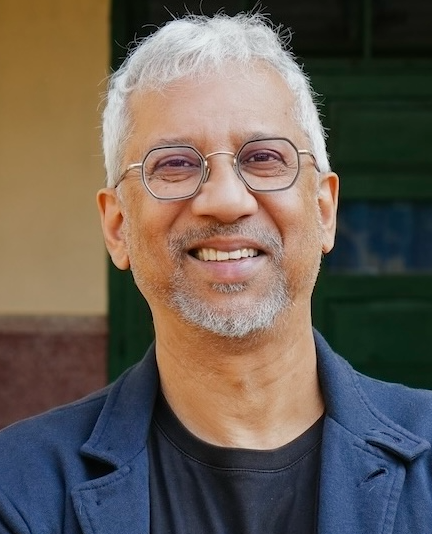 Debraj Ray合作论文数Department of Economics, Faculty of Arts and Science, New York University;National Bureau of Economic Research7Phillippe Aghion合作论文数6
 Leigh Linden合作论文数Department of Economics, College of Liberal Arts, University of Texas at Austin6
 Sarah Eichmeyer合作论文数Department of Economics, Bocconi University6
 Sir Angus Deaton合作论文数Princeton School of Public and International Affairs, Princeton University;University of Southern California6
 Sendhil Mullainathan合作论文数Department of Economics, Massachusetts Institute of Technology;Dandelion Health AI6
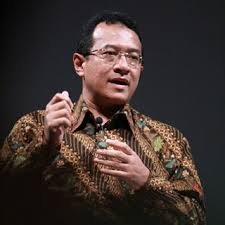 Elan Satriawan合作论文数6
 Cynthia Kinnan合作论文数6
 Carlos Alberto Torres合作论文数Graduate School of Education and Information Studies, University of California, Los Angeles6
 Rohini Pande合作论文数Department of Economics, Yale University;Economic Growth Center, Yale University6Andrew F. Newman合作论文数5Emily Hoppe合作论文数5sharon barnhardt合作论文数5
 Jordan Kyle合作论文数Development Strategy and Governance Division, IFPRI5
 Thomas Piketty合作论文数Paris School of Economics;École des Hautes Études en Sciences Sociales5
 Erica Warner合作论文数5
 Esteban Puentes合作论文数Centro de Microdatos;Universidad de Chile;Depto de Economia;Universidad de Chile, Universidad de Chile5




