The offline reinforcement learning (RL) problem aims to learn an optimal policy from historical data collected by one or more behavioural policies (experts) by interacting with an environment. However, the individual experts may be privacy-sensitive in that the learnt policy may retain information about their precise choices. In some domains like personalized retrieval, advertising and healthcare, the expert choices are considered sensitive data. To provably protect the privacy of such experts, we propose a novel consensus-based expert-level differentially private offline RL training approach compatible with any existing offline RL algorithm. We prove rigorous differential privacy guarantees, while maintaining strong empirical performance. Unlike existing work in differentially private RL, we supplement the theory with proof-of-concept experiments on classic RL environments featuring large continuous state spaces, demonstrating substantial improvements over a natural baseline across multiple tasks.
DP training pipelines for modern neural networks are iterative and generate multiple checkpoints. However, all except the final checkpoint are discarded after training. In this work, we propose novel methods to utilize intermediate checkpoints to improve prediction accuracy and estimate uncertainty in DP predictions. First, we design a general framework that uses aggregates of intermediate checkpoints during training to increase the accuracy of DP ML techniques. Specifically, we demonstrate that training over aggregates can provide significant gains in prediction accuracy over the existing state-of-the-art for StackOverflow, CIFAR10 and CIFAR100 datasets. For instance, we improve the state-of-the-art DP StackOverflow accuracies to 22.74% (+2.06% relative) for epsilon=8.2, and 23.90% (+2.09%) for epsilon=18.9. Furthermore, these gains magnify in settings with periodically varying training data distributions. We also demonstrate that our methods achieve relative improvements of 0.54% and 62.6% in terms of utility and variance, on a proprietary, production-grade pCVR task. Lastly, we initiate an exploration into estimating the uncertainty (variance) that DP noise adds in the predictions of DP ML models. We prove that, under standard assumptions on the loss function, the sample variance from last few checkpoints provides a good approximation of the variance of the final model of a DP run. Empirically, we show that the last few checkpoints can provide a reasonable lower bound for the variance of a converged DP model. Crucially, all the methods proposed in this paper operate on a single training run of the DP ML technique, thus incurring no additional privacy cost.
The spherical noise added to gradients in differentially private (DP) training undermines the performance of adaptive optimizers like AdaGrad and Adam, and hence many recent works have proposed algorithms to address this challenge. However, the empirical results in these works focus on simple tasks and models and the conclusions may not generalize to model training in practice. In this paper we survey several of these variants, and develop better theoretical intuition for them as well as perform empirical studies comparing them. We find that a common intuition of aiming for unbiased estimates of second moments of gradients in adaptive optimizers is misguided, and instead that a simple technique called scale-then-privatize (which does not achieve unbiased second moments) has more desirable theoretical behaviors and outperforms all other variants we study on a small-scale language model training task. We additionally argue that scale-then-privatize causes the noise addition to better match the application of correlated noise mechanisms which are more desirable to use in practice.
In this paper we revisit the DP stochastic convex optimization (SCO) problem. For convex smooth losses, it is well-known that the canonical DP-SGD (stochastic gradient descent) achieves the optimal rate of O(LR/root n + LR root plog(1/delta)/epsilon n) under (epsilon, d)-DP (Bassily et al., 2014), and also well-known that variants of DP-SGD can achieve the optimal rate in a single epoch (Feldman et al., 2020). However, the batch gradient complexity (i.e., number of adaptive optimization steps), which is important in applications like federated learning, is less well-understood. In particular, all prior work on DP-SCO requires Omega(n) batch gradient steps, multiple epochs, or convexity for privacy. We propose an algorithm, Accelerated-DP-SRGD (stochastic recursive gradient descent), which bypasses the limitations of past work: it achieves the optimal rate for DP-SCO (up to polylog factors), in a single epoch using root n batch gradient steps with batch size root n, and can be made private for arbitrary (non-convex) losses via clipping. If the global minimizer is in the constraint set, we can further improve this to n(1/4) batch gradient steps with batch size n(3/4). To achieve this, our algorithm combines three key ingredients, a variant of stochastic recursive gradients (SRG), accelerated gradient descent, and correlated noise generation from DP continual counting.
We propose a simple heuristic privacy analysis of noisy clipped stochastic gradient descent (DP-SGD) in the setting where only the last iterate is released and the intermediate iterates remain hidden. Namely, our heuristic assumes a linear structure for the model.We show experimentally that our heuristic is predictive of the outcome of privacy auditing applied to various training procedures. Thus it can be used prior to training as a rough estimate of the final privacy leakage. We also probe the limitations of our heuristic by providing some artificial counterexamples where it underestimates the privacy leakage.The standard composition-based privacy analysis of DP-SGD effectively assumes that the adversary has access to all intermediate iterates, which is often unrealistic. However, this analysis remains the state of the art in practice. While our heuristic does not replace a rigorous privacy analysis, it illustrates the large gap between the best theoretical upper bounds and the privacy auditing lower bounds and sets a target for further work to improve the theoretical privacy analyses.
How should we evaluate the robustness of language model defenses? Current defenses against jailbreaks and prompt injections (which aim to prevent an attacker from eliciting harmful knowledge or remotely triggering malicious actions, respectively) are typically evaluated either against a static set of harmful attack strings, or against computationally weak optimization methods that were not designed with the defense in mind. We argue that this evaluation process is flawed. Instead, we should evaluate defenses against adaptive attackers who explicitly modify their attack strategy to counter a defense's design while spending considerable resources to optimize their objective. By systematically tuning and scaling general optimization techniques-gradient descent, reinforcement learning, random search, and human-guided exploration-we bypass 12 recent defenses (based on a diverse set of techniques) with attack success rate above 90
This monograph explores the design and analysis of correlated noise mechanisms for differential privacy (DP), focusing on their application to private training of AI and machine learning models via the core primitive of estimation of weighted prefix sums. While typical DP mechanisms inject independent noise into each step of a stochastic gradient (SGD) learning algorithm in order to protect the privacy of the training data, a growing body of recent research demonstrates that introducing (anti-)correlations in the noise can significantly improve privacy-utility trade-offs by carefully canceling out some of the noise added on earlier steps in subsequent steps. Such correlated noise mechanisms, known variously as matrix mechanisms, factorization mechanisms, and DP-Follow-the-Regularized-Leader (DP-FTRL) when applied to learning algorithms, have also been influential in practice, with industrial deployment at a global scale.
We consider the problem of secret protection, in which a business or organization wishes to train a model on their own data, while attempting to not leak secrets potentially contained in that data via the model. The standard method for training models to avoid memorization of secret information is via differential privacy (DP). However, DP requires a large loss in utility or a large dataset to achieve its strict privacy definition, which may be unnecessary in our setting where the data curator and data owner are the same entity. We propose an alternate definition of secret protection that instead of targeting DP, instead targets a bound on the posterior probability of secret reconstruction. We then propose and empirically evaluate an algorithm for model training with this secret protection definition. Our algorithm solves a linear program to assign weights to examples based on the desired per-secret protections, and then performs Poisson sampling using these weights. We show our algorithm significantly outperforms the baseline of running DP-SGD on the whole dataset.
As major progress in LLM-based long-form text generation enables paradigms such as retrieval-augmented generation (RAG) and inference-time scaling, safely incorporating private information into the generation remains a critical open question. We present InvisibleInk, a highly scalable long-form text generation framework satisfying rigorous differential privacy guarantees with respect to the sensitive reference texts. It interprets sampling from the LLM's next-token-distribution as the exponential mechanism over the LLM logits with two innovations. First, we reduce the privacy cost by isolating and clipping only the sensitive information in the model logits (relative to the public logits). Second, we improve text quality by sampling without any privacy cost from a small superset of the top-$k$ private tokens. Empirical evaluations demonstrate a consistent $8\times$ (or more) reduction in computation cost over state-of-the-art baselines to generate long-form private text of the same utility across privacy levels. InvisibleInk is able to generate, for the first time, high-quality private long-form text at less than $4\text{-}8\times$ times the computation cost of non-private generation, paving the way for its practical use.
We study the problem of computing the privacy parameters for DP machine learning when using privacy amplification via random batching and noise correlated across rounds via a correlation matrix $\textbf{C}$ (i.e., the matrix mechanism). Past work on this problem either only applied to banded $\textbf{C}$, or gave loose privacy parameters. In this work, we give a framework for computing near-exact privacy parameters for any lower-triangular, non-negative $\textbf{C}$. Our framework allows us to optimize the correlation matrix $\textbf{C}$ while accounting for amplification, whereas past work could not. Empirically, we show this lets us achieve smaller RMSE on prefix sums than the previous state-of-the-art (SOTA). We also show that we can improve on the SOTA performance on deep learning tasks. Our two main technical tools are (i) using Monte Carlo accounting to bypass composition, which was the main technical challenge for past work, and (ii) a ``balls-in-bins'' batching scheme that enables easy privacy analysis and is closer to practical random batching than Poisson sampling.
Large ASR models can inadvertently leak sensitive information, which can be mitigated by formal privacy measures like differential privacy (DP). However, traditional DP training is computationally expensive, and can hurt model performance. Our study explores DP parameter-efficient fine-tuning as a way to mitigate privacy risks with smaller computation and performance costs for ASR models. Through extensive experimentation and progressive optimization, we achieve 4.6 a new performance benchmark while maintaining (10, 3.52e-6)-DP in fine-tuning a large ASR model with over 600M parameters.
Self-supervised learning (SSL) methods for large speech models have proven to be highly effective at ASR. With the interest in public deployment of large pre-trained models, there is a rising concern for unintended memorization and leakage of sensitive data points from the training data. In this paper, we apply differentially private (DP) pre-training to a SOTA Conformer-based encoder, and study its performance on a downstream ASR task assuming the fine-tuning data is public. This paper is the first to apply DP to SSL for ASR, investigating the DP noise tolerance of the BEST-RQ pre-training method. Notably, we introduce a novel variant of model pruning called gradient-based layer freezing that provides strong improvements in privacy-utility-compute trade-offs. Our approach yields a LibriSpeech test-clean/other WER (%) of 3.78/ 8.41 with ($10$, 1e^-9)-DP for extrapolation towards low dataset scales, and 2.81/ 5.89 with (10, 7.9e^-11)-DP for extrapolation towards high scales.
We design, to the best of our knowledge, the first differentially private (DP) stream aggregation processing system at scale. Our system - Differential Privacy SQL Pipelines (DP-SQLP) - is built using a streaming framework similar to Spark streaming, and is built on top of the Spanner database and the F1 query engine from Google. Towards designing DP-SQLP we make both algorithmic and systemic advances, namely, we (i) design a novel (user-level) DP key selection algorithm that can operate on an unbounded set of possible keys, and can scale to one billion keys that users have contributed, (ii) design a preemptive execution scheme for DP key selection that avoids enumerating all the keys at each triggering time, and (iii) use algorithmic techniques from DP continual observation to release a continual DP histogram of user contributions to different keys over the stream length. We empirically demonstrate the efficacy by obtaining at least 16× reduction in error over meaningful baselines we consider. We implemented a streaming differentially private user impressions for Google Shopping with DP-SQLP. The streaming DP algorithms are further applied to Google Trends.
In this article, we present a detailed review of current practices and state-of-the-art methodologies in the field of differential privacy (DP), with a focus of advancing DP's deployment in real-world applications. Key points and high-level contents of the article were originated from the discussions from "Differential Privacy (DP): Challenges Towards the Next Frontier," a workshop held in July 2022 with experts from industry, academia, and the public sector seeking answers to broad questions pertaining to privacy and its implications in the design of industry-grade systems.This article aims to provide a reference point for the algorithmic and design decisions within the realm of privacy, highlighting important challenges and potential research directions. Covering a wide spectrum of topics, this article delves into the infrastructure needs for designing private systems, methods for achieving better privacy/utility trade-offs, performing privacy attacks and auditing, as well as communicating privacy with broader audiences and stakeholders.
Leveraging transfer learning has recently been shown to be an effective strategy for training large models with Differential Privacy (DP). Moreover, somewhat surprisingly, recent works have found that privately training just the last layer of a pre-trained model provides the best utility with DP. While past studies largely rely on algorithms like DP-SGD for training large models, in the specific case of privately learning from features, we observe that computational burden is low enough to allow for more sophisticated optimization schemes, including second-order methods. To that end, we systematically explore the effect of design parameters such as loss function and optimization algorithm. We find that, while commonly used logistic regression performs better than linear regression in the non-private setting, the situation is reversed in the private setting. We find that linear regression is much more effective than logistic regression from both privacy and computational aspects, especially at stricter epsilon values ($\epsilon < 1$). On the optimization side, we also explore using Newton's method, and find that second-order information is quite helpful even with privacy, although the benefit significantly diminishes with stricter privacy guarantees. While both methods use second-order information, least squares is effective at lower epsilons while Newton's method is effective at larger epsilon values. To combine the benefits of both, we propose a novel algorithm called DP-FC, which leverages feature covariance instead of the Hessian of the logistic regression loss and performs well across all $\epsilon$ values we tried. With this, we obtain new SOTA results on ImageNet-1k, CIFAR-100 and CIFAR-10 across all values of $\epsilon$ typically considered. Most remarkably, on ImageNet-1K, we obtain top-1 accuracy of 88\% under (8, $8 * 10^{-7}$)-DP and 84.3\% under (0.1, $8 * 10^{-7}$)-DP.
We study a class of private learning problems in which the data is a join of private and public features. This is often the case in private personalization tasks such as recommendation or ad prediction, in which features related to individuals are sensitive, while features related to items (the movies or songs to be recommended, or the ads to be shown to users) are publicly available and do not require protection. A natural question is whether private algorithms can achieve higher utility in the presence of public features. We give a positive answer for multi-encoder models where one of the encoders operates on public features. We develop new algorithms that take advantage of this separation by only protecting certain sufficient statistics (instead of adding noise to the gradient). This method has a guaranteed utility improvement for linear regression, and importantly, achieves the state of the art on two standard private recommendation benchmarks, demonstrating the importance of methods that adapt to the private-public feature separation.
Differentially private learning algorithms inject noise into the learning process. While the most common private learning algorithm, DP-SGD, adds independent Gaussian noise in each iteration, recent work on matrix factorization mechanisms has shown empirically that introducing correlations in the noise can greatly improve their utility. We characterize the asymptotic learning utility for any choice of the correlation function, giving precise analytical bounds for linear regression and as the solution to a convex program for general convex functions. We show, using these bounds, how correlated noise provably improves upon vanilla DP-SGD as a function of problem parameters such as the effective dimension and condition number. Moreover, our analytical expression for the near-optimal correlation function circumvents the cubic complexity of the semi-definite program used to optimize the noise correlation matrix in previous work. We validate our theory with experiments on private deep learning. Our work matches or outperforms prior work while being efficient both in terms of compute and memory.
In the task of differentially private (DP) continual counting, we receive a stream of increments and our goal is to output an approximate running total of these increments, without revealing too much about any specific increment. Despite its simplicity, differentially private continual counting has attracted significant attention both in theory and in practice. Existing algorithms for differentially private continual counting are either inefficient in terms of their space usage or add an excessive amount of noise, inducing suboptimal utility. The most practical DP continual counting algorithms add carefully correlated Gaussian noise to the values. The task of choosing the covariance for this noise can be expressed in terms of factoring the lower-triangular matrix of ones (which computes prefix sums). We present two approaches from this class (for different parameter regimes) that achieve near-optimal utility for DP continual counting and only require logarithmic or polylogarithmic space (and time). Our first approach is based on a space-efficient streaming matrix multiplication algorithm for a class of Toeplitz matrices. We show that to instantiate this algorithm for DP continual counting, it is sufficient to find a low-degree rational function that approximates the square root on a circle in the complex plane. We then apply and extend tools from approximation theory to achieve this. We also derive efficient closed-forms for the objective function for arbitrarily many steps, and show direct numerical optimization yields a highly practical solution to the problem. Our second approach combines our first approach with a recursive construction similar to the binary tree mechanism.
Survey researchers have long protected the privacy of respondents via de-identification (removing names and other directly identifying information) before sharing data. Although these procedures help, recent research demonstrates that they fail to protect respondents from intentional re-identification attacks, a problem that threatens to undermine vast survey enterprises in academia, government, and industry. This is especially a problem in political science because political beliefs are not merely the subject of our scholarship; they represent some of the most important information respondents want to keep private. We confirm the problem in practice by re-identifying individuals from a survey about a controversial referendum declaring life beginning at conception. We build on the concept of “differential privacy” to offer new data sharing procedures with mathematical guarantees for protecting respondent privacy and statistical validity guarantees for social scientists analyzing differentially private data. The cost of these new procedures is larger standard errors, which can be overcome with somewhat larger sample sizes.
Privacy amplification exploits randomness in data selection to provide tighter differential privacy (DP) guarantees. This analysis is key to DP-SGD's success in machine learning, but, is not readily applicable to the newer state-of-the-art algorithms. This is because these algorithms, known as DP-FTRL, use the matrix mechanism to add correlated noise instead of independent noise as in DP-SGD. In this paper, we propose "MMCC", the first algorithm to analyze privacy amplification via sampling for any generic matrix mechanism. MMCC is nearly tight in that it approaches a lower bound as $\epsilon\to0$. To analyze correlated outputs in MMCC, we prove that they can be analyzed as if they were independent, by conditioning them on prior outputs. Our "conditional composition theorem" has broad utility: we use it to show that the noise added to binary-tree-DP-FTRL can asymptotically match the noise added to DP-SGD with amplification. Our amplification algorithm also has practical empirical utility: we show it leads to significant improvement in the privacy-utility trade-offs for DP-FTRL algorithms on standard benchmarks.
 Shuang Song合作论文数Google21
 Arun Ganesh合作论文数Google Research18
 Prateek Jain合作论文数Google DeepMind15
 Thomas Steinke合作论文数Google DeepMind12
 Om Thakkar合作论文数Google12
 Adam D. Smith合作论文数Department of Computer Science, Boston University;Faculty of Computing and Data Sciences, Boston University11
 H. Brendan McMahan合作论文数Google Research10
 Christopher A. Choquette-Choo合作论文数OpenAI9
 Keith Rush合作论文数Google DeepMind9
 Nicolas Papernot合作论文数The Edward S. Rogers Sr. Department of Electrical and Computer Engineering, Faculty of Applied Science and Engineering, University of Toronto;Department of Computer Science, University of Toronto;Faculty of Law, University of Toronto8
 Peter Kairouz合作论文数Google8
 Li Zhang合作论文数Microsoft7
 Kunal Talwar合作论文数Apple7
 Steve Chien合作论文数6
 Milad Nasr合作论文数Anthropic5
 Andreas Terzis合作论文数Google Deepmind5
 Adam T. Smith合作论文数Department of Anthropology, College of Arts and Sciences, Cornell University5
 Ilya Mironov合作论文数Meta5
 Krishnamurthy (Dj) Dvijotham合作论文数ServiceNow Research5
 Walid Krichene合作论文数Microsoft CoreAI5Georgina Evans合作论文数Dept Govt, Harvard Univ4
 Matthew Jagielski合作论文数Anthropic4
 Krishna Pillutla合作论文数Paul G. Allen School of Computer Science & Engineering, University of Washington4
 Vitaly Feldman合作论文数Apple4
 Úlfar Erlingsson合作论文数Google4
 Jalaj Upadhyay合作论文数Rutgers University4
 Alexey Kurakin合作论文数Google DeepMind4
 Nicholas Carlini合作论文数Anthropic4
 Raef Bassily合作论文数Department of Computer Science & Engineering, College of Engineering, The Ohio State University;Translational Data Analytics Institute, The Ohio State University4
 Harsh Mehta合作论文数Google Research3Daogao Liu合作论文数3
 Monica Ribero合作论文数Univ Texas Austin, Dept Elect & Comp Engn, Austin, TX 78712 USA3
 Florian Tramèr合作论文数Department of Computer Science, Eidgenössische Technische Hochschule Zürich3
 Saeed Mahloujifar合作论文数FAIR Labs, Meta3
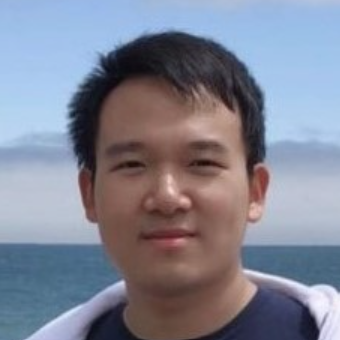 Lun Wang合作论文数Google DeepMind3
 Rajiv Mathews合作论文数Google DeepMind3
 Samuel Deng合作论文数Theory of Computation Group, Columbia University3
 Satyen Kale合作论文数Google Research3
 Sofya Raskhodnikova合作论文数Computer Science,Boston University3
 Somesh Jha合作论文数Department of Computer Sciences, School of Computer, Data & Information Sciences, University of Wisconsin-Madison3
 Roxana Geambasu合作论文数Department of Computer Science, Columbia University;Meta, Inc.3
 Sewoong Oh合作论文数Allen School of Computer Science & Engineering, University of Washington3
 Raghav Bhaskar合作论文数Microsoft Research India3
 Sanjam Garg合作论文数Department of Electrical Engineering and Computer Sciences, University of California, Berkeley3
 Borja de Balle Pigem合作论文数DeepMind;Quipu3
 Ananth Raghunathan合作论文数Facebook Inc.3
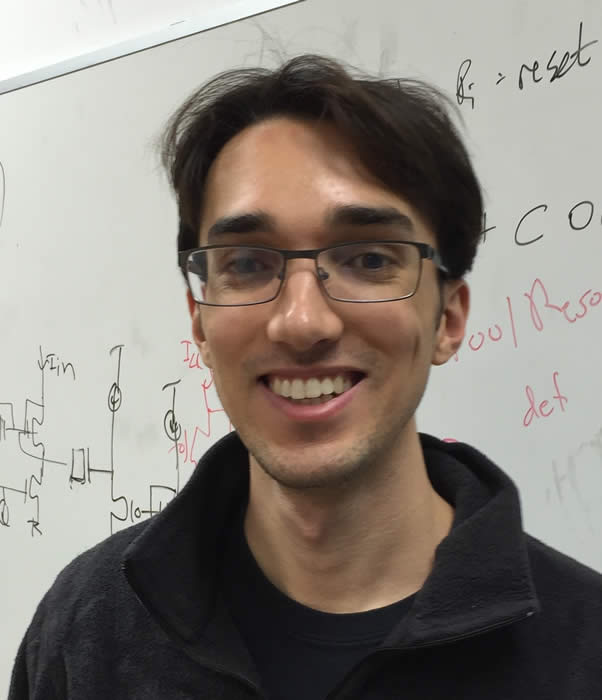 Ashok Cutkosky合作论文数Department of Electrical and Computer Engineering, College of Engineering, Boston University3
 Mohammad Mahmoody合作论文数Cornell University3
 Kashyap Dixit合作论文数Pennsylvania State University3