The current best bounds on the matrix multiplication exponent ω are obtained through a refinement of the laser method called combination loss analysis (Duan et al., 2022; Williams et al., 2024; Alman et al., 2025). In this note, we address the optimization problem at the core of this approach and propose several improvements. First, we reformulate the optimization problem allowing us to solve it in a larger setting than was previously possible. Second, we leverage recent advances in machine learning to design a new optimization algorithm for this problem. Finally, we refine the resulting optimization algorithm with AlphaEvolve. Our combined approach yields an upper bound of ω < 2.371177, improving the previous best bound of 2.371339.
In this white paper, we present AlphaEvolve, an evolutionary coding agent that substantially enhances capabilities of state-of-the-art LLMs on highly challenging tasks such as tackling open scientific problems or optimizing critical pieces of computational infrastructure. AlphaEvolve orchestrates an autonomous pipeline of LLMs, whose task is to improve an algorithm by making direct changes to the code. Using an evolutionary approach, continuously receiving feedback from one or more evaluators, AlphaEvolve iteratively improves the algorithm, potentially leading to new scientific and practical discoveries. We demonstrate the broad applicability of this approach by applying it to a number of important computational problems. When applied to optimizing critical components of large-scale computational stacks at Google, AlphaEvolve developed a more efficient scheduling algorithm for data centers, found a functionally equivalent simplification in the circuit design of hardware accelerators, and accelerated the training of the LLM underpinning AlphaEvolve itself. Furthermore, AlphaEvolve discovered novel, provably correct algorithms that surpass state-of-the-art solutions on a spectrum of problems in mathematics and computer science, significantly expanding the scope of prior automated discovery methods (Romera-Paredes et al., 2023). Notably, AlphaEvolve developed a search algorithm that found a procedure to multiply two 4 × 4 complex-valued matrices using 48 scalar multiplications; offering the first improvement, after 56 years, over Strassen's algorithm in this setting. We believe AlphaEvolve and coding agents like it can have a significant impact in improving solutions of problems across many areas of science and computation.
Large language models (LLMs) have enabled the generation of high-quality synthetic text, often indistinguishable from human-written content, at a scale that can markedly affect the nature of the information ecosystem1-3. Watermarking can help identify synthetic text and limit accidental or deliberate misuse4, but has not been adopted in production systems owing to stringent quality, detectability and computational efficiency requirements. Here we describe SynthID-Text, a production-ready text watermarking scheme that preserves text quality and enables high detection accuracy, with minimal latency overhead. SynthID-Text does not affect LLM training and modifies only the sampling procedure; watermark detection is computationally efficient, without using the underlying LLM. To enable watermarking at scale, we develop an algorithm integrating watermarking with speculative sampling, an efficiency technique frequently used in production systems5. Evaluations across multiple LLMs empirically show that SynthID-Text provides improved detectability over comparable methods, and standard benchmarks and human side-by-side ratings indicate no change in LLM capabilities. To demonstrate the feasibility of watermarking in large-scale-production systems, we conducted a live experiment that assessed feedback from nearly 20 million Gemini6 responses, again confirming the preservation of text quality. We hope that the availability of SynthID-Text7 will facilitate further development of watermarking and responsible use of LLM systems.
Automated radiology report generation has the potential to improve patient care and reduce the workload of radiologists. However, the path toward real-world adoption has been stymied by the challenge of evaluating the clinical quality of artificial intelligence (AI)-generated reports. We build a state-of-the-art report generation system for chest radiographs, called Flamingo-CXR, and perform an expert evaluation of AI-generated reports by engaging a panel of board-certified radiologists. We observe a wide distribution of preferences across the panel and across clinical settings, with 56.1% of Flamingo-CXR intensive care reports evaluated to be preferable or equivalent to clinician reports, by half or more of the panel, rising to 77.7% for in/outpatient X-rays overall and to 94% for the subset of cases with no pertinent abnormal findings. Errors were observed in human-written reports and Flamingo-CXR reports, with 24.8% of in/outpatient cases containing clinically significant errors in both report types, 22.8% in Flamingo-CXR reports only and 14.0% in human reports only. For reports that contain errors we develop an assistive setting, a demonstration of clinician-AI collaboration for radiology report composition, indicating new possibilities for potential clinical utility.
Radiology reports are an instrumental part of modern medicine, informing key clinical decisions such as diagnosis and treatment. The worldwide shortage of radiologists, however, restricts access to expert care and imposes heavy workloads, contributing to avoidable errors and delays in report delivery. While recent progress in automated report generation with vision-language models offer clear potential in ameliorating the situation, the path to real-world adoption has been stymied by the challenge of evaluating the clinical quality of AI-generated reports. In this study, we build a state-of-the-art report generation system for chest radiographs, $\textit{Flamingo-CXR}$, by fine-tuning a well-known vision-language foundation model on radiology data. To evaluate the quality of the AI-generated reports, a group of 16 certified radiologists provide detailed evaluations of AI-generated and human written reports for chest X-rays from an intensive care setting in the United States and an inpatient setting in India. At least one radiologist (out of two per case) preferred the AI report to the ground truth report in over 60$\%$ of cases for both datasets. Amongst the subset of AI-generated reports that contain errors, the most frequently cited reasons were related to the location and finding, whereas for human written reports, most mistakes were related to severity and finding. This disparity suggested potential complementarity between our AI system and human experts, prompting us to develop an assistive scenario in which Flamingo-CXR generates a first-draft report, which is subsequently revised by a clinician. This is the first demonstration of clinician-AI collaboration for report writing, and the resultant reports are assessed to be equivalent or preferred by at least one radiologist to reports written by experts alone in 80$\%$ of in-patient cases and 60$\%$ of intensive care cases.
Expressing natural language descriptions of 001 structured facts or relations – data-to-text gen-002 eration – increases the accessibility of a di-003 verse range of structured knowledge reposito-004 ries. End-to-end neural models for this task 005 require a large training corpus of relations and 006 corresponding descriptions. While such re-007 sources are unrealistic for every domain, we do 008 not fully understand how well different data-to-009 text generation models can generalize to new re-010 lations. This work presents an analysis of data-011 to-text models for unseen relations based on 012 two pre-trained language models (PLMs): T5 013 and GPT-2. We consider different strategies, in-014 cluding few-shot learning, prompt-tuning, and 015 incorporating other domain knowledge (natural 016 language description of the unseen relations) to 017 identify effective strategies and remaining chal-018 lenges for improving performance of PLMs on 019 new relations. 020
We present Sparrow, an information-seeking dialogue agent trained to be more helpful, correct, and harmless compared to prompted language model baselines. We use reinforcement learning from human feedback to train our models with two new additions to help human raters judge agent behaviour. First, to make our agent more helpful and harmless, we break down the requirements for good dialogue into natural language rules the agent should follow, and ask raters about each rule separately. We demonstrate that this breakdown enables us to collect more targeted human judgements of agent behaviour and allows for more efficient rule-conditional reward models. Second, our agent provides evidence from sources supporting factual claims when collecting preference judgements over model statements. For factual questions, evidence provided by Sparrow supports the sampled response 78% of the time. Sparrow is preferred more often than baselines while being more resilient to adversarial probing by humans, violating our rules only 8% of the time when probed. Finally, we conduct extensive analyses showing that though our model learns to follow our rules it can exhibit distributional biases.
We present Chirpy Cardinal, an open-domain social chatbot. Aiming to be both informative and conversational, our bot chats with users in an authentic, emotionally intelligent way. By integrating controlled neural generation with scaffolded, hand-written dialogue, we let both the user and bot take turns driving the conversation, producing an engaging and socially fluent experience. Deployed in the fourth iteration of the Alexa Prize Socialbot Grand Challenge, Chirpy Cardinal handled thousands of conversations per day, placing second out of nine bots with an average user rating of 3.58/5.
Neural generative dialogue agents have shown an increasing ability to hold short chitchat conversations, when evaluated by crowdworkers in controlled settings. However, their performance in real-life deployment – talking to intrinsically-motivated users in noisy environments – is less well-explored. In this paper, we perform a detailed case study of a neural generative model deployed as part of Chirpy Cardinal, an Alexa Prize socialbot. We find that unclear user utterances are a major source of generative errors such as ignoring, hallucination, unclearness and repetition. However, even in unambiguous contexts the model frequently makes reasoning errors. Though users express dissatisfaction in correlation with these errors, certain dissatisfaction types (such as offensiveness and privacy objections) depend on additional factors – such as the user’s personal attitudes, and prior unaddressed dissatisfaction in the conversation. Finally, we show that dissatisfied user utterances can be used as a semi-supervised learning signal to improve the dialogue system. We train a model to predict next-turn dissatisfaction, and show through human evaluation that as a ranking function, it selects higher-quality neural-generated utterances.
We present Chirpy Cardinal, an open-domain dialogue agent, as a research platform for the 2019 Alexa Prize competition. Building an open-domain socialbot that talks to real people is challenging - such a system must meet multiple user expectations such as broad world knowledge, conversational style, and emotional connection. Our socialbot engages users on their terms - prioritizing their interests, feelings and autonomy. As a result, our socialbot provides a responsive, personalized user experience, capable of talking knowledgeably about a wide variety of topics, as well as chatting empathetically about ordinary life. Neural generation plays a key role in achieving these goals, providing the backbone for our conversational and emotional tone. At the end of the competition, Chirpy Cardinal progressed to the finals with an average rating of 3.6/5.0, a median conversation duration of 2 minutes 16 seconds, and a 90th percentile duration of over 12 minutes.
A good conversation requires balance - between simplicity and detail; staying on topic and changing it; asking questions and answering them. Although dialogue agents are commonly evaluated via human judgments of overall quality, the relationship between quality and these individual factors is less well-studied. In this work, we examine two controllable neural text generation methods, conditional training and weighted decoding, in order to control four important attributes for chitchat dialogue: repetition, specificity, response-relatedness and question-asking. We conduct a large-scale human evaluation to measure the effect of these control parameters on multi-turn interactive conversations on the PersonaChat task. We provide a detailed analysis of their relationship to high-level aspects of conversation, and show that by controlling combinations of these variables our models obtain clear improvements in human quality judgments.
Large neural language models trained on massive amounts of text have emerged as a formidable strategy for Natural Language Understanding tasks. However, the strength of these models as Natural Language Generators is less clear. Though anecdotal evidence suggests that these models generate better quality text, there has been no detailed study characterizing their generation abilities. In this work, we compare the performance of an extensively pretrained model, OpenAI GPT2-117 (Radford et al., 2019), to a state-of-the-art neural story generation model (Fan et al., 2018). By evaluating the generated text across a wide variety of automatic metrics, we characterize the ways in which pretrained models do, and do not, make better storytellers. We find that although GPT2-117 conditions more strongly on context, is more sensitive to ordering of events, and uses more unusual words, it is just as likely to produce repetitive and under-diverse text when using likelihood-maximizing decoding algorithms.
In this paper we present TinkerBell, a state-of-the-art end-to-end cold-start knowledge base construction system that extracts entity, relation, event and sentiment knowledge from three languages (English, Chinese and Spanish).
Neural sequence-to-sequence models have provided a viable new approach for abstractive text summarization (meaning they are not restricted to simply selecting and rearranging passages from the original text). However, these models have two shortcomings: they are liable to reproduce factual details inaccurately, and they tend to repeat themselves. In this work we propose a novel architecture that augments the standard sequence-to-sequence attentional model in two orthogonal ways. First, we use a hybrid pointer-generator network that can copy words from the source text via pointing, which aids accurate reproduction of information, while retaining the ability to produce novel words through the generator. Second, we use coverage to keep track of what has been summarized, which discourages repetition. We apply our model to the CNN / Daily Mail summarization task, outperforming the current abstractive state-of-the-art by at least 2 ROUGE points.
Neural Machine Translation (NMT), like many other deep learning domains, typically suffers from over-parameterization, resulting in large storage sizes. This paper examines three simple magnitude-based pruning schemes to compress NMT models, namely class-blind, class-uniform, and class-distribution, which differ in terms of how pruning thresholds are computed for the different classes of weights in the NMT architecture. We demonstrate the efficacy of weight pruning as a compression technique for a state-of-the-art NMT system. We show that an NMT model with over 200 million parameters can be pruned by 40% with very little performance loss as measured on the WMT'14 English-German translation task. This sheds light on the distribution of redundancy in the NMT architecture. Our main result is that with retraining, we can recover and even surpass the original performance with an 80%-pruned model.
We propose Compatibility Weighted Voting Games, a variant of Weighted Voting Games in which some pairs of agents are compatible and some are not. In a Weighted Voting Game each agent has a weight, and a set of agents can form a winning coalition if the sum of their weights is at least a given quota. Whereas the original Weighted Voting Game model assumes that compatibility graph. We consider power indices, which measure the power of each agent to affect the outcome of the game, and show that their computation is tractable under certain restrictions (chiefly that the agents' compatibilities have spectral structure). Through simulations we investigate the effect an agent's compatibility restrictions has on its power.
Termination proving has traditionally been based on the search for (possibly lexicographic) ranking functions. In recent years, however, the discovery of termination proof techniques based on Ramsey's theorem have led to new automation strategies, e.g. size-change, or iterative reductions from termination to safety. In this paper we revisit the decision to use Ramsey-based termination arguments in the iterative approach. We describe a new iterative termination proving procedure that instead searches for lexicographic termination arguments. Using experimental evidence we show that this new method leads to dramatic speedups.
 Christopher Manning合作论文数Department of Linguistics, Stanford University;Department of Computer Science, Stanford University;AIX Ventures10
 Peng Qi (齐鹏)合作论文数5
 Ashwin Paranjape合作论文数Samaya AI5
 Pushmeet Kohli合作论文数Google DeepMind5
 Po-Sen Huang合作论文数Google DeepMind5
 Sumanth Dathathri合作论文数DeepMind4
 Zahra Ahmed合作论文数3
 Kevin Clark合作论文数Google3Sumedh Ghaisas合作论文数DeepMind3Jinhao Lei合作论文数3
 Matthew Lamm合作论文数Google3Bolton Jason C合作论文数3
 Johannes Welbl合作论文数Google;DeepMind3
 Arun Tejasvi Chaganty合作论文数Dept Comp Sci, Stanford Univ3Joelle K. Barral合作论文数2Amelia Hardy合作论文数2
 Dilara Soylu合作论文数Dept Comp Sci, Stanford Univ2
 Kaushik Ram Sadagopan合作论文数2Kathleen Kenealy合作论文数Google DeepMind2
 Aneesh Satya Pappu合作论文数Stanford University2Andrew Sellergren合作论文数Google2Wai Man Si合作论文数2Max Thomas合作论文数2
 Karan Singhal合作论文数OpenAI2Nguyet Minh Phu合作论文数2
 Vivek Natarajan合作论文数Google2Haojun Li合作论文数2Shravya Shetty合作论文数Google Health;Advanced Clinical;Apollo Radiology International;TB Department, Center of Infectious Disease Research in Zambia;Sibanye Stillwater;and Clickmedix;TB Department, Center of Infectious Disease Research in Zambia2
 Mike Schaekermann合作论文数Google Research2
 Ira Ktena合作论文数Ellison Institute of Technology2
 Demis Hassabis (戴密斯·哈萨比斯)合作论文数DeepMind;Isomorphic Labs2
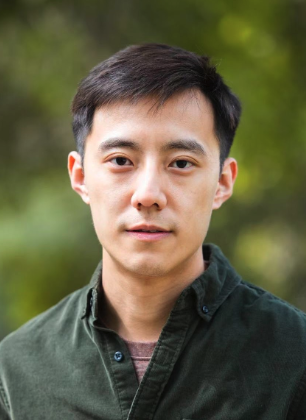 Boliang Zhang (张伯良)合作论文数Appel AI2
 Ali Eslami合作论文数Google DeepMind;Gemini2
 Ryutaro Tanno (丹野龍太郎)合作论文数Google DeepMind2
 Kai Sun (孙锴)合作论文数Meta2Craig Harman合作论文数2
 Danielle Belgrave合作论文数GlaxoSmithKline2
 Tao Tu合作论文数2
 Hao Wu (吴昊)合作论文数School of Computer Science & Technology, Beijing Institute of Technology2
 Yossi Matias合作论文数Google Research;Tel Aviv University;Verily Life Sciences;SandboxAQ;Israeli Advanced Technology Industries2
 Owen Rambow合作论文数Department of Linguistics, College of Arts and Sciences, Stony Brook University2
 Chris Callison-Burch合作论文数Department of Computer and Information Science, School of Engineering and Applied Science, University of Pennsylvania2
 Di Lu (卢迪)合作论文数Dataminr Inc.2
 Heng Ji (季姮)合作论文数Siebel School of Computing and Data Science, The Grainger College of Engineering, University of Illinois at Urbana-Champaign2
 Dan Roth合作论文数Department of Computer and Information Science, University of Pennsylvania;University of Illinois at Urbana-Champaign;Oracle2
 Claire Cardie合作论文数Department of Computer Science, Cornell University;Department of Information Science, Cornell University;Ann S. Bowers College of Computing and Information Science, Cornell University2
 Mohamed Al-Badrashiny合作论文数The Engineering Company for the Development of Computer Systems;RDI 171st Al-Haram Av. 12111 Giza Egypt;The Engineering Company for the Development of Computer Systems2
 Smaranda Muresan合作论文数Department of Computer Science, Barnard College, Columbia University;Data Science Institute, Columbia University2
 Shekoofeh Azizi合作论文数Google Research2





