Reasoning models have made rapid progress on many benchmarks involving math, code, and science. Yet, there are still many open questions about the best train- ing recipes for reasoning since state-of-the-art models often rely on proprietary datasets with little to no public information available. To address this, the goal of the OpenThoughts project is to create open-source datasets for training reasoning models. Our OpenThoughts2-1M dataset led to OpenThinker2-32B, the first model trained on public reasoning data to match DeepSeek-R1-Distill-32B on standard reasoning benchmarks such as AIME and LiveCodeBench. We then improve our dataset further by systematically investigating each step of our data genera- tion pipeline with 1,000+ controlled experiments, which led to OpenThoughts3. Scaling the pipeline to 1.2M examples and using QwQ-32B as teacher yields our OpenThinker3-7B model, which achieves state-of-the-art results: 53% on AIME 2025, 51% on LiveCodeBench 06/24-01/25, and 54% on GPQA Dia- mond – improvements of 15.3, 17.2, and 20.5 percentage points compared to the DeepSeek-R1-Distill-Qwen-7B. All of our datasets and models are available on ANONYMIZED.
We introduce AllTracker: a model that estimates long-range point tracks by way of estimating the flow field between a query frame and every other frame of a video. Unlike existing point tracking methods, our approach delivers high-resolution and dense (all-pixel) correspondence fields, which can be visualized as flow maps. Unlike existing optical flow methods, our approach corresponds one frame to hundreds of subsequent frames, rather than just the next frame. We develop a new architecture for this task, blending techniques from existing work in optical flow and point tracking: the model performs iterative inference on low-resolution grids of correspondence estimates, propagating information spatially via 2D convolution layers, and propagating information temporally via pixel-aligned attention layers. The model is fast and parameter-efficient (16 million parameters), and delivers state-of-the-art point tracking accuracy at high resolution (i.e., tracking 768x1024 pixels, on a 40G GPU). A benefit of our design is that we can train jointly on optical flow datasets and point tracking datasets, and we find that doing so is crucial for top performance. We provide an extensive ablation study on our architecture details and training recipe, making it clear which details matter most. Our code and model weights are available at https://alltracker.github.io
Scaling laws are useful guides for derisking expensive training runs, as they predict performance of large models using cheaper, small-scale experiments. However, there remain gaps between current scaling studies and how language models are ultimately trained and evaluated. For instance, scaling is usually studied in the compute-optimal training regime (i.e., "Chinchilla optimal" regime). In contrast, models are often over-trained to reduce inference costs. Moreover, scaling laws mostly predict loss on next-token prediction, but models are usually compared on downstream task performance. To address both shortcomings, we create a testbed of 104 models with 0.011B to 6.9B parameters trained with various numbers of tokens on three data distributions. First, we fit scaling laws that extrapolate in both the amount of over-training and the number of model parameters. This enables us to predict the validation loss of a 1.4B parameter, 900B token run (i.e., 32$\times$ over-trained) and a 6.9B parameter, 138B token run (i.e., a compute-optimal run)––each from experiments that take 300$\times$ less compute. Second, we relate the perplexity of a language model to its downstream task performance by proposing a power law. We use this law to predict top-1 error averaged over downstream tasks for the two aforementioned models, using experiments that take 20$\times$ less compute.
Pre-trained LLMs that are further trained with image data perform well on vision-language tasks. While adding images during a second training phase effectively unlocks this capability, it is unclear how much of a gain or loss this two-step pipeline gives over VLMs which integrate images earlier into the training process. To investigate this, we train models spanning various datasets, scales, image-text ratios, and amount of pre-training done before introducing vision tokens.We then fine-tune these models and evaluate their downstream performance on a suite of vision-language and text-only tasks.We find that pre-training with a mixture of image and text data allows models to perform better on vision-language tasks while maintaining strong performance on text-only evaluations.On an average of 6 diverse tasks, we find that for a 1B model, introducing visual tokens 80\% of the way through pre-training results in a 2\% average improvement over introducing visual tokens to a fully pre-trained model.
3D reconstruction from a single image is a long-standing problem in computer vision. Learning-based methods address its inherent scale ambiguity by leveraging increasingly large labeled and unlabeled datasets, to produce geometric priors capable of generating accurate predictions across domains. As a result, state of the art approaches show impressive performance in zero-shot relative and metric depth estimation. Recently, diffusion models have exhibited remarkable scalability and generalizable properties in their learned representations. However, because these models repurpose tools originally designed for image generation, they can only operate on dense ground-truth, which is not available for most depth labels, especially in real-world settings. In this paper we present GRIN, an efficient diffusion model designed to ingest sparse unstructured training data. We use image features with 3D geometric positional encodings to condition the diffusion process both globally and locally, generating depth predictions at a pixel-level. With comprehensive experiments across eight indoor and outdoor datasets, we show that GRIN establishes a new state of the art in zero-shot metric monocular depth estimation even when trained from scratch.
We propose a data-driven approach to analyzing query complexity in Video Question Answering (VideoQA). Previous efforts in benchmark design have relied on human expertise to design challenging questions, yet we experimentally show that humans struggle to predict which questions are difficult for machine learning models. Our automatic approach leverages recent advances in code generation for visual question answering, using the complexity of generated code as a proxy for question difficulty. We demonstrate that this measure correlates significantly better with model performance than human estimates. To operationalize this insight, we propose an algorithm for estimating question complexity from code. It identifies fine-grained primitives that correlate with the hardest questions for any given set of models, making it easy to scale to new approaches in the future. Finally, to further illustrate the utility of our method, we extend it to automatically generate complex questions, constructing a new benchmark that is 1.9 times harder than the popular NExT-QA.
Drug-related errors are a leading cause of preventable patient harm in the clinical setting. We present the first wearable camera system to automatically detect potential errors, prior to medication delivery. We demonstrate that using deep learning algorithms, our system can detect and classify drug labels on syringes and vials in drug preparation events recorded in real-world operating rooms. We created a first-of-its-kind large-scale video dataset from head-mounted cameras comprising 4K footage across 13 anesthesiology providers, 2 hospitals and 17 operating rooms over 55 days. The system was evaluated on 418 drug draw events in routine patient care and a controlled environment and achieved 99.6% sensitivity and 98.8% specificity at detecting vial swap errors. These results suggest that our wearable camera system has the potential to provide a secondary check when a medication is selected for a patient, and a chance to intervene before a potential medical error.
We introduce pix2gestalt, a framework for zero-shot amodal segmentation, which learns to estimate the shape and appearance of whole objects that are only partially visible behind occlusions. By capitalizing on large-scale diffusion models and transferring their representations to this task, we learn a conditional diffusion model for reconstructing whole objects in challenging zero-shot cases, including examples that break natural and physical priors, such as art. As training data, we use a synthetically curated dataset containing occluded objects paired with their whole counterparts. Experiments show that our approach outperforms supervised baselines on established benchmarks. Our model can furthermore be used to significantly improve the performance of existing object recognition and 3D reconstruction methods in the presence of occlusions.
A key challenge in manipulation is learning a policy that can robustly generalize to diverse visual environments. A promising mechanism for learning robust policies is to leverage video generative models, which are pretrained on large-scale datasets of internet videos. In this paper, we propose a visuomotor policy learning framework that fine-tunes a video diffusion model on human demonstrations of a given task. At test time, we generate an example of an execution of the task conditioned on images of a novel scene, and use this synthesized execution directly to control the robot. Our key insight is that using common tools allows us to effortlessly bridge the embodiment gap between the human hand and the robot manipulator. We evaluate our approach on four tasks of increasing complexity and demonstrate that harnessing internet-scale generative models allows the learned policy to achieve a significantly higher degree of generalization than existing behavior cloning approaches.
Object tracking is central to robot perception and scene understanding. Tracking-by-detection has long been a dominant paradigm for object tracking of specific object categories. Recently, large-scale pre-trained models have shown promising advances in detecting and segmenting objects and parts in 2D static images in the wild. This begs the question: can we re-purpose these large-scale pre-trained static image models for open-vocabulary video tracking? In this paper, we re-purpose an open-vocabulary detector, segmenter, and dense optical flow estimator, into a model that tracks and segments objects of any category in 2D videos. Our method predicts object and part tracks with associated language descriptions in monocular videos, rebuilding the pipeline of Tractor with modern large pre-trained models for static image detection and segmentation: we detect open-vocabulary object instances and propagate their boxes from frame to frame using a flow-based motion model, refine the propagated boxes with the box regression module of the visual detector, and prompt an open-world segmenter with the refined box to segment the objects. We decide the termination of an object track based on the objectness score of the propagated boxes, as well as forward-backward optical flow consistency. We re-identify objects across occlusions using deep feature matching. We show that our model achieves strong performance on multiple established video object segmentation and tracking benchmarks, and can produce reasonable tracks in manipulation data. In particular, our model outperforms previous state-of-the-art in UVO and BURST, benchmarks for open-world object tracking and segmentation, despite never being explicitly trained for tracking. We hope that our approach can serve as a simple and extensible framework for future research.
Most of the current vision-language models (VLMs) for videos struggle to understand videos longer than a few seconds. This is primarily due to the fact that they do not scale to utilizing a large number of frames. In order to address this limitation, we propose Espresso, a novel method that extracts and compresses spatial and temporal information separately. Through extensive evaluations, we show that spatial and temporal compression in Espresso each have a positive impact on the long-form video understanding capabilities; when combined, their positive impact increases. Furthermore, we show that Espresso's performance scales well with more training data, and that Espresso is far more effective than the existing projectors for VLMs in long-form video understanding. Moreover, we devise a more difficult evaluation setting for EgoSchema called "needle-in-a-haystack" that multiplies the lengths of the input videos. Espresso achieves SOTA performance on this task, outperforming the SOTA VLMs that have been trained on much more training data.
Linear transformers have emerged as a subquadratic-time alternative to softmax attention and have garnered significant interest due to their fixed recurrent state. However, they suffer from poor scaling and under-perform compute-matched transformers. Prior models such as RWKV and Mamba have attempted to address these shortcomings by proposing novel time-mixing and gating architectures, but pre-training large language models requires significant data and compute investments. In this paper, we propose Scalable UPtraining for Recurrent Attention (SUPRA), an alternative to pre-training linear transformers. We present a method to uptrain existing large pre-trained transformers into Recurrent Neural Networks (RNNs) with a modest compute budget. This allows us to leverage the strong pre- training data and performance of existing transformer LLMs, while requiring 5% of the training cost. We find that our linearization technique leads to competitive performance on standard benchmarks, but we identify a persistent in-context learning shortfall for even the largest linear models.
Accurate reconstruction of complex dynamic scenes from just a single viewpoint continues to be a challenging task in computer vision. Current dynamic novel view synthesis methods typically require videos from many different camera viewpoints, necessitating careful recording setups, and significantly restricting their utility in the wild as well as in terms of embodied AI applications. In this paper, we propose GCD, a controllable monocular dynamic view synthesis pipeline that leverages large-scale diffusion priors to, given a video of any scene, generate a synchronous video from any other chosen perspective, conditioned on a set of relative camera pose parameters. Our model does not require depth as input, and does not explicitly model 3D scene geometry, instead performing end-to-end video-to-video translation in order to achieve its goal efficiently. Despite being trained on synthetic multi-view video data only, zero-shot real-world generalization experiments show promising results in multiple domains, including robotics, object permanence, and driving environments. We believe our framework can potentially unlock powerful applications in rich dynamic scene understanding, perception for robotics, and interactive 3D video viewing experiences for virtual reality.
This paper studies the problem of concept-based interpretability of transformer representations for videos. Concretely, we seek to explain the decision-making process of video transformers based on high-level, spatiotemporal concepts that are automatically discovered. Prior research on concept-based interpretability has concentrated solely on image-level tasks. Comparatively, video models deal with the added temporal dimension, increasing complexity and posing challenges in identifying dynamic concepts over time. In this work, we systematically address these challenges by introducing the first Video Transformer Concept Discovery (VTCD) algorithm. To this end, we propose an efficient approach for unsupervised identification of units of video transformer representations - concepts, and ranking their importance to the output of a model. The resulting concepts are highly interpretable, revealing spatio-temporal reasoning mechanisms and object-centric representations in unstructured video models. Performing this analysis jointly over a diverse set of supervised and self-supervised representations, we discover that some of these mechanism are universal in video transformers. Finally, we show that VTCD can be used for fine-grained action recognition and video object segmentation.
We introduce DataComp for Language Models (DCLM), a testbed for controlled dataset experiments with the goal of improving language models. As part of DCLM, we provide a standardized corpus of 240T tokens extracted from Common Crawl, effective pretraining recipes based on the OpenLM framework, and a broad suite of 53 downstream evaluations. Participants in the DCLM benchmark can experiment with data curation strategies such as deduplication, filtering, and data mixing at model scales ranging from 412M to 7B parameters. As a baseline for DCLM, we conduct extensive experiments and find that model-based filtering is key to assembling a high-quality training set. The resulting dataset, DCLM-Baseline enables training a 7B parameter language model from scratch to 64 previous state-of-the-art in open-data language models, DCLM-Baseline represents a 6.6 percentage point improvement on MMLU while being trained with 40 Llama 3 8B on MMLU (63 natural language understanding tasks while being trained with 6.6x less compute than Llama 3 8B. Our results highlight the importance of dataset design for training language models and offer a starting point for further research on data curation.
Amodal perception, the ability to comprehend complete object structures from partial visibility, is a fundamental skill, even for infants. Its significance extends to applications like autonomous driving, where a clear understanding of heavily occluded objects is essential. However, modern detection and tracking algorithms often overlook this critical capability, perhaps due to the prevalence of \textit{modal} annotations in most benchmarks. To address the scarcity of amodal benchmarks, we introduce TAO-Amodal, featuring 833 diverse categories in thousands of video sequences. Our dataset includes \textit{amodal} and modal bounding boxes for visible and partially or fully occluded objects, including those that are partially out of the camera frame. We investigate the current lay of the land in both amodal tracking and detection by benchmarking state-of-the-art modal trackers and amodal segmentation methods. We find that existing methods, even when adapted for amodal tracking, struggle to detect and track objects under heavy occlusion. To mitigate this, we explore simple finetuning schemes that can increase the amodal tracking and detection metrics of occluded objects by 2.1\% and 3.3\%.
This paper presents Shape of You (SoY), an approach to improve the accuracy of 3D body shape estimation for vision-based clothing recommendation systems. While existing methods have successfully estimated 3D poses, there remains a lack of work in precise shape estimation, particularly for diverse human bodies. To address this gap, we propose two loss functions that can be readily integrated into parametric 3D human reconstruction pipelines. Additionally, we propose a test-time optimization routine that further improves quality. Our method improves over the recent SHAPY [7] method by 17.7% on the challenging SSP-3D dataset [16]. We consider our work to be a step towards a more accurate 3D shape estimation system that works reliably on diverse body types and holds promise for practical applications in the fashion industry.
Amodal perception, the ability to comprehend complete object structures from partial visibility, is a fundamental skill, even for infants. Its significance extends to applications like autonomous driving, where a clear understanding of heavily occluded objects is essential. However, modern detection and tracking algorithms often overlook this critical capability, perhaps due to the prevalence of modal annotations in most benchmarks. To address the scarcity of amodal benchmarks, we introduce TAO-Amodal, featuring 833 diverse categories in thousands of video sequences. Our dataset includes amodal and modal bounding boxes for visible and partially or fully occluded objects, including those that are partially out of the camera frame. We investigate the current lay of the land in both amodal tracking and detection by benchmarking state-of-the-art modal trackers and amodal segmentation methods. We find that existing methods, even when adapted for amodal tracking, struggle to detect and track objects under heavy occlusion. To mitigate this, we explore simple finetuning schemes that can increase the amodal tracking and detection metrics of occluded objects by 2.1% and 3.3%.
 Deva Ramanan合作论文数Center for Autonomous Vehicle Research, Robotics Institute, School of Computer Science, Carnegie Mellon University15
 Pavel Tokmakov合作论文数Toyota Research Institute11
 Ludwig Schmidt合作论文数Anthropic;Department of Computer Science, Stanford University9
 Vaishaal Shankar合作论文数Apple7
 Tarasha Khurana合作论文数The Robotics Institute, Carnegie Mellon University6
 Jean Mercat合作论文数Toyota Research Institute6
 Igor Vasiljevic合作论文数Toyota Res Inst, Toyota, Japan5
 Thomas Kollar合作论文数Wayve AI5
 Rares Ambrus合作论文数Toyota Research Institute5Sedrick Keh合作论文数4Ege Ozguroglu合作论文数4
 Ruoshi Liu (刘若石)合作论文数Meta4
 Shuran Song合作论文数Robotics and Embodied Artificial Intelligence Lab, Stanford University;Department of Electrical Engineering, Stanford University4
 Mitchell Wortsman合作论文数Anthropic4
 Carl Vondrick合作论文数Department of Computer Science, The Fu Foundation School of Engineering and Applied Science, Columbia University;The Data Science Institute, Columbia University;Apple4
 Kushal Arora合作论文数Mila University;McGill University4Alex Fang合作论文数Stanford University3
 Marianna Nezhurina合作论文数Juelich Supercomputing Center3Georgios Smyrnis合作论文数University of Texas, Austin3
 Niklas Muennighoff合作论文数Meta;Stanford University;Ai23
 Reinhard Heckel合作论文数School of Computation, Information and Technology, Technical University of Munich;Department of Computer Engineering, Technical University of Munich3
 Gabriel Ilharco合作论文数Meta Superintelligence Labs3
 Samir Yitzhak Gadre合作论文数Pre-Training Team, Anthropic3
 Jenia Jitsev合作论文数LAION;Ontocord.ai3
 Alexandros G. Dimakis (Alex Dimakis)合作论文数Chandra Department of Electrical and Computer Engineering, The University of Texas at Austin;Department of Computer Science, College of Natural Sciences, The University of Texas at Austin3
 Ben Recht合作论文数Department of Electrical Engineering and Computer Sciences, University of California, Berkeley3
 Wen-Hsuan Chu合作论文数Robotics Institute, Carnegie Mellon University2Chevanthie Dissanayake合作论文数2Niloofar Gheissari合作论文数2Nalin Gupta合作论文数2
 Jeffrey W. Li合作论文数University of Washington2Spurthi Sandiri合作论文数2
 Etash Guha合作论文数Anthropic2
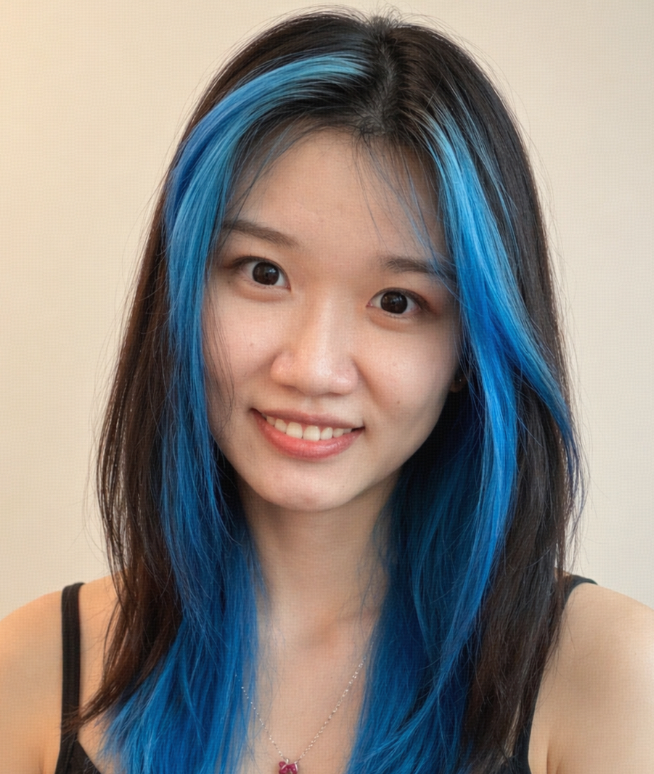 Rulin Shao (邵如琳)合作论文数University of Washington;Meta2
 Prashan Wanigasekara合作论文数Alexa AI NU2
 Hritik Bansal合作论文数AnthropicAI2Rui Xin合作论文数Dept Comp Sci & Engn, Univ South Carolina2
 Stephen Rawls合作论文数Information Sciences Institute, University of Southern California Marina del Rey California2
 Aaron Gokaslan合作论文数Cornell University;MosaicML2
 Olga Russakovsky合作论文数Department of Computer Science, School of Engineering and Applied Science, Princeton University2
 Adam Harley合作论文数Meta2
 Neehar Peri合作论文数Robotics Institute, Carnegie Mellon University2
 Dídac Surís合作论文数CS Department, Columbia University;Meta2
 Luca Soldaini合作论文数Allen Institute for AI2
 Sachin Gururangan合作论文数Anthropic2Kechen Qin合作论文数Int Sch Software, Wuhan Univ2
 Emre Barut合作论文数Amazon2
 Shu Kong合作论文数Department of Computer Science and Engineering, College of Engineering, Texas A&M University;University of Macau2
 Ethan Su合作论文数Amazon2




