We tackle the challenge of generating dynamic 4D scenes from monocular, multi-object videos with heavy occlusions, and introduce GenMOJO, a novel approach that integrates rendering-based deformable 3D Gaussian optimization with generative priors for view synthesis. While existing models perform well on novel view synthesis for isolated objects, they struggle to generalize to complex, cluttered scenes. To address this, GenMOJO decomposes the scene into individual objects, optimizing a differentiable set of deformable Gaussians per object. This object-wise decomposition allows leveraging object-centric diffusion models to infer unobserved regions in novel viewpoints. It performs joint Gaussian splatting to render the full scene, capturing cross-object occlusions, and enabling occlusion-aware supervision. To bridge the gap between object-centric priors and the global frame-centric coordinate system of videos, GenMOJO uses differentiable transformations that align generative and rendering constraints within a unified framework. The resulting model generates 4D object reconstructions over space and time, and produces accurate 2D and 3D point tracks from monocular input. Quantitative evaluations and perceptual human studies confirm that GenMOJO generates more realistic novel views of scenes and produces more accurate point tracks compared to existing approaches.
We introduce AllTracker: a model that estimates long-range point tracks by way of estimating the flow field between a query frame and every other frame of a video. Unlike existing point tracking methods, our approach delivers high-resolution and dense (all-pixel) correspondence fields, which can be visualized as flow maps. Unlike existing optical flow methods, our approach corresponds one frame to hundreds of subsequent frames, rather than just the next frame. We develop a new architecture for this task, blending techniques from existing work in optical flow and point tracking: the model performs iterative inference on low-resolution grids of correspondence estimates, propagating information spatially via 2D convolution layers, and propagating information temporally via pixel-aligned attention layers. The model is fast and parameter-efficient (16 million parameters), and delivers state-of-the-art point tracking accuracy at high resolution (i.e., tracking 768x1024 pixels, on a 40G GPU). A benefit of our design is that we can train jointly on optical flow datasets and point tracking datasets, and we find that doing so is crucial for top performance. We provide an extensive ablation study on our architecture details and training recipe, making it clear which details matter most. Our code and model weights are available at https://alltracker.github.io
We address the challenge of generating dynamic 4D scenes from monocular multi-object videos with heavy occlusions and introduce GenMOJO, a novel approach that integrates rendering-based deformable 3D Gaussian optimization with generative priors for view synthesis. While existing view-synthesis models excel at novel view generation for isolated objects, they struggle with full scenes due to their complexity and data demands. To overcome this, GenMOJO decomposes scenes into individual objects, optimizing a differentiable set of deformable Gaussians per object while capturing 2D occlusions from a 3D perspective through joint Gaussian splatting. Joint splatting ensures occlusion-aware rendering losses in observed frames, while explicit object decomposition allows the usage of object-centric diffusion models for object completion in unobserved viewpoints. To reconcile the differences between object-centric priors and the global frame-centric coordinate system of the video, GenMOJO employs differentiable transformations to unify the rendering and generative constraints within a single framework. The result is a model capable of generating 4D objects across space and time while producing 2D and 3D point tracks from monocular videos. To rigorously evaluate the quality of scene generation and the accuracy of the motion under multi-object occlusions, we introduce MOSE-PTS, a subset of the challenging MOSE benchmark, which we annotated with high-quality 2D point tracks. Quantitative evaluations and perceptual human studies confirm that GenMOJO generates more realistic novel views of scenes and produces more accurate point tracks compared to existing approaches. Project page: https://genmojo.github.io/.
View-predictive generative models provide strong priors for lifting object-centric images and videos into 3D and 4D through rendering and score distillation objectives. A question then remains: what about lifting complete multi-object dynamic scenes? There are two challenges in this direction: First, rendering error gradients are often insufficient to recover fast object motion, and second, view predictive generative models work much better for objects than whole scenes, so, score distillation objectives cannot currently be applied at the scene level directly. We present DreamScene4D, the first approach to generate 3D dynamic scenes of multiple objects from monocular videos via 360-degree novel view synthesis. Our key insight is a "decompose-recompose" approach that factorizes the video scene into the background and object tracks, while also factorizing object motion into 3 components: object-centric deformation, object-to-world-frame transformation, and camera motion. Such decomposition permits rendering error gradients and object view-predictive models to recover object 3D completions and deformations while bounding box tracks guide the large object movements in the scene. We show extensive results on challenging DAVIS, Kubric, and self-captured videos with quantitative comparisons and a user preference study. Besides 4D scene generation, DreamScene4D obtains accurate 2D persistent point track by projecting the inferred 3D trajectories to 2D. We will release our code and hope our work will stimulate more research on fine-grained 4D understanding from videos.
Object tracking is central to robot perception and scene understanding. Tracking-by-detection has long been a dominant paradigm for object tracking of specific object categories. Recently, large-scale pre-trained models have shown promising advances in detecting and segmenting objects and parts in 2D static images in the wild. This begs the question: can we re-purpose these large-scale pre-trained static image models for open-vocabulary video tracking? In this paper, we re-purpose an open-vocabulary detector, segmenter, and dense optical flow estimator, into a model that tracks and segments objects of any category in 2D videos. Our method predicts object and part tracks with associated language descriptions in monocular videos, rebuilding the pipeline of Tractor with modern large pre-trained models for static image detection and segmentation: we detect open-vocabulary object instances and propagate their boxes from frame to frame using a flow-based motion model, refine the propagated boxes with the box regression module of the visual detector, and prompt an open-world segmenter with the refined box to segment the objects. We decide the termination of an object track based on the objectness score of the propagated boxes, as well as forward-backward optical flow consistency. We re-identify objects across occlusions using deep feature matching. We show that our model achieves strong performance on multiple established video object segmentation and tracking benchmarks, and can produce reasonable tracks in manipulation data. In particular, our model outperforms previous state-of-the-art in UVO and BURST, benchmarks for open-world object tracking and segmentation, despite never being explicitly trained for tracking. We hope that our approach can serve as a simple and extensible framework for future research.
We are interested in the detection and segmentation of anomalies in images where the anomalies are typically small (i.e., a small tear in woven fabric, broken pin of an IC chip). From a statistical learning point of view, anomalies have low occurrence probability and are not from the main modes of a data distribution. Learning a generative model of anomalous data from a natural distribution of data can be difficult because the data distribution is heavily skewed towards a large amount of non-anomalous data. When training a generative model on such imbalanced data using an iterative learning algorithm like stochastic gradient descent (SGD), we observe an expected yet interesting trend in the loss values (a measure of the learned models performance) after each gradient update across data samples. Naturally, as the model sees more non-anomalous data during training, the loss values over a non-anomalous data sample decreases, while the loss values on an anomalous data sample fluctuates. In this work, our key hypothesis is that this change in loss values during training can be used as a feature to identify anomalous data. In particular, we propose a novel semi-supervised learning algorithm for anomaly detection and segmentation using an anomaly classifier that uses as input the loss profile of a data sample processed through an autoencoder. The loss profile is defined as a sequence of reconstruction loss values produced during iterative training. To amplify the difference in loss profiles between anomalous and non-anomalous data, we also introduce a Reinforcement Learning based meta-algorithm, which we call the neural batch sampler, to strategically sample training batches during autoencoder training. Experimental results on multiple datasets with a high diversity of textures and objects, often with multiple modes of defects within them, demonstrate the capabilities and effectiveness of our method when compared with existing state-of-the-art baselines.
Few-shot learning (FSL) requires one to learn from object categories with a small amount of training data (as novel classes), while the remaining categories (as base classes) contain a sufficient amount of data for training. It is often desirable to transfer knowledge from the base classes and derive dominant features efficiently for the novel samples. In this work, we propose a sampling method that de-correlates an image based on maximum entropy reinforcement learning, and extracts varying sequences of patches on every forward-pass with discriminative information observed. This can be viewed as a form of "learned" data augmentation in the sense that we search for different sequences of patches within an image and performs classification with aggregation of the extracted features, resulting in improved FSL performances. In addition, our positive and negative sampling policies along with a newly defined reward function would favorably improve the effectiveness of our model. Our experiments on two benchmark datasets confirm the effectiveness of our framework and its superiority over recent FSL approaches.
We propose a deep learning framework for few-shot image classification, which exploits information across label semantics and image domains, so that regions of interest can be properly attended for improved classification. The proposed semantics-guided attention module is able to focus on most relevant regions in an image, while the attended image samples allow data augmentation and alleviate possible overfitting during FSL training. Promising performances are presented in our experiments, in which we consider both closed and open-world settings. The former considers the test input belong to the categories of few shots only, while the latter requires recognition of all categories of interest.
 Katerina Fragkiadaki合作论文数Manufacturing Futures Institute, College of Engineering, Carnegie Mellon University;Machine Learning Department, School of Computer Science, Carnegie Mellon University4
 Adam Harley合作论文数Meta2
 Achal Dave合作论文数Anthropic2
 Leonidas Guibas合作论文数Computer Science Department, School of Engineering, Stanford University;Department of Electrical Engineering, Stanford University2
 Wang, Yu-Chiang Frank (王鈺強)合作论文数Vision and Learning Laboratory, National Taiwan University;Dept. Electrical Engineering & Graduate Inst. Communication Engineering, National Taiwan University;NVIDIA2
 Yunqi Gu合作论文数1Sheldon Liang合作论文数1
 Nikhil Raghuraman合作论文数1Xinglong Sun合作论文数1Mingxiao Huo合作论文数1Jianmeng Liu合作论文数1Yu-Jhe Li合作论文数1Fragkiadaki Aikaterini合作论文数1
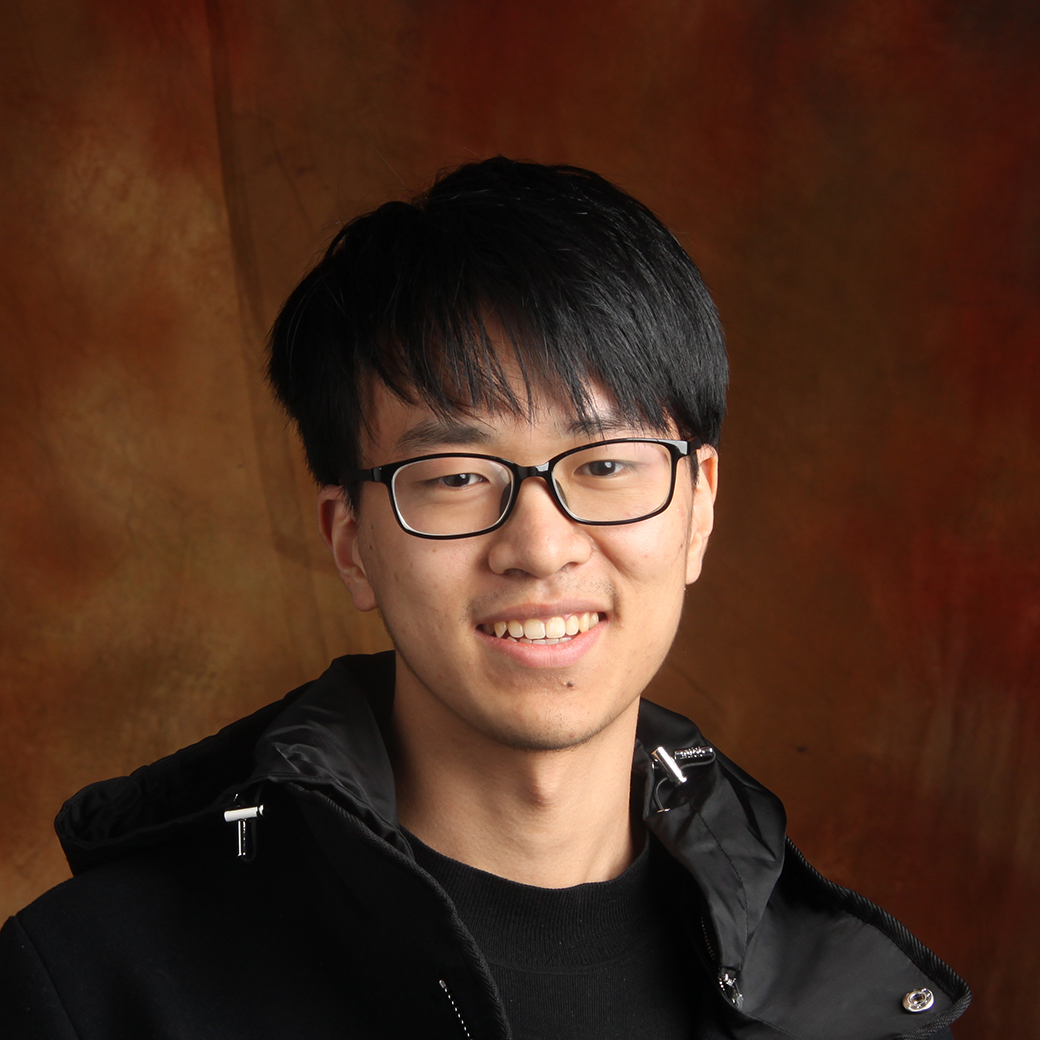 Yang Zheng (郑旸)合作论文数Computer Science Department, Stanford University1
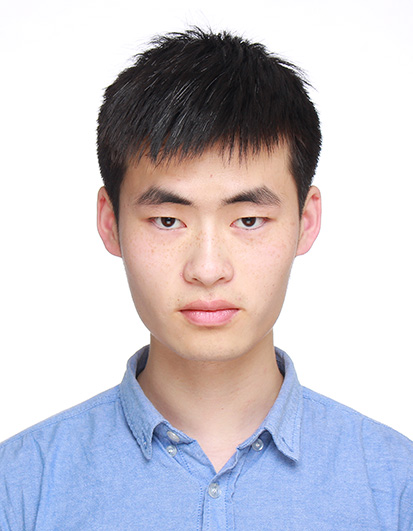 Yang You (尤洋)合作论文数Computer Science Department, School of Engineering, Stanford University1
 Lei Ke合作论文数Computer Vision Lab, ETH Zurich1
 Jing-Cheng Chang合作论文数National Taiwan Universit1
 Pavel Tokmakov合作论文数Toyota Research Institute1
 Rares Ambrus合作论文数Toyota Research Institute1
 Kris Kitani合作论文数Robotics Institute, School of Computer Science, Carnegie Mellon University1
 Suya You合作论文数Ming Hsieh Department of Electrical and Computer Engineering, University of Southern California;U.S. Army Research Laboratory Adelphi1




