Energetic particle precipitation (EPP) is one of the fundamental drivers of space weather in the coupled atmosphere-ionosphere-magnetosphere (AIM) system. These electrons and ions from the sun or the terrestrial magnetosphere, ranging in energy from hundreds of eV to GeV, precipitate into the atmosphere in response to enhanced topside (solar and magnetosphere) driving. They deposit their energy at a wide range of altitudes, enhancing ionization, and changing neutral temperature, density, and winds. During times of prolonged driving the resulting changes can adversely affect anthropogenic systems including disruption of communication and power systems, and increased satellite drag leading to orbital decay. In addition to its effects on space weather, EPP has been recognized as an important component of climate via its ability to indirectly destroy ozone, modifying local radiative balance in the middle and upper atmosphere. Despite the recognized importance of EPP to the AIM system, the way in which these two-way coupled systems interact is highly complex and remains poorly understood and constrained. Measurements from our current observational fleet are not able to fully capture EPP-driven AIM dynamics. As a result, we lack a fundamental understanding of many aspects of this coupled system, and models cannot be validated and are inhibited in their ability to forecast space weather. To compound this situation, different aspects of the AIM system are studied by the different communities with insufficient cross-community cooperation. Properly studying AIM dynamics, a societal level priority, requires a global systems science (holistic) approach to data collection, analysis, and modeling. This Chapman conference will bring together participants from the AIM communities to focus efforts on identifying and communicating outstanding issues, how models can bridge knowledge gaps, promising techniques for enhanced analysis, and required new types of observations.
A large proton belt enhancement occurred on 24 March 1991 following an interplanetary shock that impacted the dayside magnetopause at 03:40 UT. Its formation was measured by the proton telescope aboard CRRES and attributed to the injection and inward transport of solar energetic particles (SEPs) by an azimuthally propagating electric field pulse induced by the shock's compression of the magnetosphere. This led to an increase in the flux of high energy (25 MeV) protons by several orders of magnitude at which has been well‐studied. However, a flux enhancement by up to one order of magnitude was also seen in 1–20 MeV protons at . Protons in this energy range pose a hazard to orbiting spacecraft as a major contributor to solar cell nonionizing dose. The 1–20 MeV enhancement cannot be explained by the inward transport of a solar proton source, because a newly injected source population at the required energy would have a drift velocity too low to interact with the pulse. Instead, we hypothesize that the 1–20 MeV enhancement was caused by the redistribution of radiation belt protons to different drift shells by the pulse. To test this hypothesis, we apply a novel method to predict the change in phase space density during a shock event which utilizes reverse‐time particle tracing simulations. Our results show that the 1–20 MeV enhancement can be accounted for by internal redistribution as hypothesized. We thus identify a new mechanism for proton belt enhancements that does not depend on a SEP source and present a way to model it.
Energetic particle precipitation (EPP) is one of the fundamental drivers of space weather in the coupled atmosphere-ionosphere-magnetosphere (AIM) system. These electrons and ions from the sun or the terrestrial magnetosphere, ranging in energy from hundreds of eV to GeV, precipitate into the atmosphere in response to enhanced topside (solar and magnetosphere) driving. They deposit their energy at a wide range of altitudes, enhancing ionization, and changing neutral temperature, density, and winds. During times of prolonged driving the resulting changes can adversely affect anthropogenic systems including disruption of communication and power systems, and increased satellite drag leading to orbital decay. In addition to its effects on space weather, EPP has been recognized as an important component of climate via its ability to indirectly destroy ozone, modifying local radiative balance in the middle and upper atmosphere. Despite the recognized importance of EPP to the AIM system, the way in which these two-way coupled systems interact is highly complex and remains poorly understood and constrained. Measurements from our current observational fleet are not able to fully capture EPP-driven AIM dynamics. As a result, we lack a fundamental understanding of many aspects of this coupled system, and models cannot be validated and are inhibited in their ability to forecast space weather. To compound this situation, different aspects of the AIM system are studied by the different communities with insufficient cross-community cooperation. Properly studying AIM dynamics, a societal level priority, requires a global systems science (holistic) approach to data collection, analysis, and modeling. This Chapman conference will bring together participants from the AIM communities to focus efforts on identifying and communicating outstanding issues, how models can bridge knowledge gaps, promising techniques for enhanced analysis, and required new types of observations.
Abstract Maintaining accurate real‐time hindcast and forecast specification of the radiation environment is essential for operators to monitor and mitigate the effects of hazardous radiation on satellite components. The Radiation Belt Forecasting Model and Framework (RBFMF) provides real‐time forecasts and hindcasts of the electron radiation belt environment, which are used as inputs for the Satellite Charging Assessment Tool. We evaluated the long‐term statistical error and bias of the RBFMF by comparing the 10‐hr hindcast of electron phase space densities (PSD) to a multi‐mission data set of PSD observations. We found that, between the years 2016–2018, the RBFMF reproduced the radiation belt environment to within a factor of 1.5. While the error and bias of assimilated observations were found to influence the error and bias of the hindcast, data assimilation resulted in more accurate specification of the radiation belt state than real‐time Van Allen Probe observations alone. Furthermore, when real‐time Van Allen Probe observations were no longer available, the hindcast errors increased by an order of magnitude. This highlights two needs; (a) the development of physics‐based modeling incorporated into this framework, and (b) the need for real‐time observations which span the entire outer radiation belt.
The near‐Earth plasma sheet region is the main source of energetic (tens to hundreds keV) ion and electron populations transported by convection and injections into the inner magnetosphere. Energetic ions from the plasma sheet contribute to the ring current, whereas energetic electrons contribute to the radiation belt seed population for further acceleration to relativistic energies. Near‐Earth plasma sheet energetic fluxes have been traditionally used to set boundary conditions for radiation belt and ring current models. This study provides an empirical parametrization for ∼75 keV flux intensity as a function of the geomagnetic activity index auroral electrojet and the equatorial magnetic field B z . Such parametrization includes the dynamic magnetic field configuration in the near‐Earth plasma sheet and may be merged with empirical magnetic field models. We also provide models extending this parametrization to the [20, 300] keV of electron energy range and [75, 300] keV of ion energy range. The parametrization is developed based on THEMIS and Geostationary Operational Environmental Satellite measurements, and verified by comparison with MMS measurements in the near‐Earth plasma sheet. This parametrization incorporates meso‐scale transient flux variations associated with B z perturbations into ring current and radiation belt simulations.
Waves which couple to energetic electrons are particularly important in space weather, as they drive rapid changes in the topology and intensity of Earth’s outer radiation belt during geomagnetic storms. This includes Ultra Low Frequency (ULF) waves that interact with electrons via radial diffusion which can lead to electron dropouts and rapid acceleration and inward transport of electrons during. In radiation belt simulations, the strength of this interaction is specified by ULF wave radial diffusion coefficients. In this paper we detail the development of new models of electric and magnetic radial diffusion coefficients derived from in-situ observations of the azimuthal electric field and compressional magnetic field. The new models use L* as it accounts for adiabatic changes due to the dynamic magnetic field coupled with an optimized set of four components of solar wind and geomagnetic activity, Bz, V, Pdyn and Sym-H, as independent variables (inputs). These independent variables are known drivers of ULF waves and offer the ability to calculate diffusion coefficients at a higher cadence then existing models based on Kp. We investigate the performance of the new models by characterizing the model residuals as a function of each independent variable and by comparing to existing radial diffusion models during a quiet geomagnetic period and through a geomagnetic storm. We find that the models developed here perform well under varying levels of activity and have a larger slope or steeper gradient as a function of L* as compared to existing models (higher radial diffusion at higher L* values).
We analyzed the contribution of electromagnetic ion cyclotron (EMIC) wave driven electron loss to a flux dropout event in September 2017. The evolution of electron phase space density (PSD) through the dropout showed the formation of a radially peaked PSD profile as electrons were lost at high L*, resembling distributions created by magnetopause shadowing. By comparing 2D Fokker Planck simulations of pitch angle diffusion to the observed change in PSD, we found that the μ and K of electron loss aligned with maximum scattering rates at dropout onset. We conclude that, during this dropout event, EMIC waves produced substantial electron loss. Because pitch angle diffusion occurred on closed drift paths near the last closed drift shell, no radial PSD minimum was observed. Therefore, the radial PSD gradients resembled solely magnetopause shadowing loss, even though the local pitch angle scattering produced electron losses of several orders of magnitude of the PSD.
The Application Usability Level framework has increasingly been adapted to enable communication of a project's progress towards user defined outcomes.It is important to outline the roles enabling these activities.Individuals and groups can play multiple roles in the same and different projects, and funding and acknowledgment/credit must be given for each of the roles. Synopsis 1. Proposal calls should encourage the identification of named and funded personalfor the appropriate roles necessary to achieve the goals in the proposal 2. Funding agencies should work with proposers to network and find the appropriate people to fill these roles which may be outside of their research field and network of colleagues.3. Agencies, universities, and publication institutions should encourage the formation of new metrics and more inclusive use of old metrics to give appropriate credit for the often unseen work within these roles to be used towards awards, performance reviews, and promotions.
Space weather is variability of the natural space environment that results in hazardous conditions presenting increased risk of damage to -or outright loss of -human systems.Since it pertains directly to impacts on human systems, space weather (SWx) is ultimately a field of applied science and engineering; SWx is not in itself a field of fundamental scientific research.Currently, much attention is dedicated to SWx forecasting, but here, we argue that nowcasting, hindcasting, and climatological modeling are all of equally significant importance as forecasting.All combined, the true priority of improved SWx risk mitigation is prediction of the relevant state conditions at any point in time: past, present, future, and probabilistic.While forecasts are valuable for operational planning, nowcasts provide operators with valuable information of the current state of SWx systems and are crucial for real-time anomaly attribution and risk mitigation and for accurate "go/no-go" decisions of critical operations, like space vehicle launches or mission-critical maneuvers.Meanwhile, hindcast models fill in the gaps in observations of the prior state of SWx systems, and hindcasts prove invaluable for model validation, forensics studies for anomaly attribution and resolution, and worst-case scenario estimation and simulation.Climatological models, which provide statistical probabilities including quantified uncertainty of the relevant SWx states, are valuable for engineering of new systems intended to survive variability of the space environment, reducing the risk of negative repercussions from SWx through sufficiently informed design.For accurate prediction of state, the availability of reliable and comprehensive data sets is critical, both for real-time operational capabilities and for historic records of prior conditions and trends.Much like the chaotic and highly nonlinear atmospheric and oceanic systems that govern terrestrial weather, SWx is ultimately governed by the chaotic and highly nonlinear solar, solar wind, and magnetosphere-ionosphere-atmosphere systems.We argue that alongside an adequately comprehensive network of observatories providing the abovementioned data sets, future physics-based predictive models for SWx should incorporate a combination of ensemble and data assimilative capabilities to ensure at least statistical accuracy to reality.Empirical models, including those incorporating state-of-the-art machine learning capabilities, should also be further developed for SWx state prediction.
The Application Usability Level (AUL) framework describes how a project advances from basic research to operation-ready applications. Here we expand upon the current project-level usage of Application Usability Levels into a programmatic usage which can be used to help funding agencies track the health of the Heliophysics program. Examples are discussed throughout Heliophysics to show the utility of the Application Usability Level framework for describing the usability level of projects.
Develop studies showing the potential advancements and lifetime gained by de-signing missions to be serviceable and implement opportunities to service ongoing and future missions.
Precipitation losses of Earth's ring current and radiation belt particles represent a major loss process that ultimately helps balance the intensity levels of the radiation environment in near-Earth space.Energetic particle precipitation (EPP) involves particles that are quasi-trapped along magnetic field lines venturing to very high magnetic latitudes, where their mirror points in the dipole-like magnetic trap start to move to altitudes ≤ ~100 km, where collisions with atmospheric neutrals and ionospheric particles becomes significant.Such collisions result in radiation belt particles depositing their energy into the ionosphere and atmosphere and being lost from the system, but the altitude at which a precipitating energetic particle deposits the majority of its energy is highly dependent on the particle's energy and pitch angle.The highest energy, several MeV electrons from Earth's outer radiation belt deposit most of their energy at altitudes < 40 km, within the stratosphere.Many outstanding questions remain concerning the nature of radiation belt precipitation losses into the atmosphere and the impacts of such energy input on atmospheric heating and chemistry and the bottom-side ionosphere.Implications of these unknowns are broad ranging and cross-divisional, spanning Earth and Atmospheric Sciences, such as sudden stratospheric warming events and terrestrial climate, to Heliophysics, such as ionospheric energy budgets, radiation belt physics, and space weather.We encourage the Decadal Survey Committee to consider the following science objectives to be of high priority for dedicated missions and research over the next decade: Prioritize new missions to be developed that adequately instrument and populate a constellation of satellites at various altitudes in LEO with energetic particle instrumentation plus ionospheric and atmospheric remote sensing capabilities.Such a constellation should explore and establish the consequences of and causal role between energetic particle precipitation (i.e., ring current, radiation belt, and solar energetic particles) and: i) transient events of mesospheric NOx and HOx production, ozone depletion, and stratospheric and tropospheric warming and ii) localized, transient structures and sporadic intensification of the D-and E-region ionospheres.
Loss mechanisms act independently or in unison to drive rapid loss of electrons in the radiation belts. Electrons may be lost by precipitation into the Earth's atmosphere, or through the magnetopause into interplanetary space-a process known as magnetopause shadowing. While magnetopause shadowing is known to produce dropouts in electron flux, it is unclear if shadowing continues to remove particles in tandem with electron acceleration processes, limiting the overall flux increase. We investigated the contribution of shadowing to overall radiation belt fluxes throughout a geomagnetic storm starting on the 7 September 2017. We use new, multimission phase space density calculations to decipher electron dynamics during each storm phase and identify features of magnetopause shadowing during both the net-loss and the net-acceleration storm phases on sub-hour time scales. We also highlight two distinct types of shadowing; "direct," where electrons are lost as their orbit intersects the magnetopause, and "indirect," where electrons are lost through ULF wave driven radial transport toward the magnetopause boundary.
A hypothetical, space weather–induced power grid catastrophe served as a practice case for building unity and collaborative skills among disparate communities to address a major global hazard.
Key elements of space weather models are energetic electron fluxes in the inner magnetosphere and the outer radiation belt. Flux depletion is driven by various loss processes: scattering into atmosphere, magnetopause shadowing. Flux enhancement is driven by various acceleration processes: local wave‐particle interactions, radial transport, plasma sheet injections. Many of these processes operate on ∼ hour timescales. Such mesoscale flux variations are not well traced by equatorial spacecraft with much longer orbits. Energetic electron detectors onboard the Global Positioning System (GPS) constellation provide a unique opportunity for probing such ∼ hour‐scale flux variations. Measurements from up to 23 identically instrumented GPS satellites cover a wide energy and L ‐shell range with a subhour time resolution. However, their orbits are inclined and thus all measurements at L ‐shell >4.3 are off‐equatorial. In this report, we present a comparison of equatorial THEMIS and nonequatorial GPS measurements of omnidirectional ≤600 keV electron fluxes. Such a comparison allows us to derive coefficients for using off‐equatorial GPS fluxes to infer the equatorial values. These coefficients depend on particle energy and L ‐shell. We demonstrate a new data set derived from GPS measurements and discuss how it can be used to investigate mesoscale dynamics of energetic electron fluxes in the inner magnetosphere.
Substorms are closely associated with fast flows; however, many fast flows are not associated with substorm onsets and only lead to a localized, transient, and weak response in the magnetosphere and ionosphere. This study uses the midlatitude positive bay index to identify substorms. A case study investigates the magnetospheric and ionospheric responses to substorm‐onset‐related fast flows and nonsubstorm fast flows using observations from the THEMIS spacecraft and ionospheric currents. Statistics based on THEMIS observations made over 11 years show that substorm‐onset‐related fast flows are more likely to penetrate closer to the Earth and spread over a wider range of MLTs compared to nonsubstorm fast flows. The substorm‐onset‐related fast flow durations are slightly longer than nonsubstorm fast flow on average, and there is no significant difference between their peak velocity probability distributions. However, substorm‐onset‐related fast flows are statistically shown to be accompanied by substantially larger B z increases that persist for longer periods of time, and hence result in 80% larger earthward‐directed magnetic flux transport rates.
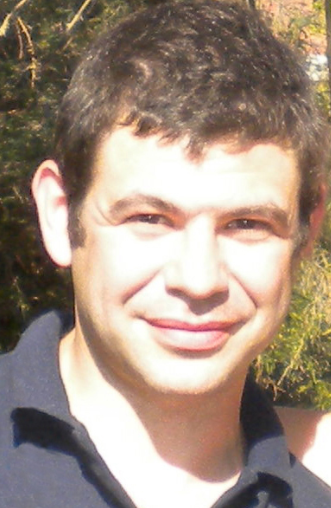 Yuri Shprits合作论文数Institute of Geophysics and Planetary Physics, University of California, Los Angeles;Department of Earth, Planetary, and Space Sciences, University of California, Los Angeles;University of Potsdam83
 Alexander Y. Drozdov合作论文数Department of Earth, Planetary, and Space Sciences, College of Physical Sciences, University of California, Los Angeles32
 Nikita Aseev合作论文数GFZ German Res Ctr Geosci, Helmoltz Ctr Potsdam25
 A. J. Halford合作论文数Centre for Space Physics;University of Newcastle;Centre for Space Physics, University of Newcastle15
 Tatiana Podladchikova合作论文数14
 Roman A Makarevich合作论文数Department of Physics, La Trobe University14
 Dmitriy Subbotin合作论文数Department of Atmospheric and Oceanic Sciences, University of California12
 Dmitri Kondrashov合作论文数Department of Atmospheric and Oceanic Sciences, College of Physical Sciences, University of California, Los Angeles11
 Jacob Bortnik合作论文数Department of Atmospheric and Oceanic Sciences, College of Physical Sciences, University of California, Los Angeles;SPACE Institute, College of Physical Sciences, University of California, Los Angeles11Maria Usanova合作论文数Laboratory for Atmospheric and Space Physics, University of Colorado Boulder11
 Drew L. Turner合作论文数Johns Hopkins University Applied Physics Laboratory10
 Ryan M. Mcgranaghan合作论文数8Karthik Venkataramani合作论文数6
 Vassilis Angelopoulos合作论文数Department of Earth, Planetary, and Space Sciences, College of Physical Sciences, University of California, Los Angeles;Institute of Geophysics and Planetary Physics, University of California, Los Angeles6
 Jeffrey Klenzing合作论文数Goddard Space Flight Center, National Aeronautics and Space Administration6
 Geoff Reeves合作论文数Los Alamos National Laboratory;Space Sciences Division, The New Mexico Consortium6
 Brett Carter合作论文数School of Science, RMIT University6Katherine Garcia‐Sage合作论文数5
 Hui Zhu (朱辉)合作论文数Institute of Frontier and Interdisciplinary Science, Shandong University5
 Daniel N. Baker合作论文数Laboratory for Atmospheric and Space Physics, College of Engineering and Applied Science, University of Colorado Boulder5
 Richard Horne合作论文数British Antarctic Survey, Natural Environment Research Council, UK Research and Innovation;University of Sheffield;Sat-Risk Project5
 Kyle R. Murphy合作论文数Department of Physics;University of Alberta;Department of Physics, University of Alberta5
 Aaron Breneman合作论文数Department of Physics and Astronomy, University of Minnesota5
 Steve Morley合作论文数Los Alamos National Laboratory5
 Xinlin Li合作论文数Laboratory for Atmospheric and Space Physics, University of Colorado Boulder;Department of Ann and H.J. Smead Aerospace Engineering Sciences, College of Engineering & Applied Science, University of Colorado Boulder5Chigo Ngwira合作论文数4Robert F. Arritt合作论文数4
 Frances A. Staples合作论文数University College London4
 S. Cervantes合作论文数Inst Geophys & Meteorol, Univ Cologne4J. K. Sandhu合作论文数4
 Andrei Runov合作论文数Department of Earth, Planetary, and Space Sciences, College of Physical Sciences, University of California, Los Angeles4
 Wen Li合作论文数Department of Astronomy, College of Arts & Sciences, Boston University;Center for Space Physics, Boston University4
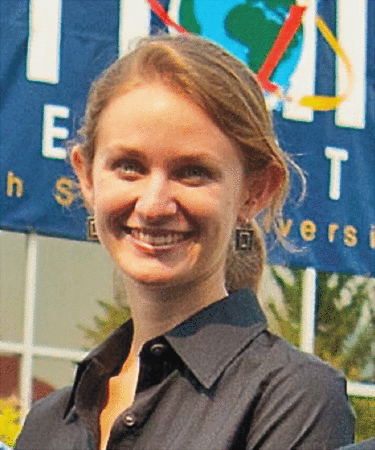 Lauren Blum合作论文数NASA, Goddard Space Flight Ctr4
 Joseph F. Fennell合作论文数4
 David Malaspina合作论文数Department of Astrophysical and Planetary Sciences, College of Arts and Sciences, University of Colorado Boulder4
 Harlan Spence合作论文数Institute for the Study of Earth, Oceans, and Space, University of New Hampshire4
 Michael Hartinger合作论文数Space Science Institute4
 John Wygant合作论文数School of Physics and Astronomy, College of Science and Engineering, University of Minnesota4
 I. Jonathan Rae合作论文数Department of Physics, University of Alberta4
 Irina Zhelavskaya合作论文数Russian Academy of Sciences, Scientific Research Institute for System Analysis4
 Morris B Cohen (Morris Cohen)合作论文数School of Electrical and Computer Engineering, College of Engineering, Georgia Institute of Technology4Theodore E. Sarris合作论文数University of Colorado at Boulder, Democritus University of Thrace4M. Spasojević合作论文数3K. Orlova合作论文数3P. Cruce合作论文数3Sasha Ukhorskiy合作论文数3
 Yihua Zheng合作论文数3Jackson McCormick合作论文数3S. Califf合作论文数3




