The term “Medium-Scale Traveling Ionospheric Disturbances” is used to describe a number of different propagating phenomena in ionospheric plasma density with a scale size of hundreds of km. This includes multiple generation mechanisms, including ion-neutral collisions, plasma instabilities, and electromagnetic forcing. Observational limitations can impede characterization and identification of MSTID generation mechanisms. We discuss inconsistencies in the current terminology used to describe these and provide a set of recommendations for description and discussion.
Abstract Atmospheric neutral density is a crucial component to accurately predict and track the motion of satellites. During periods of elevated solar and geomagnetic activity atmospheric neutral density becomes highly variable and dynamic. This variability and enhanced dynamics make it difficult to accurately model neutral density leading to increased errors which propagate from neutral density models through to orbit propagation models. In this paper we investigate the dynamics of neutral density during geomagnetic storms. We use a combination of solar and geomagnetic variables to develop three Random Forest machine learning models of neutral density. These models are based on (a) slow solar indices, (b) high cadence solar irradiance, and (c) combined high‐cadence solar irradiance and geomagnetic indices. Each model is validated using an out‐of‐sample data set using analysis of residuals and typical metrics. During quiet‐times, all three models perform well; however, during geomagnetic storms, the combined high cadence solar iradiance/geomagnetic model performs significantly better than the models based solely on solar activity. The combined model capturing an additional 10% in the variability of density and having an error up to six times smaller during geomagnetic storms then the solar models. Overall, this work demonstrates the importance of including geomagnetic activity in the modeling of atmospheric density and serves as a proof of concept for using machine learning algorithms to model, and in the future forecast atmospheric density for operational use.
Equatorial plasma bubbles (EPBs) are a primary source of ionospheric irregularities (IIR) in low-latitude regions. The severity of EPBs depends on the intensity, penetration, and disturbance of electric fields generated in the ionosphere. In this work, we analyze the IIR associated with geomagnetic activity in the low-latitude region (0 degrees N-25 degrees N, 90 degrees E-110 degrees E) from 2022 to 2024. The total electron content (TEC) and the rate of TEC index (ROTI) are used to investigate the spatiotemporal characteristics of these IIRs, influenced by both local EPBs and global geomagnetic storms. During low-to-moderate geomagnetic activity, electric field penetration and disturbances have a low impact on EPB development. The high solar activity intensifies the electric field, leading to intense EPB occurrences that can affect the entire region for several hours. From January 2022 to October 2024, these intense EPB events accounted for 35% of all EPB occurrences. During strong geomagnetic storms, the prompt penetration of electric fields (PPEF), and disturbance dynamo electric field (DDEF) caused the depression and fluctuations of TECs. (c) 2025 The Authors. Published by Elsevier B.V. on behalf of COSPAR. This is an open access article under the CC BY license (http:// creativecommons.org/licenses/by/4.0/).
Realistic modeling of the dynamics and variability in the mesosphere and lower thermosphere (MLT) is significant to understand the coupling of the whole atmosphere system. Here we present the simulations of the MLT temperatures at ~100 km altitude for one year during 2014 by Whole Atmosphere Community Climate Model with thermosphere-ionosphere extension (WACCM-X) constrained below ~90 km using meteorological analysis products of the high-altitude version of Navy Global Environmental Model (NAVGEM-HA). The model results are sampled at the same times and locations as the satellite observations from Thermosphere Ionosphere and Mesosphere Electric Dynamics/Sounding of the Atmosphere using Broadband Emission Radiometry (TIMED/SABER). Comparisons of the daily mean temperatures show that the observed and modeled values are correlated (correlation coefficient equals to ~0.5-0.7) at latitudes away from the equator. Both the observations and simulations reveal an annual variation at mid-latitudes with the temperature maximum in summer and minimum in winter, and at lower latitudes the semiannual variation becomes stronger having the temperature maximums at equinoxes and minimums during solstices. However, the temperatures observed are on average ~5-10 K (3-5%) smaller than the model and the observations show a larger variability across all latitudes between 50oS-50oN. The WACCM-X simulations with constrains by NAVGEM-HA meteorological analyses are overall consistent with the SABER observations though some differences are noticed. Whole atmosphere models with high altitude observation constrains would be useful to improve the numerical simulations of the MLT variability and the atmosphere and ionosphere coupling.
Equatorial plasma irregularities in the ionospheric F-region proliferate after sunset, causing the most apparent radio scintillation “hot-spot” in geospace. These irregularities are caused by plasma instabilities, and appear mostly in the form of under-densities that rise up from the F-region’s bottomside. After an irregularity production peak at sunset, the amplitude of the resulting turbulence decays with time. Analyzing a large database of plasma irregularity spectra observed by one of the European Space Agency’s Swarm satellites, we have applied a novel but conceptually simple statistical analysis to the data, finding in the process that post-sunset turbulence in the F-region tends to decay with a uniform, scale-independent rate at night, thereby confirming and extending the results from earlier case studies. Our results should be of utility for large-scale space weather modelling efforts that are unable to resolve turbulent effects.
The Space Physics Data Facility (SPDF) is a digital archive of space physics data and is useful for the storage, analysis, and dissemination of data. We discuss the process used to create an amended dataset and store it on the SPDF. The operational software to generate the archival data software uses the open-source Python package pysat, and an end-user module has been added to the pysatNASA module. The result is the addition of data products to the Mars Global Surveyor (MGS) magnetometer (MAG) dataset, its archival location on SPDF, and pysat compatibility. The primary and metadata format increases the convenience and efficiency for users of the MGS MAG data. The storage of planetary and heliophysics data in one location supports the use of data throughout the solar system for comparison, while pysat compatibility enables loading data in an identical format for ease of processing. We encourage the use of the outlined process for past, present, and future space science missions of all sizes and funding levels. This includes balloons to Flagship-class missions.
Plasma escape from the high-latitude ionosphere (ion outflow) serves as a significant source of heavy plasma to the magnetospheric plasma sheet and ring current regions. Outflows alter mass density and reconnection rates, hence global responses of the magnetosphere. A new fully kinetic and semi-kinetic model, KAOS (Kinetic model of Auroral ion OutflowS), is constructed from first principles which traces large numbers of individual O+ ion macro-particles along curved magnetic field lines, using a guiding-center approximation, in order to facilitate calculation of ion distribution functions and moments. Particle forces include mirror and parallel electric field forces, a self-consistent ambipolar electric field, and a parameterized source of ion cyclotron resonance wave heating, thought to be central to the transverse energization of ions. The model is initiated with a steady-state ion density altitude profile and Maxwellian velocity distribution and particle trajectories are advanced via a direct simulation Monte Carlo scheme. This outlines the implementation of the kinetic outflow model, demonstrates the model's ability to achieve near-hydrostatic equilibrium necessary for simulation spin-up, and investigates L-shell dependent wave heating and pressure cookers scenarios. This paper illustrates the model initialization process and numerical investigations of L-shell dependent outflows and pressure cooker environments and serves to advance our understanding of the drivers and particle dynamics in the auroral ionosphere. A new model, KAOS (Kinetic model of Auroral ion OutflowS), is introduced for studying ionospheric outflows from first principlesWe quantify dependence of upflowing/outflowing ion distributions on parameters pertaining to the characterization of pressure cookersMagnetospheric potential structures may transport highly transversely energized ion distributions to ionospheric altitudes
Statistical analysis of low latitude spread F is presented for three different longitudinal sectors from Jicamarca (12°S, 76.8°W, −2.5° declination angle) from 2001 to 2016, Ascension Island (7.9°S, 14.4°W, −15.09° declination angle) from 2000 to 2014, Kwajalein (8.71°N, 167.7°E, 7.5° declination angle) from 2004 to 2012. Digisonde data from these stations have been processed and analyzed to study statistical variations of equatorial spread F, a diagnostic of irregular plasma structure in the ionosphere. A new automated method of spread F detection using pattern recognition and edge detection for low latitude regions is used to determine solar and seasonal variation over these three sites. An algorithm has been developed to detect the foF2 and hpF2 parameters and this has been validated by comparisons with manually scaled data as well as with SAMI2 and International Reference Ionosphere models showing good correlation. While significant variation is not observed over the solar cycle, the different longitudes and declination angles contribute to the variations over the seasonal cycle.
A major obstacle in cultivating a robust Heliophysics (and broader scientific) community is the lack of diversity throughout science, technology, engineering, and mathematics (STEM) fields. For many years, this has been understood as a “leaky pipeline” analogy, in which predominately minority students initially interested in STEM gradually fall (or are pushed) out of the field on their way to a scientific research position. However, this ignores critical structural and policy issues which drive even later career Ph.D.s out of a career in Heliophysics. We identify here several systemic problems that inhibit many from participating fully in the Heliophysics community, including soft money pressure, lack of accessibility and equity, power imbalances, lack of accountability, friction in collaboration, and difficulties in forming mentorship bonds. We present several recommendations to empower research-supporting organizations to help create a culture of inclusion, openness, and innovative science.
The ultraviolet‐imaging spectrograph that comprises Global‐scale Observations of the Limb and Disk (GOLD) mission in geostationary orbit at 47.5°W longitude has taken full disk images at high cadence throughout the deep solar minimum period of 2019–2020. Synoptic (i.e., concurrent and spatially unified and resolved) observations of thermospheric temperature and composition at ∼150 km altitude are made for the first time, allowing GOLD to disambiguate temporal and spatial variations. Here we analyze the daytime effective temperature and column integrated O and N 2 density ratio (ΣO/N 2 ) data simultaneously observed by GOLD over 120°W–20°E longitude and 60°S–60°N latitude from 13 October 2019 to 12 October 2020. Daily zonal mean values are calculated for each latitude and compared with NRLMSIS 2.0 and simulations from the Whole Atmosphere Community Climate Model with thermosphere and ionosphere extension (WACCM‐X). On average, the GOLD observations show higher temperatures than Mass Spectrometer Incoherent Scatter radar (MSIS) and WACCM‐X by ∼20–60 K (5%–10%) and 80–120 K (12%–18%), respectively. The ΣO/N 2 ratios observed by GOLD are larger than the MSIS results by ∼0.4 (40%) but smaller than the WACCM‐X simulations by ∼0.3 (30%). The observed and modeled results are correlated at most latitudes ( r = 0.4–0.8), and GOLD, MSIS, and WACCM‐X all display a similar seasonal variation and change with latitude. WACCM‐X simulates a larger annual variation in ΣO/N 2 , suggesting that the thermospheric circulation is overestimated and atmospheric waves and turbulence transport are not properly represented in the model.
A large number of heliophysicists from across career levels, institution types, and job titles came together to support a poster at Heliophysics 2050 and the position papers for the 2024 Heliophysics decadal survey titled “Cultivating a Culture of Inclusivity in Heliophysics,” “The Importance of Policies: It’s not just a pipeline problem,” and “Mentorship within Heliophysics.” While writing these position papers, the number of people who privately shared disturbing stories and experiences of bullying and harassment was shocking. The number of people who privately expressed how burned out they were was staggering. The number of people who privately spoke about how they considered leaving the field for their and their family’s health was astounding. And for as much good there is in our community, it is still a toxic environment for many. If we fail to do something now, our field will continue to suffer. While acknowledging the ongoing growth that we as individuals must work toward, we call on our colleagues to join us in working on organizational, group, and personal levels toward a truly inclusive culture, for the wellbeing of our colleagues and the success of our field. This work includes policies, processes, and commitments to promote: accountability for bad actors; financial security through removing the constant anxiety about funding; prioritization of mental health and community through removing constant deadlines and constant last-minute requests; a collaborative culture rather than a hyper-competitive one; and a community where people can thrive as whole persons and do not have to give up a healthy or well-rounded life to succeed.
The ITM regime is a critical region in the geospace system, where the dominant physical processes transition from neutral dynamics to plasma dynamics.This region is sensitive to forcing from both above (Solar radiation, solar wind, and magnetosphere) and below (lower atmosphere).Four out of the five major space weather threats occur in the ITM regime, including ionospheric disturbances, upper atmosphere expansion, induced geo-electric fields, and ionizing radiation.This regime has been sampled and will be further probed by a number of NASA missions:• Past measurements from AE, DE-2, UARS, CINDI/C/NOFS • Current measurements from TIMED, AIM, ICON, GOLD, AMPERE • Near-future measurements from AWE, GDC, DYNAMIC, EZIE These missions are essentially missions of "discovery" to explore the fundamental phenomena and search for the critical linkages between the drivers and the responses of the middle and upper atmosphere.They have made and will make pioneering advances in our understanding of the general processes that occur, and the relative importance of various processes in the overall energy, momentum, and mass budgets.However, these missions will not provide the adequate observations needed to understand how the ITM system varies at mesoscales, all over the globe, on timescales of minutes to days.This will be required for the next-generation measurements after GDC+DYNAMIC and AWE and EZIE, to make the critical next steps for the future.
Continue towards a truly open science approach in Heliophysics2. Find new solutions to provide more stability to soft money scientists 3. Work towards more accessibility and equity across different sections of our community 4. Government institutions like NASA and NSF support and provide transinstitutional Human Resource (HR
Abstract Digisonde data from three different longitude sectors from Jicamarca (12°S, 76.8°W, -2.5° declination angle) from 2001–2016, Ascension Island (7.9°S, 14.4°W, -15.09° declination angle) from 2000–2014, Kwajalein (8.71°N, 167.7°E, 7.5° declination angle) from 2004–2012, has been processed and analyzed to determine statistical studies of equatorial spread F, a diagnostic of irregular plasma structure in the ionosphere. A new method of spread F detection for low latitude region is used to determine solar and seasonal variation over these three sites. An algorithm has been developed to detect the foF2 and hmF2 values from an ionogram and this has been validated using manually scaled ionograms, as well as comparisons to the SAMI2 and IRI models.
The complex drivers of equatorial plasma bubbles and resulting scintillation requires a system science approach spanning the Magnetosphere-Ionosphere-Thermosphere-Mesosphere disciplines. The current roadmap missions strongly support this approach, but gaps are identified in planned observations, with potential mission and solutions proposed.
 Douglas Edward Rowland合作论文数54
 Robert F Pfaff合作论文数Space Weather Laboratory, Heliophysics Division, Goddard Space Flight Center, NASA46
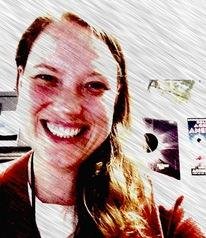 A. J. Halford合作论文数Centre for Space Physics;University of Newcastle;Centre for Space Physics, University of Newcastle25
 Angeline G. Burrell合作论文数Space Science Division, US Naval Research Laboratory23
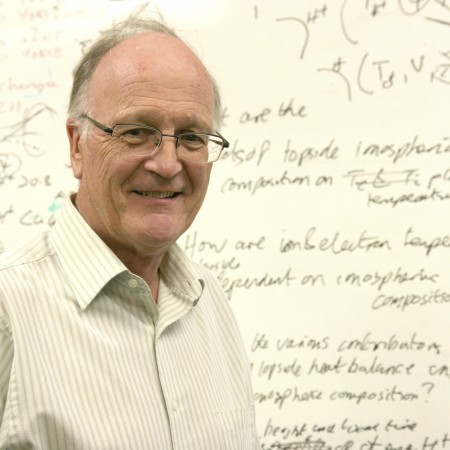 Roderick Heelis合作论文数Center for Space Sciences|University of Texas at Dallas21
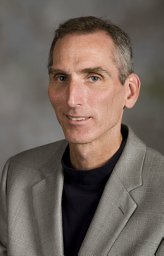 Gregory Earle合作论文数William B. Hanson Center for Space Sciences, University of Texas at Dallas17
 Fernando Simoes合作论文数Instituto Nacional de Engenharia e Tecnologia Industrial16
 Russell Stoneback合作论文数Hanson Center for Space Sciences, University of Texas at Dallas15
 J. H. Clemmons合作论文数11
 Matthew Zettergren合作论文数Physical Sciences Department, Embry-Riddle Aeronautical University10k zawdie合作论文数Naval Res Lab, Washington, DC 20375 USA9Steven Martin合作论文数8C. Liebrecht合作论文数8Henry Freudenreich合作论文数8
 Dieter Bilitza合作论文数School of Physics, Astronomy, and Computational Sciences, George Mason University8
 Jonathon Smith合作论文数7Katherine Garcia‐Sage合作论文数7
 K. R. Bromund合作论文数7Patrick Roddy合作论文数7
 William Robin Coley合作论文数Center for Space Sciences, University of Texas at Dallas7James H. Hecht合作论文数Space Sciences Laboratory, The Aerospace Corporation7R. A. Haaser合作论文数7s ivanov合作论文数6
 Ryan M. Mcgranaghan合作论文数6
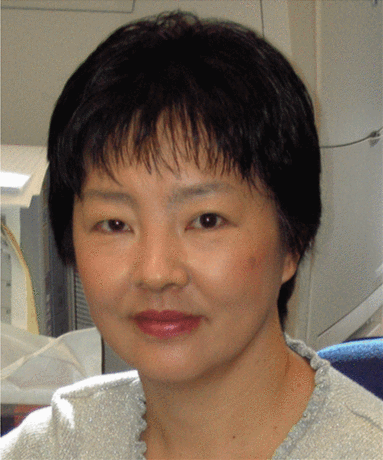 Guan Le合作论文数6
 Michael Collier合作论文数NASA / Goddard Space Flight Center6
 Joseph Huba合作论文数Paul Alan Bernhardt's Lab;Syntek Technologies Inc;Naval Research Laboratory6
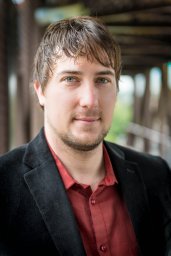 Adam C. Kellerman合作论文数Department of Physics, La Trobe University6M. C. Liebrecht合作论文数6
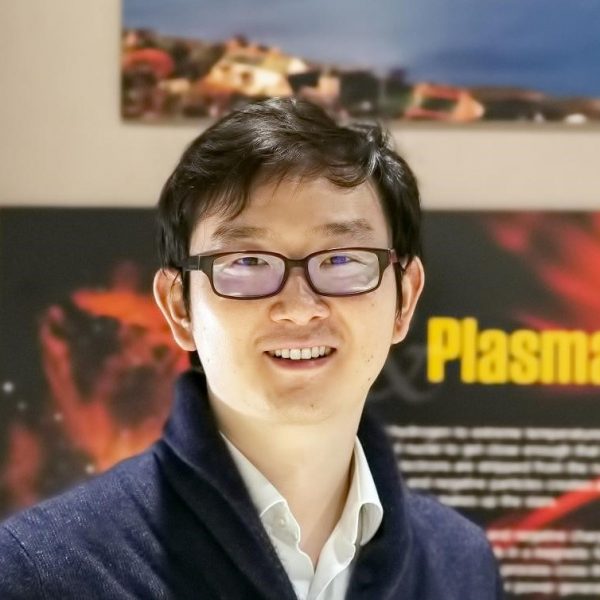 Chuanfei Dong合作论文数Department of Astronomy, Boston University;Discovery Plasma Science Department, Princeton Plasma Physics Laboratory;Department of Astrophysical Sciences, Princeton University5
 Stephen R. Kaeppler合作论文数Dept Phys & Astron, Clemson Univ5j kujawski合作论文数5Preeti Bhaneja合作论文数5
 Jason L. Mclain合作论文数Department of Chemistry, University of Georgia5Guiping Liu合作论文数Space Sciences Laboratory, University of California5
 Yoav Yair合作论文数Department of Life and Natural Sciences, University of Israel5m jones jr合作论文数4
 Michael Liemohn合作论文数College of Literature, Science, and the Arts, University of Michigan-Ann Arbor4Terence Bullett合作论文数4
 Erhan Kudeki合作论文数Department of Electrical and Computer Engineering, The Grainger College of Engineering, University of Illinois at Urbana-Champaign4D. E. Hunton合作论文数4
 N. E. Turner合作论文数AgBiotech Center, Rutgers University4
 Astrid Maute合作论文数High Altitude Observatory, National Center for Atmospheric Research4
 R. L. Bishop合作论文数4
 Carlos Martinis合作论文数Center for Space Physics, Department of Astronomy, Boston University4M. F. Larsen合作论文数4JW Keller合作论文数3kenneth bromund合作论文数3




