Founded in Glasgow and the island of Iona in 1938, the Iona Community is a dispersed Christian ecumenical community working for peace and social justice, rebuilding of community and renewal of worship. The study presented in this dissertation explores the conceptualisations of and responses to inequalities of wealth, privilege and power currently held by members and associate members of the Iona Community, with the intention of using this exploration as a lens through which to consider aspects of the Community’s ‘incarnational’ spirituality. The study thus examines a longstanding, defining concern of the Community that has been elaborated in its literature and implemented in its initiatives in the past but may have been given new impetus by the current global economic situation. The study involved the collection/generation and analysis of qualitative data gathered through five individual key informant interviews with Community members and associate members and two focus group interviews with Community ‘family groups’, consisting of 16 individuals. All participants were based in Scotland or England. Those who were approached to act as key informants had been identified as having access to privileged insights relevant to the research foci by virtue of their position within the Community and/or their professional roles. Interviews were transcribed and subjected to thematic analysis. This analysis yielded a range of themes that were organised under four broad dimensions drawn from the research aims: ‘Community members’ and associate members’ conceptualisations of inequalities’; ‘Reflections on the theology/spirituality of Community conceptualisations of and responses to inequalities’; ‘Perceptions of challenges faced by the Community in engaging with inequalities’; and ‘Possibilities and recommendations for Community engagement with marginalised people in the future’. Although none of the participants described their spirituality or the Community’s spirituality as incarnational, their action-oriented talk expressed key features attributed to an incarnational spirituality in the Community’s writings. The resonances with liberation theologies were readily discernible across the analytic dimensions, particularly in discussions of the role of power and disempowerment at both individual and social structural levels in perpetuating economic marginalisation. Participants’ discussions about appropriate responses to economic marginalisation centred around motifs of respectful relationality, ensuring that the voices of people in economic need are heard and can have influence, and the empowerment of people as authentic agents of change. Participants understood scripture as consistently concerned with God’s love for people in poverty and under oppression, which echoes the defining thesis of liberation theologies that God loves the poor preferentially. However, participants did not elaborate the sort of hermeneutical circle that constitutes the relationship between Christian practice and theological reflection within liberation theologies. A focus on action makes sense in a context where Community members come from diverse denominational backgrounds and where reflections on the relationship between initiatives and theological/spiritual commitments could be difficult to negotiate easily. Yet it may be worthwhile for the Community to accord attention to this.
Throughout its history, the Black Lives Matter (BLM) movement has elicited strong opposition that risks stifling anti-racist progress. This paper examines how support for BLM is argued about and challenged in online settings, focussing on the use of alternative 'Lives Matter' hashtags and slogans. BLM and anti-BLM material from 2020 was identified across six online platforms, which generated 1242 data items. Data were subjected to discourse analysis informed by critical discursive psychology. Arguments over the context of racism were a recurrent feature of responses to BLM-supporting posts. The analysis demonstrates the varying ways that alternative 'Lives Matter' formulations can be used to display opposition to and undermine BLM. Of these, 'All Lives Matter' was used most prominently but also 'White Lives Matter' and others. All alternatives to BLM function to obscure or deny the discrimination that Black people face, and so work to maintain the racist status quo.
Within a case study framework, this dissertation considers the perspectives of a Christian scholar and a Muslim scholar, John Milbank and Shabbir Akhtar respectively, on the possibilities for meaningful relationship between religion and the secular world. Milbank’s conceptualisation, drawn principally from ideas presented in 'Theology and Social Theory', is foregrounded and evaluated. Consideration is then given to what the ideas of Akhtar, in 'The Quran and the Secular Mind: A Philosophy of Islam', might add to them. A critical, reflective rationale for this structure is presented. The outcomes of this comparison are examined in relation to Christian theology and in terms of whether it offers insights into possibilities for interfaith dialogue between Christians and Muslims.What Milbank calls for can be described as a specific religious reactive counter-formation to secular modernity. This is quite different to the inherently intertwined Islam-state/politics relationship presented by Akhtar and his suggestion that religious engagement with the secular world should be located within a framework of secular reason, at least at the outset. In response to Akhtar, Milbank would surely insist that Christianity should not adapt or accommodate to the secular world in general and specifically to the places in that world to which Christianity has been consigned. Milbank’s position raises the question of the nature and form that a religious reactive counter-formation to secular modernity would take. One idea is a ‘politics of the middle’ as elaborated by Vincent Lloyd. This picks up Milbank’s understanding of intermediate or ‘middle’ bodies as the site of politics and his concept of ‘complex space’ in which political sovereignty is reclaimed by these bodies within an overall consensus about the (Christian) transcendent. What is potentially more useful, though, is Luke Bretherton’s advocacy of ‘hospitable politics’, which involves framing interfaith relations not in terms of dialogue but in terms of common political action.
In the contemporary Western cultural context, the place of religion in public life has been subjected to sustained and polarised debate and dispute. The best-selling 2006 book by Richard Dawkins, entitled ‘The God Delusion’, has been represented as providing a catalyst or focus for critique. The basic argument advanced by Dawkins and by others writing from related perspectives is that, in light of Darwin’s theory of evolution and contemporary scientific knowledge, belief in God is irrational. Additionally, this literature has sought to defend what Dawkins represents as the Western liberal ‘moral zeitgeist’ against what it constructs as the threat posed by (fundamentalist) religion. Given the positioning, questions arise about how members of religious traditions and groups which define themselves at least partially in terms of reason/rationalism and liberalism manage the discourses of rationalism, liberalism and religion in their constructions of their traditions and groups. Unitarianism is one such religious tradition. The study presented in this dissertation examines the ways in which these discourses are employed by Unitarians in constructing the nature and ethos of the religious tradition, versions of ‘the Other’ in contrast to which these constructions are built up, the construction of borders to rationalism and liberalism within Unitarianism, and orientations to any associated ideological dilemmas.The study involved the acquisition/generation of two qualitative data sets. One consisted of texts from a fortnightly British and Irish Unitarian publication entitled ‘The Inquirer’ and covering the period from January 12th 2008 until June 12th 2010 (62 issues). The other was generated from four focus group interviews with 26 members and regular attenders at three Unitarian congregations in England. Data were subjected to analysis using critical discursive psychology.Three major themes characterised the data: ‘Constructing Unitarianism and the religious “Other”’; ‘Unitarianism and liberalism: individualism, inclusivity and allied dilemmas’; and ‘Unitarianism and rationalism: qualified accord’. The themes relate mostly to the content patterns of the data; a discursive focus on rhetorical function is presented in the elaboration of constituent subthemes. The ideological dilemmas anticipated from a Dawkins perspective between rationalism and religion and between liberalism and religion were not worked up in ways that might have been expected. This was largely on account of the positioning of Unitarianism as peripheral to or outside the category of orthodox, mainstream religion and the crafting of Unitarianism in terms of spirituality, community and social action and as characterised by inclusivity and the promotion of free, open inquiry among agentic inquirers. The construction of this account permitted the framing of Unitarianism as according with but not being exclusively characterised by scientific rationalism. There was a dilemmatic element here, with scientific rationalism being constructed as providing too narrow a frame to encompass all that a diverse, inclusive Unitarianism enfolded. Dilemmas in relation to the construction of Unitarianism in terms of liberal individualism did not seem specific to the discursive work involved in trying to hold together liberalism and Unitarianism. Rather they were standard dilemmas associated with an inclusive liberalism and concerned questions about limits to liberal inclusivity and the implications of excessive diversity for forging commonalities. The scope for engagement and manoeuvre within discourses of rationalism and liberalism in the data was afforded largely by the construction of Unitarianism in ways other than as ‘religion’.
This paper presents findings from a study which examined the application of an Islamic model of the soul in psychotherapy. It addresses the clinical scope of an Islamic psychotherapy. Interviews with 18 psychotherapists who believed that they integrate Islamic conceptions of psychology into their practice were analysed using a grounded theory approach. Findings centered on the stages of the soul with which Islamic psychotherapy is concerned and the potential for inter-stage movement, and the relationships between and demarcation of the roles of Islamic psychotherapist and religious guide or shaykh. A data-grounded model of the clinical scope of Islamic psychotherapy is presented.
Analysing Qualitative Data in Psychology equips students and researchers in psychology and the social sciences to carry out qualitative data analysis, focusing on four major methods (grounded theory, interpretative phenomenological analysis, discourse analysis and narrative analysis). Assuming no prior knowledge of qualitative research, chapters on the nature, assumptions and practicalities of each method are written by acknowledged experts. To help students and researchers make informed methodological choices about their own research the book addresses data collection and the writing up of research using each method, while providing a sustained comparison of the four methods, backed up with authoritative analyses using the different methods.
Many religiously committed Muslims do not seek psychotherapeutic services because of assumptions that psychotherapists will not engage with their religious values in an informed and open way. In light of this, an approach to psychotherapy is needed that explicitly values Muslims' religious orientations and commitments and integrates these into clinical practice. The present study builds upon an Islamic model of the soul to develop a data-grounded, experience-based model of Islamic psychotherapy. It does this by adopting a grounded theory approach to the analysis of interviews with 18 Muslim psychotherapists from six countries (12 men and six women) who believed that they integrate Islamic conceptions of psychology into their clinical practice. The ways in which participants understood and applied the four levels of the structure of the soul (the nafs, or "lower self"; the aql, or "intellect"; the qalb, or "heart"; and the ruh, or "spirit") in formulating an Islamic psychotherapy are examined. Their conceptualizations and reports of practice spoke of a holistic psychology with an emphasis on embodiment, and of psychological difficulties as occurring because of blockages or imbalances at the levels of the soul. These were seen as needing to be released to enable clients to align more closely with their pure and good nature that comes from and is connected to God. Participants expressed caution about overstepping their knowledge and expertise and venturing into deep religious guidance. From these insights, an "iceberg model" of Islamic psychotherapy is developed.
This article considers how the risk of sexual violence against women and girls is topicalised in social media interaction about ‘gender-neutral toilets’. In particular, it examines how versions of the category of ‘transgender people’ are assigned a key role within the construction of sexual violence risk. A discursive analysis is presented of 1,756 online comments in response to ten YouTube videos relating to gender-neutral toilets. The analysis focuses on one theme entitled ‘Gender-neutral toilets as a site of sexual danger’ and its constituent sub-themes. The phenomenon of gender-neutral toilets was responded to with a limited set of gendered tropes that constructed and positioned stakeholders in culturally recognisable ways. Women and children were constructed as vulnerable to sexual violence, at risk from men (including versions of ‘transgender women’) and in need of protection. This transformed a debate over public space into a question of morality. The analysis contributes to existing literature by focusing on the discursive features involved in the construction of risk, and the implications of these constructions in minimising the need to address social structures that position transgender people as legitimate targets of violence.
Background Young sudden cardiac death (YSCD), often occurring in previously healthy individuals, is a tragic event with devastating impact on affected families, who are at heightened risk of posttraumatic stress and prolonged grief and may themselves be at risk of YSCD. Previous research suggests that surviving family members' psychosocial support needs are often unmet. Purpose This study sought to identify how YSCD-affected families experience dedicated community and peer support in light of their psychosocial support needs. Methods The study used a qualitative design, employing a thematic analysis of focus group and interview data. Three focus groups and five individual interviews were conducted with affected family members (N = 19). The sample was drawn from a UK-based charity, Cardiac Risk in the Young. Audio-recordings of the focus groups and interviews were transcribed and subjected to thematic analysis. Results Three super-ordinate themes were identified: 1. YSCD community support as offering a place of safety, 2. YSCD community support as fostering sense-making, 3. YSCD community support as facilitating finding new meaning. Conclusions YSCD-affected families can benefit from access to dedicated community and peer support that offers a safe environment, provides affiliation, understanding and normalisation and enables sense-making and the rebuilding of a sense of self. Dedicated community support can facilitate meaningful re-engagement with life through helping prevent YSCD and through memorialisation and legacy-building to maintain a continuing bond with the deceased. Clinicians need to be aware of the need to incorporate available community and peer support into patient pathways.
We conducted a systematic review of relevant literature to address how religious and occupational identities relate to each other in the workplace. We identified 53 relevant publications for analysis and synthesis. Studies addressed value differences associated with religion and occupation, identity tensions, unmet expectations, and the connection of religious identity to well-being and work outcomes. Key variables in the connection between religious and occupational identities included personal preferences, the fit between religious identity and job-related concerns, and the organization's policies, practices, and expectations. We highlight the personal and organizational consequences of being able to express religious identity at work and the conditions that promote high congruence between religious identity and its expression in the workplace. From these findings, we develop a research agenda and offer recommendations for management practice that focus on support for expression of religious identity at work while maintaining a broader climate of inclusion.
This chapter contributes to the process of ascertaining the views and preferences of one segment of the consumer base of physical health care services, i.e., lesbians and gay men. 'Lesbian' and 'gay' are terms used to describe people 'whose sexual and emotional feelings and behaviours are exclusively or predominantly directed towards others of the same sex'. The situation that was most commonly identified as problematic for lesbian and gay patients in health care contexts concerned the failure of health care staff to consider that patients might be lesbian or gay and that a person of the same gender accompanying a patient might be their partner. Some lesbian women said that they would prefer to be examined by a woman because they did not trust men. Provisional recommendations can also be offered on the issue of patients' preferences regarding the gender of health care staff who are involved in their care.
In this chapter we provide an exposition and critical analysis of some ways in which transgender people are ‘othered’ online and attempts to resist or challenge this. This is achieved through the discursive analysis of 1756 online comments made in response to ten YouTube videos concerning ‘gender neutral toilets’. Three themes were developed: ‘Gender neutral toilets as sites of sexual danger’; ‘Claiming victimhood: Gender neutral toilets as undermining the rights of cisgender people’; and ‘The delegitimisation and othering of transgender people’. The theme on delegitimisation and othering is elaborated in detail. It consists of subthemes concerning the invocation of nature and biology to construct transgender people as challenging the given order; the mobilisation of religious and moral values and norms; the delegitimisation of transgender people by constructing them as psychopathological; and the construction of transgenderism as a ‘modern trend’ created by media and social media. The discursive resources used in othering transgender people overlap with those that have long been used in the offline denigration of sexual minority groups. We conclude that sexual and gender non-conformity is responded to with a limited set of tropes that delegitimise and other non-conforming people in culturally recognisable ways. We note that the framing of effective resistance to anti-transgender, othering online talk is not straightforward but calls for creative, evidence-based, contextually-informed discursive labour.
Within the religiously and ethnically diverse secular state of Malaysia, the ethnic and religious identities of the Malay Muslim majority group are constitutionalized. This, together with the official classification of religious issues as "sensitive," provides a distinctive context for the political psychological analysis of Islam and interfaith relations. The qualitative study presented in this article examines how Malay Muslims who are students in the United Kingdom perceive and experience engagement with other religious groups in Malaysia. Four focus group interviews were undertaken with 18 participants. Interview transcripts were subjected to thematic analysis. Three themes were developed: "Perceived sociopolitical influences on interfaith engagement in Malaysia"; "Individual and group barriers to engagement with other religious traditions"; and "Potential pathways toward positive interfaith engagement." These are elaborated and discussed in terms of the social categorization processes used to conceptualize and navigate interfaith relations. It is recommended that future research in the political psychology of religion should attend closely to the complexity of religious groups' social identities and the implications this might have for recategorization efforts as a means of encouraging and facilitating interfaith contact.
A uniquely Islamic theoretical framework for an Islamic psychology has yet to be established. To do so requires that we understand how human beings are conceptualized within the cosmology that characterizes the Islamic tradition. This paper presents a model of the soul from within an Islamic paradigm, generated through a grounded theory analysis of interviews with 18 key informants with relevant academic or religious expertise. The model elaborates aspects of a mechanism for the development of the soul that constitutes a potential foundation for an Islamic theory of human psychology and has particular relevance for Islamic approaches to psychotherapy.
This study aimed to explore the experiences, responses, and conceptualizations of sense of presence experiences in bereavement in terms of family meaning-making. A case study framework was chosen, using group and individual interviews and ethnographically derived observations in a father-bereaved family in the south of England. Interview data were analyzed by applying both phenomenological and social constructionist perspectives to the same data set. It was observed that there was a division between the mother, who had derived much personal benefit from sense of presence experiences, and the children, who dismissed the experiences as incompatible with their own worldviews and how they made sense of their father’s death.
 Martin Milton合作论文数8
 Chris Walton合作论文数7
 Edith Maria Steffen合作论文数Department of Psychology, University of Surrey7Evanthia Lyons合作论文数7Benjamin Knudson合作论文数5
 Rusi Jaspal合作论文数University of Brighton5Dora Brown合作论文数4
 Celia Kitzinger合作论文数Department of Sociology Heslington, University of York4Ben Colliver合作论文数Criminol, Birmingham City Univ3
 Abdallah Rothman合作论文数Dept Psychol, Kingston Univ London3
 Jane Ogden合作论文数School of Psychology, University of Surrey/Faculty of Health and Medical Sciences, University of Surrey3Sue Wilkinson合作论文数3
 Elaine Frances Fernandez合作论文数HELP Univ2E Lyons合作论文数2celine rojon合作论文数CBS Int Business Sch2
 Peter Hegarty合作论文数The Open University2
 Ilka H. Gleibs合作论文数Department of Psychological and Behavioural Science, London School of Economics and Political Science2
 Paulo N Lopes合作论文数2Richard Shepherd合作论文数School of Psychology, University of Surrey2
 Michaela Dewe合作论文数2
 Michael J. Daniels合作论文数John Innes Institute2
 Denise M. Rousseau合作论文数Heinz College of Information Systems and Public Policy, Carnegie Mellon University;Tepper School of Business, Carnegie Mellon University2
 Yingfei Gao Heliot合作论文数2
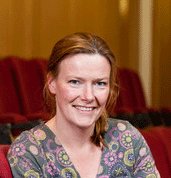 Birgitta Gatersleben合作论文数Faculty of Arts and Human Sciences, University of Surrey2A. J. Turner合作论文数2
 Julie Barnett合作论文数Department of Information Systems and Computing, Brunel University2Marisa Silvestri合作论文数2
 Ian Rivers合作论文数School of Education, Faculty of Humanities and Social Sciences, University of Strathclyde2Deborah Pugh合作论文数2Richard Golsworthy合作论文数1Dan Shepperd合作论文数1Vanessa Tafi合作论文数1bryony shaw合作论文数1Charlotte Whiteley合作论文数1lucy loveless合作论文数1Miltiades Hadjiosif合作论文数1
 Vicknaeshwari Marimuther合作论文数Sch Civil & Environm Engn, Nanyang Technol Univ1Niamh Murtagh合作论文数The Bartlett School of Sustainable Construction, The Bartlett Faculty of the Built Environment, University College London1
 Mark Hayward合作论文数1
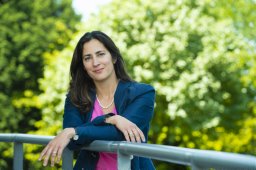 Lada Timotijevic合作论文数Food Consumer Behaviour and Health Research Centre, University of Surrey1
 Emma Williams合作论文数1
 Clara Strauss合作论文数1
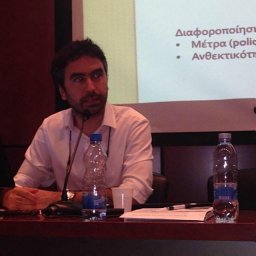 Angelos P. Kassianos合作论文数Department of Public Health and Primary Care, University of Cambridge;Department of Public Health and Primary Care, University of Cambridge1
 Simon Goodman合作论文数1Rachel Perkins合作论文数1Susan Beardsell合作论文数1
 Clare Wright合作论文数Faculty of Life Sciences;University of Manchester;Faculty of Life Sciences, University of Manchester1
 Victoria Senior合作论文数University of Surrey1James Osborne合作论文数1




