The story of dying in the 21st century is a story of paradox. While many people are overtreated in hospitals with families and communities relegated to the margins, still more remain undertreated, dying of preventable conditions and without access to basic pain relief. The unbalanced and contradictory picture of death and dying is the basis for this Commission. How people die has changed radically over recent generations. Death comes later in life for many and dying is often prolonged. Death and dying have moved from a family and community setting to primarily the domain of health systems. Futile or potentially inappropriate treatment can continue into the last hours of life. The roles of families and communities have receded as death and dying have become unfamiliar and skills, traditions, and knowledge are lost. Death and dying have become unbalanced in high-income countries, and increasingly in low-and-middle-income countries; there is an excessive focus on clinical interventions at the end of life, to the detriment of broader inputs and contributions. The COVID-19 pandemic has meant that death is prominent in daily media reports and health systems have been overwhelmed. People have died the ultimate medicalised deaths, often alone but for masked staff in hospitals and intensive care units, unable to communicate with family except electronically. This situation has further fuelled the fear of death, reinforcing the idea of health-care services as the custodian of death. Climate change, the COVID-19 pandemic, environmental destruction, and attitudes to death in high-income countries have similar roots—our delusion that we are in control of, and not part of, nature. Large sums are being invested to dramatically extend life, even achieve immortality, for a small minority in a world that struggles to support its current population. Health care and individuals appear to struggle to accept the inevitability of death. Philosophers and theologians from around the globe have recognised the value that death holds for human life. Death and life are bound together: without death there would be no life. Death allows new ideas and new ways. Death also reminds us of our fragility and sameness: we all die. Caring for the dying is a gift, as some philosophers and many carers, both lay and professional, have recognised. Much of the value of death is no longer recognised in the modern world, but rediscovering this value can help care at the end of life and enhance living. Treatment in the last months of life is costly and a cause of families falling into poverty in countries without universal health coverage. In high-income countries between 8% and 11·2% of annual health expenditure for the entire population is spent on the less than 1% who die in that year. Some of this high expenditure is justified, but there is evidence that patients and health professionals hope for better outcomes than are likely, meaning treatment that is intended to be curative often continues for too long. Conversations about death and dying can be difficult. Doctors, patients, or family members may find it easier to avoid them altogether and continue treatment, leading to inappropriate treatment at the end of life. Palliative care can provide better outcomes for patients and carers at the end of life, leading to improved quality of life, often at a lower cost, but attempts to influence mainstream health-care services have had limited success and palliative care broadly remains a service-based response to this social concern. Rebalancing death and dying will depend on changes across death systems—the many inter-related social, cultural, economic, religious, and political factors that determine how death, dying, and bereavement are understood, experienced, and managed. A reductionist, linear approach that fails to recognise the complexity of the death system will not achieve the rebalancing needed. Just as they have during the COVID-19 pandemic, the disadvantaged and powerless suffer most from the imbalance in care when dying and grieving. Income, education, gender, race, ethnicity, sexual orientation, and other factors influence how much people suffer in death systems and the capacity they possess to change them. Radically reimagining a better system for death and dying, the Lancet Commission on the Value of Death has set out the five principles of a realistic utopia: a new vision of how death and dying could be. The five principles are: the social determinants of death, dying, and grieving are tackled; dying is understood to be a relational and spiritual process rather than simply a physiological event; networks of care lead support for people dying, caring, and grieving; conversations and stories about everyday death, dying, and grief become common; and death is recognised as having value. Systems are constantly changing, and many programmes are underway that encourage the rebalancing of our relationship with death, dying, and grieving. Communities from varied geographies are challenging norms and rules about caring for dying people, and models of citizen and community action, such as compassionate communities, are emerging. Policy and legislation changes are recognising the impact of bereavement and supporting the availability of medication to manage pain when dying. Hospitals are changing their culture to openly acknowledge death and dying; health-care systems are beginning to work in partnership with patients, families, and the public on these issues and to integrate holistic care of the dying throughout health services. Key messages•Dying in the 21st century is a story of paradox. Although many people are overtreated in hospitals, still more remain undertreated, dying of preventable conditions and without access to basic pain relief.•Death, dying, and grieving today have become unbalanced. Health care is now the context in which many encounter death and as families and communities have been pushed to the margins, their familiarity and confidence in supporting death, dying, and grieving has diminished. Relationships and networks are being replaced by professionals and protocols.•Climate change, the COVID-19 pandemic, and our wish to defeat death all have their origins in the delusion that we in control of, not part of, nature.•Rebalancing death and dying will depend on changes across death systems—the many inter-related social, cultural, economic, religious, and political factors that determine how death, dying, and bereavement are understood, experienced, and managed.•The disadvantaged and powerless suffer most from the imbalance in care for those dying and grieving.•The Lancet Commission on the Value of Death sets out five principles of a realistic utopia, a new vision of how death and dying could be. The five principles are: the social determinants of death, dying, and grieving are tackled; dying is understood to be a relational and spiritual process rather than simply a physiological event; networks of care lead support for people dying, caring, and grieving; conversations and stories about everyday death, dying, and grief become common; and death is recognised as having value.•The challenge of transforming how people die and grieve today has been recognised and responded to by many around the world. Communities are reclaiming death, dying and grief as social concerns, restrictive policies on opioid availability are being transformed and health-care professionals are working in partnership with people and families, but more is needed.•To achieve our ambition to rebalance death, dying and grieving, radical changes across all death systems are needed. It is a responsibility for us all, including global bodies and governments, to take up this challenge. The Commission will continue its work in this area. •Dying in the 21st century is a story of paradox. Although many people are overtreated in hospitals, still more remain undertreated, dying of preventable conditions and without access to basic pain relief.•Death, dying, and grieving today have become unbalanced. Health care is now the context in which many encounter death and as families and communities have been pushed to the margins, their familiarity and confidence in supporting death, dying, and grieving has diminished. Relationships and networks are being replaced by professionals and protocols.•Climate change, the COVID-19 pandemic, and our wish to defeat death all have their origins in the delusion that we in control of, not part of, nature.•Rebalancing death and dying will depend on changes across death systems—the many inter-related social, cultural, economic, religious, and political factors that determine how death, dying, and bereavement are understood, experienced, and managed.•The disadvantaged and powerless suffer most from the imbalance in care for those dying and grieving.•The Lancet Commission on the Value of Death sets out five principles of a realistic utopia, a new vision of how death and dying could be. The five principles are: the social determinants of death, dying, and grieving are tackled; dying is understood to be a relational and spiritual process rather than simply a physiological event; networks of care lead support for people dying, caring, and grieving; conversations and stories about everyday death, dying, and grief become common; and death is recognised as having value.•The challenge of transforming how people die and grieve today has been recognised and responded to by many around the world. Communities are reclaiming death, dying and grief as social concerns, restrictive policies on opioid availability are being transformed and health-care professionals are working in partnership with people and families, but more is needed.•To achieve our ambition to rebalance death, dying and grieving, radical changes across all death systems are needed. It is a responsibility for us all, including global bodies and governments, to take up this challenge. The Commission will continue its work in this area. These innovations do not yet amount to a whole system change, but something very close to the Commission's realistic utopia has been achieved in Kerala, India, over the past three decades. Death and dying have been reclaimed as a social concern and responsibility through a broad social movement comprised of tens of thousands of volunteers complemented by changes to political, legal, and health systems. To achieve the ambition of radical change across death systems we present a series of recommendations, outlining the next steps that we urge policy makers, health and social care systems, civil society, and communities to take. Death and dying must be recognised as not only normal, but valuable. Care of the dying and grieving must be rebalanced, and we call on people throughout society to respond to this challenge.
This chapter identifies international trends in end-of-life law reform from analysing ten case studies of reform from the United Kingdom, the United States, Canada, Australia, the Netherlands and Belgium. A key finding is that law reform is more likely to succeed when supported by ‘good process’. This includes effective consultation with key stakeholders and engaging with experts. Social science evidence is also increasingly influential in both legislative and judicial reform, particularly in relation to how assisted dying systems can operate safely in practice. Other factors contributing to reform are the support or advocacy of key individuals or groups, shifts in community sentiment, and changes in political composition of parliaments. The chapter also concludes that law reform is ultimately a political exercise. Compromise is often required for a law to pass. This has implications for designing effective end-of-life law, pointing to the need for critical evaluation of both proposed laws and how existing laws operate in practice. The chapter concludes with reflections about the future of end-of-life law.
In An NHS Trust v. Y, the UK Supreme Court ruled that it is not mandatory to seek judicial approval for decisions to withdraw feeding tubes (clinically assisted nutrition and hydration (CANH)) from patients in vegetative or minimally conscious states. The courts remain available where a patient's best interests are in dispute (e.g. between family and clinicians) or where a decision is 'finely balanced’. We welcomed this decision. Our research at the Coma and Disorders of Consciousness Research Centre over the previous decade had shown how mandatory court hearings work against these patients’ best interests ‒ in particular by creating situations where patients are treated by default (sometimes for decades) without consideration of whether ongoing CANH is in their best interests. This chapter highlights the significance of the Supreme Court judgement, tells the story of the movement for law reform that culminated in that judgement, and explores the role played by different evidence, arguments, case law, professional bodies, and networks in creating change. We explain how, as academics, advocates and activists, we contributed to the collective effort that achieved this reform.
This article focuses on the ways in which heterosexuality is routinely deployed as a taken-for-granted resource in ordinary interactions. Using the foundational data sets of conversation analysis (CA), this article analyzes the conversational practices through which cointeractants, in the course of accomplishing other activities, routinely produce themselves and each other as heterosexual. These practices include heterosexual topic talk and person reference terms: husband and wife; in-law terminology; identification of the other with reference to their spouse; the production of heterosexual "couples"; and the use of locally initial proterms. Finally, this article discusses the implications both for CA and for lesbian, gay, bisexual, and transgender studies of the ways in which a normative taken-for-granted heterosexual world is produced and reproduced in everyday talk-in-interaction and suggests that the research reported here further opens up the analytic possibilities of CA for studying culture, understood as constructed through and by particular practices for managing interaction.
We are a British lesbian couple who married legally in Canada, but subsequently had our marriage deemed a civil partnership in England and Wales. We brought a High Court case (Wilkinson v Kitzinger & Ors [2006]) seeking a declaration of the validity of our marriage as a marriage in our home country, alleging breaches of our human rights. We lost our case, but continued to pursue marriage equality, which was eventually won in England and Wales (as well as in Scotland) in 2014. In this chapter we explain why we got married in Canada and discuss our experience of bringing (and losing) this High Court case, and its repercussions. We end by reflecting on the current situation of marriage equality worldwide.
Professor Celia Kitzinger is an activist-scholar and thoroughgoing innovator. She was an early contributor to the emerging field of lesbian and gay psychology in the 1980s (now evolved into lesbian, gay, bisexual, and trans psychology), one of the co-founders of the Lesbian and Gay Psychology Section of the British Psychological Society (BPS) in 1998 (now the Psychology of Sexualities Section), and among the first in the field to apply a social constructionist lens to the study of lesbian and gay concerns (e.g., Kitzinger 1987, 1995). Celia is also a key figure in the fields of feminist, qualitative, and critical psychology (e.g., Kitzinger 1989, 1991), known for authoring thought-provoking papers about methodological and epistemological concerns in qualitative research (e.g., Kitzinger 1999; Kitzinger & Wilkinson 1996; Wilkinson & Kitzinger 2013). She was a leading developer of discourse and conversation analytic approaches in psychology, particularly in relation to the study of gender and sexuality (e.g., Kitzinger 2000, 2005; Kitzinger & Frith 1999; Wilkinson & Kitzinger 1995), often in collaboration with her partner, now wife, Professor Sue Wilkinson (who is currently an Honorary Professor in the Department of Sociology at the University of York). A public campaigner for marriage equality (see Kitzinger & Wilkinson 2004), Celia enacts the personal as political and analytic. She most recently turned her attention to the treatment of people in vegetative and minimally conscious states, and the experience of their families, after her sister, Polly Kitzinger, was catastrophically brain-injured in a car accident (e.g., Kitzinger & Kitzinger 2012, 2015). With sister Professor Jenny Kitzinger (Cardiff University), Celia co-founded the multidisciplinary Coma and Disorders of Consciousness Research Centre in 2010 (see http://cdoc.org. uk/). Her many achievements have been recognised through, among other things, an Economic and Social Research Council Celebrating Impact Award (2015) and a BPS Research Board Lifetime Achievement Award (2016). You can follow her on Twitter: @kitzingercelia.
Objective: To clarify the concept of best interests, setting out how they should be ascertained and used to make healthcare decisions for patients who lack the mental capacity to make decisions. Context: The legal framework is the Mental Capacity Act (MCA) 2005, which applies to England and Wales. Theory: Unless there is a valid and applicable Advance Decision, an appointed decision-maker needs to decide for those without capacity. This may be someone appointed by the patient through a Lasting Power of Attorney, or a Deputy appointed by the court. Otherwise the decision-maker is usually the responsible clinician. Different approaches exist to surrogate decision-making cross-nationally. In England and Wales, decision-making is governed by the MCA 2005, which uses a person-centred, flexible best interests (substituted interests) approach. Observations: The MCA is often not followed in healthcare settings, despite widespread mandatory training. The possible reasons include its focus on single decisions, when multiple decisions are made daily, the potential time involved and lack of clarity about who is the responsible decision-maker. Solution: One solution is to decide a strategic policy to cover more significant (usually health-related) decisions and to separate these from day-to-day relational decisions covering care and activities. Once persistent lack of capacity is confirmed, an early meeting should be arranged with family and friends, to start a process of sharing information about the patient's medical condition and their values, wishes, feelings and beliefs with a view to making timely treatment decisions in the patient's best interests.
This article explores the links between our roles as academics, advocates, and activists, focusing on our research on treatment decisions for patients in vegetative and minimally conscious states. We describe how our work evolved from personal experience through traditional social science research to public engagement activities and then to advocacy and activism. We reflect on the challenges we faced in navigating the relationship between our research, advocacy, and activism, and the implications of these challenges for our research ethics and methodology-giving practical examples of how we worked with research participants, wrote up case studies and developed interventions into legal debates. We also address the implications of the impact agenda-imposed by the British Research Excellence Framework- for our actions as scholar-activists. Finally, we ask how practicing at the borders of academia, advocacy, and activism can inform research-helping to contextualize, sensitize, and engage theory with practice, leading to a more robust analysis of data and its implications, and helping to ensure a dialogue between research, theory, lived experience, front-line practice, law, and public policy.
BACKGROUND:Families of patients in vegetative or minimally conscious states are often horrified by the suggestion of withdrawing a feeding tube, even when they believe that their relative would not have wanted to be maintained in their current condition. Very little is known about what it is like to witness such a death.AIM:To understand these families' experience of their relatives' deaths.DESIGN:Qualitative study using in-depth narrative interviews analyzed inductively with thematic analysis.PARTICIPANTS:A total of 21 people (from 12 families) whose vegetative or minimally conscious relative died following court-authorized withdrawal of artificial nutrition and hydration. All had supported treatment withdrawal.FINDINGS:Interviewees were usually anxious in advance about the nature of the death and had sometimes confronted resistance from, and been provided with misinformation by, healthcare staff in long-term care settings. However, they overwhelmingly described deaths as peaceful and sometimes even as a "good death." There was (for some) a significant "burden of witness" associated with the length of time it took the person to die and/or distressing changes in their appearance. Most continued to voice ethical objections to the manner of death while considering it "the least worst" option in the circumstances.CONCLUSION:Staff need to be aware of the distinctive issues around care for this patient group and their families. It is important to challenge misinformation and initiate honest discussions about feeding-tube withdrawal and end-of-life care for these patients. Families (and staff) need better support in managing the "burden of witness" associated with these deaths.
In August 2017 a judge sanctioned withdrawal of clinically assisted nutrition and hydration from a patient who had been sustained in a vegetative state for twenty-three years, finding it “overwhelmingly in his best interests” for treatment to stop, allowing him to die. Injured in 1994, this patient had continued to receive life-sustaining treatment long after clinicians, and his family, had abandoned any hope for recovery and with no evidence that he would have wanted to be kept alive this way. Based on interviews with his parents, and the court hearing, we explore how it came about that he received this treatment for so long. We contextualize this in relation to our wider research about the treatment of severely brain injured patients and ask why, despite guidelines, policies and statute concerning best interests decision-making, thousands of patients in permanent vegetative states are similarly maintained in England and Wales without any formal review of whether continuing clinically assisted nutrition and hydration is in their best interests. We consider the implications for ethics, policy and practice in relation to patients with prolonged disorders of consciousness more broadly, highlighting in particular the actions that need to be taken by clinicians, inspection bodies, Clinical Commissioning Groups and Health Boards across England and Wales.
We examine the relationship between the linguistic gender intrinsic to person reference terms (such as ‘husband’, ‘man’, ‘he’) and the actions participants use them to do. We show that analysts cannot rely on the fact that a term is gendered linguistically as evidence that participants are using it in order to ‘do gender’. First, we show that linguistically gendered terms are not necessarily deployed by reference to their gendered properties, or in order to make gender relevant. Second, we show that linguistically gendered terms are nonetheless a resource for making gender relevant interactionally. Third, we show that the relevance of gender may be invoked or disattended over the course of an interaction in the service of local interactional goals.
Background: This research explores the current and potential future role of independent mental capacity advocates (IMCAs) in critical care. The Mental Capacity Act (MCA) of 2005 introduced IMCAs as advocates for patients without anyone to represent their best interests, but research suggests that this role is not well understood or implemented. No existing research explores the role of IMCAs in critical care or their potential use when families are judged 'appropriate to act' on the patient's behalf. It is suggested that families may not be best placed to advocate for their sick family member when they themselves are in a state of shock. Aim: To investigate existing levels of knowledge and awareness of the MCA and understanding of the role of IMCAs in critical care as a prelude to considering whether the role of IMCAs might usefully be extended. The concept of 'MCA clinics' is introduced and explored. Design and methods: A small-scale qualitative study using thematic analysis of 15 interviews across two NHS sites and a survey of IMCA services were undertaken. Results: Some knowledge of the MCA was evident across both study sites, but training on MCA remains unsatisfactory, with confusion about the role of IMCAs and when they should become involved. Overall, participants felt that the broader involvement of IMCAs on a regular basis within critical care could be useful. Conclusions: There was evidence of good practice when instructing IMCAs, but further work needs to be conducted to ensure that critical care staff are informed about the referral process. It was clear that expanding the role of an advocate warrants further investigation. Relevance to clinical practice: Further training on the role of IMCAs within critical care is required, and good practice examples should be shared with other units to improve referral rates to the IMCA service and ensure that vulnerable patients are properly represented.
In a landmark judgment in the English Court of Protection, the judge (Charles J) found it to be in the best interests of a minimally conscious patient for clinically assisted nutrition and hydration (CANH) to be withdrawn, with the inevitable consequence that the patient would die. In making this judgment, it was accepted that the patient's level of consciousness-if CANH were continued and rehabilitation providedmight improve, and that he might become capable of expressing emotions and making simple choices. The decision to withdraw treatment relied on a best interests decision, which gave great weight to the patient's past wishes, feelings, values and beliefs, and brought a 'holistic' approach to understanding what this particular patient would have wanted. We draw on our own experience of supporting families, advocating for patients and training healthcare professionals in similar situations to consider the implications of the published judgment for policy and practice with patients in prolonged disorders of consciousness and their families.
We report a single case analysis of a recorded emergency call with particular reference to the use of the non-recognitional categorical person reference 'a personal doctor' in the sequential context created by the Medical Priority Dispatch System (MPDS) protocol routinely used by the emergency services. We describe both the position and the composition of the turn in which this categorical person reference is deployed in order to analyse the action accomplished by its selection. We show how this category reference is selected to support the action in which the speaker is otherwise engaged, which is to resist the sequential trajectory proposed by his interlocutor (giving instructions for cardiopulmonary resuscitation). Our analysis makes two key contributions: 1) it provides a concrete detailed exemplar of how analysts can ground claims about category-bound inferences in the empirical practices of talk in interaction and 2) it extends existing work on emergency calls by relating their sequential structure to the MPDS protocol.
Seventy six senior academics from 11 countries invite The BMJ’s editors to reconsider their policy of rejecting qualitative research on the grounds of low priority. They challenge the journal to develop a proactive, scholarly, and pluralist approach to research that aligns with its stated mission
Life-extending treatment, in the form of artificial nutrition and hydration, is often provided to people in permanent vegetative states (PVS) in England and Wales for many years, even when their family believes the patient would not want it and despite the fact that no court in the UK has ever found in favour of continuing such treatment for a patient with a confirmed PVS diagnosis. The first half of this article presents a close analysis of the recent case of Cumbria NHS Clinical Commissioning Group v Miss S and Ors [2016] EWCOP 32. It examines the causes of delay in bringing this case to court and reaching a final judgment. It draws not only on the published judgment, but also on the two authors' involvement in supporting the family (before, during and subsequent to the court hearings) as a result of their academic and policy-related work in this area. This includes conversations with the family and with members of the clinical and legal teams, and observations in court. The second part of the article draws out the ethical and practical implications of the findings for theory and policy and suggests ways forward in relation to (a) the provision and inspection of care for these patients; (b) legal practice in relation to ‘best interests’ and (c) the perceived requirement under English law for a court application before life-prolonging treatment can be withdrawn from PVS patients—even in the absence of any ‘in principle’ opposition.
 Sue Wilkinson合作论文数45
 Jenny Kitzinger合作论文数School of Journalism, Media and Cultural Studies, Cardiff University25Rachel Perkins合作论文数7
 Hannah Frith合作论文数Department of Social Sciences, Loughborough University7Rebecca Shaw合作论文数6
 Victoria Land合作论文数University of Surrey5
 Gene H. Lerner合作论文数Department of Sociology, University of California, Santa Barbara5
 Victoria Clarke合作论文数Department of Health and Social Sciences, University of the West of England4
 Merran Toerien合作论文数Department of Sociology, The University of York;MRC Health Services Research Collaboration;MRC Health Services Research Collaboration, The University of York4
 Adrian Coyle合作论文数University of Surrey4
 Sarah Nettleton合作论文数Department of Sociology, Wentworth College, University of York3
 Sonja J. Ellis合作论文数School of Social Science and Law;Hallam University;Collegiate Crescent Campus;School of Social Science and Law, Hallam University3Jakki Cowley合作论文数2
 Rose Rickford合作论文数2David J Hunter合作论文数Ctr Publ Policy & Hlth, Univ Durham2Frank Davidoff合作论文数2j winn合作论文数2a mcnulty合作论文数2
 Mary Ellen Macdonald合作论文数Faculty of Dentistry, McGill University2
 Brian Williams合作论文数Institute of Health Research and Innovation, School of Health Social Care and Life Sciences, University of the Highlands and Islands2
 Ewan Ferlie合作论文数King’s Business School, King’s College London2
 Frances Mair合作论文数School of Health & Wellbeing, University of Glasgow2
 Richard Ashcroft合作论文数City Law School, City, University of London2Carnevale Franco A合作论文数2
 Nicky Britten合作论文数College of Medicine and Health, University of Exeter2
 Fiona Stevenson合作论文数Institute of Epidemiology and Health Care, University College London2
 Glenn Robert合作论文数Department of Adult Nursing, Florence Nightingale Faculty of Nursing, Midwifery & Palliative Care, King’s College London2
 Ayelet Kuper合作论文数Institute of Health Policy, Management and Evaluation, University of Toronto;Person-Centred Care Education, Department of Medicine, Faculty of Medicine, University of Toronto;Division of General Internal Medicine, Department of Medicine, Faculty of Medicine, University of Toronto;The Wilson Centre, University Health Network/University of Toronto;Division of General Internal Medicine, Department of Medicine, Sunnybrook Health Sciences Centre;Centre for Ambulatory Care Education, Women’s College Hospital/University of Toronto;School of Graduate Studies, University of Toronto;Department of Leadership, Higher and Adult Education, Ontario Institute for Studies in Education/University of Toronto;Massey College, University of Toronto;Centre for Faculty Development, St Michael’s Hospital/University of Toronto;Sunnybrook Research Institute, Sunnybrook Health Sciences Centre2
 Marie-Pierre Gagnon合作论文数Faculté Des Sciences Infirmières, Université Laval2
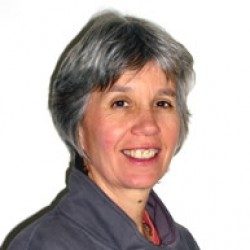 Lucy Gilson合作论文数Departement Openbare Gesondheld en Huisartskunde, School of Public Health and Family Medicine, University of Cape Town/School of Public Health, Faculty of Community and Health, University of the Western Cape2
 Pierre Pluye合作论文数Department of Family Medicine, McGill University2
 Jeffrey Braithwaite合作论文数Australian Institute of Health Innovation, Faculty of Medicine and Health Sciences, Macquarie University2
 Terry Young合作论文数School of Medicine and Public Health, University of Wisconsin-Madison2
 Martin Marshall合作论文数Institute of Epidemiology & Health Care, University College London2
 Brian David Hodges合作论文数University Health Network, University of Toronto2
 David L. Morgan合作论文数Department of Sociology, Portland State University2
 Nicholas Barron Mays合作论文数2
 Lorelei Lingard合作论文数Department of Medicine, Schulich School of Medicine & Dentistry, Western University2
 Glyn Elwyn合作论文数The Dartmouth Institute for Health Policy and Clinical Practice, Dartmouth College;Geisel School of Medicine, Dartmouth College2
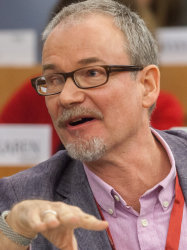 James G Barlow合作论文数Business School, Imperial College London2Nick Black合作论文数2
 Catherine Pope合作论文数Nuffield Department of Primary Care Health Sciences, Medical Sciences Division, University of Oxford2Celia Roberts合作论文数2
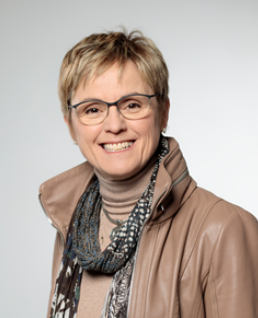 France Légaré合作论文数Department of Family Medicine and Emergency Medicine, Université Laval;Ottawa Hospital Research Institute;Research Centre in Sustainable Health, CHU de Québec Research Centre, Université Laval2Margarete Sandelowski合作论文数2Dariusz Galasinski合作论文数School of Humanities;Sciences University of Wolverhampton2
 Saville Kushner合作论文数Centre for Applied Research in Education, University of East Anglia2
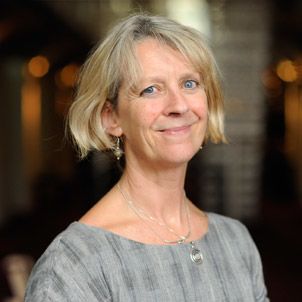 Sue Ziebland合作论文数Department of Primary Care Health Sciences, University of Oxford2
 Sally Thorne合作论文数School of Nursing, Faculty of Applied Science, The University of British Columbia2




