Measuring similarity between training examples is critical for curating high-quality and diverse pretraining datasets for language models. However, similarity is typically computed with a generic off-the-shelf embedding model that has been trained for tasks such as retrieval. Whether these embedding-based similarity metrics are well-suited for pretraining data selection remains largely unexplored. In this paper, we propose a new framework to assess the suitability of a similarity metric specifically for data curation in language model pretraining applications. Our framework's first evaluation criterion captures how well distances reflect generalization in pretraining loss between different training examples. Next, we use each embedding model to guide a standard diversity-based data curation algorithm and measure its utility by pretraining a language model on the selected data and evaluating downstream task performance. Finally, we evaluate the capabilities of embeddings to distinguish between examples from different data sources. With these evaluations, we demonstrate that standard off-the-shelf embedding models are not well-suited for the pretraining data curation setting, underperforming even remarkably simple embeddings that are extracted from models trained on the same pretraining corpus. Our experiments are performed on the Pile, for pretraining a 1.7B parameter language model on 200B tokens. We believe our analysis and evaluation framework serves as a foundation for the future design of embeddings that specifically reason about similarity in pretraining datasets.
We introduce Toto, a time series forecasting foundation model with 151 million parameters. Toto uses a modern decoder-only architecture coupled with architectural innovations designed to account for specific challenges found in multivariate observability time series data. Toto's pre-training corpus is a mixture of observability data, open datasets, and synthetic data, and is 4-10$\times$ larger than those of leading time series foundation models. Additionally, we introduce BOOM, a large-scale benchmark consisting of 350 million observations across 2,807 real-world time series. For both Toto and BOOM, we source observability data exclusively from our own telemetry and internal observability metrics. Extensive evaluations demonstrate that Toto achieves state-of-the-art performance on both BOOM and on established general purpose time series forecasting benchmarks. Toto's model weights, inference code, and evaluation scripts, as well as BOOM's data and evaluation code, are all available as open source under the Apache 2.0 License.
Speculative decoding (SD) accelerates large language model inference by employing a faster draft model for generating multiple tokens, which are then verified in parallel by the larger target model, resulting in the text generated according to the target model distribution. However, identifying a compact draft model that is well-aligned with the target model is challenging. To tackle this issue, we propose DistillSpec that uses knowledge distillation to better align the draft model with the target model, before applying SD. DistillSpec makes two key design choices, which we demonstrate via systematic study to be crucial to improving the draft and target alignment: utilizing on-policy data generation from the draft model, and tailoring the divergence function to the task and decoding strategy. Notably, DistillSpec yields impressive 10 - 45% speedups over standard SD on a range of standard benchmarks, using both greedy and non-greedy sampling. Furthermore, we combine DistillSpec with lossy SD to achieve fine-grained control over the latency vs. task performance trade-off. Finally, in practical scenarios with models of varying sizes, first using distillation to boost the performance of the target model and then applying DistillSpec to train a well-aligned draft model can reduce decoding latency by 6-10x with minimal performance drop, compared to standard decoding without distillation.
A primary challenge in large language model (LLM) development is their onerous pre-training cost. Typically, such pre-training involves optimizing a self-supervised objective (such as next-token prediction) over a large corpus. This paper explores a promising paradigm to improve LLM pre-training efficiency and quality by suitably leveraging a small language model (SLM). In particular, this paradigm relies on an SLM to both (1) provide soft labels as additional training supervision, and (2) select a small subset of valuable ("informative" and "hard") training examples. Put together, this enables an effective transfer of the SLM's predictive distribution to the LLM, while prioritizing specific regions of the training data distribution. Empirically, this leads to reduced LLM training time compared to standard training, while improving the overall quality. Theoretically, we develop a statistical framework to systematically study the utility of SLMs in enabling efficient training of high-quality LLMs. In particular, our framework characterizes how the SLM's seemingly low-quality supervision can enhance the training of a much more capable LLM. Furthermore, it also highlights the need for an adaptive utilization of such supervision, by striking a balance between the bias and variance introduced by the SLM-provided soft labels. We corroborate our theoretical framework by improving the pre-training of an LLM with 2.8B parameters by utilizing a smaller LM with 1.5B parameters on the Pile dataset.
Pre-training large language models is known to be extremely resource intensive and often times inefficient, under-utilizing the information encapsulated in the training text sequences. In this paper, we present SpacTor, a new training procedure consisting of (1) a hybrid objective combining span corruption (SC) and token replacement detection (RTD), and (2) a two-stage curriculum that optimizes the hybrid objective over the initial $\tau$ iterations, then transitions to standard SC loss. We show empirically that the effectiveness of the hybrid objective is tied to the two-stage pre-training schedule, and provide extensive analysis on why this is the case. In our experiments with encoder-decoder architectures (T5) on a variety of NLP tasks, SpacTor-T5 yields the same downstream performance as standard SC pre-training, while enabling a 50% reduction in pre-training iterations and 40% reduction in total FLOPs. Alternatively, given the same amount of computing budget, we find that SpacTor results in significantly improved downstream benchmark performance.
We present a novel framework, SoftSRV, that is used to generate targeted synthetic fine-tuning data for improving task-specific model performance. Given a sample from a target distribution, our proposed framework uses a data-driven loss minimization approach to steer a frozen large language model (LLM) to generate synthetic sequences that are similar to those from the target distribution. SoftSRV provides a practical improvement over common prompt engineering approaches that rely on human-engineered prompt-templates, which can be idiosyncratic, labor-intensive to craft, and may need to be specialized per domain. We empirically evaluate our method against standard baselines guiding a large LLM to generate synthetic data to fine-tune a smaller language model on three different domains (coding, math, reasoning). We perform these evaluations without any particular specialization of the framework to each domain, emphasizing the generality of our approach. We find that SoftSRV improves upon typical prompt engineering approaches, generating targeted data that leads to fine-tuned models with significantly better task-specific performance. In addition, SoftSRV-generated data better matches the target distribution according to the MAUVE similarity metric.
We present a subset selection algorithm designed to work with arbitrary model families in a practical batch setting. In such a setting, an algorithm can sample examples one at a time but, in order to limit overhead costs, is only able to update its state (i.e. further train model weights) once a large enough batch of examples is selected. Our algorithm, IWeS, selects examples by importance sampling where the sampling probability assigned to each example is based on the entropy of models trained on previously selected batches. IWeS admits significant performance improvement compared to other subset selection algorithms for seven publicly available datasets. Additionally, it is competitive in an active learning setting, where the label information is not available at selection time. We also provide an initial theoretical analysis to support our importance weighting approach, proving generalization and sampling rate bounds.
Given a labeled training set and a collection of unlabeled data, the goal of active learning (AL) is to identify the best unlabeled points to label. In this comprehensive study, we analyze the performance of a variety of AL algorithms on deep neural networks trained on 69 real-world tabular classification datasets from the OpenML-CC18 benchmark. We consider different data regimes and the effect of self-supervised model pre-training. Surprisingly, we find that the classical margin sampling technique matches or outperforms all others, including current state-of-art, in a wide range of experimental settings. To researchers, we hope to encourage rigorous benchmarking against margin, and to practitioners facing tabular data labeling constraints that hyper-parameter-free margin may often be all they need.
In real-world systems, models are frequently updated as more data becomes available, and in addition to achieving high accuracy, the goal is to also maintain a low difference in predictions compared to the base model (i.e. predictive "churn"). If model retraining results in vastly different behavior, then it could cause negative effects in downstream systems, especially if this churn can be avoided with limited impact on model accuracy. In this paper, we show an equivalence between training with distillation using the base model as the teacher and training with an explicit constraint on the predictive churn. We then show that distillation performs strongly for low churn training against a number of recent baselines on a wide range of datasets and model architectures, including fully-connected networks, convolutional networks, and transformers.
Here we leverage the power of the crowd: online users who are willing to answer questions about dish availability at restaurants visited. While motivated users are happy to contribute knowledge, they are much less likely to respond to "silly'' or embarrassing questions (e.g., "DoesPizza Hut serve pizza?'' or "DoesMike's Vegan Restaurant serve steak?'') In this paper, we study the problem of Vexation-Aware Active Learning (VAAL), where judiciously selected questions are targeted towards improving restaurant-dish model prediction, subject to a limit on the percentage of "unsure'' answers or "dismissals'' (e.g., swiping the app closed) measuring user vexation. We formalize the selection problem as an integer program and solve it efficiently using a distributed solution that scales linearly with the number of candidate questions. Since our algorithm relies on an accurate estimation of the unsure-dismiss rate (UDR), we present a regression model that provides high-quality results compared to baselines including collaborative filtering. Finally, we demonstrate in a live system that our proposed VAAL strategy performs competitively against classical (margin-based) active learning approaches while reducing the UDR for the questions being asked.
The ability to train complex and highly effective models often requires an abundance of training data, which can easily become a bottleneck in cost, time, and computational resources. Batch active learning, which adaptively issues batched queries to a labeling oracle, is a common approach for addressing this problem. The practical benefits of batch sampling come with the downside of less adaptivity and the risk of sampling redundant examples within a batch - a risk that grows with the batch size. In this work, we analyze an efficient active learning algorithm, which focuses on the large batch setting. In particular, we show that our sampling method, which combines notions of uncertainty and diversity, easily scales to batch sizes (100K-1M) several orders of magnitude larger than used in previous studies and provides significant improvements in model training efficiency compared to recent baselines. Finally, we provide an initial theoretical analysis, proving label complexity guarantees for a related sampling method, which we show is approximately equivalent to our sampling method in specific settings.
We analyze the problem of active covering, where the learner is given an unlabeled dataset and can sequentially label query examples. The objective is to label query all of the positive examples in the fewest number of total label queries. We show under standard non-parametric assumptions that a classical support estimator can be repurposed as an offline algorithm attaining an excess query cost of $\widetilde{\Theta}(n^{D/(D+1)})$ compared to the optimal learner, where $n$ is the number of datapoints and $D$ is the dimension. We then provide a simple active learning method that attains an improved excess query cost of $\widetilde{O}(n^{(D-1)/D})$. Furthermore, the proposed algorithms only require access to the positive labeled examples, which in certain settings provides additional computational and privacy benefits. Finally, we show that the active learning method consistently outperforms offline methods as well as a variety of baselines on a wide range of benchmark image-based datasets.
Federated learning is typically approached as an optimization problem, where the goal is to minimize a global loss function by distributing computation across client devices that possess local data and specify different parts of the global objective. We present an alternative perspective and formulate federated learning as a posterior inference problem, where the goal is to infer a global posterior distribution by having client devices each infer the posterior of their local data. While exact inference is often intractable, this perspective provides a principled way to search for global optima in federated settings. Further, starting with the analysis of federated quadratic objectives, we develop a computation- and communication-efficient approximate posterior inference algorithm -- federated posterior averaging (FedPA). Our algorithm uses MCMC for approximate inference of local posteriors on the clients and efficiently communicates their statistics to the server, where the latter uses them to refine a global estimate of the posterior mode. Finally, we show that FedPA generalizes federated averaging (FedAvg), can similarly benefit from adaptive optimizers, and yields state-of-the-art results on four realistic and challenging benchmarks, converging faster, to better optima.
Consider a setting where we wish to automate an expensive task with a machine learning algorithm using a limited labeling resource. In such settings, examples routed for labeling are often out of scope for the machine learning algorithm. For example, in a spam detection setting, human reviewers not only provide labeled data but are such high-quality detectors of spam that examples routed to them no longer require machine evaluation. As a consequence, the distribution of examples routed to the machine is intimately tied to the process generating labels. We introduce a formalization of this setting, and give an algorithm that simultaneously learns a model and decides when to request a label by leveraging ideas from both the abstention and active learning literatures. We prove an upper bound on the algorithm's label complexity and a matching lower bound for any algorithm in this setting. We conduct a thorough set of experiments including an ablation study to test different components of our algorithm. We demonstrate the effectiveness of an efficient version of our algorithm over margin sampling on a variety of datasets.
We propose using active learning based techniques to further improve the state-of-the-art semi-supervised learning MixMatch algorithm. We provide a thorough empirical evaluation of several active-learning and baseline methods, which successfully demonstrate a significant improvement on the benchmark CIFAR-10, CIFAR-100, and SVHN datasets (as much as 1.5% in absolute accuracy). We also provide an empirical analysis of the cost trade-off between incrementally gathering more labeled versus unlabeled data. This analysis can be used to measure the relative value of labeled/unlabeled data at different points of the learning curve, where we find that although the incremental value of labeled data can be as much as 20x that of unlabeled, it quickly diminishes to less than 3x once more than 2,000 labeled example are observed. Code can be found at https://github.com/google-research/mma.
Online active learning (AL) algorithms often assume immediate access to a label once a query has been made. However, due to practical constraints, the labels of these queried examples are generally only available in "batches". In this work, we present an analysis for a generic class of batch online AL algorithms, which reveals that the effects of batching are in fact mild and only result in an additional label complexity term that is quasi-linear in the batch size. To our knowledge, this provides the first theoretical justification for such algorithms and we show how they can be applied to batch variants of three canonical online AL algorithms: IWAL, ORIWAL, and DHM. Finally, we also present empirical results across several benchmark datasets that corroborate these theoretical insights.
Symmetric orthogonalization via SVD, and closely related procedures, are well-known techniques for projecting matrices onto $O(n)$ or $SO(n)$. These tools have long been used for applications in computer vision, for example optimal 3D alignment problems solved by orthogonal Procrustes, rotation averaging, or Essential matrix decomposition. Despite its utility in different settings, SVD orthogonalization as a procedure for producing rotation matrices is typically overlooked in deep learning models, where the preferences tend toward classic representations like unit quaternions, Euler angles, and axis-angle, or more recently-introduced methods. Despite the importance of 3D rotations in computer vision and robotics, a single universally effective representation is still missing. Here, we explore the viability of SVD orthogonalization for 3D rotations in neural networks. We present a theoretical analysis that shows SVD is the natural choice for projecting onto the rotation group. Our extensive quantitative analysis shows simply replacing existing representations with the SVD orthogonalization procedure obtains state of the art performance in many deep learning applications covering both supervised and unsupervised training.
In the era of big data, learning from categorical features with very large vocabularies (e.g., 28 million for the Criteo click prediction dataset) has become a practical challenge for machine learning researchers and practitioners. We design a highly-scalable vocabulary compression algorithm that seeks to maximize the mutual information between the compressed categorical feature and the target binary labels and we furthermore show that its solution is guaranteed to be within a $1-1/e \approx 63\%$ factor of the global optimal solution. To achieve this, we introduce a novel re-parametrization of the mutual information objective, which we prove is submodular, and design a data structure to query the submodular function in amortized $O(\log n )$ time (where $n$ is the input vocabulary size). Our complete algorithm is shown to operate in $O(n \log n )$ time. Additionally, we design a distributed implementation in which the query data structure is decomposed across $O(k)$ machines such that each machine only requires $O(\frac n k)$ space, while still preserving the approximation guarantee and using only logarithmic rounds of computation. We also provide analysis of simple alternative heuristic compression methods to demonstrate they cannot achieve any approximation guarantee. Using the large-scale Criteo learning task, we demonstrate better performance in retaining mutual information and also verify competitive learning performance compared to other baseline methods.
We tested in a live setting the use of active learning for selecting text sentences for human annotations used in training a Thai segmentation machine learning model. In our study, two concurrent annotated samples were constructed, one through random sampling of sentences from a text corpus, and the other through model-based scoring and ranking of sentences from the same corpus. In the course of the experiment, we observed the effect of significant changes to the learning environment which are likely to occur in real-world learning tasks. We describe how our active learning strategy interacted with these events and discuss other practical challenges encountered in using active learning in the live setting.
Modern learning models are characterized by large hyperparameter spaces. In order to adequately explore these large spaces, we must evaluate a large number of configurations, typically orders of magnitude more configurations than available parallel workers. Given the growing costs of model training, we would ideally like to perform this search in roughly the same wall-clock time needed to train a single model. In this work, we tackle this challenge by introducing ASHA, a simple and robust hyperparameter tuning algorithm with solid theoretical underpinnings that exploits parallelism and aggressive early-stopping. Our extensive empirical results show that ASHA outperforms state-of-the-art hyperparameter tuning methods; scales linearly with the number of workers in distributed settings; converges to a high quality configuration in half the time taken by Vizier, Google's internal hyperparameter tuning service) in an experiment with 500 workers; and beats the published result for a near state-of-the-art LSTM architecture in under $2\times$ the time to train a single model.
 Mehryar Mohri合作论文数Courant Institute of Mathematical Sciences, New York University;Google Research22
 Corinna Cortes合作论文数Google Research11
 Ameet Talwalkar合作论文数Machine Learning Department, Carnegie Mellon University;Amplify Partners11
 Giulia Desalvo合作论文数Google Research10
 Sanjiv Kumar合作论文数Google10
 Kevin Jamieson合作论文数Paul G. Allen School of Computer Science & Engineering, University of Washington;Department of Statistics, University of Washington8
 Dmitry Storcheus合作论文数6Jean-François Kagy合作论文数Google Research, New York, NY, USA5Lisha Li合作论文数5
 Umar Syed合作论文数Princeton University5
 Kareem Amin合作论文数Google Research4Gui Citovsky合作论文数Google DeepMind4
 Heinrich Jiang合作论文数Google4
 Yishay Mansour合作论文数School of Computer Science, Tel Aviv University;Google Research3
 Lazaros Karydas合作论文数Multimedia Understanding Group, Aristotle University of Thessaloniki3
 Ayan Chakrabarti合作论文数Google Research3
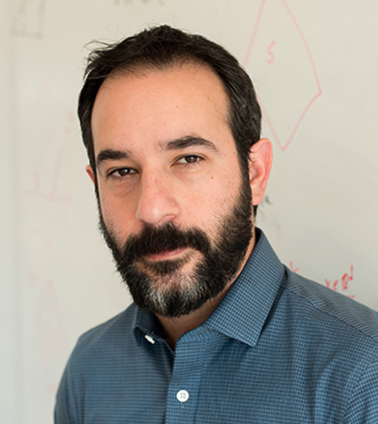 Alexandros G. Dimakis (Alex Dimakis)合作论文数Chandra Department of Electrical and Computer Engineering, The University of Texas at Austin;Department of Computer Science, College of Natural Sciences, The University of Texas at Austin3
 Tolga Kayadelen合作论文数2jana strnadova合作论文数2
 Shanshan Wu合作论文数Google2
 Dara Bahri合作论文数Google Research2
 Srikumar Ramalingam合作论文数Google Research2
 Sujay Sanghavi合作论文数Amazon;Chandra Department of Electrical and Computer Engineering, Cockrell School of Engineering, The University of Texas at Austin;Institute for Data Science, The University of Texas at Austin2
 Eric P. Xing合作论文数Computer Science Department, School of Computer Science, Carnegie Mellon University;Mohamed bin Zayed University of Artificial Intelligence;Petuum2Thomas Fu合作论文数Google Research2
 Alekh Agarwal合作论文数Google2
 Moritz Hardt合作论文数Max-Planck-Institute for Intelligent Systems, Max-Planck Institute;Tübingen AI Center, University of Tübingen2
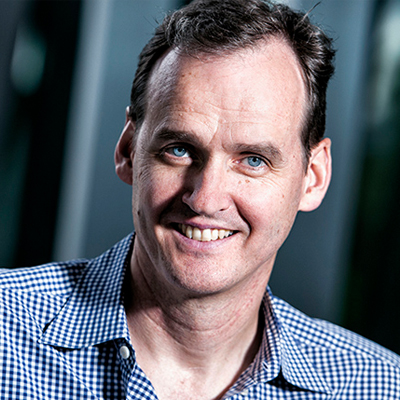 Peter L. Bartlett合作论文数Department of Statistics, University of California, Berkeley;Department of Electrical Engineering and Computer Sciences, University of California, Berkeley;Google;Google DeepMind2
 Ankit Singh Rawat合作论文数Google Research2Daniel Holtmann-Rice合作论文数Department of Computer Science, Yale University2
 Felix X. Yu合作论文数2
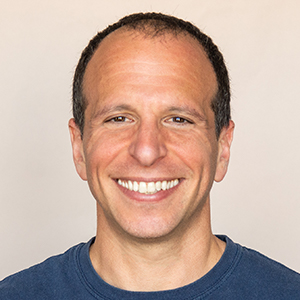 Ben Recht合作论文数Department of Electrical Engineering and Computer Sciences, University of California, Berkeley2
 Aditya Krishna Menon合作论文数Google2
 Vahab Mirrokni合作论文数Google Research2
 Kayur Patel合作论文数Google2Othmane Abou-Amal合作论文数1David Asker合作论文数1Viktoriya Zhukova合作论文数1Zongzhe Xu合作论文数1Stephan Xie合作论文数1Kan Wang合作论文数1Anna-Monica Toon合作论文数1Jean Ogier du Terrail合作论文数1Qiqi Ren合作论文数1Elise Ramé合作论文数1Hugo Miccinilli合作论文数1Charles Masson合作论文数1Chris Lettieri合作论文数1Salahidine Lemaachi合作论文数1




