Computer aided design (CAD) is ubiquitous: virtually any modern object was designed using editable CAD tools. However, with the shortage of available CAD datasets in its native editable and parametric format, boundary representation (B-Rep), it is ever more important to develop data-efficient methods for this domain. We present a new self-supervised pretraining task, Masked Topology Modeling (MTM), that leverages the face-adjacency graph, an induced structure unique to B-reps that the encoder can be asked to reconstruct. MTM masks a fraction of edges and trains a small head to predict each masked edge's convexity and curve type from the encoder's post-message-passing face features. We combine MTM with a MoCo-style momentum-queue contrastive learning over B-rep-aware augmentations, a BFS-connected face-region masked-reconstruction objective, and pretraining on the ABC dataset and our new procedurally generated dataset to show strong performance on a number of benchmarks.
Large language models (LLMs) have demonstrated remarkable capabilities, but their outputs can sometimes be unreliable or factually incorrect. To address this, we introduce Self Logits Evolution Decoding (SLED), a novel decoding framework that enhances the truthfulness of LLMs without relying on external knowledge bases or requiring further fine-tuning. From an optimization perspective, our SLED framework leverages the latent knowledge embedded within the LLM by contrasting the output logits from the final layer with those from early layers. It then utilizes an approximate gradient approach to enable latent knowledge to guide the self-refinement of outputs, thereby effectively improving factual accuracy. Extensive experiments have been conducted on established benchmarks across a diverse range of model families (LLaMA 2, LLaMA 3, Gemma) and scales (from 2B to 70B), including more advanced architectural configurations such as the mixture of experts (MoE). Our evaluation spans a wide variety of tasks, including multi-choice, open-generation, and adaptations to chain-of-thought reasoning tasks. The results demonstrate that SLED consistently improves factual accuracy by up to 20\% compared to existing decoding methods while maintaining natural language fluency and negligible latency overhead. Furthermore, it can be flexibly combined with other decoding methods to further enhance their performance.
Detecting out-of-distribution (OOD) examples is critical in many applications. We propose an unsupervised method to detect OOD samples using a $k$-NN density estimate with respect to a classification model's intermediate activations on in-distribution samples. We leverage a recent insight about label smoothing, which we call the {\it Label Smoothed Embedding Hypothesis}, and show that one of the implications is that the $k$-NN density estimator performs better as an OOD detection method both theoretically and empirically when the model is trained with label smoothing. Finally, we show that our proposal outperforms many OOD baselines and we also provide new finite-sample high-probability statistical results for $k$-NN density estimation's ability to detect OOD examples.
Pre-training large language models is known to be extremely resource intensive and often times inefficient, under-utilizing the information encapsulated in the training text sequences. In this paper, we present SpacTor, a new training procedure consisting of (1) a hybrid objective combining span corruption (SC) and token replacement detection (RTD), and (2) a two-stage curriculum that optimizes the hybrid objective over the initial $\tau$ iterations, then transitions to standard SC loss. We show empirically that the effectiveness of the hybrid objective is tied to the two-stage pre-training schedule, and provide extensive analysis on why this is the case. In our experiments with encoder-decoder architectures (T5) on a variety of NLP tasks, SpacTor-T5 yields the same downstream performance as standard SC pre-training, while enabling a 50% reduction in pre-training iterations and 40% reduction in total FLOPs. Alternatively, given the same amount of computing budget, we find that SpacTor results in significantly improved downstream benchmark performance.
Given a labeled training set and a collection of unlabeled data, the goal of active learning (AL) is to identify the best unlabeled points to label. In this comprehensive study, we analyze the performance of a variety of AL algorithms on deep neural networks trained on 69 real-world tabular classification datasets from the OpenML-CC18 benchmark. We consider different data regimes and the effect of self-supervised model pre-training. Surprisingly, we find that the classical margin sampling technique matches or outperforms all others, including current state-of-art, in a wide range of experimental settings. To researchers, we hope to encourage rigorous benchmarking against margin, and to practitioners facing tabular data labeling constraints that hyper-parameter-free margin may often be all they need.
Self-supervised contrastive representation learning has proved incredibly successful in the vision and natural language domains, enabling state-of-the-art performance with orders of magnitude less labeled data. However, such methods are domain-specific and little has been done to leverage this technique on real-world tabular datasets. We propose SCARF, a simple, widely-applicable technique for contrastive learning, where views are formed by corrupting a random subset of features. When applied to pre-train deep neural networks on the 69 real-world, tabular classification datasets from the OpenML-CC18 benchmark, SCARF not only improves classification accuracy in the fully-supervised setting but does so also in the presence of label noise and in the semi-supervised setting where only a fraction of the available training data is labeled. We show that SCARF complements existing strategies and outperforms alternatives like autoencoders. We conduct comprehensive ablations, detailing the importance of a range of factors.
Much effort has been devoted to making large and more accurate models, but relatively little has been put into understanding which examples are benefiting from the added complexity. In this paper, we demonstrate and analyze the surprisingly tight link between a model's predictive uncertainty on individual examples and the likelihood that larger models will improve prediction on them. Through extensive numerical studies on the T5 encoder-decoder architecture, we show that large models have the largest improvement on examples where the small model is most uncertain. On more certain examples, even those where the small model is not particularly accurate, large models are often unable to improve at all, and can even perform worse than the smaller model. Based on these findings, we show that a switcher model which defers examples to a larger model when a small model is uncertain can achieve striking improvements in performance and resource usage. We also explore committee-based uncertainty metrics that can be more effective but less practical.
Generalizing to out-of-distribution (OOD) data -- that is, data from domains unseen during training -- is a key challenge in modern machine learning, which has only recently received much attention. Some existing approaches propose leveraging larger models and pre-training on larger datasets. In this paper, we provide new insights in applying these approaches. Concretely, we show that larger models and larger datasets need to be simultaneously leveraged to improve OOD performance. Moreover, we show that using smaller learning rates during fine-tuning is critical to achieving good results, contrary to popular intuition that larger learning rates generalize better when training from scratch. We show that strategies that improve in-distribution accuracy may, counter-intuitively, lead to poor OOD performance despite strong in-distribution performance. Our insights culminate to a method that achieves state-of-the-art results on a number of OOD generalization benchmark tasks, often by a significant margin.
In real-world systems, models are frequently updated as more data becomes available, and in addition to achieving high accuracy, the goal is to also maintain a low difference in predictions compared to the base model (i.e. predictive "churn"). If model retraining results in vastly different behavior, then it could cause negative effects in downstream systems, especially if this churn can be avoided with limited impact on model accuracy. In this paper, we show an equivalence between training with distillation using the base model as the teacher and training with an explicit constraint on the predictive churn. We then show that distillation performs strongly for low churn training against a number of recent baselines on a wide range of datasets and model architectures, including fully-connected networks, convolutional networks, and transformers.
Detecting out-of-distribution (OOD) examples is critical in many applications. We propose an unsupervised method to detect OOD samples using a $k$-NN density estimate with respect to a classification model's intermediate activations on in-distribution samples. We leverage a recent insight about label smoothing, which we call the \emph{Label Smoothed Embedding Hypothesis}, and show that one of the implications is that the $k$-NN density estimator performs better as an OOD detection method both theoretically and empirically when the model is trained with label smoothing. Finally, we show that our proposal outperforms many OOD baselines and also provide new finite-sample high-probability statistical results for $k$-NN density estimation's ability to detect OOD examples.
Mode estimation is a classical problem in statistics with a wide range of applications in machine learning. Despite this, there is little understanding in its robustness properties under possibly adversarial data contamination. In this paper, we give precise robustness guarantees as well as privacy guarantees under simple randomization. We then introduce a theory for multi-armed bandits where the values are the modes of the reward distributions instead of the mean. We prove regret guarantees for the problems of top arm identification, top m-arms identification, contextual modal bandits, and infinite continuous arms top arm recovery. We show in simulations that our algorithms are robust to perturbation of the arms by adversarial noise sequences, thus rendering modal bandits an attractive choice in situations where the rewards may have outliers or adversarial corruptions.
Training modern neural networks is an inherently noisy process that can lead to high \emph{prediction churn} -- disagreements between re-trainings of the same model due to factors such as randomization in the parameter initialization and mini-batches -- even when the trained models all attain similar accuracies. Such prediction churn can be very undesirable in practice. In this paper, we present several baselines for reducing churn and show that training on soft labels obtained by adaptively smoothing each example's label based on the example's neighboring labels often outperforms the baselines on churn while improving accuracy on a variety of benchmark classification tasks and model architectures.
Training modern neural networks is an inherently noisy process that can lead to high \emph{prediction churn}-- disagreements between re-trainings of the same model due to factors such as randomization in the parameter initialization and mini-batches-- even when the trained models all attain high accuracies. Such prediction churn can be very undesirable in practice. In this paper, we present several baselines for reducing churn and show that utilizing the k-NN predictions to smooth the labels results in a new and principled method that often outperforms the baselines on churn while improving accuracy on a variety of benchmark classification tasks and model architectures.
We analyze the problem of active covering, where the learner is given an unlabeled dataset and can sequentially label query examples. The objective is to label query all of the positive examples in the fewest number of total label queries. We show under standard non-parametric assumptions that a classical support estimator can be repurposed as an offline algorithm attaining an excess query cost of $\widetilde{\Theta}(n^{D/(D+1)})$ compared to the optimal learner, where $n$ is the number of datapoints and $D$ is the dimension. We then provide a simple active learning method that attains an improved excess query cost of $\widetilde{O}(n^{(D-1)/D})$. Furthermore, the proposed algorithms only require access to the positive labeled examples, which in certain settings provides additional computational and privacy benefits. Finally, we show that the active learning method consistently outperforms offline methods as well as a variety of baselines on a wide range of benchmark image-based datasets.
MeanShift is a popular mode-seeking clustering algorithm used in a wide range of applications in machine learning. However, it is known to be prohibitively slow, with quadratic runtime per iteration. We propose MeanShift++, an extremely fast mode-seeking algorithm based on MeanShift that uses a grid-based approach to speed up the mean shift step, replacing the computationally expensive neighbors search with a density-weighted mean of adjacent grid cells. In addition, we show that this grid-based technique for density estimation comes with theoretical guarantees. The runtime is linear in the number of points and exponential in dimension, which makes MeanShift++ ideal on low-dimensional applications such as image segmentation and object tracking. We provide extensive experimental analysis showing that MeanShift++ can be more than 10,000x faster than MeanShift with competitive clustering results on benchmark datasets and nearly identical image segmentations as MeanShift. Finally, we show promising results for object tracking.
Learning under one-sided feedback (i.e., where we only observe the labels for examples we predicted positively on) is a fundamental problem in machine learning - applications include lending and recommendation systems. Despite this, there has been surprisingly little progress made in ways to mitigate the effects of the sampling bias that arises. We focus on generalized linear models and show that without adjusting for this sampling bias, the model may converge suboptimally or even fail to converge to the optimal solution. We propose an adaptive approach that comes with theoretical guarantees and show that it outperforms several existing methods empirically. Our method leverages variance estimation techniques to efficiently learn under uncertainty, offering a more principled alternative compared to existing approaches.
We study a constrained contextual linear bandit setting, where the goal of the agent is to produce a sequence of policies, whose expected cumulative reward over the course of $T$ rounds is maximum, and each has an expected cost below a certain threshold $\tau$. We propose an upper-confidence bound algorithm for this problem, called optimistic pessimistic linear bandit (OPLB), and prove an $\widetilde{\mathcal{O}}(\frac{d\sqrt{T}}{\tau-c_0})$ bound on its $T$-round regret, where the denominator is the difference between the constraint threshold and the cost of a known feasible action. We further specialize our results to multi-armed bandits and propose a computationally efficient algorithm for this setting. We prove a regret bound of $\widetilde{\mathcal{O}}(\frac{\sqrt{KT}}{\tau - c_0})$ for this algorithm in $K$-armed bandits, which is a $\sqrt{K}$ improvement over the regret bound we obtain by simply casting multi-armed bandits as an instance of contextual linear bandits and using the regret bound of OPLB. We also prove a lower-bound for the problem studied in the paper and provide simulations to validate our theoretical results.
The goal of active learning is to select the best examples from an unlabeled pool of data to label to improve a model trained with the addition of these labeled examples. We discuss a real-world use case for batch active sampling that works at larger scales. The standard margin algorithm has repeatedly been shown difficult to beat in practice for the classic active sampling set-up, but for larger batches and candidate pools, we show that margin sampling may not provide enough diversity. We present a simple variant of margin sampling for the batch setting that scores candidate samples by their minimum margin to a set of bootstrapped margins, and explain how this proposal increases diversity in a supervised and efficient way, and why it differs from the usual ensemble methods for active sampling. Experiments on benchmark datasets show that the proposed min-margin sampling consistently works better than margin as the batch size grows, and better than the five other diversity-encouraging active sampling methods we tested. Two real-world case studies illustrate the practical value, and help highlight challenges of applying and deploying batch active sampling.
Datasets often contain biases which unfairly disadvantage certain groups, and classifiers trained on such datasets can inherit these biases. In this paper, we provide a mathematical formulation of how this bias can arise. We do so by assuming the existence of underlying, unknown, and unbiased labels which are overwritten by an agent who intends to provide accurate labels but may have biases against certain groups. Despite the fact that we only observe the biased labels, we are able to show that the bias may nevertheless be corrected by re-weighting the data points without changing the labels. We show, with theoretical guarantees, that training on the re-weighted dataset corresponds to training on the unobserved but unbiased labels, thus leading to an unbiased machine learning classifier. Our procedure is fast and robust and can be used with virtually any learning algorithm. We evaluate on a number of standard machine learning fairness datasets and a variety of fairness notions, finding that our method outperforms standard approaches in achieving fair classification.
Modern machine learning models are often trained on examples with noisy labels that hurt performance and are hard to identify. In this paper, we provide an empirical study showing that a simple $k$-nearest neighbor-based filtering approach on the logit layer of a preliminary model can remove mislabeled training data and produce more accurate models than many recently proposed methods. We also provide new statistical guarantees into its efficacy.
 Dara Bahri合作论文数Google Research9
 Andrew Cotter合作论文数Google7
 Maya R. Gupta合作论文数Department of Electrical Engineering, University of Washington;Didero;Hoefnagel Wooden Jigsaw Puzzles Club;Artifact Puzzles6
 Aldo Pacchiano合作论文数Schmidt Center, Broad Institute of MIT and Harvard;Duan Family Center for Computing & Data Sciences, Faculty of Computing & Data Sciences, Boston University5
 Jennifer Jang合作论文数StoryGold;Grantscout;Fundify AI5Taman Narayan合作论文数4
 Ofir Nachum合作论文数OpenAI4
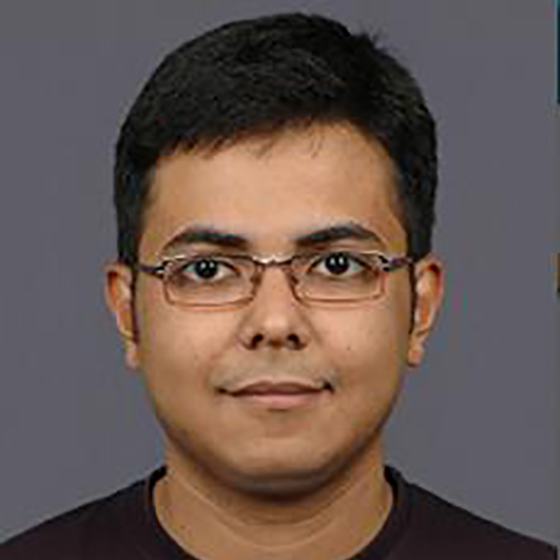 Karthik Sridharan合作论文数Department of Computer Science, Cornell University4
 Serena L. Wang合作论文数Harvard University;Google4
 Afshin Rostamizadeh合作论文数Google Research NY4
 Yi Tay合作论文数Google DeepMind3
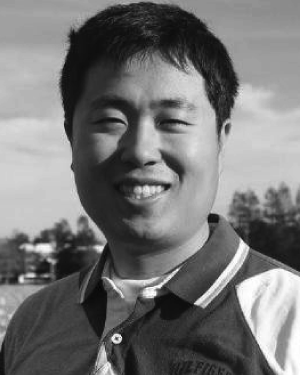 Seungil You合作论文数CALTECH, Control & Dynam Syst3
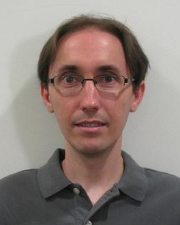 Donald Metzler合作论文数Google DeepMind3Tom Stepleton合作论文数2Ray Jiang合作论文数Google DeepMind2James E. Muller合作论文数2
 Melody Y. Guan合作论文数OpenAI2
 Sanjiv Kumar合作论文数Google2
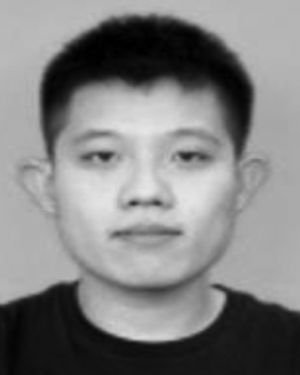 Tao Zhu合作论文数Google2
 Nathan Srebro合作论文数Department of Computer Science, University of Chicago;Toyota Technological Institute at Chicago2
 Blake Woodworth合作论文数George Washington University;Inria2
 Silvia Chiappa合作论文数DeepMind2
 Samory Kpotufe合作论文数Department of Statistics, Columbia University;Faculty of Arts and Sciences, Columbia University;Data Science Institute, Columbia University2Chun-Sung Ferng合作论文数1
 Ke Ye合作论文数Google1
 Jianyi Zhang合作论文数Center for Computational Evolutionary Intelligence, Pratt School of Engineering, Duke University1Jean-François Kagy合作论文数Google Research, New York, NY, USA1
 John Aslanides合作论文数DeepMind1Gui Citovsky合作论文数Google DeepMind1
 Andreas Veit合作论文数Google1
 Qijia Jiang合作论文数Lawrence Berkeley National Lab1
 Giulia Desalvo合作论文数Google Research1
 Tal Schuster合作论文数Google1
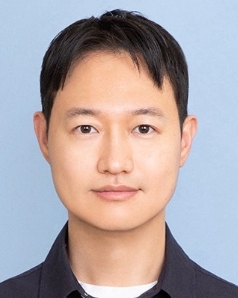 Seungyeon Kim合作论文数Google Research1
 Yaodong Yu合作论文数Meta1
 Mohammad Ghavamzadeh合作论文数Amazon1
 Yi Ma (马毅)合作论文数School of Computing and Data Science, The University of Hong Kong;Department of Electrical Engineering and Computer Sciences, University of California, Berkeley1
 Sen Zhao合作论文数Google Research1
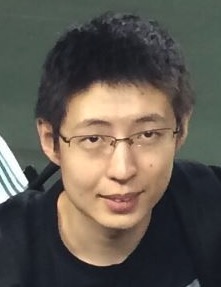 Yifan Wu合作论文数Machine Learning Department, Carnegie Mellon University1
 Michael I. Jordan (迈克尔·乔丹)合作论文数Department of Electrical Engineering and Computer Sciences, University of California, Berkeley;Department of Statistics, University of California, Berkeley;Department of Industrial Engineering and Operations Research, University of California, Berkeley1
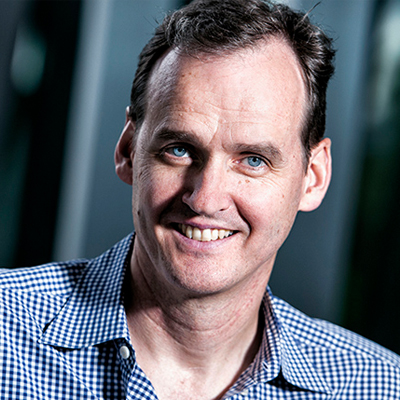 Peter L. Bartlett合作论文数Department of Statistics, University of California, Berkeley;Department of Electrical Engineering and Computer Sciences, University of California, Berkeley;Google;Google DeepMind1
 Lazaros Karydas合作论文数Multimedia Understanding Group, Aristotle University of Thessaloniki1
 Ankit Singh Rawat合作论文数Google Research1
 Dacheng Juan合作论文数Google1
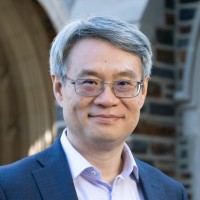 Yiran Chen (陈怡然)合作论文数Pierre R. Lamond Department of Electrical and Computer Engineering, Pratt School of Engineering, Duke University1
 Cyrus Rashtchian合作论文数Google Research1
 Been Kim合作论文数Google DeepMind1
 Jakub Łącki合作论文数Google Research1
 Harikrishna Narasimhan (Hari)合作论文数Google Research1




