Early detection of invasive species is crucial to deal effectively with biological invasions in ports, which are hotspots of species introductions. In this study, a simplified end-time PCR methodology conducted on eDNA from water samples was developed for rapid detection of the invasive seaweed Asparagopsis armata (four hours from water collection to result visualization). It was tested dockside in four international Spanish ports in presence of stakeholders, whose feedback was obtained to explore the real applicability of this biotechnology. Although biological invasions were not a main concern for them, results indicate a unanimous approval of the methodology by the stakeholders, having detected the presence of A. armata in three of the ports. Stakeholders suggested further developments for easier application of the tool and multiple species detection, to be adopted for the control of invasive species in ports.
Early detection of alien species is crucial to deal effectively with biological invasions in maritime ports, which are hotspots of non-indigenous species. In this study, a simplified end-time PCR methodology conducted on eDNA from water samples was applied dockside for rapid detection (four hours from water collection to result visualization) of the invasive seaweed Asparagopsis armata in four international Spanish ports. Feedback from port authorities was obtained in a focus group to explore the real applicability of this biotechnology. The stakeholders’ feedback was analyzed from relevant terms clustering. Although biological invasions are not a main concern for them, results indicate a unanimous approval of the methodology by the ports, having detected the presence of A. armata in three of them. Port stakeholders suggested further developments for easier application, especially in ballast water, and for multiple species detections, to be adopted for the control of invasive species in maritime ports.
Anthropogenic litter is considered a potential vector for the dispersal of non-indigenous species (NIS) in marine ecosystems. Using the bay of Gijon (Southwestern Bay of Biscay) as a case study, we studied the composition and potential transfer of the communities inhabiting three different environment components: 1) natural and artificial substrates from the international port of Gijon, 2) six proximate rocky beaches and 3) floating litter collected in the adjacent coast. A total of 717 organisms were morphologically identified and DNA barcoded using COI and 18S genes. In total 23 NIS were detected, six of them considered invasive in the area. The taxonomic profiles of the three environment components were significantly different, flotsam containing higher proportions of Hexanauplia and less mollusks, echinoderms and polychaetes than ports and beaches. Contrary to expectations, floating litter showed higher densities of native and exotic species than beaches or port surfaces. This and shared haplotypes between port, flotsam and beaches in some invasive species may indicate that marine litter could represent a new habitat for species to disperse into new areas.
Coastal areas are environments of high diversity and severely threatened by hazards as marine litter and biological invasions. Citizens' knowledge and awareness are drivers of changes needed to improve environment conservation. Density both of litter and IAS Cortaderia selloana were measured from six beaches in southwest Bay of Biscay along with awareness of inhabitants of the zone using a social survey. Relationship between beach littering, alien invasion and perception and awareness of adults and students were assessed. Litter levels were associated with port presence and showed relationship between environmental degradation, IAS and litter accumulation. Adults were more aware about both issues and their perception of litter and plant invasion were positively correlated. Results suggest enhancing marine awareness, with more effort addressed specifically to students. There is a misperception of the real magnitude of IAS and litter impacts that should be approached improving awareness about this topics in the younger generations.
Invasive alien species (IAS) are currently considered one of the greatest threats to global marine ecosystems. Thus, ships and maritime activity have been identified as the main factors responsible for the vast majority of accidental species translocations around the world, implying that prevention should be the core of environmental port policies. Preventive port strategies should include analyzing risks based on traffic origins and volumes, revising port policies for inspections, estimating probabilities of non-indigenous species (NIS) appearance, monitoring routine species within ports, and finally implementing management plans and focused actions. Here, we conducted a comprehensive NIS prediction analysis for the port of Gijon (northern Spain), one of the largest ports in the south Bay of Biscay, as a case study that can be extrapolated to other international seaports. An extensive bibliographic search (1953–2020) was conducted and we identified 380 species that have been transported through hull fouling and ballast water around the world. We evaluated their likelihood of arriving (from 14 years of traffic data) and becoming established (from habitat suitability and demonstrated impacts and invasion ability) within the Gijon port, creating a new NIS Invasion Threat Score (NIS-ITS). This new index could help to identify target species that are likely invaders for early detection and prevention policies within the port. The results showed that 15 NIS had >90% likelihood of becoming a biological invasion problem in Gijon Port. At the same time, we reported morphological and genetic analysis of biota found in two successive annual monitoring surveys of Gijon port and ships ( n = 612 individuals) revealing 18 NIS, including 6 of the NIS predicted from high NIS-ITS. Actually, 80% (12 NIS) of those potentially most dangerous species (NIS-ITS > 90%) have already been detected in the Bay of Biscay area. We propose the use of this new tool for a risk-reduction strategy in ports, based on accurate predictions that help in promoting specific early detection tests and specific monitoring for NIS that have a high chance of establishment. All international seaports can adopt this strategy to address the problem of biological invasions and become “blueports” in line with EU policy.
The status of aquatic ecosystems has historically been monitored by the use of biotic indices. However, few biotic measures consider the presence of non-indigenous species as a sign of anthropogenic pollution and habitat disturbance even when this may seriously affect the metric scores and ecological status classifications of an environment. Today, biological invasions are currently one of the greatest threats to biodiversity and sustainable blue economies around the world. In this work, environmental assessments were conducted in the Port of Gijon, Northern Spain, using eDNA metabarcoding, and the gAMBI (genetics based AZTI Marine Biotic Index) was estimated. Results indicate a high/good ecological status within the port. However, nine non-indigenous species and five invasive species were found, and a modification of the gAMBI that includes species invasiveness was proposed: Blue-gNIS. The index was preliminary tested against existing validated indices such as gAMBI, BENTIX (based on the ecology of macroinvertebrates) and ALEX (based on the invasiveness of the species). Blue-gNIS classified the port in a good ecological status and showed its potential usefulness to achieve more complete water quality assessments of ports.
Recreational ports are known to be sources of pollution to the coastal marine environment due to the pouring of pollutants or the transfer of invasive species to neighboring areas. Nonetheless, the responsibility of protecting the marine environment does not lie solely on the users of the ports, but also affects the rest of citizens. Thus, an effective communication is necessary between scientists and citizens to avoid the lack of knowledge and boost cooperation against these environmental problems. In this study, (focused on the marina of Gijon, Northwestern Spain) citizens set education and social media as the main sources of information, rarely considering science outreach. Also, their environmental knowledge showed to be based on a visual perception, rather than on a cognitive one, as marine litter was considered a great environmental problem, while invasive species and biofouling went unnoticed, remarking the lack of an effective communication from scientific sources.
Marine debris is currently a significant source of environmental and economic problems. Floating litter can be employed by marine organisms as a surface to attach to and use as spreading vector. Human activities are promoting the expansion of potentially harmful species into novel ecosystems, endangering autochthonous communities. In this project, more than 1,000 litter items were collected and classified from five beaches eastwards the port of Gijon, in Asturias, Spain. Next generation sequencing was employed to study biofouling communities attached to items of different materials. A dominance of DNA from Florideophyceae, Dinophyceae and Arthropoda was found, and four non-indigenous species (NIS) were identified. Results showed a clear preference of Florideophyceae and Bryozoa to attach on textile surfaces versus plastic ones. Considering that these taxa contain several highly invasive species described to date, these data emphasize the potential of textile marine debris as a vector for dispersal of NIS. Moreover, the closest beaches to the port contained a more similar biota profile than the farther ones, confirming that both plastic and textile marine litter can be vectors for species dispersal from ports.
 Eva Garcia-Vazquez合作论文数7
 Eduardo Dopico合作论文数Department of Education Sciences, University of Oviedo6
 Yaisel J. Borrell Pichs合作论文数Laboratorio de Genética Acuícola, Universidad de Oviedo6
 Marlene Bartolome Saez合作论文数4
 Sara Fernandez合作论文数3
 Fernando Rayon Vina合作论文数Corresponding author.3
 Laura Miralles合作论文数3
 Alba Ardura合作论文数Departamento de Biologia Funcional, Universidad de Oviedo3
 Deva Menéndez-Teleña合作论文数2Verónica Soto-López合作论文数2
 Gonzalo Machado-Schiaffino合作论文数Departamento Biologia Funcional, Universidad de Oviedo2
 Juan Luis Mateo合作论文数Intelligent Systems and Data Mining Group --- i3A, University of Castilla-La Mancha2
 Andres H. Arias合作论文数1Sara Fernandez-Rodriguez合作论文数1Noemi Rodriguez合作论文数University of Oviedo1Carleos C E合作论文数1
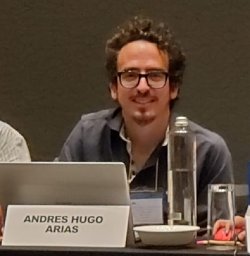 Arias Andrés合作论文数Departamento de Biología de Organismos y Sistemas (Zoología),, Universidad de Oviedo;Email: unknown.;Departamento de Biología de Organismos y Sistemas (Zoología),, Universidad de Oviedo1Jose L. Martinez合作论文数1Trinidad Perez合作论文数Facultad Veterinaria, Universidad de Extremadura1




