Several qualitative features distinguish bipedal from quadrupedal locomotion in mammals. In this study we show quantitative differences between quadrupedal and bipedal gait in the Japanese monkey in terms of gait patterns, trunk/hindlimb kinematics, and electromyographic (EMG) activity, obtained from 3 macaques during treadmill walking. We predicted that as a consequence of an almost upright body axis, bipedal gait would show properties consistent with temporal and spatial optimization countering higher trunk/hindlimb loads and a less stable center of mass (CoM). A comparatively larger step width, an ~9% longer duty cycle, and ~20% increased relative duration of the double-support phase were all in line with such a strategy. Bipedal joint kinematics showed the strongest differences in proximal, and least in distal, hindlimb joint excursions compared with quadrupedal gait. Hindlimb joint coordination (cyclograms) revealed more periods of single-joint rotations during bipedal gait and predominance of proximal joints during single support. The CoM described a symmetrical, quasi-sinusoidal left/right path during bipedal gait, with an alternating shift toward the weight-supporting limb during stance. Trunk/hindlimb EMG activity was nonuniformally increased during bipedal gait, most prominently in proximal antigravity muscles during stance (up to 10-fold). Non-antigravity hindlimb EMG showed altered temporal profiles during liftoff or touchdown. Muscle coactivation was more, but muscle synergies less, frequent during bipedal gait. Together, these results show that behavioral and EMG properties of bipedal vs. quadrupedal gait are quantitatively distinct and suggest that the neural control of bipedal primate locomotion underwent specific adaptations to generate these particular behavioral features to counteract increased load and instability. NEW & NOTEWORTHY Bipedal locomotion imposes particular biomechanical constraints on motor control. In a within-species comparative study, we investigated joint kinematics and electromyographic characteristics of bipedal vs. quadrupedal treadmill locomotion in Japanese macaques. Because these features represent (to a large extent) emergent properties of the underlying neural control, they provide a comparative, behavioral, and neurophysiological framework for understanding the neural system dedicated to bipedal locomotion in this nonhuman primate, which constitutes a critical animal model for human bipedalism.
The network between the parietal cortex and premotor cortex has a pivotal role in sensory-motor control. Grasping-related neurons in the anterior intraparietal area (AIP) and the ventral premotor cortex (F5) showed complementary properties each other. The object information for grasping is sent from the parietal cortex to the premotor cortex for sensory-motor transformation, and the backward signal from the premotor cortex to parietal cortex can be considered an efference copy/corollary discharge that is used to predict sensory outcome during motor behavior. Mirror neurons that represent both own action and other's action are involved in this system. This system also very well fits with body schema that reflects online state of the body during motor execution. We speculate that the parieto-premotor network, which includes the mirror neuron system, is key for mapping one's own body and the bodies of others. This means that the neuronal substrates that control one's own action and the mirror neuron system are shared with the "who" system, which is related to the recognition of action contribution, i.e., sense of agency. Representation of own and other's body in the parieto-premotor network is key to link between sensory-motor control and higher-order cognitive functions.
Visual self-face and proprioceptive postural recognition predominantly activate the right inferior frontoparietal cortices in human right-handers at the population level. In the present study, prompted by the finding that left-handedness may alter lateralized cortical organization for language, sensory-motor, and cognitive functions observed in right-handers, we investigated individual variations in right-dominant use of the cortices in 50 right-handers and 50 left-handers during self-body recognition (self-face and proprioceptive) tasks. We also investigated possible between-tasks differences in this right-dominant use, and possible atypical left–right reversed lateralization (right-dominance for language and left-dominance for self-body recognition) in left-handers. We measured brain activity using functional magnetic resonance imaging while participants performed a proprioceptive postural recognition task (experiencing illusory movements of the left and the right hands), a visual self-face recognition (self-other distinction) task, and a language (verb generation) task. To evaluate hemispheric dominance, we computed individual lateralization indices for the inferior frontoparietal activities in these tasks. Left-handedness altered the right-hemispheric dominance that was observed in the majority of right-handed participants in both self-body recognition tasks. In the left-handed group, during proprioceptive recognition, participants with right-lateralization, bilaterality, or left-lateralization were equally distributed, and during self-face recognition, right-lateralization was still observed, though the number of participants who demonstrated left-lateralization increased. Atypical left–right reversed lateralization was only observed in left-handed participants, but during both self-body recognition tasks. The present study provides novel and valuable knowledge about right-hemispheric dominance in self-body recognition affected by left-handedness. We discuss how functional lateralization of self-body recognition is shaped in human brain, in terms of handedness, language lateralization, and development.
Parietofrontal pathways play an important role in visually guided motor control. In this pathway, hand manipulation-related neurons in the inferior parietal lobule represent 3-D properties of an object and motor patterns to grasp it. Furthermore, mirror neurons show visual responses that are concerned with the actions of others and motor-related activity during execution of the same grasping action. Because both of these categories of neurons integrate visual and motor signals, these neurons may play a role in motor control based on visual feedback signals. The aim of this study was to investigate whether these neurons in inferior parietal lobule including the anterior intraparietal area and PFG of macaques represent visual images of the monkey's own hand during a self-generated grasping action. We recorded 235 neurons related to hand manipulation tasks. Of these, 54 responded to video clips of the monkey's own hand action, the same as visual feedback during that action or clips of the experimenter's hand action in a lateral view. Of these 54 neurons, 25 responded to video clips of the monkey's own hand, even without an image of the target object. We designated these 25 neurons as "hand-type." Thirty-three of 54 neurons that were defined as mirror neurons showed visual responses to the experimenter's action and motor responses. Thirteen of these mirror neurons were classified as hand-type. These results suggest that activity of hand manipulation-related and mirror neurons in anterior intraparietal/PFG plays a fundamental role in monitoring one's own body state based on visual feedback.
The first paper on mirror neurons was published in 1992. In the span of over two decades since then, much knowledge about the relationship between social cognitive function and the motor control system has been accumulated. Direct matching of visual actions and their corresponding motor representations is the most important functional property of mirror neuron. Many studies have emphasized intrinsic simulation as a core concept for mirror neurons. Mirror neurons are thought to play a role in social cognitive function. However, the function of mirror neurons in the macaque remains unclear, because such cognitive functions are limited or lacking in macaque monkeys. It is therefore important to discuss these neurons in the context of motor function. Rizzolatti and colleagues have stressed that the most important function of mirror neurons in macaques is recognition of actions performed by other individuals. I suggest that mirror neurons in the Macaque inferior pariental lobule might be correlated with body schema. In the parieto-premotor network, matching of corollary discharge and actual sensory feedback is an essential neuronal operation. Recently, neurons showing mirror properties were found in some cortical areas outside the mirror neuron system. The current work would revisit the outcomes of mirror neuron studies to discuss the function of mirror neurons in the monkey.
BACKGROUND:In the recent past several invasive cortical neuroprostheses have been developed. Signals recorded from the motor cortex (area MI) have been decoded and used to control computer cursors and robotic devices. Nevertheless, few attempts have been carried out to predict different grips.A Support Vector Machines (SVMs) classifier has been trained for a continuous decoding of four/six grip types using signals recorded in two monkeys from motor neurons of the ventral premotor cortex (area F5) during a reach-to-grasp task.FINDINGS:The results showed that four/six grip types could be extracted with classification accuracy higher than 96% using window width of 75-150 ms.CONCLUSIONS:These results open new and promising possibilities for the development of invasive cortical neural prostheses for the control of reaching and grasping.
Representation of one's own body (body schema) is the neural basis for sensory-motor control and recognition of self and other. Matching between efference copy and sensory feedback in parieto-frontal network seems to be an essential neuronal operation underlying the corporeal and social brain functions.
This paper is an introduction to the Mobiligence Program by MEXT (the Japanese Ministry of Education, Culture, Sports, Science, and Technology) from 2005 through 2009. The concept, subject, methodology, and results regarding the Mobiligence Program are discussed. Next, the future of mobiligence research is proposed with respect to a research target (the methodology focusing on embodiment) and research methodology (integrated dynamic model combining physiological and behavioral data and knowledge).
Six1 is a member of the six-homeodomain family of transcription factors. Six1 is expressed in multiple embryonic cell types and plays important roles in proliferation, differentiation and survival of precursor cells of different organs, yet its function during lung development was hitherto unknown. Herein we show that Six1−/− lungs are severely hypoplastic with greatly reduced epithelial branching and increased mesenchymal cellularity. Six1 is expressed at the distal epithelial tips of branching tubules as well as in the surrounding distal mesenchyme. Six1−/− lung epithelial cells show increased expression of differentiation markers, but loss of progenitor cell markers. Six1 overexpression in MLE15 lung epithelial cells in vitro inhibited cell differentiation, but increases the expression of progenitor cell markers. In addition, Six1−/− embryos and newborn mice exhibit mesenchymal overproliferation, decreased Fgf10 expression and severe defects in the smooth muscle component of the bronchi and major pulmonary vessels. These defects lead to rupture of major vessels in mutant lungs after birth. Treatment of Six1−/− epithelial explants in culture with recombinant Fgf10 protein restores epithelial branching. As Shh expression is abnormally increased in Six1−/− lungs, we also treated mutant mesenchymal explants with recombinant Shh protein and found that these explants were competent to respond to Shh and continued to grow in culture. Furthermore, inhibition of Shh signaling with cyclopamine stimulated Six1−/− lungs to grow and branch in culture. This study provides the first evidence for the requirement of Six1 in coordinating Shh–Fgf10 signaling in embryonic lung to ensure proper levels of proliferation and differentiation along the proximodistal axis of epithelial, mesenchymal and endothelial cells. These findings uncover novel and essential functions for Six1 as a critical coordinator of Shh–Fgf10 signaling during embryonic lung development. We propose that Six1 is hence critical for coordination of proper lung epithelial, mesenchymal and vascular development.
Many neurons in the monkey ventral premotor area F5 discharge selectively when the monkey grasps an object with a specific grip. Of these, the motor neurons are active only during grasping execution, whereas the visuomotor neurons also respond to object presentation. Here we assessed whether the activity of 90 task-related F5 neurons recorded from two macaque monkeys during the performance of a visually-guided grasping task can be used as input to pattern recognition algorithms aiming to decode different grips. The features exploited for the decoding were the mean firing rate and the mean interspike interval calculated over different time spans of the movement period (all neurons) or of the object presentation period (visuomotor neurons). A support vector machine (SVM) algorithm was applied to the neural activity recorded while the monkey grasped two sets of objects. The original set contained three objects that were grasped with different hand shapes, plus three others that were grasped with the same grip, whereas the six objects of the special set were grasped with six distinctive hand configurations. The algorithm predicted with accuracy greater than 95% all the distinct grips used to grasp the objects. The classification rate obtained using the first 25% of the movement period was 90%, whereas it was nearly perfect using the entire period. At least 16 neurons were needed for accurate performance, with a progressive increase in accuracy as more neurons were included. Classification errors revealed by confusion matrices were found to reflect similarities of hand grips used to grasp the objects. The use of visuomotor neurons' responses to object presentation yielded grip classification accuracy similar to that obtained from actual grasping execution. We suggest that F5 grasping-related activity might be used by neural prostheses to tailor hand shape to the specific object to be grasped even before movement onset.
We used mutual information analysis of neuronal activity in the macaque anterior intraparietal area (AIP) to examine information processing during a hand manipulation task. The task was to reach-to-grasp a three-dimensional (3D) object after presentation of a go signal. Mutual information was calculated between the spike counts of individual neurons in 50-ms-wide time bins and six unique shape classifications or 15 one-versus-one classifications of these shapes. The spatiotemporal distribution of mutual information was visualized as a two-dimensional image ("information map") to better observe global profiles of information representation. In addition, a nonnegative matrix factorization technique was applied for extracting its structure. Our major finding was that the time course of mutual information differed significantly according to different classes of task-related neurons. This strongly suggests that different classes of neurons were engaged in different information processing stages in executing the hand manipulation task. On the other hand, our analysis revealed the heterogeneous nature of information representation of AIP neurons. For example, "information latency" (or information onset) varied among individual neurons even in the same neuron class and the same shape classification. Further, some neurons changed "information preference" (i.e., shape classification with the largest amount of information) across different task periods. These suggest that neurons encode different information in the different task periods. Taking the present result together with previous findings, we used a Gantt chart to propose a hypothetical scheme of the dynamic interactions between different types of AIP neurons.
Parietal cortex contributes to body representations by integrating visual and somatosensory inputs. Because mirror neurons in ventral premotor and parietal cortices represent visual images of others' actions on the intrinsic motor representation of the self, this matching system may play important roles in recognizing actions performed by others. However, where and how the brain represents others' bodies and correlates self and other body representations remain unclear. We expected that a population of visuotactile neurons in simian parietal cortex would represent not only own but others' body parts. We first searched for parietal visuotactile bimodal neurons in the ventral intraparietal area and area 7b of monkeys, and then examined the activity of these neurons while monkeys were observing visual or tactile stimuli placed on the experimenter's body parts. Some bimodal neurons with receptive fields (RFs) anchored on the monkey's body exhibited visual responses matched to corresponding body parts of the experimenter, and visual RFs near that body part existed in the peripersonal space within approximately 30 cm from the body surface. These findings suggest that the brain could use self representation as a reference for perception of others' body parts in parietal cortex. These neurons may contribute to spatial matching between the bodies of the self and others in both action recognition and imitation.
 Masahiko Inase合作论文数18
 Vittorio Gallese合作论文数Department of Medicine and Surgery, Unit of Neuroscience, University of Parma;Institute of Philosophy, School of Advanced Study, University of London;Department of Art History and Archeology, Columbia University14Katsumi Nakajima合作论文数14H Sakata合作论文数13Masato Taira合作论文数11
 Futoshi Mori合作论文数8
 Hiroaki Ishida合作论文数7Leonardo Fogassi合作论文数7Hideo Sakata合作论文数6M Kaseda合作论文数5
 Vassilis Raos合作论文数Institute of Applied and Computational Mathematics, Foundation for Research and Technology-Hellas5L Fadiga合作论文数4Yuji Tanaka合作论文数4
 Giuseppe Luppino合作论文数Istituto di Fisiologia;Universitadi Parma;Istituto di Fisiologia, Universitadi Parma4M Kusunoki合作论文数4Tomio Arikuni合作论文数3Hiroko Sako合作论文数3S Mine合作论文数3Y Tanaka合作论文数3
 Kazutaka Maeda合作论文数3Takashi Shimizu合作论文数Graduate School of Animal and Food Hygiene, Obihiro University of Agriculture and Veterinary Medicine3
 Fumihiko Ishida合作论文数3Yasuo Higurashi合作论文数3Yutaka Sakaguchi合作论文数Graduate School of Information Systems, University of Electro-Communications, Tokyo, Japan3
 Silvestro Micera合作论文数School of Engineering, Ecole Polytechnique Federale de Lausanne2Okada K合作论文数2
 Giacomo Rizzolatti合作论文数University of Parma2
 Jun Ota (太田順)合作论文数Center for Engineering, School of Engineering, University of Tokyo2Osamu Matsuo合作论文数2
 Ken-Ichiro Tsutsui合作论文数Grad School of Life Sci, Tohoku Univ2Yukiko Miyashita合作论文数2
 Maria Alessandra Umiltà合作论文数Italian Institute of Technology, University of Parma2Ken-Ichi Oshio合作论文数2
 Hajime Asama合作论文数Asama Laboratory, Department of Precision Engineering, University of Tokyo2
 Jacopo Carpaneto合作论文数Advanced Robotics Technology and Systems Lab., Scuola Superiore Sant’Anna, Pisa, Italy2Nanako Niki合作论文数2K. Oshio合作论文数1Erisa Shikata合作论文数1S Ueshima合作论文数1Eiichi Naito合作论文数1
 Marzio Gerbella合作论文数Istituto Italiano di Tecnologia (IIT),, Università di Parma and Rete Multidisciplinare Tecnologica1Naito Eiichi合作论文数1
 Atsushi Iriki (入來篤史)合作论文数Laboratory for Symbolic Cognitive Development, RIKEN Center for Biosystems Dynamics Research1Makoto Kusunoki合作论文数1Toriyama T合作论文数1
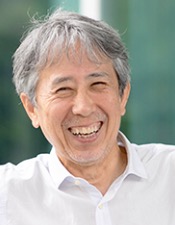 Mitsuo Kawato (川人光男)合作论文数Center for Information and Neural Networks;Brain Information Communication Research Laboratory Group, Advanced Telecommunications Research Institute International;Center for AdvancedIntegrated intelligence Research, Institute of Physical and Chemical Research1
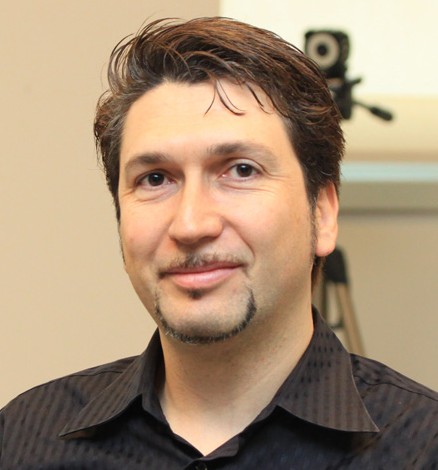 Erhan Öztop合作论文数Robotics Laboratory, Computer Science Department, Özyeğin University;Symbiotic Intelligent Systems Research Center, Institute for Open and Transdisciplinary Research Initiatives, Özyeğin University1Kaoru Takakusaki合作论文数1Ken Tsutsui合作论文数1




