This isn't the real cover. It's the one we wanted. Drawn by Freddy Bruckstein.
We show global uniqueness of the solution to a class of constrained variational problems, using scaling properties. This is used to establish the essential uniqueness of solutions of a large deviations problem in multiple dimensions. The result is motivated by models of buffers, and in particular the probability of, and typical path to overflow in the limit of small buffers, which we analyze.
The theory of large deviations for jump Markov processes has been generally proved only when jump rates are bounded below, away from zero (Dupuis and Ellis, 1995, The large deviations principle for a general class of queueing systems I.Trans. Amer. Math. Soc.347 2689--2751; Ignatiouk-Robert, 2002, Sample path large deviations and convergence parameters.Ann. Appl. Probab.11 1292--1329; Shwartz and Weiss, 1995,Large Deviations for Performance Analysis, Chapman-Hall). Yet, various applications of interest do not satisfy this condition. We describe several classes of models where jump rates diminish to zero in a Lipschitz continuous way. Under appropriate conditions, we prove that the sample path large deviations principle continues to hold. Under our conditions, the rate function remains an integral over a local rate function, which retains its standard representation.
A new parallel algorithm for simulating Ising spin systems is presented. The sequential prototype is the n-fold way algorithm [2], which is efficient but is hard to parallelize using conservative methods. Our parallel algorithm is optimistic. Unlike other optimistic algorithms, e.g., Time Warp, our algorithm is synchronous. It also belongs to the class of simulations known as "relaxation" [3]; hence it is named "synchronous relaxation." We derive performance guarantees for this algorithm. If N is the number of PEs, then under weak assumptions we show that the number of correct events processed per unit of time is, on average, at least of order N/logN. All communication delays, processing time, and busy waits are taken into account.
Synchronous relaxation , a new, general-purpose, efficient method for parallel simulation, is proposed. The method is applied to obtain a new parallel algorithm for simulating large circuit-switched communication networks. To show that synchronous-relaxation method is efficient, we present the results of circuit-switched network simulation experiments, and analytic approximations derived from a mathematical model of the simulation method.
Suppose that a child is likely to be weaker than its parent and a child who is too weak will not reproduce. What is the condition for a family line to survive? Let $b$ denote the mean number of children a viable parent will have; we suppose that this is independent of strength as long as strength is positive. Let $F$ denote the distribution of the change in strength from parent to child, and define $h = \sup_\theta(-\log(\int e^{\theta t} dF(t)))$. We show that the situation is black or white: 1. If $b < e^h, \text{then} P(\text{family line dies}) = 1$. 2. If $b > e^h, \text{then} P(\text{family survives}) > 0$. Define $f(x) := E(\text{number of members in the family} \mid \text{initial strength} x)$. We show that if $b < e^h$, then there exists a positive constant $C$ such that $\lim_{x \rightarrow \infty}e^{- \alpha x}f(x) = C$, where $\alpha$ is the smaller of the (at most) two positive roots of $b \int e^{st} dF(t) = 1$. We also find an explicit expression for $f(x)$ when the walk is on a lattice and is skip-free to the left. This process arose in an analysis of rollback-based simulation, and these results are the foundation of that analysis.
article Free Access Share on An analysis of rollback-based simulation Authors: Boris Lubachevsky AT&T Bell Labs, Murray Hill, NJ AT&T Bell Labs, Murray Hill, NJView Profile , Adam Schwartz Technion, IIT, Haifa, Israel Technion, IIT, Haifa, IsraelView Profile , Alan Weiss AT&T Bell Labs, Murray Hill, NJ AT&T Bell Labs, Murray Hill, NJView Profile Authors Info & Claims ACM Transactions on Modeling and Computer SimulationVolume 1Issue 2pp 154–193https://doi.org/10.1145/116890.116912Published:01 April 1991Publication History 98citation559DownloadsMetricsTotal Citations98Total Downloads559Last 12 Months70Last 6 weeks8 Get Citation AlertsNew Citation Alert added!This alert has been successfully added and will be sent to:You will be notified whenever a record that you have chosen has been cited.To manage your alert preferences, click on the button below.Manage my AlertsNew Citation Alert!Please log in to your account Save to BinderSave to BinderCreate a New BinderNameCancelCreateExport CitationPublisher SiteeReaderPDF
We introduce a new parallel discrete event simulation algorithm called filtered rollback. It is a combination of the Time Warp and bounded lag simulation algorithms introduced previously. The "filter" postpones event processing in some subsystems in favor of safer simulation. The filter may be tuned by the simulationist; at one extreme the algorithm is conservative, i.e., free from rollback, and at the other extreme the algorithm is purely optimistic, i.e., relying exclusively on rollback. We prove that rollback cascading, wherein a "chain reaction" of secondary and higher generation rollbacks appear in the simulation, can be bounded by an appropriate tuning. The tuning achieves a trade-off between the two extremes which yields an efficient and scalable algorithm. Our method of proof uses a representation of the rollback cascading as a tree and models such a tree as a Galton-Watson branching process on which an additional structure is defined, a random walk with a barrier.
Analyzes the random delay experienced by a message traversing a buffered, multistage packet-switching banyan network. The authors find the generating function for the distribution of waiting time at the first stage of the network for a very general class of traffic, assuming messages have discrete sizes. For example, traffic can be uniform or nonuniform, messages can have different sizes, and messages can arrive in batches. For light-to-moderate loads, the authors conjecture that delays experienced at the various stages of the network are nearly the same and are nearly independent. This allows us to approximate the total delay distribution. Better approximations for the distribution of waiting times at later stages of the network are attained by assuming that in the limit a sort of spatial steady state is achieved. Extensive simulations confirm the formulas and conjectures. >
 Adam Shwartz合作论文数Department of Electrical Engineering, Faculty of Electrical Engineering, Technion - Israel Institute of Technology9
 Boris D. Lubachevsky合作论文数6
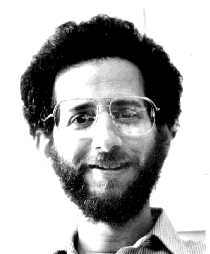 Clyde P Kruskal合作论文数Department of Computer Science, University of Illinois2C. P. Kruskal合作论文数1
 Albert G. Greenberg合作论文数Uber;Microsoft1
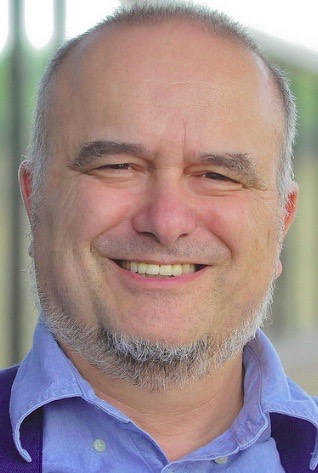 Marc Snir合作论文数Department of Computer Science, Siebel School of Computing and Data Science, The Grainger College of Engineering, University of Illinois at Urbana-Champaign1
 J. D. Biggins合作论文数University of Sheffield1Bell Laboratories合作论文数1I. Formal Calculations合作论文数1M. Suit合作论文数1




