We have computed the amplitude and phase responses of microwaves scattered from fluctuation wave packets that stream down a density gradient. At various wavelengths and packet sizes and shapes, the dominant scattered signal is either due to reflection from the critical surface or due to Bragg resonance scattering from below the critical density. Depending on the amplitude and wavelength of the fluctuation, one or both of these mechanisms might play a role. The delineation of their relative importance is carried out. Comparisons are made to previous studies within and beyond the Born approximation.1,2 The motivation for this work is a series of well-controlled experiments carried out by the plasma diagnostics group at UC Davis. We will show comparisons of our numerical results, using their experimental parameters, with their measurements of scattered microwave amplitude and phase.3
The initial value problem of the scalar wave equation modeling the propagation and scattering of O modes in a fluctuating plasma is solved numerically. Using split operator and FFT techniques, SOFTSTEP codes solve the slow temporal envelope equations that describe fluctuation reflectometry in the presence of space and time varying density profiles. Previous studies have revealed an inexplicable sensitivity of the scattered phase signal to input microwave frequency. This might suggest that the fluctuations that give rise to the scattered signals are highly localized in space, much more so than one might expect on physical grounds. Our simulations attempt to resolve this paradox by demonstrating the existence of additional interference between various signals that contribute to the same measured phase. As the launching and detecting antennas are a few wavelengths wide, the measured phase is an average over their surface areas. This results in added sensitivity and wavelength selectivity which might be overcome if more than one detector is used to simultaneously measure the scattered signal at various angles.
Ultra-short-pulse reflectometry is studied by means of the numerical integration of a one-dimensional full-wave equation for ordinary modes propagating in a plasma. The numerical calculations illustrate the potential of using the reflection of ultra-short-pulse, microwaves as an effective probe of the density profile even in the presence of significant density fluctuations. The difference in time delays of differing frequency components of the microwaves can be used to deduce the density profile. The modification of the reflected pulses in the presence of density fluctuations is examined and can be understood based on considerations of Bragg resonance. A simple and effective profile-reconstruction algorithm using the zero-crossings of the reflected pulse and subsequent Abel inversion is demonstrated. The robustness of the profile reconstruction algorithm in the presence of a sufficiently small amplitude density perturbation is assessed.
 Bedros Afeyan合作论文数Polymath Research Inc9
 Neville C.Luhmann合作论文数Department of Electrical and Computer Engineering, University of California, Davis5
 Nc Luhmann合作论文数1
 Scott Wilks合作论文数Lawrence Livermore National Laboratory1
 Bruce I. Cohen合作论文数Lawrence Livermore National Laboratory, University of California1
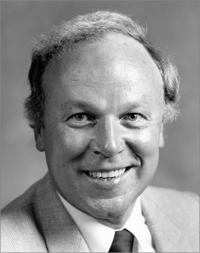 William L. Kruer合作论文数Lawrence Livermore National Laboratory1




