Resonance absorption (RA) occurs when a p-polarized electromagnetic wave, obliquely incident on an inhomogeneous plasma, tunnels past its turning point and resonantly excites an electron plasma wave (EPW) at the critical density. This phenomenon is important, for instance, in the direct drive approach to inertial fusion energy and is a particular example of a wider phenomenon in plasma physics known as mode conversion, which is crucial for heating magnetic fusion devices, such as tokamaks, via RF heating. Direct measurement of these RA-generated EPW accelerated hot electrons, with energy in the range of a few tens to a few hundreds of keV, is a challenging task due to the relatively low deflecting magnetic fields needed. The solution described here is a magnetic electron spectrometer (MES) with a continually changing magnetic field, lower at the entrance of the MES and gradually increasing toward the end, that enables the measurement of a wide spectral range of electrons with energies between 50 and 460 keV. Electron spectra taken in a LaserNetUS RA experiment were acquired from plasmas generated by irradiating polymer targets with the combination of an ∼300 ps pulse followed by a series of ten high intensity 50-200 fs duration laser pulses from the ALEPH laser at Colorado State University. The high intensity beam is designed as spike trains of uneven duration and delay pulses in order to modify the RA phenomenon.
Goals were to study the interplay between electron plasma waves (EPW), KEEN waves and externally generated magnetic fields. In particular, the Weibel instability B field generation process and its interrelationship with the existence of nonlinear EPWs in high energy density plasmas. We focused on a number of models of how Kinetic, Nonlinear Electron Plasma Waves, KNL-EPW and KEEN waves create anisotropic electron velocity distribution functions, e- VDF, and how these anisotropic e- VDFs in turn drive the Weibel instability and generate B fields. Our goal is to control the SRS and SKEENS processes that generate the KNL-EPW, control the anisotropy, and thus also control the dynamics of the resulting B fields, their influence on the transport coefficients and heat transport that results, their modification of SRS itself and the reinforced anisotropy driven loop gain.
The shape of the anisotropic velocity distribution function, beyond the realm of strict Maxwellians can play a significant role in determining the evolution of the Weibel instability dictating the dynamics of self-generated magnetic fields. For non-Maxwellian distribution functions, we show that the direction of the maximum growth rate wavevector changes with shape. We investigate different laser-plasma interaction model distributions which show that their Weibel generated magnetic fields may require closer scrutiny beyond the second moment (temperature) anisotropy ratio characterization.
Combining techniques from nonlinear, ultrafast and statistical optics, flexible control of laser-plasma instabilities is attainable. Adaptively using spike trains of uneven duration and delay (STUD pulses), single and multiple crossing beam instabilities become tamed.
We study the problem of the amplification of an ultra-short seed pulse via stimulated Raman backscattering (SRB) from a long pump pulse (assumed to have an envelope with a constant amplitude), in an underdense plasma. The SRB interaction couples the pump light wave to a daughter light seed wave propagating in the opposite direction, scattered off an electron plasma wave. In recent numerical simulations, it has been observed that besides stimulated Raman backward scattering (SRBS) and stimulated Raman forward scattering, other high-frequency kinetic instabilities can occur when modified distribution functions exist during the evolution of the system. In particular, we showed the prominent role played by kinetic electrostatic electron nonlinear (KEEN) waves (Afeyan et al. , 2004). We continue this work by applying a relativistic Vlasov–Maxwell code to study stimulated KEEN wave scattering (SKEENS) and its role in the SRBS short pulse amplification processes. An analysis of the full spectrum of waves participating in the amplification processes is presented. The absence of spurious noise in grid-based Vlasov codes allows us to follow the evolution of the system with a kinetic (collisionless) description. This affords us a glimpse at the intricate phase-space structures such as trapped particle orbits, which coexist and interact nonlinearly in the electron distribution function.
The various implementations of the STUD pulse program (spike trains of uneven duration and delay) for LPI (laser-plasma instability) control were studied in depth, and novel regimes were found. How to generate STUD pulses with large time-bandwidth products, how to measure their optical scattering signatures, and how to experimentally demonstrate their usefulness were explored. Theoretical and numerical studies were conducted on Stimulated Brillouin Scattering (SBS) and Crossed Beam Energy Transfer (CBET) including statistical models. We established how LPI can be tamed and gain democratized in space and time. Implementing STUD pulses on NIF was also studied. Future high rep rate lasers and fast diagnostics will aid in the adoption of the whole STUD pulse program for LPI control in High Energy Density Plasmas (HEDP).
 Andrew J Schmitt合作论文数Plasma Physics Division;Naval Research Laboratory;Plasma Physics Division, Naval Research Laboratory23
 D. S. Montgomery合作论文数Lawrence Livermore National Laboratoty, University of California21kirk won合作论文数18
 Stefan Hüller合作论文数Centre de Physique Théorique, Ecole Polytechnique16
 Robert Keith Kirkwood合作论文数Lawrence Livermore National Laboratory15Vlad Savchenko合作论文数13Me Cuneo合作论文数12
 J. Moody合作论文数12
 Tudor Wyatt Johnston合作论文数11guy r bennett合作论文数10
 Jean-Luc Starck合作论文数CosmoStat laboratory, Institute of Research into The Fundamental Laws of The Universe, Departement D'Astrophysique, CEA-Saclay10
 Frank Tsung合作论文数Particle-in-Cell and Kinetic Simulation Software Center, University of California, Los Angeles;Department of Physics & Astronomy, University of California, Los Angeles10
 Alain Ghizzo合作论文数10
 Magdi M. Shoucri合作论文数9Albert Chou合作论文数9Robert H. Lehmberg合作论文数9
 William L. Kruer合作论文数Lawrence Livermore National Laboratory9Marine Mardirian合作论文数8K. Won合作论文数7lee phillips合作论文数7Stephen Obenschain合作论文数U.S. Naval Research Laboratory7
 Eric Sonnendrücker合作论文数Department of Mathematics, Technische Universitat Munchen6U. Feldman合作论文数6R. A. Vesey合作论文数6
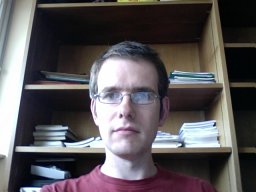 Michel Mehrenberger合作论文数IRMA, Université de Strasbourg and CNRS and INRIA-Nancy-Grand Est6
 Brian J. Macgowan合作论文数Lawrence Livermore National Laboratory6Nicolas Crouseilles合作论文数6David Martin Kehne合作论文数6
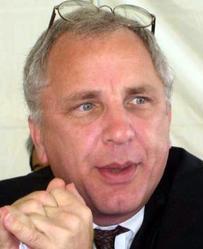 Martin M. Fejer合作论文数Fejer Group, Edward L. Ginzton Laboratory, Stanford University6Mathieu Charbonneau-Lefort合作论文数6
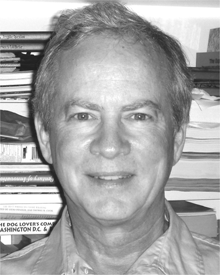 John F. Seely合作论文数6pierre raphael bertrand合作论文数5John L. Porter合作论文数5Ea Williams合作论文数5
 Richard L Berger合作论文数Lawrence Livermore National Laboratory5
 Warren Mori合作论文数Physics and Astronomy Department, College of Physical Sciences, University of California, Los Angeles;Samueli School of Engineering, University of California, Los Angeles5Rambo, Patrick合作论文数5
 Neville C.Luhmann合作论文数Department of Electrical and Computer Engineering, University of California, Davis5Victor Serlin合作论文数5Kent G. Estabrook合作论文数5
 Siegfried Glenzer合作论文数Department of Energy Sciences, Stanford University;SLAC National Accelerator Laboratory, Stanford University;Stanford PULSE Institute, Stanford University5Jae-Yong Oh合作论文数4Tudor Johnston合作论文数4james lawrence weaver合作论文数4William Bertsche合作论文数Department of Physics and Astronomy, School of Natural Sciences, Faculty of Science and Engineering, The University of Manchester4Simpson, W.W.合作论文数4Holland Glenn合作论文数4
 Mehlhorn T A合作论文数sandia national laboratories4




