Background: Pulmonary arterial hypertension (PAH) is a poor marker in patients with heart failure (HF). Biventricular (BiV) pacing is an alternative for patients with refractory symptoms of HF.
This article deals with the tracings of a patient having episodes of atrial flutter with 4:1 atrioventricular (AV) block increasing to 8:1 AV block. This phenomenon was attributed to the coexistence of 3-level block due to transverse dissociation with 2:1 AV block in the most proximal level, or first level as well as in the second level coexisting with a Wenckebach's period in the most distal, or third level. It is suggested that perhaps the term Wenckebach's periods during progression of 4:1 AV block best describes this arrhythmia so as to maintain the term alternating Wenckebach's periods only to those occurring when 2:1 block increases to higher degrees of AV block.
Background: Earlier reports suggest that the stimulation site in the left ventricle plays an important role in the outcome of cardiac resynchronization therapy. Although data suggest that the posterolateral (PL) location is ideal, this is not always feasible due to variations in the coronary sinus (CS) anatomy, suboptimal pacing thresholds and diaphragmatic stimulation. The purpose of this study is to assess the relationship between changes in ejection fraction (EF) and pulmonary artery pressure (PAP) and CS lead position.
Right ventricular pacing has been associated with worsening symptoms of heart failure in patients with cardiomyopathy. We describe a patient with severe ischemic cardiomyopathy and sinus node dysfunction who developed acute worsening of pulmonary hypertension immediately after right ventricular pacing.
Chapter 11 New Developments in Out-of-hospital Cardiac Defibrillation: Evaluation of AED Strategies Robert J. Myerburg MD, Robert J. Myerburg MDSearch for more papers by this authorShauntelle Elliott RN, Shauntelle Elliott RNSearch for more papers by this authorDonald G. Rosenberg MD, Donald G. Rosenberg MDSearch for more papers by this authorAlberto Interian Jr MD, Alberto Interian Jr MDSearch for more papers by this authorAgustin Castellanos MD, Agustin Castellanos MDSearch for more papers by this author Robert J. Myerburg MD, Robert J. Myerburg MDSearch for more papers by this authorShauntelle Elliott RN, Shauntelle Elliott RNSearch for more papers by this authorDonald G. Rosenberg MD, Donald G. Rosenberg MDSearch for more papers by this authorAlberto Interian Jr MD, Alberto Interian Jr MDSearch for more papers by this authorAgustin Castellanos MD, Agustin Castellanos MDSearch for more papers by this author Book Editor(s):Paul J. Wang MD, Paul J. Wang MD Director, Cardiac Arrhythmia Service and Cardiac Electrophysiology Laboratory, Professor of Medicine, Stanford University Medical CenterSearch for more papers by this authorGerald V. Naccarelli MD, Gerald V. Naccarelli MD Chief, Division of Cardiology, Professor of Medicine, Penn State University College of MedicineSearch for more papers by this authorMichael R. Rosen MD, Michael R. Rosen MD Gustavus A. Pfeiffer Professor of Pharmacology, Professor of Pediatrics, Director, Center for Molecular Therapeutics, Columbia UniversitySearch for more papers by this authorN.A. Mark Estes III MD, N.A. Mark Estes III MD Director, Cardiac Arrhythmia Service, Professor of Medicine, Tufts New England Medical CenterSearch for more papers by this authorDavid L. Hayes MD, David L. Hayes MD Chair, Division of Cardiovascular Diseases, Professor of Medicine, Mayo ClinicSearch for more papers by this authorDavid E. Haines MD, David E. Haines MD Director, Heart Rhythm Center, William Beaumont HospitalSearch for more papers by this author First published: 01 January 2005 https://doi.org/10.1002/9780470988725.ch11 AboutPDF ToolsRequest permissionExport citationAdd to favoritesTrack citation ShareShare Give accessShare full text accessShare full-text accessPlease review our Terms and Conditions of Use and check box below to share full-text version of article.I have read and accept the Wiley Online Library Terms and Conditions of UseShareable LinkUse the link below to share a full-text version of this article with your friends and colleagues. Learn more.Copy URL Share a linkShare onFacebookTwitterLinked InRedditWechat Summary This chapter contains sections titled: Background and definition of the problem History of out-of-hospital cardiac arrest survival Technical evolution of AEDs Police as cardiac arrest responders The Miami-Dade county, Florida, police-AED project Public access AEDs Interaction between CPR, ACLS, defibrillation, and survival Conclusion Acknowledgments New Arrhythmia Technologies RelatedInformation
Background: The current population impact of new implantable cardioverter defibrillator (ICD) Madit criteria and ACC/AHA biventricular (BiV) device implantation guidelines published in 2002 in patients with heart failure has not been fully evaluated. Objectives: The purpose of this study was to determine the current practice and potential eligibility of device implantation in patients (pts) admitted to a large tertiary care center with a primary diagnosis of heart failure. Methods: The data was collected from November of 2001 to April of 2003 as part of a national acute decompensated heart failure registry (Adhere). A complete patient profile was obtained in 261 pts including QRS width, ejection fraction (EF), NHYA functional class and underlying CHF etiology. Pts were separated into 3 groups according to device implantation during their index admission or eligibility for device implantation : ICD only (Madit I and II ICD criteria), BiV pacemaker only (ACC/AHA BiV guidelines, and BiV/ICD (both criteria). Results: The study included 169 male pts, mean age 59.8 +/− SD13.2 yrs and 92 females pts with a mean age of 59.9+/−12.5 yrs. ICD criteria were met by 43 pts (16%); of those 4 received an ICD and 4 a BiV/ICD. BiV criteria were met by 31 pts(31%), of those 4 received a BiV/ICD and 1 an ICD only. BiVICD criteria were met by 26 pts (10%); of those 1 received an ICD and 4 recieved a BiV/ICD. The devide group had a mean length of stay of 9.24+/−SD6.81 days and mean EF (19.92% +/−SD8.36). The non-device group had a mean length of stay of 7.29+/− SD6.32 days and mean EF(25.37+/−SD11.6). Three pts died during their hospital admission. Conclusion: This study reveals an apparent underutilization of device implantation according to published guidelines. Out of 261 pts, 105(40.2%) satisfied criteria for device impantation but only 18(17.1%) recieved one. Although the indication for device implantation is influenced by multiple factor, there appears to be a bias toward device implantation in the sicker or less responsive to medical therapy patients as suggested by the longer lenght of stay and lower EF in this group. The social and economic impact of device utilization on the healthcare system is left to be determined as new guidelines become more widely accepted.
Sudden cardiac death (SCD) is defined as death due to cardiovascular causes in a patient with or without known preexisting heart disease, in whom the mode and time of death are unexpected. The generally accepted temporal definition is bracketed by a period of up to 1 hour between the onset of an abrupt change in clinical status and loss of consciousness. 1 This time period is more appropriate for definitions used in population studies and clinical analyses than the absolute definition of biologic death, which may be delayed for days to a month or more by life-support interventions after central nervous system (CNS) injury. The former better relates to the pathophysiology leading to the ultimate death.
Diagnostic information retrieved from a pacemaker offers the ability to improve patient care. Pacemaker diagnostic data provides information regarding pacemaker function and activity, lead function, arrhythmia occurrence, and data to aid in optimal pacemaker programming. Current pacemakers incorporate greater storage capabilities, more efficient means of storing and presenting data between follow-up visits, and more options for programming diagnostic functions and algorithms. The cardiac rhythm of the paced patient can be evaluated via real-time intracardiac electrograms at interrogation, surface electrocardiograms, ambulatory electrocardiograms, and by pacemaker stored diagnostic function that may include stored intracardiac electrograms. This article focuses on the various methods of obtaining diagnostic information regarding pacemaker activity, pacemaker function, and diagnostic information on cardiac arrhythmias. The current clinical applicability and limitations of these methods and the use of stored diagnostic data in the clinical follow-up and study of patients with pacemakers is discussed.
Diagnostic information retrieved from a pacemaker offers the ability to improve patient care. Pacemaker diagnostic data provides information regarding pacemaker function and activity, lead function, arrhythmia occurrence, and data to aid in optimal pacemaker programming. Current pacemakers incorporate greater storage capabilities, more efficient means of storing and presenting data between follow-up visits, and more options for programming diagnostic functions and algorithms. The cardiac rhythm of the paced patient can be evaluated via real-time intracardiac electrograms at interrogation, surface electrocardiograms, ambulatory electrocardiograms, and by pacemaker stored diagnostic function that may include stored intracardiac electrograms. This article focuses on the various methods of obtaining diagnostic information regarding pacemaker activity, pacemaker function, and diagnostic information on cardiac arrhythmias. The current clinical applicability and limitations of these methods and the use of stored diagnostic data in the clinical follow-up and study of patients with pacemakers is discussed.
POLLAK, W.M., et al .: Pacemaker Diagnostics: A Critical Appraisal of Current Technology. Diagnostic information retrieved from a pacemaker offers the ability to improve patient care. Pacemaker diagnostic data provides information regarding pacemaker function and activity, lead function, arrhythmia occurrence, and data to aid in optimal pacemaker programming. Current pacemakers incorporate greater storage capabilities, more efficient means of storing and presenting data between follow‐up visits, and more options for programming diagnostic functions and algorithms. The cardiac rhythm of the paced patient can be evaluated via real‐time intracardiac electrograms at interrogation, surface electrocardiograms, ambulatory electrocardiograms, and by pacemaker stored diagnostic function that may include stored intracardiac electrograms. This article focuses on the various methods of obtaining diagnostic information regarding pacemaker activity, pacemaker function, and diagnostic information on cardiac arrhythmias. The current clinical applicability and limitations of these methods and the use of stored diagnostic data in the clinical follow‐up and study of patients with pacemakers is discussed. (PACE 2003; 26[Pt. I]:76–98)
Heart rate turbulence onset of unifocal, isolated, ventricular premature complex was negative in 18 young healthy subjects. Furthermore, applying the method of Schmidt to episodes of ventricular bigeminy gave values that were not only negative, but even more negative than those of the immediately preceding isolated ectopic beats. It is possible for the latter to have resulted from predominantly pre-bigeminy heart rate deceleration rather than from post-extrasystolic acceleration.
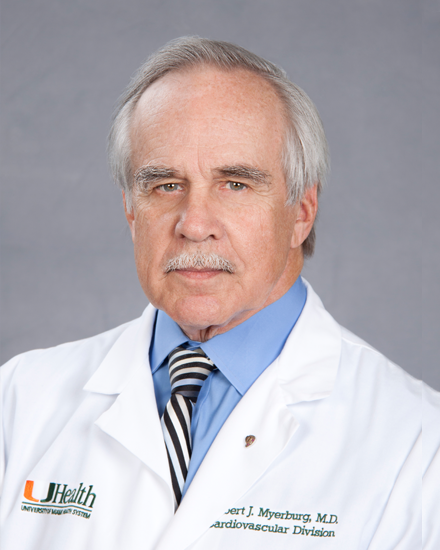 Robert J. Myerburg合作论文数Division of Cardiovascular Medicine, Department of Medicine, Miller School of Medicine, University of Miami67
 Agustin Castellanos合作论文数Department of Medicine, University of Miami School of Medicine60
 Raul D. Mitrani合作论文数University of Miami School of Medicine14F Moleiro合作论文数9Liaqat Zaman合作论文数9
 Pedro Fernandez合作论文数9Marilyn M. Cox合作论文数7DK COOPER合作论文数6
 Richard G. Trohman合作论文数Division of Cardiology, Rush University Medical Center6O GARCIA合作论文数5Km Kessler合作论文数5
 Heikki Veli Huikuri合作论文数Institute of Clinical Medicine, Department of Internal Medicine, University of Oulu5Marilyn Cox合作论文数5isaac s daniel合作论文数4Jeffrey Simmons合作论文数4G BREUER合作论文数4Rm Luceri合作论文数4Pollak Wayne M合作论文数4
 Richard Jerome Thurer合作论文数4Ester Levin合作论文数4Gustavo Lopera合作论文数4Simon Chakko合作论文数4H Huikuri合作论文数3
 Marielle Kloosterman合作论文数3Wj Stafford合作论文数3Javier Jimenez合作论文数3Kenneth M. Kessler合作论文数3Federico Moleiro合作论文数3Stephen Mallon合作论文数3Ej Demarchena合作论文数2E. Martin KLOOSTERMAN合作论文数2Jorge O Diaz合作论文数2JEFFERY D. SIMMONS合作论文数2Th Makikallio合作论文数2P Kozlovskis合作论文数2P R Fernandez合作论文数2MI FERNANDEZ合作论文数2Nc Saoudi合作论文数2
 Michael Horowitz合作论文数Adelaide Medical School, University of Adelaide;Faculty of Health and Medical Sciences, University of Adelaide;St Louis University2Robert J Myerburg合作论文数2Ivan J. Mendoza合作论文数2Carlos Arrieta合作论文数2Manuel Mayor合作论文数2Jeffrey D. Simmons合作论文数2
 George M Palatianos合作论文数2
 Abdel Fuenmayor合作论文数2Julia Alba合作论文数2Frances Glicksman合作论文数2
 Tapio Seppänen合作论文数Department of Computer Science and Engineering, University of Oulu2




