To slow the spread of the COVID-19 virus, some U.S. State governments restricted public activity by implementing lockdowns. The possibility remains that lockdowns may need to be implemented in the future, whether to combat novel strains of COVID-19 or entirely different viruses. The present experiment tested whether thinking about a future lockdown affects people’s attitudes toward institutions. We found that conservative participants who thought about a future lockdown reported less intention to adhere to the Centers for Disease Control and Prevention (CDC) guidelines and less trust in the government compared to conservative participants in a control condition. We also found that liberal participants who thought about a future lockdown reported more trust in the government and the CDC, compared to liberal participants in a control condition. These findings suggest that merely considering a future lockdown affects people’s intended adherence and institutional trust.
Previous research suggests that free will beliefs and moral responsibility beliefs are strongly linked, yet ultimately distinct. Unfortunately, the most common measure of free will beliefs, the free will subscale (FWS) of the Free Will and Determinism Plus, seems to confound free will beliefs and moral responsibility beliefs. Thus, the present research (1,700 participants across two studies) details the development of a 2-factor FWS - the FWS-II - that divides the FWS into a free will subscale and a moral responsibility subscale. The FWS-II showed good fit compared to standard fit thresholds and superior fit compared to the original FWS. The moral responsibility subscale was moderately correlated with general punitive attitudes and specific punitive assignments, even when controlling for the free will subscale. Conversely, the free will subscale was moderately correlated with conservativism and religiosity, even when controlling for the moral responsibility subscale. These results provide evidence that the FWS is better suited - psychometrically, theoretically, and practically - as a 2-factor measure of free will beliefs and moral responsibility beliefs than as a 1-factor measure of free will beliefs.
The present research tested whether people engage in more victim blaming toward unvaccinated COVID-19 victims than toward vaccinated COVID-19 victims. In two experiments (total N = 799), participants were randomly assigned to read one of two fictitious vignettes about an unvaccinated COVID-19 victim or a vaccinated COVID-19 victim. Both experiments found that participants attributed more blame and free will to the unvaccinated COVID-19 victim than to the vaccinated COVID-19 victim. Moreover, Experiment 2 found that free will attributions mediated the effect of victim vaccination status on victim blaming. Both experiments also found that participants with stronger liberal attitudes attributed more blame to the unvaccinated COVID-19 victim, but less blame to the vaccinated COVID-19 victim, than participants with stronger conservative attitudes. These relations remained significant while controlling for just world beliefs and participant vaccination status. The present research suggests that, compared to vaccinated COVID-19 victims, people believe that unvaccinated COVID-19 victims could have done otherwise—that is, they could have chosen to get vaccinated. The present research also suggests that liberals and conservatives differentially engage in victim blaming to corroborate their partisan attitudes.
Two online studies (Total N = 331) tested the hypothesis that individual differences in self-control and responses to uncertainty would predict adherence to Centers for Disease Control and Prevention (CDC, 2020a ) guidelines, reported stockpiling, and intentions to engage in hedonic behavior in response to the COVID-19 pandemic. Trait self-control ( b = 0.27, p = .015), desire for self-control (Study 1: b = 0.28, p = .001; Study 2: b = 0.27, p = .005), and cognitive uncertainty ( b = 0.73, p < .001) predicted more CDC adherence. State self-control (Study 1: b = −0.15, p = .012; Study 2: b = −0.26, p < .001) predicted less stockpiling, whereas emotional uncertainty ( b = 0.56, p < .001) and cognitive uncertainty ( b = 0.61, p < .001) predicted more stockpiling. State self-control ( b = −0.18, p = .003) predicted less hedonic behavior, whereas desire for self-control ( b = 0.42, p < .001) and emotional uncertainty ( b = 0.26, p = .018) predicted more hedonic behavior. Study 2 (pre-registered) also found that emotional uncertainty predicted more stockpiling and hedonic behavior for participants low in state self-control (stockpiling: b = −0.31, p < .001; hedonic behavior: b = 0.28, p = .025), but not for participants high in state self-control (stockpiling: b = 0.03, p = .795; hedonic behavior: b = −0.24, p = .066). These findings provide evidence that some forms of self-control and uncertainty influenced compliance with behavioral recommendations during the COVID-19 pandemic.
Two experiments tested the hypothesis that neurological abnormalities decrease punishment by decreasing perceptions of free will. Experiment 1 found that a brain tumor decreased punishment for criminal behavior by decreasing perceptions of the afflicted criminal's free will. This effect was stronger for liberal and non-religious participants than for conservative and religious participants. Experiment 2 replicated Experiment 1 and additionally found that a brain tumor decreased perceptions of the afflicted criminal's conscious decisions and true self, thereby decreasing perceptions of his free will, thereby decreasing his punishment. Collectively, these results suggest that neurological abnormalities decrease punishment by decreasing perceptions of free will, especially among liberals and non-religious people. These results also suggest that neurological abnormalities decrease perceptions of free will - and ultimately decrease punishment - by decreasing perceptions of conscious decisions and the true self.
Groups serve a variety of crucial functions, one of which is the provision of an identity and belief system that impart self-referent information, thereby reducing self-uncertainty. Entitative groups are more attractive for highly uncertain participants seeking groups for identification and self-uncertainty reduction than less entitative groups. The purpose of the current study was to explore how self-uncertainty impacts physiological arousal and stress responses. Using a mixed-methods design (N = 123), we found that self-uncertainty increased physiological arousal (measured via skin-conductance level) and stress responses (measured via heart rate). Furthermore, we found that uncertainty-activated physiological arousal and stress responses were decreased through identification with a high entitativity group. Our findings expand upon uncertainty identity theory by identifying physiological mechanisms that motivate uncertainty reduction.
We conducted a preregistered multilaboratory project (k = 36; N = 3,531) to assess the size and robustness of ego-depletion effects using a novel replication method, termed the paradigmatic replication approach. Each laboratory implemented one of two procedures that was intended to manipulate self-control and tested performance on a subsequent measure of self-control. Confirmatory tests found a nonsignificant result (d = 0.06). Confirmatory Bayesian meta-analyses using an informed-prior hypothesis (δ = 0.30, SD = 0.15) found that the data were 4 times more likely under the null than the alternative hypothesis. Hence, preregistered analyses did not find evidence for a depletion effect. Exploratory analyses on the full sample (i.e., ignoring exclusion criteria) found a statistically significant effect (d = 0.08); Bayesian analyses showed that the data were about equally likely under the null and informed-prior hypotheses. Exploratory moderator tests suggested that the depletion effect was larger for participants who reported more fatigue but was not moderated by trait self-control, willpower beliefs, or action orientation.
 Jessica L. Alquist合作论文数Department of Psychology, Florida State University6
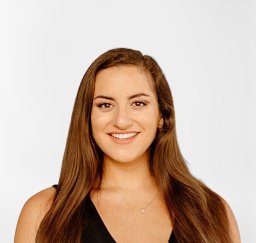 Jordan Rodriguez合作论文数3
 H. K. Martin合作论文数2
 Hayden L Holmes合作论文数Texas Tech Univ2
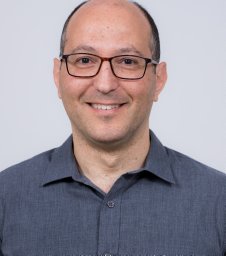 Liad Uziel合作论文数2Julie Eyink合作论文数1Grant J Butschek合作论文数1Samuel L. Clay合作论文数1Carine Meslot合作论文数1Christine A Lam合作论文数1
 Jessica Curtis合作论文数1
 Astrid Schuetz合作论文数1Carina M Gobes合作论文数1Victoria E. Forgea合作论文数1
 Konstantyn Sharpinskyi合作论文数1
 Karolin Gieseler合作论文数1Angelica Falkenstein合作论文数1Yu Song合作论文数1
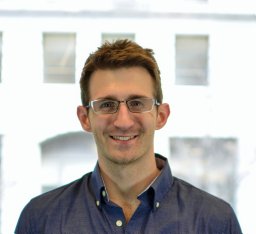 Julian A Wills合作论文数Dept Psychol, New York Univ1
 Nicholas M Michalak合作论文数Dept Psychol, Univ Michigan1Kareena del Rosario合作论文数Dept Psychiat, Univ Calif San Francisco1
 Katja Pollak合作论文数Univ British Columbia1
 Nicholas Sosa合作论文数Psychol Dept, Ohio Univ1
 Mindi Price合作论文数Dept Psychol Sci, Texas Tech Univ1
 Matthew Findley合作论文数Psychol Dept, Austin Coll1
 Julia Stapels合作论文数1
 Heather M Maranges合作论文数Department of Psychology, Wake Forest University;Corresponding author at: Heather Maranges, Department of Psychology, Winston-Salem, NC, 27109.;Department of Psychology, Wake Forest University1Janelle Sherman合作论文数1Natasha E Garcia-Willingham合作论文数1
 Josh Hodge合作论文数1Joshua K. Brown合作论文数Texas Tech University1Nick Lee合作论文数1Edward R. Hirt合作论文数1
 Elana M Gloger合作论文数Dept Psychol, Univ Kentucky1
 Valeria De Cristofaro合作论文数1
 Sophie Lohmann合作论文数Univ Illinois, Psychol Dept, 603 East Daniel St, Champaign, IL 61820 USA1
 Anand Krishna合作论文数Julius-Maximilians-Universität Würzburg1
 Kaitlyn M. Werner合作论文数Dept Psychol, Univ Penn1
 Marco Salvati合作论文数Dept Human Sci, Univ Verona1
 Krishna Patel合作论文数Amrita Vishwa Vidyapeetham, Amrita Sch Biotechnol1
 Anna J Finley合作论文数Ctr Hlth Minds, Univ Wisconsin1
 Mehrad Moeini-Jazani合作论文数Dept Mkt, Univ Groningen1
 Justina Gineikiene合作论文数Vilnius University1
 Elizabeth Niedbala合作论文数1
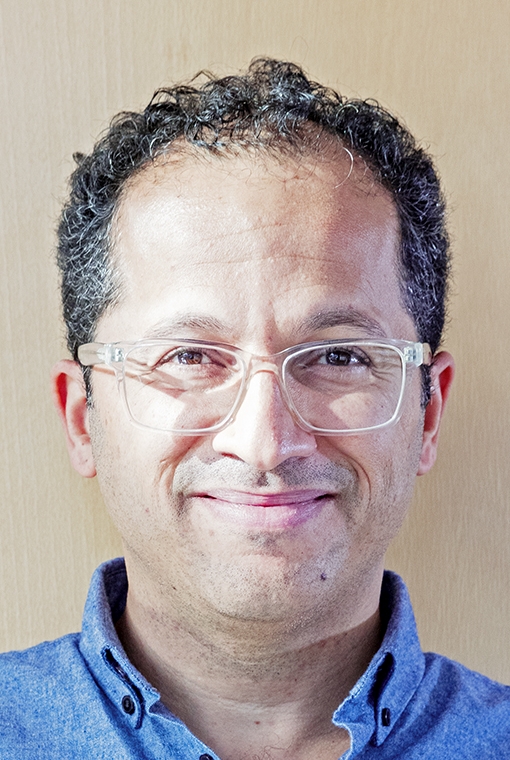 Michael Inzlicht合作论文数Department of Psychology, University of Toronto Scarborough;Department of Psychology, Faculty of Arts & Science, University of Toronto;Rotman Research Institute, Baycrest Hospital1
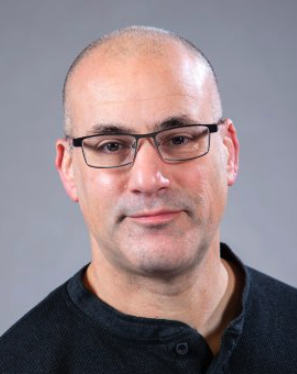 Mark Muraven合作论文数Department of Psychology, University at Albany1
 Howell Jennifer L合作论文数Department of Psychology, University of Florida1
 Saunders Blair合作论文数Department of Psychology, University of Toronto.1
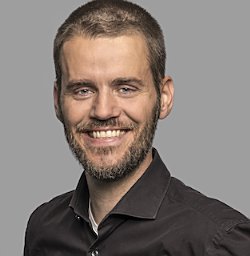 David D. Loschelder合作论文数Department of Social Psychology, Saarland University1




