Mindfulness intervention is commonly employed to lower rumination due to its ability to target the components of the ruminative process. The current study attempts to examine how environmental settings, nature vs. urban, are able to affect the outcome of mindfulness practices in its ability to reduce rumination. A total of 316 participants completed a survey regarding their mindfulness practices, trait mindfulness, dysfunctional attitude, attention control and rumination. Data was analysed using block variable analysis. Results indicate during the initial stages of one’s practice, a naturalistic environment could help reduce rumination better than an urban environment. However, people who meditate in urban environments can better reduce their rumination levels as they persist in their practice over time.
We conducted a preregistered multilaboratory project (k = 36; N = 3,531) to assess the size and robustness of ego-depletion effects using a novel replication method, termed the paradigmatic replication approach. Each laboratory implemented one of two procedures that was intended to manipulate self-control and tested performance on a subsequent measure of self-control. Confirmatory tests found a nonsignificant result (d = 0.06). Confirmatory Bayesian meta-analyses using an informed-prior hypothesis (δ = 0.30, SD = 0.15) found that the data were 4 times more likely under the null than the alternative hypothesis. Hence, preregistered analyses did not find evidence for a depletion effect. Exploratory analyses on the full sample (i.e., ignoring exclusion criteria) found a statistically significant effect (d = 0.08); Bayesian analyses showed that the data were about equally likely under the null and informed-prior hypotheses. Exploratory moderator tests suggested that the depletion effect was larger for participants who reported more fatigue but was not moderated by trait self-control, willpower beliefs, or action orientation.
Although there has been substantial support for the strength model of self-control (Baumeister’s, 1998) in the last two decades, questions have been raised regarding its validity as a recent meta-analysis by Carter and McCullough (2014) concluded the ego-depletion effect was statistically negligible. We postulate that these results may be due to the previous studies not ascertaining how much exertion was put into the first task of a sequential-task experiment, resulting in conflicting outcomes of the depletion effect. The primary goal of this study was to explore possible methods to reliably evoke the ego-depletion effect during a strength model experiment. This project involves two laboratory experiments using the sequential-task experimental paradigm while attempting to manipulate the self-control effort exerted during the first task by either offering monetary incentives or extending task durations in order to manipulate self-control exertion level. Results found that neither offering of incentives nor extending of task duration was able to effectively trigger the ego-depletion effect. These results illuminated critical methodological shortcomings in the ways that strength model have been tested in the past and suggests the research focus in the immediate future is to re-examine some experiment protocols of strength model research.
Interest in the application of mindfulness-based intervention for the treatment of psychological disorders and promotion of wellbeing has grown exponentially in recent years. Mindfulness-based interventions have been found to be beneficial for treatment of various forms of psychopathology as well as improve psychological wellbeing and enhance physical health. Little research has investigated for whom and under what conditions training people to use mindfulness-based therapeutic techniques is most effective. Recent studies have found evidence that individual differences in personality traits are associated with mindfulness. For example, neuroticism has been found to be negatively associated with mindfulness. These associations raise the possibility that individual differences in personality may potentially moderate the effectiveness of mindfulness-based interventions. In the present study we draw on Gray's revised Reinforcement Sensitivity Theory (r-RST) to examine relationships between personality traits, mindfulness and psychological distress. We found that the Flight, Fight, Freeze system mediated the relationship between trait mindfulness and psychological distress, while trait mindfulness moderated the relationship between the Flight, Fight, Freeze system and psychological distress. Both results are consistent with the suggestion that acquiring the skills from learning and practicing mindfulness techniques is potentially useful, particularly for threat-sensitive individuals with low to moderate levels of trait mindfulness.
OPINION article Front. Psychol., 09 February 2016Sec. Personality and Social Psychology Volume 7 - 2016 | https://doi.org/10.3389/fpsyg.2016.00136
A large body over the last 20 years has demonstrated that rumination is an important determinant of depression. Research has also shown that mindfulness practice can reduce rumination and depression. However, over this period the concept of rumination has evolved. Initially rumination was understood to be a single static construct that a person would engage in when they experience depressive mood. The Differential Activation Hypothesis introduced the idea that rumination involved an interaction between depressive mood and negative cognition. Later, this model was expanded with negative cognition seen to be the product of the memories of negative events and influenced by dysfunctional attitude. Rumination started to be viewed as an interactive cycle between depressive mood, memories of negative event and dysfunctional attitude. A separate but relevant literature has demonstrated the relationship between emotion and attention. However, to date no study has investigated the role of innate attention control capacity on the ruminative process. Similarly, despite attention control being viewed as a component of mindfulness, little research has investigated the relationship between attention control capacity and mindfulness. Thus, this study investigates how attention control capacity influences rumination and mindfulness. 392 adults recruited from two public universities and the general community were given a series of online survey questionnaires involving their depression and rumination levels, dysfunctional attitude, attention control, and different facets of trait mindfulness. Results found that attention control and dysfunctional attitude sequentially mediated the relationship between depressive mood and rumination. The mindfulness facets of Nonjudging and Nonreactivity also mediated the relationship between depressive mood and attention control. These results indicate that our theoretical understanding of the rumination process should include attention control for a more holistic conception. Further the results suggest that the enhancement of a Nonjudgemental attitude and Nonreactivity through mindfulness practice has the potential to interfere with the rumination process by enhancing a person’s attention control capacity and decreasing the attention allocation effects of emotional arousal.
 Chatzisarantis Nikos L D合作论文数2
 Martin Hagger合作论文数The Social and Health Psychology Applied Behavioral Research for Promotion and Prevention Lab, University of California, Merced2Julie Eyink合作论文数1Grant J Butschek合作论文数1Samuel L. Clay合作论文数1Carine Meslot合作论文数1Christine A Lam合作论文数1
 Jessica Curtis合作论文数1
 Astrid Schuetz合作论文数1Carina M Gobes合作论文数1Victoria E. Forgea合作论文数1
 Konstantyn Sharpinskyi合作论文数1
 Paul H Harnett合作论文数1
 Karolin Gieseler合作论文数1Angelica Falkenstein合作论文数1
 Alec J. Stinnett合作论文数1Yu Song合作论文数1
 Julian A Wills合作论文数Dept Psychol, New York Univ1
 Nicholas M Michalak合作论文数Dept Psychol, Univ Michigan1Kareena del Rosario合作论文数Dept Psychiat, Univ Calif San Francisco1
 Katja Pollak合作论文数Univ British Columbia1
 Nicholas Sosa合作论文数Psychol Dept, Ohio Univ1
 Mindi Price合作论文数Dept Psychol Sci, Texas Tech Univ1
 Matthew Findley合作论文数Psychol Dept, Austin Coll1
 Julia Stapels合作论文数1
 Heather M Maranges合作论文数Department of Psychology, Wake Forest University;Corresponding author at: Heather Maranges, Department of Psychology, Winston-Salem, NC, 27109.;Department of Psychology, Wake Forest University1Janelle Sherman合作论文数1Natasha E Garcia-Willingham合作论文数1
 Josh Hodge合作论文数1Edward R. Hirt合作论文数1
 Elana M Gloger合作论文数Dept Psychol, Univ Kentucky1
 Valeria De Cristofaro合作论文数1
 Sophie Lohmann合作论文数Univ Illinois, Psychol Dept, 603 East Daniel St, Champaign, IL 61820 USA1
 Anand Krishna合作论文数Julius-Maximilians-Universität Würzburg1
 Kaitlyn M. Werner合作论文数Dept Psychol, Univ Penn1
 Marco Salvati合作论文数Dept Human Sci, Univ Verona1
 Krishna Patel合作论文数Amrita Vishwa Vidyapeetham, Amrita Sch Biotechnol1
 Anna J Finley合作论文数Ctr Hlth Minds, Univ Wisconsin1
 Mehrad Moeini-Jazani合作论文数Dept Mkt, Univ Groningen1
 Justina Gineikiene合作论文数Vilnius University1
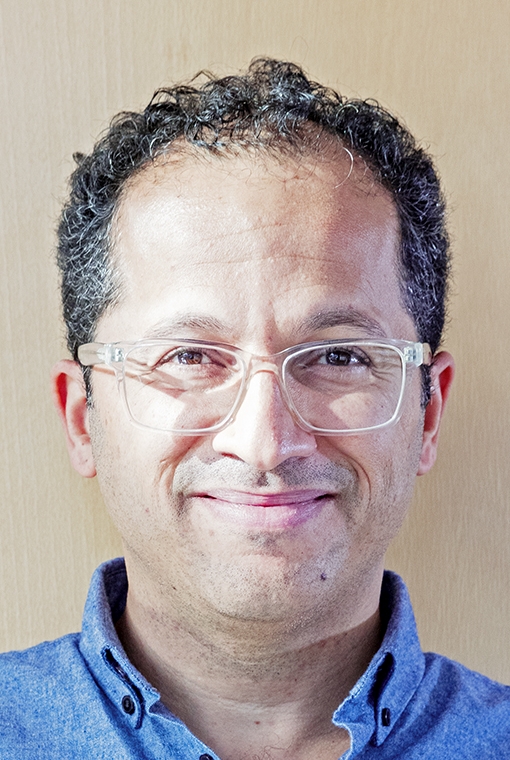 Michael Inzlicht合作论文数Department of Psychology, University of Toronto Scarborough;Department of Psychology, Faculty of Arts & Science, University of Toronto;Rotman Research Institute, Baycrest Hospital1
 Natasha Reid合作论文数Child Health Research Centre, Faculty of Medicine, The University of Queensland1
 Mark Muraven合作论文数Department of Psychology, University at Albany1
 Howell Jennifer L合作论文数Department of Psychology, University of Florida1
 Saunders Blair合作论文数Department of Psychology, University of Toronto.1
 David D. Loschelder合作论文数Department of Social Psychology, Saarland University1
 Rachel White合作论文数1Gronau Quentin F合作论文数Psychological Methods, University of Amsterdam1
 Akira Miyake合作论文数Department of Psychology and Neuroscience, College of Arts and Sciences, University of Colorado Boulder1




