Wood is one of the most used raw materials for the manufacture of various products. When it comes to industrial processes, it is necessary to optimize its use as much as possible. A key point for this optimization is the control of the of moisture content, because wood logs gradually start to lose water when stored in open air. Such water loss is directly reflected in weight and defects, such as warping and cracks, which impair the production processes causing irreparable losses of raw material. Given this context, this work develops a method based on Machine Learning to predict the variation in the weight of wood logs caused by moisture loss, without the need to purchase equipment or increase the cost of labor, using data that companies in the sector already have at their disposal. Several models were developed, with different algorithms, hyperparameter configurations and data distributions. These models were subjected to different evaluations. As an empirical evaluation, the metric chosen was the weighted balanced F-measure. The results showed that the model developed using the Random Forest classifier, classes balanced by the SMOTE algorithm, and hyperparameters adjusted with best tuning obtained the best classification performance. In the statistical analysis, the Align-Friedman and post hoc Holm tests were used. Considering the model based on Random Forest as a control method, the results showed that the algorithms Random Forest and Gradient Boosting can be considered statistically equivalent in most of the scenarios tested. Thus, a model based on Random Forest is suggested for industrial use, thus enabling better use of wood logs in production processes and helping decision-making in the industrial chain in which wood is inserted.
The emergence of new technologies for Virtual Reality has provided the user with a greater feeling of immersion. This immersion includes visual and sound perception, making realistic models for the light and sound behavior necessary. The Computer Graphics field is already well consolidated, but studies still need to be conducted on sound behavior in Virtual Reality. In this context, this work describes a new simplified underwater sound propagation model using the Unity game engine. The proposed approach allows the development of virtual environments with realistic underwater sound effects. Based on the ray-tracing algorithm, the implementation presents satisfactory results considering static sound sources. This paper describes the proposed model and a few test scenarios, and discusses the results obtained.
: The growing demand for wood in several industry segments and for its economical value increased illegal deforestation in several countries. As a direct consequence, climate changes across the planet have been aggravated, which further increases the prominence and concern about the issue of deforestation. So that these potentially catastrophic effects can be mitigated, it is necessary to better use wood in production processes. In this sense, a key point is the variation of the moisture content of the wood as a function of storage time, since, as the wood logs are stored outdoors, they gradually begin to lose water. Dry wood usually cracks, which makes most of its use unfeasible – depending on the purpose – which can even lead to the disposal of the log. Considering that there is a direct relationship between moisture content and wood weight, this work aims to develop different possible solutions for this problem using explainable machine learning methods, contributing to the effectiveness in controlling the variation in moisture content and, consequently, to a better use in the production processes in which wood is used as a raw material.
O mercado de trabalho vem valorizando o desenvolvimento das habilidades comportamentais e interpessoais dos profissionais conhecidas como soft skills. Neste artigo, apresentamos um programa de formação universitária para o desenvolvimento dessas habilidades, a partir do modelo EMBRAPII Capacitação 4.0. Neste programa, os estudantes têm suas soft skills estimuladas em ambientes estruturados em projetos de inovação provenientes de parcerias público-privadas. Para a avaliação da proposta, organizou-se um estudo de caso das competências Criatividade e Resolução de Problemas Complexos, em que se analisa o método através de uma pesquisa de opinião junto aos estudantes, qualificada a partir de um Discurso do Sujeito Coletivo (DSC).
Essa pesquisa tem o objetivo de identificar, através de exercícios práticos, as áreas cerebrais que são acionadas enquanto determinadas Inteligências Múltiplas (IM) são testadas. A partir da coleta de sinais elétricos amplificados, através do uso do Emotiv Epoc, identificamos as principais áreas cerebrais, e relacionamos as mesmas com algumas inteligências da teoria de Howard Gardner. Os testes realizados apontam que há uma ligação direta entre determinadas áreas cerebrais e as IMs examinadas nesta pesquisa.
We describe an experiment to assess the ease of use of Augmented Reality (AR) tools and techniques by end-users. We are particularly interested in the user-facing limitations of current AR technologies, both from the device and operating system support of open standards and from specific low-complexity tasks that users must perform to publish and consume AR content. For this, we design and implement a simple e-commerce architecture, where two user profiles interact, a retailer and a customer. A store-like platform is created for registering and publishing web-based 3D models by retailers. Customers then access this platform through smartphones, selecting and interacting with 3D content through markerless AR. We examine a small set of technologies in this particular context, briefly covering platform APIs and interoperable storage formats. We realize that there are still gaps in the content-consumption pipeline for AR that hampers straightforward usage by end-users. Moreover, even when choosing the simplest standards and widest available tools, we still notice device limitations and hardware incompatibilities. For evaluation, we discuss our human interface protocol, which shows that most users have no problems understanding AR interaction or perceiving the added value of this medium. Yet, users struggle with technical and interoperability issues, most of them outside of the scope of Augmented Reality techniques.
Currently, most network topologies used in online games to connect players are client-server, even for browser-based games. This work evaluates an alternative approach, describing the implementation of a hybrid peer-to-peer (P2P) architecture. We have developed the open-source Proton framework for multiplayer online games, using the browser-based Web Real-Time Communication (WebRTC) technology and running on the Unity game engine. As a case study, the same prototype game was built over both topologies: a client-server using the Photon Unity Networking (PUN) and the other using our proposed framework. We detail our implementation and then analyze networking metrics in two scenarios. Later, we show that the results are promising and assess that the WebRTC API is mature enough to serve as the basis for online multiplayer games.
Wood is the raw material for many manufactured goods. Charcoal, cellulose for the paper industry, laminated wood furniture, and even explosive products, such as gunpowder cotton, are possible destinations for the wood. On the other hand, the growing use of wood as a raw material has increased illegal deforestation and, as a direct consequence, it has changed the climate at a global level. The use of wood in production processes must be optimized to mitigate these adverse effects. One of the determining factors for this optimization is moisture content on wood, i.e., the ratio between the mass of water contained in the wood and dry wood mass. This article reviews the scientific literature published from 1959 to 2019 regarding the use of wood due to a better knowledge of its properties, particularly systems to explain or predict the moisture content. It contributes to the continuity of related research with the theme by ensemble the conducted studies into a single analysis.
This complete work on innovative practices, presents the proposal of a hybrid model between Problem-Based Learning (PBL) and the SCRUM agile project management framework, which seeks to facilitate the control and management of the teaching process, during the activities of students’ learning, in the face of difficulties still encountered such as: I. material support; II. students’ responsibility in the task; III. division of tasks; and IV. contribution and performance in tasks. We carried out a case study to validate the proposal, including SCRUM practices (such as the structure of the Daily Scrum), during the performance of PBL activities in an undergraduate class in Software Engineering, during the second semester of 2019. To investigate what was accomplished and discuss its results, we used the technique of Discourse of the Collective Subject (DCS) as a way to capture the impression of the students who participated in the study. Through the study of the resulting DCS, it was possible to identify that SCRUM practices enhanced the PBL process with regard to the control and management of teams in the projects developed in the discipline, which allowed us to conclude the adequacy of the proposed model and its potential to contribute to the student’s teaching-learning process.
This paper presents a new microscopic model to simulate the behavior of vehicle traffic through a bio-inspired agent-based method. The proposed model reinterprets a biologically-motivated method for generating leaf venation patterns in order to propose terrain reasoning, a technique that has been widely used in simulations and games. The main idea is to represent unoccupied spaces through abstract markers distributed in the environment. These markers identify free regions for the movement of vehicles in the simulated traffic environment. The markers provide space information and report the vehicular flow of the simulated scenario, including flow density and velocity. Typical behaviors observed in real traffic, including inhomogeneous driver models, lane changing and merging trajectories, are emergent properties of the proposed model. We demonstrate the flexibility and robustness of our model on simulation environments, comparing the statistical results with a commercial software used for traffic simulation.
Este artigo apresenta uma revisão de literatura sobre a teoria das Inteligências Múltiplas (teoria das IM) e como a Educação, a Neurociência e o Pensamento computacional se correlacionam com esta teoria principal. Esta revisão é focada em trabalhos apresentados na última década (2010-2019). Os trabalhos foram selecionados através de palavras-chave em seis bases de dados acadêmicas. A maioria dos trabalhos relaciona as IM com Educação e, em seguida, com a Neurociência e, por último, com o Pensamento computacional. A principal ideia é buscar a inter-relação entre estas áreas e como elas podem ser trabalhadas conjuntamente, sendo foco para pesquisas futuras.
A principal contribuição deste trabalho é o desenvolvimento de um modelo de gatilhos que atuam na mudança de motivação do indivíduo para realizar uma atividade específica. Para validar o modelo, desenvolvemos um estudo de caso focado no uso lógico-racional dos recursos de energia elétrica. Este estudo foi realizado na Espanha e no Brasil a fim de avaliar possíveis semelhanças ou diferenças entre os tipos de motivação e comportamentos sustentáveis. A identificação do perfil motivacional possibilita a organização de mensagens motivacionais (gatilhos) que, quando enviadas a usuários de tecnologias móveis, podem potencializar o processo de aprendizagem onipresente neste trabalho relacionado à educação ambiental. A abordagem metodológica utilizada neste trabalho foi uma análise qualitativa e quantitativa. A análise qualitativa foi desenvolvida por meio do Discurso do Sujeito Coletivo, que é um método que permite ao pesquisador conhecer e descrever opiniões e representações descritivas, permitindo delinear perfis de comportamento. A análise quantitativa foi feita através da média, desvio padrão das respostas dos especialistas de um instrumento para avaliar a clareza, pertinência e neutralidade das informações do gatilho. Além disso, também desenvolvemos um instrumento para avaliar a relação entre motivação e os gatilhos, a fim de observar quais gatilhos estão relacionados a cada tipo de motivação. A partir desses procedimentos, desenvolvemos nosso modelo de pesquisa, que visa no seu processo final verificar se as mediações de aprendizagem ubíquas nos processos motivacionais dos indivíduos são capazes de mudar seu comportamento, tornando-o mais sustentável. O processo de aquisição de conhecimento caracterizado pela aprendizagem onipresente consiste em um tipo de aprendizagem aberta que pode ser obtida em quaisquer ocasiões e contextos a partir do uso de artefatos tecnológicos.
As tecnologias emergentes surgem como facilitadoras no processo de interação entre os agentes de desenvolvimento no território e os sistemas de conhecimento virtuais, dos quais surge o conceito de cidade inteligente. Contudo, percebemos que essa inteligência da cidade desconsidera em seu escopo os fatores associados à construção de saberes gerados pela opinião pública. Neste estudo, buscamos discutir como a Ciência de Dados pode transformar-se em uma potente ferramenta, capaz de revelar processos emergentes de cognição partilhada entre os membros de um grupo social e as Tecnologias de Informação e Comunicação (TCIs). Para tanto, apresentamos um estudo de caso no qual a partir de um processo de Mineração de Conhecimento, em que identificamos relações impressas por um conjunto de mensagens do site de rede social Facebook com os eixos da inteligência da cidade, bem como o sentimento da população a ele relacionado - avaliamos as implicações reveladas por este conjunto informações para a constituição dos fenômenos sociais na Educação. Como resultado apresentamos as implicações reveladas pela ordem sócio-educacional contida no conhecimento gerado por esse processo de mineração de dados e uma análise estatística descritiva. No entanto, não nos preocupamos em extrair uma regularidade (média) da percepção da população sobre um determinado aspecto da cidade, bem como não desejamos transformar esses dados em um regulamento a ser seguido como uma norma ou regra pela sociedade. Assim, a observação das diferentes dimensões que compõem uma cidade encarnam múltiplas micro-regularidades entre inúmeras variáveis heterogêneas e, de modo algum, apresentam-se como regulamentos.
Sabe-se que em uma situação de incêndio, uma das principais causas de mortes é a inalação de fumaça. Portanto, é essencial que, no início de situações de emergência, as pessoas saiam rapidamente para evitar possíveis lesões. Neste trabalho foi investigada a dispersão de fumaça em locais fechados, e simulado o comportamento de multidões nessas situações. O objetivo é apresentar uma nova proposta para modelar a dispersão de fumaça em ambientes fechados, utilizando o conceito de campos potenciais associado a autômatos celulares. Para validar o trabalho, foi implementado um modelo comportamental para a simulação de evacuação de pessoas utilizando a abordagem multiagente.
We often visit places with a large concentration of people, such as malls, football stadiums, restaurants or nightclubs. Through the media, there are often reports of emergency's cases in these places. It is known that in a fire situation, one of the main causes of deaths is the inhalation of smoke. Therefore, it is essential that at the start of emergency situations people leave quickly to avoid possible injuries. We have investigated the dispersion of smoke in closed places and simulate the crowds' behavior in these situations. This paper aims to present a new proposal to model the smoke dispersion in closed environments using the concept of potential fields joined to cellular automata. To validate the work, a behavioral model for the simulation of people evacuation using the multiagent approach was implemented.
The use of smartphone technology is now ubiquitous as they become part of people's day-to-day lives. Mobile apps have been explored in a number of use cases including medical, education, entertainment - to cite a few. A growing number of mobile interfaces are now designed to be persuasive with respect to the Fogg Behaviour Model (FBM). This work carried out a structured user survey to evaluate the effectiveness of a persuasive interface in a smartphone energy setting. The mobile phone app brings awareness of energy consumption and help engaging with users towards good practices for electricity cost savings. In this study it was possible to evaluate the level of communication obtained between interface and users of the persuasive technology, being possible to verify items to be optimized in the interface design.
O modelo Termites do NetLogo é inspirado pelo comportamento de cupins que recolhem lascas de madeira. A proposta do trabalho apresenta os resultados através de três hipóteses: investigar se a média das lascas de madeira formadas ao final da simulação diminuem ou não com o aumento do número de cupins no ambiente; analisar se existe um ponto de saturação no número de cupins empregados na simulação para a execução da tarefa por completo; e apurar se a média dos tempos de término de recolhimento de todas as lascas diminuem à medida que é aumentado o número de cupins no ambiente.
O desenvolvimento de um simulador grafico para robos moveis visa fornecer uma ferramenta grafica computacional que auxilie, atraves de graficos e animacao, o projeto e a analise de leis de controle para robos moveis a rodas, tanto em relacao a definicao de que tipo de tecnica utilizar, quanto ao ajuste de parâmetros do controlador. As interfaces desenvolvidas permitem ao usuario definir, dentre os diferentes tipos de robos com rodas, parâmetros de controle e de simulacao, fornecendo a visualizacao de forma separada, de todas as informacoes necessarias ao usuario, no periodo de execucao da tarefa. A modelagem cinematica e dinâmica concentrou seu foco na classe de robos omnidirecionais, porem a estrutura do simulador foi desenvolvida para dar suporte as demais classes de robos moveis com rodas existentes. A implementacao de tal ferramenta se apresenta como uma interessante forma de ensino e de aprendizado em disciplinas que envolvam robotica movel e tecnicas de controle para tais sistemas.
The development of this graphical simulator for mobile robots aims to supply a computati- onal graphical tool that assists, through graphs and animation, the project and analysis of control laws for wheeled mobile robots, as much concerning definiton of control technique as as to the tunning of controller's parameters. The developed interfaces allow the user to define among all 5 different classes of wheele mobile robots, simulation and control parameters, supplying the independent visualization of all necessary information to the designer, while the task execution is execute. The kinematics and dyna- mics models developed are for the omnidirectional wheeled mobile robots, however, the structure of the simulator was developed to support all classes of wheeled mobile robots. The implementation of such tool is presented as an interesting form of education and knowledge acquisition in disciplines that involve mobile robotics and techniques of control for such systems.
This paper describes a new method of path-planning for multiple robots in unknown environments. The method, called Space D*, is based on two algorithms: the D*, which is an incremental graph search algorithm, and the Space Colonization algorithm, previously used to simulate crowd behaviors. The path-planning is achieved through the exchange of information between the robots. So decentralized, each robot performs its path-planning, which provides an obstacle-free path with the least number of robots around. The major contribution of the proposed method is that it generates paths in spacious environments facilitating the control of robots and thus presenting itself in a viable way for using in areas populated with multiple robots. The results obtained validate the approach and show the advantages in comparison with using only the D* method.
 Silvia Silva Da Costa Botelho合作论文数Eletricity;Departament of Phisic;FURG - Fundacao Universidade Federal do Rio Grande7
 Léo Pini Magalhães合作论文数School of Electrical and Computer Engineering, University of Campinas (Unicamp),7
 Soraia Raupp Musse合作论文数Faculdade de Informática, Pontifícia Universidade Católica do Rio Grande do Sul6
 Diana F. Adamatti合作论文数Centro de Ciências Computacionais, Universidade Federal do Rio Grande FURG6
 Marcelo Paravisi合作论文数Pontifícia Universidade Católica do Rio Grande do Sul-PUCRS5Sam Devincenzi合作论文数Comp Sci Ctr, Fed Univ Rio Grande4
 Viviani Kwecko合作论文数Fed Inst Rio Grande do Sul, IFRS Rio Grande Campus4
 Claudio Rosito Jung合作论文数Institute of Informatics, Federal University of Rio Grande do Sul4
 Carlos Quadros合作论文数3
 Fernanda Mota合作论文数Fed Univ Rio Grande, Ctr Ciencias Comp, Rio Grande, RS, Brazil3
 Giancarlo Lucca合作论文数Departamento of Automática y Computación and the Institute of Smart Cities, Universidad Publica de Navarra, Navarra, Spain3
 Nelson Duarte Filho合作论文数Departamento de Matem ´;Universidade Federal do Rio Grande;Departamento de Matem ´, Universidade Federal do Rio Grande3Rafael Araújo Rodrigues合作论文数3
 Marcelo Malheiros合作论文数Grupo de Computac;Universidade Estadual de Campinas;Grupo de Computac, Universidade Estadual de Campinas3
 Eduardo Nunes Borges合作论文数Institute of Informatics, Federal University of Rio Grande do Sul3
 Luan Silveira合作论文数3
 Paulo Drews-Jr合作论文数Universidade Federal do Rio Grande3Renan Maffei合作论文数3
 Bruna A Correa合作论文数2Fernando Tolêdo合作论文数2
 Fabiana Zaffalon Ferreira合作论文数2
 Vitor Magalhaes合作论文数2
 Vinicius Menezes de Oliveira合作论文数2
 Danubia BUENO Espindola合作论文数2
 Alberto B. Raposo合作论文数Department of Computer Science2
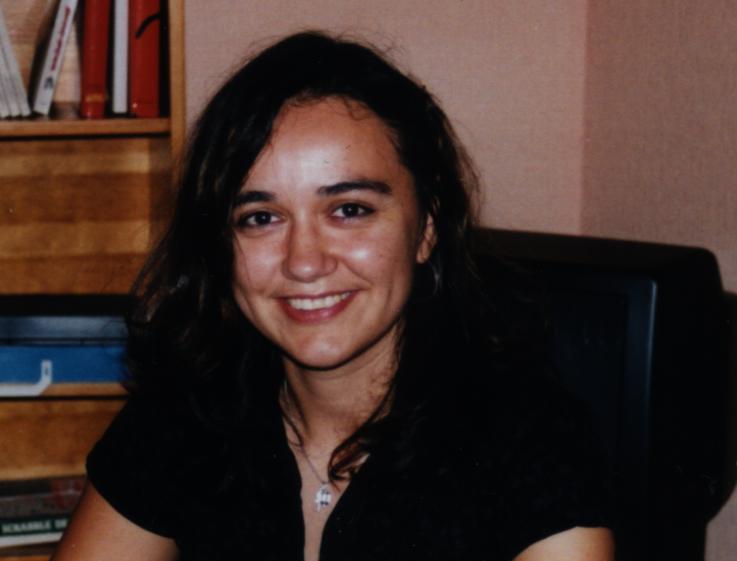 Silvia Botelho合作论文数Eletricity;Departament of Phisic;FURG - Fundacao Universidade Federal do Rio Grande2
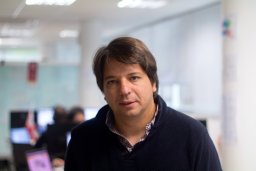 Marcelo Pias合作论文数Intel Research2
 Marla Melo合作论文数1
 Fernando Pereira de Toledo合作论文数1
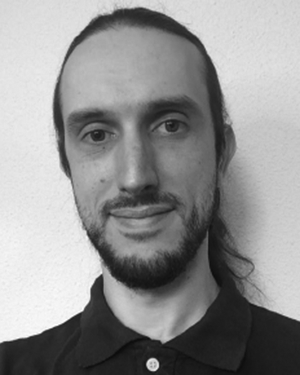 Tiago da Cruz Asmus合作论文数1
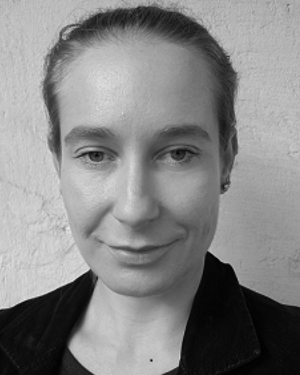 Greyce N. Schroeder合作论文数1
 Marilton S. De Aguiar合作论文数UFPel, Federal University of Pelotas1
 Thales Sehn Korting合作论文数Image Processing Division, Instituto Nacional de Pesquisas Espaciais1Alfredo K. Kojima合作论文数1Felipe Almeida合作论文数1Carlos A. M. Dos Santos合作论文数1Felipe Castro da Silva合作论文数1Adailton José Alves Da Cruz合作论文数1Rodrigo Mendes Costa合作论文数1
 Cleo Zanella Billa合作论文数Instituto de Computação, Unicamp1
 Luciano Maciel Ribeiro合作论文数1




