Partial differential equations (PDEs) are often computationally challenging to solve, and in many settings many related PDEs must be be solved either at every timestep or for a variety of candidate boundary conditions, parameters, or geometric domains. We present a meta-learning based method which learns to rapidly solve problems from a distribution of related PDEs. We use meta-learning (MAML and LEAP) to identify initializations for a neural network representation of the PDE solution such that a residual of the PDE can be quickly minimized on a novel task. We apply our meta-solving approach to a nonlinear Poisson's equation, 1D Burgers' equation, and hyperelasticity equations with varying parameters, geometries, and boundary conditions. The resulting Meta-PDE method finds qualitatively accurate solutions to most problems within a few gradient steps; for the nonlinear Poisson and hyper-elasticity equation this results in an intermediate accuracy approximation up to an order of magnitude faster than a baseline finite element analysis (FEA) solver with equivalent accuracy. In comparison to other learned solvers and surrogate models, this meta-learning approach can be trained without supervision from expensive ground-truth data, does not require a mesh, and can even be used when the geometry and topology varies between tasks.
The successes of deep learning, variational inference, and many other fields have been aided by specialized implementations of reverse-mode automatic differentiation (AD) to compute gradients of mega-dimensional objectives. The AD techniques underlying these tools were designed to compute exact gradients to numerical precision, but modern machine learning models are almost always trained with stochastic gradient descent. Why spend computation and memory on exact (minibatch) gradients only to use them for stochastic optimization? We develop a general framework and approach for randomized automatic differentiation (RAD), which can allow unbiased gradient estimates to be computed with reduced memory in return for variance. We examine limitations of the general approach, and argue that we must leverage problem specific structure to realize benefits. We develop RAD techniques for a variety of simple neural network architectures, and show that for a fixed memory budget, RAD converges in fewer iterations than using a small batch size for feedforward networks, and in a similar number for recurrent networks. We also show that RAD can be applied to scientific computing, and use it to develop a low-memory stochastic gradient method for optimizing the control parameters of a linear reaction-diffusion PDE representing a fission reactor.
Cellular mechanical metamaterials are a special class of materials whose mechanical properties are primarily determined by their geometry. However, capturing the nonlinear mechanical behavior of these materials, especially those with complex geometries and under large deformation, can be challenging due to inherent computational complexity. In this work, we propose a data-driven multiscale computational scheme as a possible route to resolve this challenge. We use a neural network to approximate the effective strain energy density as a function of cellular geometry and overall deformation. The network is constructed by "learning" from the data generated by finite element calculation of a set of representative volume elements at cellular scales. This effective strain energy density is then used to predict the mechanical responses of cellular materials at larger scales. Compared with direct finite element simulation, the proposed scheme can reduce the computational time up to two orders of magnitude. Potentially, this scheme can facilitate new optimization algorithms for designing cellular materials of highly specific mechanical properties.
Optimizing the parameters of partial differential equations (PDEs), i.e., PDE-constrained optimization (PDE-CO), allows us to model natural systems from observations or perform rational design of structures with complicated mechanical, thermal, or electromagnetic properties. However, PDE-CO is often computationally prohibitive due to the need to solve the PDE—typically via finite element analysis (FEA)—at each step of the optimization procedure. In this paper we propose amortized finite element analysis (AmorFEA), in which a neural network learns to produce accurate PDE solutions, while preserving many of the advantages of traditional finite element methods. This network is trained to directly minimize the potential energy from which the PDE and finite element method are derived, avoiding the need to generate costly supervised training data by solving PDEs with traditional FEA. As FEA is a variational procedure, AmorFEA is a direct analogue to popular amortized inference approaches in latent variable models, with the finite element basis acting as the variational family. AmorFEA can perform PDE-CO without the need to repeatedly solve the associated PDE, accelerating optimization when compared to a traditional workflow using FEA and the adjoint method.
Meta-materials are an important emerging class of engineered materials in which complex macroscopic behaviour–whether electromagnetic, thermal, or mechanical– arises from modular substructure. Simulation and optimization of these materials are computationally challenging, as rich substructures necessitate high-fidelity finite element meshes to solve the governing PDEs. To address this, we leverage parametric modular structure to learn component-level surrogates, enabling cheaper high-fidelity simulation. We use a neural network to model the stored potential energy in a component given boundary conditions. This yields a structured prediction task: macroscopic behavior is determined by the minimizer of the system's total potential energy, which can be approximated by composing these surrogate models. Composable energy surrogates thus permit simulation in the reduced basis of component boundaries. Costly ground-truth simulation of the full structure is avoided, as training data are generated by performing finite element analysis of individual components. Using dataset aggregation to choose training data allows us to learn energy surrogates which produce accurate macroscopic behavior when composed, accelerating simulation of parametric meta-materials.
Standard variational lower bounds used to train latent variable models produce biased estimates of most quantities of interest. We introduce an unbiased estimator of the log marginal likelihood and its gradients for latent variable models based on randomized truncation of infinite series. If parameterized by an encoder-decoder architecture, the parameters of the encoder can be optimized to minimize its variance of this estimator. We show that models trained using our estimator give better test-set likelihoods than a standard importance-sampling based approach for the same average computational cost. This estimator also allows use of latent variable models for tasks where unbiased estimators, rather than marginal likelihood lower bounds, are preferred, such as minimizing reverse KL divergences and estimating score functions.
Meta-learning, or learning-to-learn, has proven to be a successful strategy in attacking problems in supervised learning and reinforcement learning that involve small amounts of data. State-of-the-art solutions involve learning an initialization and/or learning algorithm using a set of training episodes so that the meta learner can generalize to an evaluation episode quickly. These methods perform well but often lack good quantification of uncertainty, which can be vital to real-world applications when data is lacking. We propose a meta-learning method which efficiently amortizes hierarchical variational inference across tasks, learning a prior distribution over neural network weights so that a few steps of Bayes by Backprop will produce a good task-specific approximate posterior. We show that our method produces good uncertainty estimates on contextual bandit and few-shot learning benchmarks.
We consider optimization problems in which the objective requires an inner loop with many steps or is the limit of a sequence of increasingly costly approximations. Meta-learning, training recurrent neural networks, and optimization of the solutions to differential equations are all examples of optimization problems with this character. In such problems, it can be expensive to compute the objective function value and its gradient, but truncating the loop or using less accurate approximations can induce biases that damage the overall solution. We propose randomized telescope (RT) gradient estimators, which represent the objective as the sum of a telescoping series and sample linear combinations of terms to provide cheap unbiased gradient estimates. We identify conditions under which RT estimators achieve optimization convergence rates independent of the length of the loop or the required accuracy of the approximation. We also derive a method for tuning RT estimators online to maximize a lower bound on the expected decrease in loss per unit of computation. We evaluate our adaptive RT estimators on a range of applications including meta-optimization of learning rates, variational inference of ODE parameters, and training an LSTM to model long sequences.
We present Pixie, a socialbot submitted to the 2017 Alexa Prize, developed with the objective of holding engaging casual conversations on open-ended topics. We discuss the modular, heterogeneous architecture of the Pixie system, and highlight the successes and shortcomings of our primarily template-based approach. We reflect on our findings about alternative paradigms used in the prototyping phase; in particular, we discuss the challenges of bridging recent breakthroughs in deep learning with the frontier of machine social dialogue.
Developments in deep generative models have allowed for tractable learning of high-dimensional data distributions. While the employed learning procedures typically assume that training data is drawn i.i.d. from the distribution of interest, it may be desirable to model distinct distributions which are observed sequentially, such as when different classes are encountered over time. Although conditional variations of deep generative models permit multiple distributions to be modeled by a single network in a disentangled fashion, they are susceptible to catastrophic forgetting when the distributions are encountered sequentially. In this paper, we adapt recent work in reducing catastrophic forgetting to the task of training generative adversarial networks on a sequence of distinct distributions, enabling continual generative modeling.
The importance of studying the robustness of learners to malicious data is well established. While much work has been done establishing both robust estimators and effective data injection attacks when the attacker is omniscient, the ability of an attacker to provably harm learning while having access to little information is largely unstudied. We study the potential of a "blind attacker" to provably limit a learner's performance by data injection attack without observing the learner's training set or any parameter of the distribution from which it is drawn. We provide examples of simple yet effective attacks in two settings: firstly, where an "informed learner" knows the strategy chosen by the attacker, and secondly, where a "blind learner" knows only the proportion of malicious data and some family to which the malicious distribution chosen by the attacker belongs. For each attack, we analyze minimax rates of convergence and establish lower bounds on the learner's minimax risk, exhibiting limits on a learner's ability to learn under data injection attack even when the attacker is "blind".
 Ryan P. Adams合作论文数Department of Computer Science, Princeton University7
 Tianju Xue (薛添駒)合作论文数Department of Civil and Environmental Engineering, School of Engineering, The Hong Kong University of Science and Technology3
 Daniel Suo合作论文数Department of Computer Science, Princeton University2
 Jordan T. Ash合作论文数Microsoft Research2
 Ari Seff合作论文数Waymo2
 Nick McGreivy合作论文数Stealth2
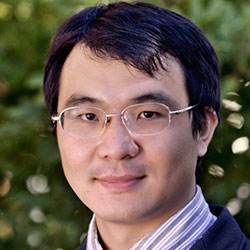 Han Liu合作论文数Department of Computer Science, McCormick School of Engineering, Northwestern University;Department of Statistics, Northwestern University2
 Sigrid Adriaenssens合作论文数Faculty of Engineering Sciences, Vrije Universiteit Brussel2
 Deniz Oktay合作论文数Princeton University2
 Roeder Geoffrey合作论文数Laboratory for Intelligent Probabilistic Systems, Princeton University2
 Sunny Qin合作论文数Harvard University1
 Ricky Tian Qi Chen合作论文数Facebook AI Research1
 Sachin Ravi合作论文数Apple1
 Adewale Oluwatosin合作论文数1
 Davit Buniatyan合作论文数Princeton Univ1
 Holden Lee合作论文数Department of Applied Mathematics and Statistics, Whiting School of Engineering, Johns Hopkins University1
 Joshua Aduol合作论文数1
 Niranjani Prasad合作论文数Dept Comp Sci, Princeton Univ1
 Maurizio Chiaramonte合作论文数Meta Reality Labs Research1Jason Ge合作论文数1
 Cheng Mao (毛晟)合作论文数College of Engineering, Peking University1
 Zhaoran Wang合作论文数Departments of Industrial Engineering & Management Sciences, Northwestern University;Departments of Computer Science, Northwestern University1
 Misha Khodak合作论文数Department of Computer Sciences, University of Wisconsin-Madison1
 Cyril Zhang合作论文数Microsoft1
 Nikunj Saunshi合作论文数Google1
 Karan Singh合作论文数Tepper School of Business, Carnegie Mellon University1
 Jun Zhu (朱军)合作论文数State Key Laboratory of Intelligent Technology and Systems, Department of Computer Science and Technology, School of Information Science and Technology, Tsinghua University1
 Sanjeev Arora合作论文数Department of Computer Science, Princeton University1
 Yucen Luo合作论文数1
 David Kristjanson Duvenaud合作论文数Department of Statistical Sciences, Faculty of Arts and Science, University of Toronto;Fable Therapeutics1
 Mohammad Norouzi合作论文数Ideogram AI1
 Yigit Mengüç合作论文数Facebook1




