The discipline of ecology and evolutionary biology (EEB) has long grappled with issues of inclusivity and representation, particularly for individuals with systematically excluded and marginalized backgrounds or identities. For example, significant representation disparities still persist that disproportionately affect women and gender minorities; Black, Indigenous, and People of Color (BIPOC); individuals with disabilities; and people who are LGBTQIA+. Recent calls for action have urged the EEB community to directly address issues of representation, inclusion, justice, and equity. One aspect of this endeavor is to examine the use of EEB’s discipline-specific language and terminology, which may have the potential to perpetuate unjust systems and isolate marginalized groups. Through a mixed-methods survey, we examined how members of the EEB community perceive discipline-specific terminology, including how they believe it can be harmful and which terms they identified as problematic. Of the 795 survey respondents, we found that almost half agreed that there are harmful terms in EEB and that many individuals from marginalized groups responded that they have been harmed by such terminology. Most of the terms identified as harmful relate to race, ethnicity, and immigration; sex and gender; geopolitical hierarchies; and historical violence. Our findings suggest there is an urgent need for EEB to confront and critically reassess its discipline-specific terminology. By identifying harmful terms and their impacts, our study represents a crucial first step toward dismantling deeply rooted exclusionary structures in EEB. We encourage individuals, communities, and institutions to use these findings to reevaluate language used in disciplinary research, teaching and mentoring, manuscripts, and professional societies. Rectifying current harms in EEB will help promote a more just and inclusive discipline.
Research has shown that conservation and restoration efforts that engage local communities are often more successful at meeting stated goals than those that are externally controlled. Such participatory management approaches have been increasingly applied in coastal wetland ecosystems, yet our collective understanding of the scope of methods applied and outcomes observed in these efforts is limited. In order to address this gap, we present a review of the published literature on community-based conservation and restoration in coastal wetlands. We summarize the current state of coastal wetland participatory management and provide suggestions for future conservation and restoration efforts, namely: expanding the ecosystem and geographic focus, incorporating additional approaches and outcome metrics, and increasing the post-conservation or restoration monitoring period. It is our hope that this work will encourage further implementation of community-based approaches to coastal wetland management for the collective benefit of both people and nature.
Amid a growing disciplinary commitment to inclusion in ecology and evolutionary biology (EEB), it is critical to consider how the use of scientific language can harm members of our research community. Here, we outline a path for identifying and revising harmful terminology to foster inclusion in EEB.
Abstract Decades of theory and scholarship on the concept of human well‐being have informed a proliferation of approaches to assess well‐being and support public policy aimed at sustainability and improving quality of life. Human well‐being is multidimensional, and well‐being emerges when the dimensions and interrelationships interact as a system. In this paper, we illuminate two crucial components of well‐being that are often excluded from policy because of their relative difficulty to measure and manage: equity and interrelationships between humans and the environment. We use a mixed‐methods approach to review and summarize progress to date in developing well‐being constructs (including frameworks and methods) that address these two components. Well‐being frameworks that do not consider the environment, or interrelationships between people and their environment, are not truly measuring well‐being in all its dimensions. Use of equity lenses to assess well‐being frameworks aligns with increasing efforts to more holistically characterize well‐being and to guide sustainability management in ethical and equitable ways. Based on the findings of our review, we identify several pathways forward for the development and implementation of well‐being frameworks that can inform efforts to leverage well‐being for public policy.
The evaluation of cultural services and values in coastal and marine environments has been steadily increasing over the last decade, though significant knowledge gaps remain regarding specific ecosystems such as mangrove forests. To identify these gaps, we provide a summary of the current literature on mangrove cultural services and values, indicate priority areas where additional research is needed and highlight some of the potential sociocultural impacts associated with mangrove losses. The studies included in this synthesis identified or evaluated 16 cultural services and values linked to mangrove habitats across 25 countries, representing roughly 22% of global mangrove regions. We observed differences in assessment frameworks, methods, and author affiliations that may have influenced research outcomes with implications for future study design. Toward this end, we provide specific recommendations to improve future mangrove CSV studies. Cultural services are often the most valued services ecosystems provided to stakeholders and local communities. As such, it is our hope that identifying these gaps will provide an impetus for the study of mangrove cultural services and values, thereby resulting in an improved understanding of the interactions between people and mangroves for the benefit of both. Read the free Plain Language Summary for this article on the Journal blog.
Estimates of species’ ranges can inform many aspects of biodiversity research and conservation-management decisions. Many practical applications need high-precision range estimates that are sufficiently reliable to use as input data in downstream applications. One solution has involved expert-generated maps that reflect on-the-ground field information and implicitly capture various processes that may limit a species’ geographic distribution. However, expert maps are often subjective and rarely reproducible. In contrast, species distribution models (SDMs) typically have finer resolution and are reproducible because of explicit links to data. Yet, SDMs can have higher uncertainty when data are sparse, which is an issue for most species. Also, SDMs often capture only a subset of the factors that determine species distributions (e.g., climate) and hence can require significant post-processing to better estimate species’ current realized distributions. Here, we demonstrate how expert knowledge, diverse data types, and SDMs can be used together in a transparent and reproducible modeling workflow. Specifically, we show how expert knowledge regarding species’ habitat use, elevation, biotic interactions, and environmental tolerances can be used to make and refine range estimates using SDMs and various data sources, including high-resolution remotely sensed products. This range-refinement approach is primed to use various data sources, including many with continuously improving spatial or temporal resolution. To facilitate such analyses, we compile a comprehensive suite of tools in a new R package, maskRangeR, and provide worked examples. These tools can facilitate a wide variety of basic and applied research that requires high-resolution maps of species’ current ranges, including quantifications of biodiversity and its change over time.
AbstractThe historical ecological paradigm of wetland ecosystems emphasized the role of physical or “bottom‐up” factors in maintaining functions and services. However, recent studies have shown that the loss of predators in coastal salt marshes can lead to a significant reduction in wetland extent due to overgrazing of vegetation by herbivores. Such studies indicate that consumers or “top‐down” factors may play a much larger role in the maintenance of wetland ecosystems than was previously thought. The objective of this study was to evaluate whether altering top‐down control by manipulating the presence of predators can lead to measurable changes in salt marsh ecosystem properties. Between May and August of 2015 and 2016, we established exclosure and enclosure cages within three New England coastal wetland areas and manipulated the presence of green crab predators to assess how they and their fiddler and purple marsh crab prey affect changes in ecosystem properties. Predator presence was associated with changes in soil nitrogen and aboveground biomass at two of the three field sites, though the magnitude and direction of these effects varied from site to site. Further, path analysis results indicate that across field sites, a combination of bottom‐up and top‐down factors influenced changes in measured variables. These results challenge the growing consensus that consumers have strong effects, indicating instead that predator impacts may be highly context‐dependent.
CITATION: Maas, B. et al. 2020. Academic leaders must support inclusive scientific communities during COVID-19. Nature Ecology and Evolution, doi:10.1038/s41559-020-1233-3.
Abstract Over the last 30 yr, our understanding of the factors that control the structure and function of coastal wetlands has shifted from a narrative that focused on bottom‐up control to one that explicitly includes top‐down factors. However, the emphasis of this transition has been on how consumers influence wetland vegetation; comparatively, few studies evaluate how consumers influence broader ecosystem properties and functions such as nutrient cycling and decomposition while fewer still investigate how trophic interactions affect these relationships. Here, we review the literature on consumer impacts on coastal wetland ecosystems and highlight areas where additional studies are sorely needed. It is our hope that identifying the current gaps in our knowledge will provide additional impetus for the study of community and ecosystem ecology within these globally important ecosystems.
The services and functions provided by coastal wetlands are numerous and influenced by factors ranging from climate and tidal regime to ecosystem engineers and anthropogenic modifications. In New England salt marshes, fiddler crabs and purple marsh crabs are cooccurring species that are among the most conspicuous burrowing macroinvertebrates in the region. Both are known to influence salt marsh ecosystem functions through their burrowing and feeding behavior, but the ways in which they regulate specific properties, individually and together, is unclear. Using an ex situ mesocosm study, I manipulated the presence of fiddler crabs and purple marsh crabs in order to evaluate their impact on several soil properties and aboveground biomass. Results show that, contrary to previous studies, the fiddler crab had little impact while the purple marsh crab altered soil quality with positive implications for plant growth. This suggests that the purple marsh crab, known to be a voracious consumer of marsh vegetation, may play a much more nuanced role in the maintenance of plant growth than previously thought. Additional ex situ studies should be done to further delineate the impact of these two species.
Recent studies in coastal wetlands have indicated that consumers may play an important role in regulating large-scale ecosystem processes. Predator removal experiments have shown significant differences in above-ground biomass production in the presence of higher level consumers, or predators. These results indicate that predators play an important role in regulating biomass production, but the extent to which this regulation impacts additional ecosystem functions, such as nutrient cycling and organic matter accumulation, is unclear. This study evaluated the impact that consumers have on large-scale ecosystem processes within southern New England tidal wetlands and contributes to the general understanding of trophic control in these systems. I established enclosure cages within three coastal wetlands and manipulated the presence of green crab predators to assess how trophic interactions affect ecosystem functions. Findings suggest that although these consumers may exert some top-down effects, other environmental factors, such as other consumers not studied here or bottom-up interactions, may variably play a larger role in the maintenance of ecosystem processes within the region. These results indicate that the loss of top-down control as an important mechanism influencing ecosystem functions may not hold for all wetlands along the full extent of the New England coastline.
Biological invasions are a key component of global change, and understanding the drivers of global invasion patterns will aid in assessing and mitigating the impact of invasive species. While invasive species are most often studied in the context of one or two trophic levels, in reality species invade communities comprised of complex food webs. The complexity and integrity of the native food web may be a more important determinant of invasion success than the strength of interactions between a small subset of species within a larger food web. Previous efforts to understand the relationship between food web properties and species invasions have been primarily theoretical and have yielded mixed results. Here, we present a synthesis of empirical information on food web connectance and species invasion success gathered from different sources (estimates of food web connectance from the primary literature and estimates of invasion success from the Global Invasive Species Database as well as the primary literature). Our results suggest that higher-connectance food webs tend to host fewer invaders and exert stronger biotic resistance compared to low-connectance webs. We argue that while these correlations cannot be used to infer a causal link between food web connectance and habitat invasibility, the promising findings beg for further empirical research that deliberately tests for relationships between food web connectance and invasion.
Non-marine mollusks have the highest number of documented extinctions of any major taxonomic group. Given their conservation status and the numerous cases of taxonomic uncertainty concerning freshwater mollusks in particular, the recognition of potentially endangered species is critically important. Here, we evaluate the genetic distinctiveness and phylogenetic position of a freshwater snail restricted to a series of geothermal springs within the Owyhee River drainage in Oregon (the ‘Owyhee wet-rock physa’). Because these snails closely resemble Physella (Petrophysa) zionis, a wet-rock physa that occurs in a small area in Zion National Park (Utah), the Owyhee wet-rock physa is presumably either closely related to or represents a disjunct population of P. zionis. However, phylogenetic analyses of sequences of mitochondrial cytochrome oxidase I and nuclear first and second internal transcribed spacer gene regions indicate that the Owyhee wet-rock physa is genetically distinct from other physid species. Despite exhibiting similar morphologies, the Owyhee wet-rock physa and P. zionis are distantly related physids; instead, the Owyhee wet-rock physa is most closely related to a population of physids from central California. These results suggest that convergent evolution may be responsible for the similar shell morphologies of the Owyhee wet-rock physa and P. zionis. Furthermore, the close relationship between physid populations in southeastern Oregon and central California suggests a historical connection between the Owyhee River and river drainages to the south. Finally, we recommend that the Owyhee wet-rock physa be considered critically endangered based on its extremely limited distribution.
 Cesar Estien合作论文数Department of Environmental Science, Policy, and Management, University of California - Berkeley3
 Shersingh Joseph Tumber-Dávila合作论文数Harvard Forest, Harvard University2
 Susan J. Cheng合作论文数Department of Mechanical Engineering, University of Michigan;Department of Ecology & Evolutionary Biology, University of Michigan;University of Michigan, University of Michigan2
 Mallory M. Rice合作论文数Dept Biol Sci, Calif State Univ San Marcos2
 Justine A. Smith合作论文数2
 Oswald J. Schmitz合作论文数Institute for Biospheric Studies, Yale University;Department of Ecology and Evolutionary Biology, School of the Environment, Yale University2
 Eleanor Sterling合作论文数Center for Biodiversity and Conservation;American Museum of Natural History;American Museum of Natural History, Center for Biodiversity and Conservation2
 Pua'ala Pascua合作论文数1
 Kaitlyn Gaynor合作论文数Department of Zoology, Faculty of Science, University of British Columbia1Manuel Mejia合作论文数1Valentina Grisales-Betancur合作论文数1
 Kendall L. Calhoun合作论文数1
 Amanda Sigouin合作论文数1
 Yolanda Chirango合作论文数1
 Rejane Santos-Silva合作论文数Instituto de Ciências Biológicas, Universidade Federal de Goiás Goiânia1
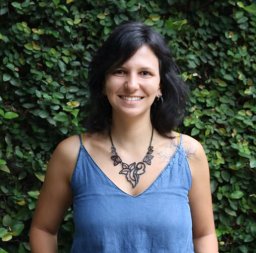 Raisa Romenia Silva Vieira合作论文数Inst Int Sustentabilidade1
 Beth E. Gerstner合作论文数City College of New York, City University of New York1Nadav Gazit合作论文数American Museum of Natural History, Center for Biodiversity and Conservation1
 Akiebia S. Hicks合作论文数Dept Pk Recreat & Tourism Management, Clemson Univ1
 Erin Betley合作论文数Ctr Biodivers & Conservat, Amer Museum Nat Hist1
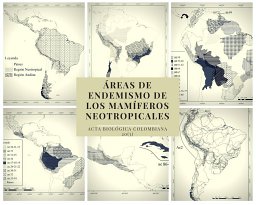 Elkin A. Noguera-Urbano合作论文数Inst Invest Recursos Biol Alexander Von Humboldt1
 Christine E. Wilkinson合作论文数Department of Environmental Science, Policy, & Management, University of California1
 Carolina Ocampo Ariza合作论文数Agroecol, Univ Gottingen1J. W. Hammond合作论文数1
 Cecina Babich Morrow合作论文数Spring Hlth, Spring Care Inc1
 Rafaela Aparecida da Silva合作论文数1Peter J. Galante合作论文数1
 Luisa Fernanda Lievano Latorre合作论文数Programa Posgrad Ecol & Evolucao, Univ Fed Goias1Felicity Arengo合作论文数American Museum of Natural History1
 Kirby Mills合作论文数Ecol & Evolutionary Biol, Univ Michigan1Matthew A. McCary合作论文数1
 Samantha H. Cheng合作论文数Ctr Biodivers & Conservat, Amer Museum Nat Hist1
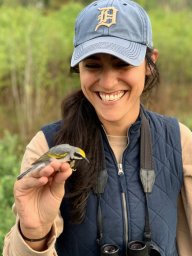 Marcella D Baiz合作论文数Penn State Univ, University Pk1
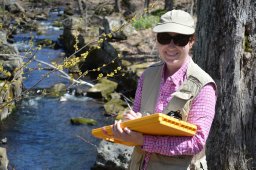 Lauren Michelle Smith-Ramesh合作论文数National Institute for Mathematical and Biological Synthesis, University of Tennessee1
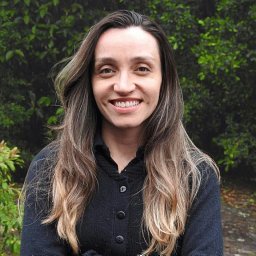 Lilian Sales合作论文数Faculty of Arts and Science, Concordia University1
 Kathy Darragh合作论文数Department of Evolution and Ecology, University of California, Davis1
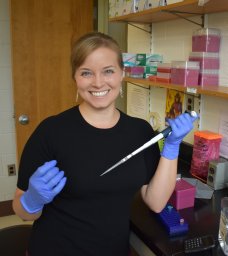 Kathleen Grogan合作论文数Dept Anthropol & Biol, Univ Cincinnati1
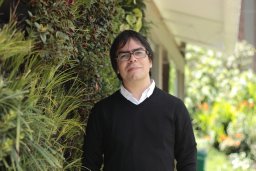 Jorge Ivan Velasquez-Tibata合作论文数Natl Audubon Soc1
 Gonzalo E. Pinilla-Buitrago合作论文数Biol Dept, City Univ New York1
 Kenneth MacDonald合作论文数Centre for Diaspora & Transnational Studies, Faculty of Arts and Science, University of Toronto;Culinaria Research Centre, University of Toronto Scarborough;Department of Human Geography, University of Toronto Scarborough1
 Marney Isaac合作论文数Department of Global Development Studies, University of Toronto1
 Nyeema Harris合作论文数School of the Environment, Yale University1
 Thomas Duda合作论文数Department of Ecology and Evolutionary Biology, College of Literature, Science, and the Arts, University of Michigan-Ann Arbor1
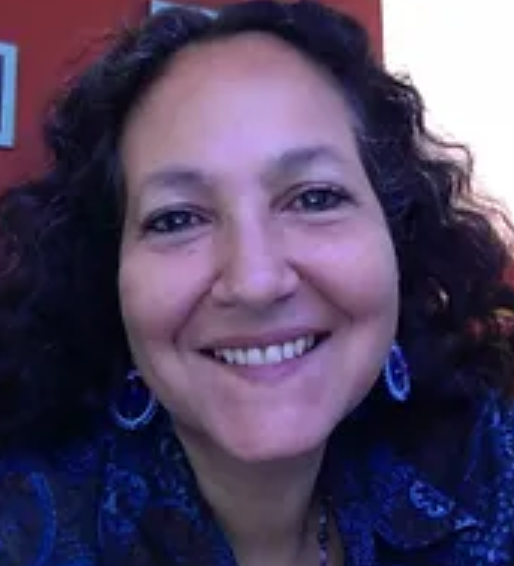 Ivette Perfecto合作论文数Perfecto Lab, School for Environment and Sustainability, The University of Michigan;Centro de Estudios de Desarrollo Agrario Rural, Universidad Agrária de la Habana1
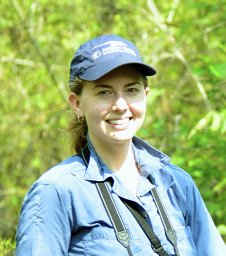 Blair Mary E合作论文数Department of Ecology, Evolution and Environmental Biology, Columbia University1
 Richard B. Primack合作论文数Department of Biology, College of Arts & Sciences, Boston University1Wyborn Carina合作论文数1
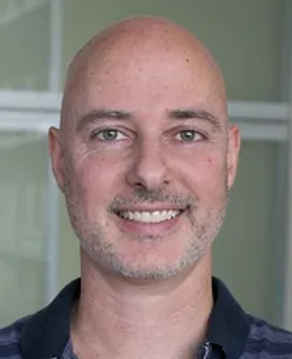 Robert P. Anderson合作论文数Department of Biology, The Division of Science, The City College of New York;American Museum of Natural History1
 Jamie M Kass合作论文数San Francisco Estuary Institute1




