Software-defined radios (SDRs) are now recognized as a key building block for future wireless communications. We have spent the past year enhancing existing open software to create a software-defined data radio. This radio extends the notion of software-defined behavior to higher layers in the protocol stack: most importantly through the media access layer. Our particular approach to the problem has been guided by the desire to allow fine-grained cognitive control of the radio. We describe our system, Adaptive Dynamic Radio Open-source Intelligent Team (ADROIT).
The ADROIT project is building an open-source software-defined data radio, intended to be controlled by cognitive applications. The goal is to create a system that enables teams of radios, where each radio both has its own cognitive controls and the ability to collaborate with other radios, to create cognitive radio teams. The desire to create cognitive radio teams, and the goal of having an open-source system, requires a rich and carefully architected system that provides great flexibility (enabling cognitive applications to change the radio's behavior) and also has a clear structure (both so that others may add or enhance the software, and also so that the system can be clearly modeled for cognitive applications). What follows is a summary of the ADROIT system and the key architectural features intended to enable cognitive radio teams.
This paper reports the current status of the DARPA Quantum Network, which became fully operational in BBN's laboratory in October 2003, and has been continuously running in 6 nodes operating through telecommunications fiber between Harvard University, Boston University, and BBN since June 2004. The DARPA Quantum Network is the world's first quantum cryptography network, and perhaps also the first QKD systems providing continuous operation across a metropolitan area. Four more nodes are now being added to bring the total to 10 QKD nodes. This network supports a variety of QKD technologies, including phase-modulated lasers through fiber, entanglement through fiber, and freespace QKD. We provide a basic introduction and rational for this network, discuss the February 2005 status of the various QKD hardware suites and software systems in the network, and describe our operational experience with the DARPA Quantum Network to date. We conclude with a discussion of our ongoing work.
We describe a technique of parameter estimation and control in a phase-encoded quantum key distribution that uses continuous control of receiver-interferometer differential path length to maintain alignment with the transmitter. In this fiber-based system, a small number of training frames are sent over the quantum channel allowing the receiver to compensate for drift in the transmitter and receiver interferometers due to slow changes in temperature. The minimum mean-square error estimation method used to infer the state of the system incorporates the prior knowledge of the fiber dynamics recursively. The optimal linear-quadratic regulator feedback design is described and combined with the estimator to obtain the stochastic linear regulator of the path-length error.
This paper describes the functionality of ViC*, a compiler-like preprocessor for out-of-core C*. The input to ViC* is a C* program but with certain shapes declared \verb`outofcore`, which means that all parallel variables of these shapes reside on disk. The output is a standard C* program with the appropriate I/O and library calls added for efficient access to out-of-core parallel variables.
This thesis describes the design and implementation of virtual memory for ViC*, aversion of the data-parallel language C*. For programs with parallel data sets that exceedthe size of main memory, ViC* provides better performance than demand-pagedvirtual memory, with less programming e#ort than traditional out-of-core methods.ViC* extends the C* language with outofcore shapes, which place parallel dataon disk. A ViC* compiler translates access to out-of-core data into calls on theViC*...
 Oleksiy Pikalo合作论文数2Joanne Mikkelson合作论文数2Steve Boswell合作论文数2John Schlafer合作论文数2
 Ram Ramanathan合作论文数GoTenna Inc.2Alberto Medina合作论文数2
 Thomas Schmid合作论文数University of California, Los Angeles2
 Mani Srivastava合作论文数Networked & Embedded Systems Laboratory, University of California, Los Angeles;Electrical and Computer Engineering Department, Samueli School of Engineering, University of California, Los Angeles;Amazon2
 Alexander M. Wyglinski合作论文数Department of Electrical and Computer Engineering, Worcester Polytechnic Institute2Nick Goffee合作论文数2Eric Blossom合作论文数2Armando Caro合作论文数BBN Technologies, Cambridge, MA, USA2Gregory D. Troxel合作论文数2David Wiggins合作论文数2Talib S. Hussain合作论文数Queen ' s University2
 Cesar A. Santivanez合作论文数Internetwork Research Department, BBN Technology2
 Vikas Kawadia合作论文数Meta2Sadaf Zahedi合作论文数2Robert S. Vincent合作论文数2Gary J Minden合作论文数Electrical Engineering & Computer Science
The University of Kansas2
Vikas Kawadia合作论文数Meta2Sadaf Zahedi合作论文数2Robert S. Vincent合作论文数2Gary J Minden合作论文数Electrical Engineering & Computer Science
The University of Kansas2 Joseph B. Evans合作论文数Department of Electrical Engineering & Computer Science, The University of Kansas;Information & Telecommunication Technology Center, The University of Kansas;STR2David Lapsley合作论文数2Tad Dreier合作论文数2
 Carl Livadas合作论文数2
 Vivek Raghunathan合作论文数University of Illinois at Urbana-Champaign2Dan Sumorok合作论文数2
 Karen Zita Haigh合作论文数Haskill Consulting2Isidro Castineyra合作论文数2
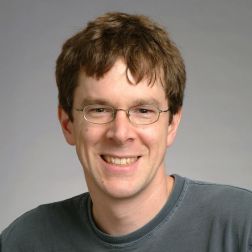 Robert Morris合作论文数Computer Science and Artificial Intelligence Laboratory, Massachusetts Institute of Technology;Department of Electrical Engineering and Computer Science, Massachusetts Institute of Technology1Paul G. Rubel合作论文数1
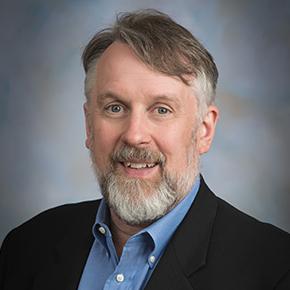 Craig Partridge合作论文数Department of Computer Science, College of Natural Science, Colorado State University1
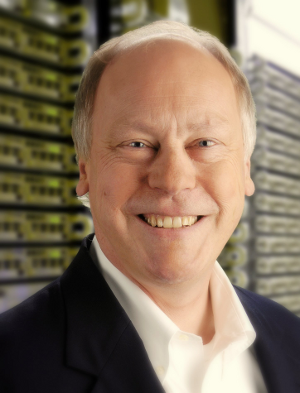 Chip Elliott合作论文数Raytheon BBN Technologies;Institute for Quantum Science and Technology, Faculty of Science, University of Calgary1
 Thomas H. Cormen合作论文数Department of Computer Science, Dartmouth College1




