FOXC1 is a ubiquitously expressed forkhead transcription factor that plays a critical role during early development. Germline pathogenic variants in FOXC1 are associated with anterior segment dysgenesis and Axenfeld-Rieger syndrome (ARS, #602482), an autosomal dominant condition with ophthalmologic anterior segment abnormalities, high risk for glaucoma and extraocular findings including distinctive facial features, as well as dental, skeletal, audiologic, and cardiac anomalies. De Hauwere syndrome is an ultrarare condition previously associated with 6p microdeletions and characterized by anterior segment dysgenesis, joint instability, short stature, hydrocephalus, and skeletal abnormalities. Here, we report clinical findings of two unrelated adult females with FOXC1 haploinsufficiency who have ARS and skeletal abnormalities. Final molecular diagnoses of both patients were achieved using genome sequencing. Patient 1 had a complex rearrangement involving a 4.9 kB deletion including FOXC1 coding region (Hg19; chr6:1,609,721-1,614,709), as well as a 7 MB inversion (Hg19; chr6:1,614,710-8,676,899) and a second deletion of 7.1 kb (Hg19; chr6:8,676,900-8,684,071). Patient 2 had a heterozygous single nucleotide deletion, resulting in a frameshift and a premature stop codon in FOXC1 (NM_001453.3): c.467del, p.(Pro156Argfs*25). Both individuals had moderate short stature, skeletal abnormalities, anterior segment dysgenesis, glaucoma, joint laxity, pes planovalgus, dental anomalies, hydrocephalus, distinctive facial features, and normal intelligence. Skeletal surveys revealed dolichospondyly, epiphyseal hypoplasia of femoral and humeral heads, dolichocephaly with frontal bossin gand gracile long bones. We conclude that haploinsufficiency of FOXC1 causes ARS and a broad spectrum of symptoms with variable expressivity that at its most severe end also includes a phenotype overlapping with De Hauwere syndrome.
Eukaryotic initiation factor-4A2 (EIF4A2) is an ATP-dependent RNA helicase and a member of the DEAD-box protein family that recognizes the 5' cap structure of mRNAs, allows mRNA to bind to the ribosome, and plays an important role in microRNA-regulated gene repression. Here, we report on 15 individuals from 14 families presenting with global developmental delay, intellectual disability, hypotonia, epilepsy, and structural brain anomalies, all of whom have extremely rare de novo mono-allelic or inherited bi-allelic variants in EIF4A2. Neurodegeneration was predominantly reported in individuals with bi-allelic variants. Molecular modeling predicts these variants would perturb structural interactions in key protein domains. To determine the pathogenicity of the EIF4A2 variants in vivo, we examined the mono-allelic variants in Drosophila melanogaster (fruit fly) and identified variant-specific behavioral and developmental defects. The fruit fly homolog of EIF4A2 is eIF4A, a negative regulator of decapentaplegic (dpp) signaling that regulates embryo patterning, eye and wing morphogenesis, and stem cell identity determination. Our loss-of-function (LOF) rescue assay demonstrated a pupal lethality phenotype induced by loss of eIF4A, which was fully rescued with human EIF4A2 wild-type (WT) cDNA expression. In comparison, the EIF4A2 variant cDNAs failed or incompletely rescued the lethality. Overall, our findings reveal that EIF4A2 variants cause a genetic neurodevelopmental syndrome with both LOF and gain of function as underlying mechanisms.
Detecting obstructive sleep apnea (OSA) is important to both prevent significant comorbidities in people with Down syndrome (DS) and untangle contributions to other behavioral and mental health diagnoses. However, laboratory-based polysomnograms are often poorly tolerated, unavailable, or not covered by health insurance for this population. In previous work, our team developed a prediction model that seemed to hold promise in identifying which people with DS might not have significant apnea and, consequently, might be able to forgo a diagnostic polysomnogram. In this study, we sought to validate these findings in a novel set of participants with DS. We recruited an additional 64 participants with DS, ages 3-35 years. Caregivers completed the same validated questionnaires, and our study team collected vital signs, physical exam findings, and medical histories that were previously shown to be predictive. Patients then had a laboratory-based polysomnogram. The best modeling had a validated negative predictive value of 50% for an apnea-hypopnea index (AHI) > 1/hTST and 73.7% for AHI >5/hTST. The positive predictive values were 60% and 39.1%, respectively. As such, a clinically reliable screening tool for OSA in people with DS was not achieved. Patients with DS should continue to be monitored for OSA according to current healthcare guidelines.
Purpose Pathogenic variants in SETD1B have been associated with a syndromic neurodevelopmental disorder including intellectual disability, language delay, and seizures. To date, clinical features have been described for 11 patients with (likely) pathogenic SETD1B sequence variants. This study aims to further delineate the spectrum of the SETD1B -related syndrome based on characterizing an expanded patient cohort. Methods We perform an in-depth clinical characterization of a cohort of 36 unpublished individuals with SETD1B sequence variants, describing their molecular and phenotypic spectrum. Selected variants were functionally tested using in vitro and genome-wide methylation assays. Results Our data present evidence for a loss-of-function mechanism of SETD1B variants, resulting in a core clinical phenotype of global developmental delay, language delay including regression, intellectual disability, autism and other behavioral issues, and variable epilepsy phenotypes. Developmental delay appeared to precede seizure onset, suggesting SETD1B dysfunction impacts physiological neurodevelopment even in the absence of epileptic activity. Males are significantly overrepresented and more severely affected, and we speculate that sex-linked traits could affect susceptibility to penetrance and the clinical spectrum of SETD1B variants. Conclusion Insights from this extensive cohort will facilitate the counseling regarding the molecular and phenotypic landscape of newly diagnosed patients with the SETD1B -related syndrome.
1Harvard Medical School Genetics Training Program, Boston, Massachusetts 2Medical Genetics Unit, Department of Pediatrics, Massachusetts General Hospital, Boston, Massachusetts 3Division of Genetics and Genomics, Department of Genetics, Boston Children's Hospital, Boston, Massachusetts 4Division of Complex Care Services, Department of Pediatrics, Boston Children's Hospital, Boston, Massachusetts 5Division of Genetics, Department of Pediatrics, Children's Hospital of Philadelphia, Philadelphia, Pennsylvania Correspondence Angela E. Lin, MD, Medical Genetics Unit, Department of Pediatrics, CPZN-2222, MassGeneral Hospital, 185 Cambridge St Boston, MA 02114. Email: lin.angela@mgh.harvard.edu
 Siddharth Banka合作论文数Division of Evolution and Genomic Sciences, School of Biological Sciences, Faculty of Biology, Medicine and Health, The University of Manchester3
 Adam Jackson合作论文数3Bruria Ben Zeev合作论文数2Giuseppe Zampino合作论文数2Timothy Blake Palculict合作论文数2Naila Ismayilova合作论文数2Anna R Duncan合作论文数2Hongling Pan合作论文数2Harrison Pirt合作论文数2Saber AlHamdan合作论文数2Dave Shahani合作论文数2Eva Matzker合作论文数2
 Antonio Novelli合作论文数2
 Rasa Traberg合作论文数2Alyssa Ritter合作论文数2
 Maimuna Sali Paul合作论文数Texas Childrens Hosp, Jan & Dan Duncan Neurol Res Inst2
 Tobias Bartolomaeus合作论文数2Casie A Genetti合作论文数2Ortal Barel合作论文数2Amber Begtrup合作论文数Genedx, Inc.2
 Daniel G Calame合作论文数Baylor Coll Med, Dept Pediat, Sect Pediat Neurol & Dev Neurosci, Houston, TX 77030 USA2Alicia R P Aycinena合作论文数2Bader Alhaddad合作论文数2
 Kosuke Izumi合作论文数Department of Genetics, Perelman School of Medicine, University of Pennsylvania2Saneto Russell P合作论文数2
 Pankaj Agrawal合作论文数Div Newborn Med, Boston Childrens Hosp2
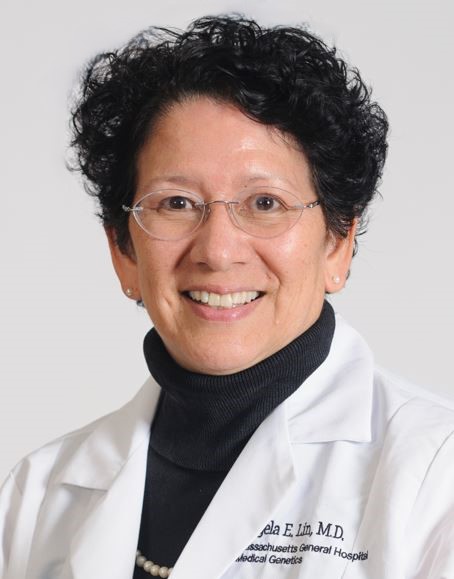 Angela Lin合作论文数Myhre Syndrome Clinic, Massachusetts General Hospital2
 Pinelli Michele合作论文数2
 Carapito Raphael合作论文数Centre de Recherche d'Immunologie et d'Hématologie, Université de Strasbourg2Carere Deanna Alexis合作论文数Brigham and Women's Hospital, Harvard School of Public Health2
 Nicola Brunetti-Pierri合作论文数Department of Translational Medicine, University of Naples "Federico II';Telethon Institute of Genetics and Medicine2
 Patricia Ellen Grant合作论文数Harvard Medical School;Maternal Fetal Care Center, Boston Children’s Hospital;Brain Injury Center, Boston Children’s Hospital2
 Ben Pode-Shakked合作论文数Institute for Rare Diseases, Sheba Medical Center2
 Emanuele Agolini合作论文数Bambino Gesù Children's Hospital2Wolfram Heinritz合作论文数2
 Hsiao-Tuan Chao合作论文数Department of Neuroscience, Baylor College of Medicine2Bertrand Isidor合作论文数Unité de Génétique clinique, Service de génétique médicale, Centre Hospitalier Universitaire de Nantes2
 Seiamak Bahram合作论文数School of Medcine and Teaching Hospitals, Strasbourg University2
 Chiara Leoni合作论文数Fondazione Policlinico Universitario Agostino Gemelli IRCCS2
 Jiahai Shi (史家海)合作论文数Department of Biomedical Sciences, Jockey Club College of Veterinary Medicine and Life Sciences, City University of Hong Kong2
 Rami Abou Jamra合作论文数Leipzig University;Universitätsklinikum Leipzig AöR;Institute of Human Genetics, University of Leipzig Medical Center2
 Sofia Douzgou合作论文数Department of Experimental Medicine, University ‘Sapienza'2Matthew A. Deardorff合作论文数2Nicholas M. Allen合作论文数1
 Reza Maroofian合作论文数1Sally Ann Lynch合作论文数1Marjon van Slegtenhorst合作论文数1Ida Nordgren合作论文数1Ulrike Blümlein合作论文数1




