Proposals to cap European Union direct payments for farmers are often defended as a matter of fairness. At first glance, the claim is intuitive: if support is paid per hectare, larger farms receive more, so limiting very large payments appears to make the Common Agricultural Policy (CAP) more equitable. This article argues that the fairness case is substantially weaker than this intuition suggests. First, the CAP pursues multiple objectives, and the identity of the intended beneficiary remains conceptually ambiguous. Second, the relevant distributive question concerns not only formal recipients but the ultimate incidence of support once payments are capitalized into land rents, wages, profits, and asset values. Third, the structural heterogeneity of European agriculture is consequential. In regions characterized by large-scale farming, especially eastern Germany and large parts of Central and Eastern Europe, capping would not merely reduce transfers to a small number of large recipients. It would also weaken liquidity, reduce regional value added, affect employment, and alter the competitive balance across regions and organizational forms. Drawing on payment data and model-based evidence for the Altmark region in eastern Germany, I argue that capping is less a fairness-enhancing measure than a politically expedient instrument that protects the western European family-farm narrative while imposing disproportionate costs on other agrarian structures, particularly most former socialist countries.
Agricultural land markets are crucial for efficient land allocation, yet they face complexities arising from land characteristics and the heterogeneous nature of market participants. This study explores how to address heterogeneity in the modelling process for land markets models by integrating Deep Reinforcement Learning (DRL) into the agent-based model AgriPoliS, to model strategic bidding behaviour. The simulations demonstrates that a DRL agent adapts its bidding strategies based on long-term growth objectives, experience, competitive interactions and adaptive decision-making leading to increased land rental and farm growth compared to a standard agent using a fixed bidding strategy. The results reveal how strategic behaviour not only improve individual farm performance but also affect neighbouring farms, emphasizing the dynamic interactions within land markets. By capturing the agent’s strategic behaviour, this work contributes towards more realistic modelling of agricultural land market dynamics and offers insights into the implications of potential land market regulations. Future research will explore multi-agent frameworks to further refine these interactions and address the limitations of static bidding strategies.
Abstract German agriculture exhibits persistent income problems. While larger farms are on average quite profitable, this is consistently not true for the majority of part-time and small- and medium-sized family farms. These farms are particularly prominent in the southern and western parts of Germany while larger family and corporate farms dominate the north and the east. Competition among farms is fierce on land markets. Particularly regions with smaller farms exhibit high land prices, often higher than the Ricardian land rents. This market disequilibria as well as the persistence of income deficits for small farms can be attributed to agricultural subsidies, tax benefits and legal privileges.
PurposeLease contracts at the time of sale influence buyers' expectations about future returns of farmland ownership and may thus contribute to price dispersion. This paper investigates the conjecture that existing land lease contracts influence buyers' and sellers' costs of being information deficient and thus their bargaining position, their expectation formation about future returns, and thus ultimately the farmland price.Design/methodology/approachThe authors link different levels of information, search, and bargaining costs to three buyer types and their land use intentions. Relying on a rich dataset of farmland transactions in the German Federal State of Saxony-Anhalt from 2014 to 2019, the authors use a hedonic pricing model to investigate five hypotheses applying multivariate one-sided tests.FindingsThe authors find buyer-specific effects related to lease status and lease term of a lot. Tenant buyers pay less than non-farmer buyers for leased lots, whereas non-tenant farmers pay a markup. While prices decrease for all buyer groups with an increasing lease term, this effect is the strongest for non-tenant farmer buyers. This study’s results suggest that an existing lease contract impacts buyers' costs of being information deficient, their bargaining positions and expectation formation, and ultimately the price discovery process.Originality/valueTo the authors’ knowledge, this is the first study that decomposes the effects of tenancy on farmland prices by buyer type and lease term. The study provides insights into price dispersion for identical characteristics of farmland and explains why empirical studies have found mixed or no empirical evidence that lease contracts influence the price discovery process.
We provide explorative insights on how farms which manage strong and successful growth affect farms in their neighbourhoods through spatial competition for land. The study is based on an exploratory analysis of repeated framed experiments within the business game FarmAgriPoliS (Appel & Balmann, Ecological Complexity, 40, 2019). In particular, we analyse the spatial influences of different behavioural clusters of farm managers. Our analysis finds that farms which manage strong growth substantially affect the development of farms in a spatial neighbourhood of some 10 km. Although the influence on the neighbourhood decreases with distance, the functional correlations of farm growth as well as exits are neither linear nor exponential, but eventually rather wave-like. We further discuss the spatial interdependence of farms and the related overlaps of the predator-prey phenomenon with the phenomena of farms' path dependency and agricultural structural change. We conclude that along with farmers' strategies and their abilities, the characteristics of their neighbours and the distances between neighbouring farms also determine who is 'predator' and who is 'prey'.
This chapter aims to synthesize key findings from the SURE-Farm project. We first discuss possible amendments to the framework to assess the resilience of farming systems. We then review why many of Europe’s farming systems face a formidable and structural resilience crisis. While emphasizing the diversity of resilience capacities, challenges and needs, we formulate cornerstones for possible resilience-enhancing strategies. The chapter concludes with critical reflections and suggestions for resilience-enhancing strategies that comprise the levels of farms, farming systems and enabling environments. We identify limitations of the research and suggest avenues for future research on the resilience of farming systems.
Over the past decades, Ukraine has built an increasingly dynamic agricultural sector, characterized by growing export engagement in various commodities. Whether the country can quickly regain its status of a key player on the world agri-food markets amid and after Russian invasion is extremely important for international food security. However, the to-date understanding of the recovery potential remains elusive due to the lack of systematic and objective insights into the major drivers of recent growth. Scarce evidence suggests that Ukraine’s agriculture has been successfully modernized mainly due to the efforts of private sector actors operating in the context of generally inconsequent policies typical of a transition country. The following factors have been reported to contribute to recent modernization and development of the sector: a) improvement of efficiency and productivity, especially in crop production; b) structural change involving a rapid development of large-scale agroholdings; and c) relatively positive public acceptance of modern technologies and organizational forms of agricultural production. The present paper reviews these trends in greater detail by addressing the role of professional farm management, digital technologies, ongoing optimization of the size of production operations (including horizontal and vertical integration through merger and acquisitions) as well as farm engagement in sustainability and legitimation activities as the main enterprise-level drivers of growth and resilience in Ukrainian agriculture.
Context: Resilience is the ability to deal with shocks and stresses, including the unknown and previously unimaginable, such as the Covid-19 crisis. Objective: This paper assesses (i) how different farming systems were exposed to the crisis, (ii) which resilience capacities were revealed and (iii) how resilience was enabled or constrained by the farming systems' social and institutional environment. Methods: The 11 farming systems included have been analysed since 2017. This allows a comparison of preCovid-19 findings and the Covid-19 crisis. Pre-Covid findings are from the SURE-Farm systematic sustainability and resilience assessment. For Covid-19 a special data collection was carried out during the early stage of lockdowns. Results and conclusions: Our case studies found limited impact of Covid-19 on the production and delivery of food and other agricultural products. This was due to either little exposure or the agile activation of robustness capacities of the farming systems in combination with an enabling institutional environment. Revealed capacities were mainly based on already existing connectedness among farmers and more broadly in value chains. Across cases, the experience of the crisis triggered reflexivity about the operation of the farming systems. Recurring topics were the need for shorter chains, more fairness towards farmers, and less dependence on migrant workers. However, actors in the farming systems and the enabling environment generally focused on the immediate issues and gave little real consideration to long-term implications and challenges. Hence, adaptive or transformative capacities were much less on display than coping capacities. The comparison with pre-Covid findings mostly showed similarities. If challenges, such as shortage of labour, already loomed before, they persisted during the crisis. Furthermore, the eminent role of resilience attributes was confirmed. In cases with high connectedness and diversity we found that these system characteristics contributed significantly to dealing with the crisis. Also the focus on coping capacities was already visible before the crisis. We are not sure yet whether the focus on shortterm robustness just reflects the higher visibility and urgency of shocks compared to slow processes that undermine or threaten important system functions, or whether they betray an imbalance in resilience capacities at the expense of adaptability and transformability. Significance: Our analysis indicates that if transformations are required, e.g. to respond to concerns about transnational value chains and future pandemics from zoonosis, the transformative capacity of many farming systems needs to be actively enhanced through an enabling environment.
This paper provides review about challenges and opportunities to assess and quantify market power in agricultural land markets. Measuring land market power is challenging because the characteristics of this production factor hinder the direct application of familiar concepts from commodity markets. Immobility, fixed availability, and large heterogeneity of land and potential users contradict assumptions of fictitious point market for homogeneous goods. Moreover, the use of concentration indicators for policy assessments is hampered by two problems. First, defining the relevant regional size of the market is challenging and concentration indicators are not robust with regard to market size and number of actors. Second, high concentration of land ownership or land operation may point at potential market power, but it may also be the result of an efficient allocation of land due to structural change in agriculture. The aforementioned challenges are illustrated with a case study for the Federal State of Brandenburg in Germany. Using available data for land sales, a regression analysis reveals a negative relationship between land use concentration and farmland prices. This result can be interpreted as an indication of market power on the buyer side in agricultural land markets. However, it is hardly possible to translate this finding into recommendations for land market regulations because the evaluation of the potential misuse of dominant positions in land markets requires a case-specific analysis. Providing evidence for the exertion of market power in land markets is extremely complex and deserves further attention from researchers and politicians.
Anfang und bleibt bis heute unvollendet.Das im
Die Art und Weise, wie wir uns ernahren, beeinflusst wesentlich unseren individuellen Gesundheitsstatus, unsere Lebensqualitat und unser Wohlbefinden. Viele Lebensmittel tragen einen grosen sozialen, umwelt-, klima- und tierschutzbezogenen Fusabdruck. Politik fur nachhaltigere Ernahrung ist in diesem Gutachten definiert als eine Politik, die alle vier Zieldimensionen integriert: Gesundheit, Soziales, Umwelt (einschlieslich Klima) und Tierwohl (Abb. ZF-1, siehe Beitrag). Die Herausforderungen, eine nachhaltigere Ernahrung zu verwirklichen, sind gros. Die notwendigen Fortschritte werden nur mit einer umfassenden Transformation des heutigen Ernahrungssystems erreichbar sein. Die Frage, was eine nachhaltigere Ernahrung ausmacht, ist schwieriger zu beantworten, als in der Offentlichkeit vielfach vermutet wird. Gleichzeitig sind wir als Konsumentinnen und Konsumenten mit Ernahrungsumgebungen konfrontiert, die ein nachhaltigeres Einkaufen und Essen erschweren. Vor diesem Hintergrund empfiehlt der WBAE, Verbraucherinnen und Verbraucher durch die Gestaltung angemessener Ernahrungsumgebungen bei der Realisierung einer nachhaltigeren Ernahrung deutlich starker als bisher zu unterstutzen. Dazu gilt es erstens, solche Faktoren in den heute vorherrschenden Ernahrungsumgebungen, die eine nachhaltigere Ernahrung erschweren (z. B. grose Portionsgrosen, hohe Werbeausgaben fur ungesunde Lebensmittel), zu reduzieren. Dazu gilt es zweitens, mehr gesundheitsfordernde, sozial-, umwelt- und tierwohlvertragliche Wahlmoglichkeiten zu bieten, ein Erkennen nachhaltigerer Varianten zu erleichtern, einen einfacheren Zugang zu Informationen zu ermoglichen und Preisanreize zu setzen, die es naheliegender machen, die nachhaltigere Wahl zu treffen. Der WBAE bezeichnet solche Ernahrungsumgebungen als fair, weil und insofern sie (1) auf unsere menschlichen Wahrnehmungs- und Entscheidungsmoglichkeiten sowie Verhaltensweisen abgestimmt sind und (2) gesundheitsfordernder, sozial-, umwelt- und tierwohlvertraglicher sind und damit zur Erhaltung der Lebensgrundlagen heutiger und zukunftig lebender Menschen beitragen. Bestehende Rahmenbedingungen sind in Deutschland wenig hilfreich, die Verantwortung wird zu stark auf das Individuum verlagert, und viele verfugbare Unterstutzungsinstrumente werden nicht genutzt. Deutschland ist, wie in diesem Gutachten aufgezeigt wird, in dieser Hinsicht im europaischen Vergleich Nachzugler. Der Verweis auf die Notwendigkeit von fairen Ernahrungsumgebungen impliziert, dass eine Politik fur nachhaltigere Ernahrung in Deutschland deutlich mehr und eingriffstiefere Instrumente wie beispielsweise Lenkungssteuern heranzieht. Mit dem vorliegenden Gutachten legt der WBAE Empfehlungen fur wichtige Schritte hin zu fairen Ernahrungsumgebungen vor. Ein zentraler Ansatzpunkt ist eine qualitativ hochwertige und beitragsfreie Kita- und Schulverpflegung. Der WBAE empfiehlt eine umfassende Neuausrichtung und Starkung des Politikfeldes Ernahrung, das die vier Nachhaltigkeitsdimensionen Gesundheit, Soziales, Umwelt und Tierwohl integriert. Es bedarf eines lernenden Politikansatzes, basierend auf langfristigen, uberprufbaren Zielen. Der notwendige Instrumentenmix sollte konsequent erprobt, evaluiert und evidenzbasiert angepasst werden. Dies erfordert eine starkere Vernetzung zwischen den Ressorts (insbesondere Ernahrung und Landwirtschaft, Gesundheit, Umwelt) und zwischen den verschiedenen Politikebenen (von der Kommune bis zur EU) sowie den Ausbau personeller Kapazitaten mit deutlichen Budgeterhohungen fur die Ernahrungspolitik. Die vorgeschlagene integrierte Ernahrungspolitik mit aufeinander abgestimmten, zum Teil deutlich eingriffstieferen Masnahmen als bisher (Abb. ZF-2: Zentrale Politikempfehlungen des Gutachtens, siehe Beitrag) stellt einen wichtigen und notwendigen Schritt dar, um unsere Gesundheit, unsere Umwelt und unser Klima zu schutzen, Ernahrungsarmut zuruckzudrangen, soziale Mindeststandards einzuhalten und das Tierwohl zu erhohen. Faire Ernahrungsumgebungen schutzen uns alle und nutzen uns allen. Die Realisierung der empfohlenen Masnahmen erfordert erhebliche staatliche Mehrausgaben. Im Verhaltnis zu den derzeitigen und zukunftig zu erwartenden hohen gesellschaftlichen und individuellen (Folge)Kosten unserer gegenwartigen Ernahrung stellen diese Mehrausgaben jedoch eine gesamtgesellschaftlich gebotene Investition dar. Eine zeitliche Verschiebung der erforderlichen Neuausrichtung wurde sowohl die zu adressierenden Problemlagen als auch den erforderlichen Anpassungsbedarf verscharfen. Die in diesem Gutachten vorgelegte Analyse zeigt: Eine umfassende Transformation des Ernahrungssystems ist sinnvoll, sie ist moglich und sie sollte umgehend begonnen werden.
Mit dem im November 2020 im Landtag eingebrachten Entwurf zum Agrarstrukturgesetz Sachsen-Anhalt sollen der landwirtschaftliche Bodenmarkt sowie der Erwerb von Beteiligungen an landwirtschaftlichen Unternehmen starker reguliert werden. Begrundet werden diese Vorhaben mit Argumenten und einem Leitbild, die sich in vielfacher Weise widersprechen und einem Faktencheck nicht standhalten. Wesentliche Merkmale und die Genese der Agrarstruktur Sachsen-Anhalts, wie Unternehmertum, genossenschaftliche Prinzipien, Zuwanderung von Landwirtinnen und Landwirten aus Westdeutschland und den Niederlanden, die dominierende Lohnarbeitsverfassung, Grosenvorteile sowie auch die damit verbundene Wettbewerbsfahigkeit und Beitrage zu Wertschopfung und Beschaftigung im landlichen Raum werden ignoriert, unrichtig dargestellt und diskreditiert. Stattdessen werden bauerliche bzw. kleinere und mittlere Haupt- und Nebenerwerbsbetriebe zum Leitbild auserkoren, obwohl diese aufgrund geringer Produktivitat und Wettbewerbsfahigkeit auch 30 Jahre nach der Wiedervereinigung nur ein Nischendasein fuhren und wenig zu Wertschopfung und Beschaftigung beitragen. Auf diese Weise werden die tatsachlichen agrarstrukturellen Starken und Herausforderungen der Landwirtschaft in Sachsen-Anhalt ebenso verkannt, wie die Bedeutung der Mechanismen und Funktionen des Bodenmarktes. Dementsprechend widersprechen die vorgesehenen Regelungen des Gesetzentwurfs ihrer vorgeblichen Zielsetzung und gefahrden den kunftigen Beitrag der Landwirtschaft zu Wertschopfung und Beschaftigung im landlichen Raum.
SummaryFarm succession is a key policy concern of the EU's Common Agricultural Policy and the European Commission's proposals for the future. This article uses the agent‐based model AgriPoliS to study the effects of the availability of potential successors in two agricultural regions, one in Belgium (Flanders) and one in eastern Germany (the Altmark). The analysis provides no indication that considerably fewer successors would threaten the ability of the farming systems to ensure an adequate provision of private and public goods. Most farm closures occur due to the low efficiency of some farms which hinders the ability of famers to cover true long‐term opportunity costs, i.e. the possibility of earning a higher income outside agriculture. In both study regions, a lack of successors leads to adaptations which create new opportunities for other farms and, in Flanders, to higher economic prosperity at the regional level. The adaptations differ between regions due to existing farm structures, labour demands and costs, institutional frameworks, and the ability to exploit economies of scale. The results of the simulations challenge the notion central to many CAP policies – that more farm succession is better for European agriculture. These findings call for a contextualised reconsideration of agricultural policies which support structural change and regional growth – not hinder it.
SummaryMany farming systems in Europe are struggling to respond to accumulating economic, environmental, institutional and social challenges. From a resilience perspective, they need three distinct capacities to continue delivering products, income and public goods: robustness, adaptability and transformability. Based on a structured assessment of the resilience capacities of 11 farming systems across Europe we conclude that three mismatches likely contribute to their struggles. First, while farming systems comprised many non‐farm actors, resilience strategies largely focused on farms and their robustness, neglecting other options and opportunities. Second, while the delivery of public goods such as biodiversity and attractive landscapes was seen as a major concern, most resilience strategies focused on the delivery of private goods. Third, while in many farming systems actors expressed the need for transformation, farming systems’ capacity to transform was perceived as low. Building on the differentiated concept of resilience, findings can guide policymakers, farming system actors, consumers and societal interest groups to identify pathways towards more resilient agricultural systems in Europe.
 Peter Weingarten合作论文数24Kathrin Happe合作论文数24
 Achim Spiller合作论文数Institute of Agricultural Economics22
 Matthias Gauly合作论文数Faculty of Science and Technology, Free University of Bolzano21
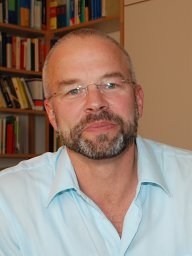 Harald Grethe合作论文数Institute of Agricultural Economics and Social Sciences;Humboldt-University of Berlin;Institute of Agricultural Economics and Social Sciences, Humboldt-University of Berlin21
 Friedhelm Taube合作论文数Institut für Pflanzenbau und Pflanzenzüchtung, Agrar- und Ernährungswissenschaftliche Fakultät, Christian-Albrechts-Universität zu Kiel19
 Franziska Appel合作论文数Halle (Saale),18
 Oliver Musshoff合作论文数Department of Agricultural Economics and Social Sciences, Humboldt-University Berlin17
 Christoph Sahrbacher合作论文数16
 Uwe Latacz-Lohmann合作论文数Department of Agricultural Economics, University of Kiel16Konrad Kellermann合作论文数16
 Martin Odening合作论文数Department of Agricultural;Economics and Social Sciences;Humboldt University of Berlin;Department of Agricultural, Humboldt University of Berlin15Hiltrud Nieberg合作论文数15
 Regina Birner合作论文数15
 Lieske Voget-Kleschin合作论文数14
 Olaf Christen合作论文数Institute of Agronomy and Crop Science14
 Matin Qaim合作论文数Center for Development Research, University of Bonn14
 Britta Renner合作论文数Britta Renner, University of Constance;Department of Psychology, Hallym University;University of Constance, Hallym University14julia c schmid合作论文数11
 Marten Graubner合作论文数Agr Dev Transit Econ IAMO, Leibniz Inst11
 Wolfgang Bokelmann合作论文数Humboldt University of Berlin11karin kataria合作论文数10
 Monika Pischetsrieder合作论文数Department of Chemistry and Pharmacy, Friedrich Alexander University9
 Peter Feindt合作论文数Umwelt9
 Pytrik Reidsma合作论文数Group Plant Production Systems, Wageningen University9
 Robert Finger合作论文数Department of Environmental Systems Science, ETH Zürich8
 Erik Mathijs合作论文数Departement Aard- En Omgevingswetenschappen, Faculty of Bioscience Engineering, Katholieke Universiteit Leuven8
 Jürgen Bauhus合作论文数Institute of Silviculture, University of Freiburg;Faculty of Environment and Natural Resources, University of Freiburg8Arlette Ostermeyer合作论文数7Jose Martinez合作论文数7Wim Paas合作论文数Plant Prod Syst, Wageningen Univ7
 Wauters Erwin合作论文数Department of Agricultural and Food Economics, KU7
 Amanda Sahrbacher合作论文数7
 M P M (Miranda) Meuwissen合作论文数Wageningen University and Research7
 Klaus Salhofer合作论文数Institut für Wirtschaft7Britta Czasch合作论文数7
 Jarmila Curtiss合作论文数7
 Alisa Spiegel合作论文数Social Sciences Group, Wageningen University & Research6Bárbara Soriano合作论文数6
 Yann De Mey合作论文数Business Economics Group, Wageningen University & Research6
 Daniel Müller合作论文数Department of Structural Development of Farms and Rural Areas, Leibniz Institute of Agricultural Development in Transition Economies;Department of Geography, Humboldt-Universität zu Berlin6Heinrich Hockmann合作论文数6
 Julie Urquhart合作论文数University of Gloucestershire Countryside and Community Research Institute Dunholme Villa6karin larsen合作论文数6
 Franziska Schaft合作论文数5Franz Wiesler合作论文数5
 Hugo Herrera合作论文数Syst Dynam Grp, Univ Bergen5
 Isabeau Coopmans合作论文数5




