Scholars have long sought to impact management practice. However, the current conceptualization of impact is grounded in dualisms, separating researchers from managers, means from ends, and thought from action. Such a dualistic understanding of impact hampers researchers' and managers' ability to achieve impact. Nowhere is this issue more acute than in the context of grand challenges, which require researchers and managers to work together closely. As a way forward, we propose a pragmatist perspective on impact, where impact is not seen as a one-time, unidirectional event, but rather as a relational and recursive process. By overcoming dualisms in traditional approaches to impact, pragmatist impacting can help advance progress on grand challenges and our current understanding of co-creation. In this article, we illustrate pragmatist impacting and reflect on its opportunities and challenges through our experience at Innovation North, an innovation laboratory that brought together researchers and managers to co-create a systems innovation process.
Drawing on two long-term ethnographic fieldworks with social entrepreneurs, this article starts to uncover the multilayered nature of the motivations underlying the creation of social enterprises. We investigate the following research question: what types of self-oriented motivations might drive social entrepreneurs? Departing from previous research and popular opinion, which foregrounds the primacy of prosocial intentions, we show the critical role played by self-oriented motives. To explain this finding, we advance three analytical categories of self-oriented motives-entrepreneurial lifestyle, repurposing expertise, and solving a social or environmental puzzle. We then illuminate these categories through the illustrative examples of six social entrepreneurs. Based on our findings, we contend that creating a social enterprise can also be the unintended consequence of adopting entrepreneurial behavior, leading to the creation of a venture guided by these three types of self-oriented motivations. Finally, we consider the implications of this study for the field of social entrepreneurship.
Corporations are currently confronting major, interlocking crises, including climate change, biodiversity loss, inequalities, and social isolation. When under threat, executives tend to focus inward and on the short term. This is particularly unfortunate because it is in such crises that executives need to see beyond the here and now in order to ride the storms. In this paper, we argue that corporate purpose helps organizations fight such myopia and offer four mechanisms through which this works: exposing new insights, seeing issues holistically, helping to sustain focus, and bringing unity and direction. History: This paper has been accepted for the Strategy Science Special Issue on Corporate Purpose. Funding: The authors acknowledge the generous funding from the Social Sciences and Humanities Council of Canada [Grant 895-2015-0026] that contributed to the broader project in which these ideas were generated.
As traditional boundaries between sectors are gradually blurred (Battilana and Lee, 2014), several studies have evidenced the ubiquity of multiple sets of logics in fields or industries (Greenwood et al. 2011; Lee and Lounsbury 2015). Recently, scholarly interest has paid close attention to organizations subject to institutional complexity, multiple sets of prescriptions from conflicting logics (Greenwood et al, 2011). Hybrid organizations combine multiple institutional logics, that refer to the patterned goals and means considered legitimate within a sector of activity (Lee and Battilana, 2013). Although great progress has been made towards understanding how these organizations are able to maintain their 'hybridity', we still have insufficient knowledge on what sorts of rhetoric and symbolism are effective in carrying out multiple demands and appealing to multiple constituents (Kraatz and Block, 2008). How do organizations symbolically manage their hybridity and why? I address the research question proposed by leveraging a 22- month ethnographic incursion in a hybrid organization acting as a social impact accelerator and investor.
 Ju Young Lee合作论文数2
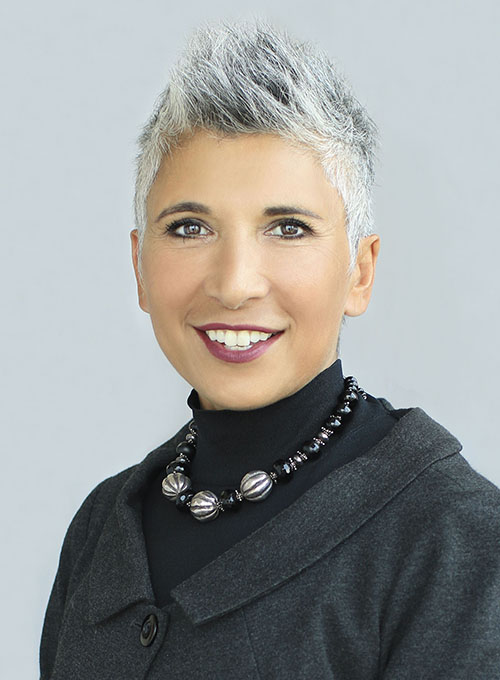 Tima Bansal合作论文数Ivey Business School, Western University;Innovation North2
 Frithjof Eberhard Wegener合作论文数Marketing and Consumer Research1
 Garima Sharma合作论文数Andrew Young Sch Policy Studies, Georgia State Univ1
 Guillaume Dumont合作论文数Department of Orthopaedic Surgery, UT Southwestern Medical Center;Shoulder Service;Department of Orthopaedic Surgery, UT Southwestern Medical Center1
 Fabrizio Ferraro合作论文数IESE Business School, 08034 Barcelona, Spain1




