Underpinned by systemic thinking, social-ecological systems (SES) research has emerged as a critical field for addressing the challenges of the Anthropocene, marked by a cross-scale focus, inter-and transdisciplinary approaches, and a strong emphasis on place-based work. Thanks to the efforts of many networks and institutes, the field has advanced new theoretical and methodological approaches, fostered dedicated journals, and spurred educational programs. It has also significantly influenced sustainability initiatives and policy from local to global scales, and has richly informed place-based efforts. Despite this progress, SES research faces persistent challenges, including conceptual and methodological fragmentation, difficulty in scaling localized insights to global frameworks (and vice versa), and capturing cross-scale connections and processes while retaining contextual relevance. Inclusivity also remains a critical issue, with regional, Indigenous, and local contributions often underrepresented, as there is still a reliance on short-term, inequitably distributed grant funding for much of the research in the field. This paper introduces the Society for Social-Ecological Systems (SocSES), a global platform designed to build on and connect to the rich legacy of SES networks. SocSES aims to advance and support SES-based research, practice, and action toward a just and sustainable future. We outline how SocSES will provide a home for SES institutes, networks, researchers, and practitioners working at the science-practice-policy interface to connect and amplify existing efforts through thematic streams, regional hubs, an institutional hub, an early-career professionals hub, and synthesis groups. The society will provide a stable infrastructure to foster interdisciplinary and transdisciplinary collaboration, enhance the generalizability and policy relevance of SES research, bolster education, research, and knowledge co-production, and support the next generation of SES professionals. By addressing the persistent challenges facing the field and fostering transformative spaces and communities for innovation and action, SocSES aspires to support and leverage SES knowledge as a cornerstone of global sustainability science. In line with the society's commitment to linguistic diversity and equitable access, this abstract has been translated into 12 languages by authors of this paper and additional contributors. These translations are available in Appendix 2 and at https://socses.org/about/paper.
In a complex and turbulent world, there is heightened interest in managing for resilience. However, resilience guides, particularly those used in the development field, often lack a theoretical grounding in complex adaptive systems. There is a demand for guidance on how to operationalize complexity in applications of resilience, such as resilience assessment and planning. This study synthesizes lessons from how twelve cases of social-ecological resilience practice are engaging with complexity. We assessed how each case engaged with complexity, according to a framework of six features of complex adaptive systems. The cases are situated in a diversity of contexts, that include rural villages in Tajikistan, a Swedish municipality, Australian catchment management authorities, a Canadian coastal fishery, and the Arctic council. Our results revealed two main ways of engaging with complexity: capturing and making sense of the complexity of a social-ecological system (system complexity) and embodying complexity into the participatory process (process complexity). Our comparison demonstrates that resilience practice provides a useful approach to address system complexity by, for example, conceptualizing social-ecological interactions, identifying interactions across scales, and assessing system dynamics. Strategies related to understanding the adaptive and emergent features of complex systems were less developed and widespread. The study also revealed a set of strategies to address process complexity, such as facilitating dialogue, building networks, and designing a flexible and iterative process, showing how complexity can be embedded into the resilience assessment process. The more participatory and embedded cases of resilience practice were stronger in these process-oriented strategies. The complexity framework we used and the identified practical strategies provide a theoretically-grounded resource for managers, decision-makers, and researchers on how to engage with complexity when applying resilience in a variety of contexts, including development and landscape management.
Here, we introduce Wayfinder, a novel conceptual framework and a process design for resilience practice. Framed by the Anthropocene argument, and with an explicit social-ecological system focus, the purpose of Wayfinder is to help users navigate toward trajectories of sustainable development. We present the theoretical perspectives that underpin the Wayfinder framework, which draw together and synthesize multiple strands of contemporary resilience thinking. We also describe how we operationalize this framework through an action-oriented process that is designed to facilitate transformative change on the ground. Wayfinder's contribution to resilience theory and practice emerges from the combination of: (1) framing that enables users to address the complex sustainability challenges that we face today, (2) synthesis of recent key advances in resilience science into one comprehensive framework and process, (3) practical guidance that moves beyond an assessment of the current state of affairs and provides concrete advice for planning and action, and (4) emphasis on learning as a key mode of operation in the rapidly changing Anthropocene.
Chapter 14 deals with the set of methods related to resilience assessment, which is a strategic approach grounded in theory that integrates multiple methods relevant to social-ecological systems (SES) research, in order to better understand the dynamics of complex SES and to design strategic interventions. The chapter discusses Wayfinder, RAPTA, the Resilience Assessment Workbook for Practitioners 2.0, STRESS and operationalising systemic resilience as major resilience assessment tools used in SES research. It goes on to discuss the types of SES problems and research questions commonly addressed by this set of methods, as well as their limitations, resource implications and new emerging research directions. The chapter also includes an in-depth case study showcasing the application of resilience assessment methods, and suggested further readings.
Understanding the resilience of social-ecological systems can advance our ability to transform environmental governance and achieve ecologically sustainable and socially just outcomes. However, measuring this multidimensional emergent system property has been elusive. We translated theoretical principles of resilience into ecological and social metrics and used expert knowledge to assess how they have changed through three sequential governance regimes of the Pacific herring fishery in northwestern Canada. We showed a significant reduction in system-wide resilience between previous Indigenous and historical colonial governance regimes, and limited change with the onset of the latest environmental justice era. We also detected recent signs of recovery among several metrics of resilience, thereby signaling that this system exhibits the preconditions for governance transformation. Pinpointing the erosion and recovery of attributes that confer social-ecological resilience can reveal leverage points and highlight strategic pathways to enable deliberate transformation toward a more ecologically sustainable and socially just future.
In 2014, the Third International Conference on the resilience of social-ecological systems chose the theme "resilience and development: mobilizing for transformation."The conference aimed specifically at fostering an encounter between the experiences and thinking focused on the issue of resilience through a social and ecological system perspective, and the experiences focused on the issue of resilience through a development perspective.In this perspectives piece, we reflect on the outcomes of the meeting and document the differences and similarities between the two perspectives as discussed during the conference, and identify bridging questions designed to guide future interactions.After the conference, we read the documents (abstracts, PowerPoints) that were prepared and left in the conference database by the participants (about 600 contributions), and searched the web for associated items, such as videos, blogs, and tweets from the conference participants.All of these documents were assessed through one lens: what do they say about resilience and development?Once the perspectives were established, we examined different themes that were significantly addressed during the conference.Our analysis paves the way for new collective developments on a set of issues: (1) Who declares/assign/cares for the resilience of what, of whom?(2) What are the models of transformations and how do they combine the respective role of agency and structure?(3) What are the combinations of measurement and assessment processes?( 4) At what scale should resilience be studied?Social transformations and scientific approaches are coconstructed.For the last decades, development has been conceived as a modernization process supported by scientific rationality and technical expertise.The definition of a new perspective on development goes with a negotiation on a new scientific approach.Resilience is presently at the center of this negotiation on a new science for development.
Summary Increased interest in managing resilience has led to efforts to develop standardized tools for assessments and quantitative measures. Resilience, however, as a property of complex adaptive systems, does not lend itself easily to measurement. Whereas assessment approaches tend to focus on deepening understanding of system dynamics, resilience measurement aims to capture and quantify resilience in a rigorous and repeatable way. We discuss the strengths, limitations and trade‐offs involved in both assessing and measuring resilience, as well as the relationship between the two. We use a range of disciplinary perspectives to draw lessons on distilling complex concepts into useful metrics. Measuring and monitoring a narrow set of indicators or reducing resilience to a single unit of measurement may block the deeper understanding of system dynamics needed to apply resilience thinking and inform management actions. Synthesis and applications. Resilience assessment and measurement can be complementary. In both cases it is important that: (i) the approach aligns with how resilience is being defined, (ii) the application suits the specific context and (iii) understanding of system dynamics is increased. Ongoing efforts to measure resilience would benefit from the integration of key principles that have been identified for building resilience.
Participatory scenario planning (PSP) is an increasingly popular tool in place-based environmental research for evaluating alternative futures of social-ecological systems.Although a range of guidelines on PSP methods are available in the scientific and grey literature, there is a need to reflect on existing practices and their appropriate application for different objectives and contexts at the local scale, as well as on their potential perceived outcomes.We contribute to theoretical and empirical frameworks by analyzing how and why researchers assess social-ecological systems using place-based PSP, hence facilitating the appropriate uptake of such scenario tools in the future.We analyzed 23 PSP case studies conducted by the authors in a wide range of social-ecological settings by exploring seven aspects: (1) the context; (2) the original motivations and objectives; (3) the methodological approach; (4) the process; (5) the content of the scenarios; (6) the outputs of the research; and (7) the monitoring and evaluation of the PSP process.This was complemented by a reflection on strengths and weaknesses of using PSP for the place-based social-ecological research.We conclude that the application of PSP, particularly when tailored to shared objectives between local people and researchers, has enriched environmental management and scientific research through building common understanding and fostering learning about future planning of social-ecological systems.However, PSP still requires greater systematic monitoring and evaluation to assess its impact on the promotion of collective action for transitions to sustainability and the adaptation to global environmental change and its challenges.
Environmental problems, at local scale as well as global scale, are now considered as key issues and scientists are encouraged to be part of the process to address these issues. For the last decades, scholars have been focusing on the study of interactions between social dynamics and ecological processes and produced a set of concepts and scientific discourses aiming at framing the analysis of socio-ecological dynamics and eventually at orienting interventions. Scientific discourses are produced by scholars who belong to different groups (resilience, vulnerability, political ecology, commons, robustness …) which identity go beyond disciplines, methods, frameworks and concepts and include a collective history on the evolution of ideas and research organization. Different research units based in Montpellier (France) have been conducting research on socio-ecological systems (SES) to understand many types of relationships, including those between agriculture and biodiversity, policies and landscapes dynamics, watershed management, ecosystem management and health risk. A project named SETER (Socio-Ecological Theories and Empirical Research) was elaborated aiming at assessing the relevance and the complementarities of theoretical frameworks by applying and testing them on several empirical research case studies developed by the participating research units based in Montpellier. We have confronted different scholars, holding the flags of different schools of thought, to the same concrete issues. The purpose of this assessment was to clarify the respective potential of the different theoretical frameworks and to provide the basis for new conceptualizations of socio-ecological systems dynamics and management. Although some authors call for an integrated framework and some advocate for the diversity of explanations, both agree on the fact that there is a need for clarification for a better scientific debate and better interactions with the managers, stakeholders and interested people. The scientific debate remains obscure when it is based on abstract developments. This report presents the material of this experiment, the interaction process and the lessons on the schools of thought and methodologies. Firstly, we introduce briefly the different schools based on the literature and on the presentations given by the invited scholars. Then we introduce the four case studies which were analyzed by the invited scholars and report on the interactions and their results. Then we present a discussion proposing a classification of the different perception of change which crosses the different schools.
Resilience and the Cultural Landscape: Understanding and Managing Change In Human-Shaped Environments. Plieninger, T., and C. Bieling, editors. 2012. Cambridge University Press, New York, NY. 348 pp. $70 (hardcover). ISBN 9781107020788. Restoring Paradise: Rethinking and Rebuilding Nature in Hawai’i. Cabin, R. J. 2013. University of Hawaii Press, Honolulu, HI. 236 pp. $24.99. ISBN 978-0-8248-3693-1. Just as fences can be used to exclude certain species and enable others to thrive in the restoration of Hawaiian landscapes, the conceptual frames we use to structure how we think about and manage landscapes determines what is included and what is left out of our analysis and planning. And while determining how best to proceed is rarely simple or straightforward, having a solid conceptual framework and philosophical grounding is critical to making informed choices. At the same time, rapid change precludes the option of sorting out the finer details of the theoretical basis of our actions, so we must grapple with the challenge, both conceptually and on the ground, as we pursue the mostly shared goal of not destroying the natural capital and cultural diversity upon which human well-being depends. On this point, Resilience and the Cultural Landscape: Understanding and Managing Change in Human-Shaped Environments, edited by Plieninger and Bieling, and Cabin's book, Restoring Paradise: Rethinking and Rebuilding Nature in Hawai’i, inform our understanding of how diverse perspectives frame our understanding and management of cultural landscapes and other types of social-ecological systems. Together these books offer insights from numerous case studies in Hawaii and other places around the world, including Europe, South America, and Australia, as to how we might progress our thinking and practice of landscape management. The resilience framework combines a related set of concepts that address complex systems and their capacity to cope with disturbance such that the system does not change its fundamental structure, function, and identity (Walker & Salt 2006). Resilience itself is a property of social-ecological systems and as Kinzig notes in chapter 18 of Plieninger and Bieling's book, “it is not as though a system either has resilience or does not. Instead, it may have more or less resilience” (p. 316). How people interact with and manage a landscape can influence how resilient it is to particular disturbances or to system perturbations more generally. The framework can thus be particularly useful in the context of changing landscapes and informing options for directing change along desirable pathways. The cultural landscape framework within human geography similarly recognizes “the concept of landscape as an expression of a complex interaction between human ideas, social structures, and the physical features of the human environment” (p. 14). Although there are many views on cultural landscapes, 3 basic understandings are outlined by Plieninger and Bieling in chapter 1: cultural landscapes are modified or influenced by human activity, they are threatened by the disappearance or change of valued landscape features, and they have meaning to groups of people in particular cultural or socioeconomic contexts (p. 15). The papers in Resilience and the Cultural Landscape deal with the challenges and opportunities presented by combining these 2 frameworks, which emerged from different disciplines. Researchers and practitioners who use these concepts have a shared interest in analyzing and managing landscape change to sustain cultural and ecological values. The book is an outcome of a workshop involving researchers predominantly from the cultural landscape field. Participants explored similarities between the approaches and considered how the approaches might inform one another. The book offers a diversity of perspectives and case studies that contrast, compare, and merge the concepts as they guide the reader from conceptual foundations, to analytic frameworks, to the practice of managing landscapes for resilience. The volume concludes with a reflection on what is to be gained from connecting resilience and cultural landscape theory. The convergence of thinking around landscape management from 2 distinct starting points, resilience with roots in ecology and cultural landscapes with roots in the social sciences, could be taken as a cue that we are approaching a deeper understanding of how things work. Despite their different origins, the 2 frameworks appear to have much in common. Several authors begin by making the comparison between the cultural landscape concept and social-ecological systems, a key component of resilience thinking. Although the concept of cultural landscapes has multiple discourses, UNESCO's (2008) broad definition, “the combined works of nature and man,” shares a core feature with social-ecological systems in that people are seen as a key component of the landscape, or in the later case the system. The use of the word system highlights a significant difference between the 2 concepts, which is that social-ecological systems and the umbrella framework of resilience stem from complex adaptive systems. With a focus on system thresholds and emergent behavior, much of resilience research involves analyzing interactions among various system parts, including natural resources and ecosystem components as well as individuals, social groups, and institutions. Thus, an underlying criticism of the resilience approach, which gives rise to the “considerable differences” described by Kirchoff et al. in chapter 3, revolves around applying an ecologically derived concept to the social domain. For example, Widgren, in chapter 6, describes how an analysis of local farming in Tanzania might be limited if social stratification were not examined, in this case how and why wealthy and poor groups of farmers differ in their ability to manage the land sustainably. Both frameworks have limitations to acknowledge and work within. However, most authors of the edited volume appear to concur that resilience thinking still has some way to go before bringing a depth of understanding of the social sciences, including political ecology (and the attention it brings to power relations in particular) to resilience analysis. Neither the resilience nor cultural landscape concepts are value-free and, as Head notes in chapter 4 (“Conceptualising the Human in Cultural Landscapes and Resilience Thinking”), both frameworks need to examine their assumptions, particularly in terms of the desirability of a system or landscape state. In their study of declining seasonal herd migration traditions in northern Spain (chapter 14, “Ecosystem Services and Social-Ecological Resilience in Transhumance Cultural Landscapes: Learning from the Past, Looking for a Future”), Oteros-Rozas and colleagues reinforce the importance of questioning assumptions underlying the desirability of a particular cultural landscape state. And in their analysis of shrimp farming off the coast of Tanzania, Beymer-Farris et al. (“Promises and Pitfalls of Adaptive Management in Resilience Thinking: the Lens of Political Ecology”) underscore the need to ask for whom is the landscape in its current configuration and use desirable. These thoughts are echoed increasingly in the ecosystem services literature in the form of the questions who benefits and who does not (e.g., Daw et al. 2011)? Although important differences between resilience and cultural landscape frameworks can be readily examined from various angles, it is their similarities and potential benefits of integration that make this collection such a timely and constructive contribution. Both approaches, it is noted, have emerged from a deeper understanding of processes of change. Combining and applying tools that stem from each framework to the compatible goals of sustainable development and preserving cultural and biological diversity should enable understanding and provide a greater range of options. Many of the case studies illustrate what is to be gained from a multidisciplinary approach. In a study of sugarcane landscapes, the authors, Found and Berbes-Blazquez (chapter 10, “The Sugar-Cane Landscape of the Caribbean Islands: Resilience, Adaptation, and Transformation of the Plantation Social-Ecological System”), combined an examination of multiscale, adaptive cycles of change with a historical analysis of labor, capital, markets, and political action, which allowed for a comprehensive analysis and led to suggested modifications to the resilience framework. In chapter 13 (“Response Strategy Assessment: A Tool for Evaluating Resilience for the Management of Social-Ecological Systems”), Tuvendal and Elmqvist introduce a novel appraisal system for estimating resilience using coping strategies. Three final perspectives on resilient landscapes offer a compelling discussion of what is to be gained by cross-fertilization of the 2 frameworks, in particular including the more complex attributes of human societies in an approach that can be used to analyze human–environment interactions and search for general patterns. Extending the dialogue from conceptual frameworks to practice, Cabin's firsthand experiences related in Restoring Paradise, provides a unique dimension to the discussion of managing cultural landscapes because it focuses on some of the challenges of implementation he has confronted both ecologically and in sociocultural and political realms. Cabin offers an expanded case study on landscape management and restoration in Hawaii that reveals multiple perspectives on land management and exposes the reality of triage-style restoration and aggressive management of ecosystems in one of the most rapidly changing places on the planet. Cabin arrived in Hawaii in 1997 to work as a research ecologist for the U.S. Forest Service, and his experiences provide a glimpse into the practical, political, and cultural dimensions of rebuilding nature in a place with the highest rate of biodiversity loss in the world. From his description of several ongoing restoration projects in Hawaii, a multilayered picture emerges of the relationships between people and their environment, where the complexity of species’ invasions and interactions is rivaled only by that of the power and politics involved with managing the landscape. Hawaii's unique evolutionary and cultural history have shaped a landscape that is difficult to imagine as anything other than a cultural landscape, as elaborated on in Plieninger and Bieling's book. From the locally hired employees, field volunteers, restoration tourists, conservation actors, and politicians, people are a key component of every project described by Cabin. With an increasing awareness of the roles they play from facilitating alien species’ invasions, supporting or opposing restoration activities, and through various ways of participating in the process, Restoring Paradise is as much about people as it is about nature and landscapes. The significance of this relationship is perhaps distilled in the casual comments of committed restoration practitioners admiring the results of their efforts and remarking, “Wow! What if it works?” “What if it works and no one cares?” (p. 104). The amount of effort required to restore and maintain Hawaiian landscapes necessitates stewardship and volunteerism on a large scale and these volunteer programs and locally hired workers emerge as key contributing factors to a project's success. And as one interview subject of Cabin's states, if restoration is to succeed, it will “ultimately depend on the public” (p. 79). Part of what makes Cabin's book so engaging are the first-hand accounts and multiple perspectives of frontline restoration practitioners, managers, and volunteers. The full spectrum of viewpoints reveals the challenge and illusiveness of achieving consensus or shared understanding of how to best manage the land. This resonates strongly with the more academic discussions in Plieninger and Bieling's book and echoes many of their authors’ attempts to more fully integrate human dimensions of land management with the landscape resilience concept. The suitability of such an approach also becomes clear upon being reminded that all the restoration efforts taking place in Hawaii today can be relatively easily undone. Hawaii remains vulnerable to a suite of potentially devastating disturbances (e.g., new and possibly worse alien species invasions, severe climate change effects, catastrophic volcanic eruptions, etc.). Within this broader context, strategic efforts to build resilience to large-scale disturbance would be prudent, and, drawing on Cabin's book, it is likely only achievable with public engagement efforts on a comparable scale. Central to both books, an unanswered question remains, for whom is the landscape (or social-ecological system to put it in resilience terms) being managed? Should—as Leopold suggests in Hawaii Volcanoes National Park's 1972 management plan, “a visitor who climbs a volcano in Hawaii ought to see Mome (Sophora chrysophylla) trees and Silverswords, not goats” (p. 85)? Who ultimately should decide on the character and use of a landscape? Perhaps, as both books would suggest, the combined perspectives of cultural landscapes and resilience can offer a firm foundation from which to address what changes are acceptable, to whom, and how best to ensure that the multiple values of landscapes are sustained.
Introduction The world breaks everyone and afterward many are strong at the broken places. (Ernest Hemingway, A Farewell to Arms, 1929) We live in challenging times with a heightened sense of uncer...
Enhancing the resilience of ecosystem services (ES) that underpin human well-being is critical for meeting current and future societal needs, and requires specific governance and management policies. Using the literature, we identify seven generic policy-relevant principles for enhancing the resilience of desired ES in the face of disturbance and ongoing change in social-ecological systems (SES). These principles are (P1) maintain diversity and redundancy, (P2) manage connectivity, (P3) manage slow variables and feedbacks, (P4) foster an understanding of SES as complex adaptive systems (CAS), (P5) encourage learning and experimentation, (P6) broaden participation, and (P7) promote polycentric governance systems. We briefly define each principle, review how and when it enhances the resilience of ES, and conclude with major research gaps. In practice, the principles often co-occur and are highly interdependent. Key future needs are to better understand these interdependencies and to operationalize and apply the principles in different policy and management contexts.
This paper present an international collaborative effort, the SETER project Socio-Ecological Theories and Empirical hosted by the Center for International Co-operation in Agronomic Research for Development (CIRAD) and funded by the Agropolis Foundation. This project brought together researchers in the fields of common pool resource research, hazards and vulnerability, political ecology, and resilience to address multiple ongoing empirical research problems through a comparative lens. The objective of this project is to assess the relevance and the complementarities of these theoretical frameworks by applying and testing them in the case of four empirical research case studies (Wetlands of the Rhone river delta, Locust control in Sahelian region, Multiple uses of Sahelian ecosystems, Management of Bemisia-phytovirus risk) The lessons from this project will also provide the basis for new conceptualisations of socio-ecological systems dynamics and management. (Resume d'auteur)
The benefits and risks of any particular GM crop depend on the interactions of its ecological functions and natural history with the agroecosystem and ecosystems within which it is embedded. These evolutionary and ecological factors must be considered when assessing GM crops. We argue that the assessment of GM crops should be broadened to include alternative agricultural practices, ecosystem management, and agricultural policy. Such an assessment would be facilitated by a clearer understanding of the indirect costs of agriculture and the ecological services that support it. The benefits of GM crops should be compared to those of other means of agricultural intensification such as organic farming, integrated pest management, and agricultural policy reform. A gradual and cautious approach to the use of GM crops that relies on a truly comprehensive risk assessment could allow people to reap substantial benefits from GM crops while mitigating their serious risks.
 Garry Peterson合作论文数Stockholm Resilience Centre, Stockholm University8
 Nancy Lee Peluso合作论文数Department of Environmental Science, Policy, and Management, University of California, Berkeley3
 Colin D. Polsky合作论文数Graduate School of Geography, Clark University;Graduate School of Geography, Clark University3
 Elena Bennett合作论文数Department of Natural Resource Sciences, Faculty of Agricultural and Environmental Sciences, McGill University3
 Lisen Schultz合作论文数Stockholm Resilience Centre, Stockholm University3
 Erin Bohensky合作论文数CSIRO Ecosystems Sciences3
 Lisbeth Jamila Haider合作论文数3
 Michael Schoon合作论文数School of Sustainability, Arizona State University3
 Lance H. Gunderson (Lance Gunderson)合作论文数The Department of Environmental Sciences, College of Arts and Sciences, Emory University3
 Line Josefin Gordon合作论文数Stockholm Resilience Centre;Stockholm University;Stockholm Resilience Centre, Stockholm University3
 Olivier Bonato合作论文数Laboratoire d'Acarologie fondamentale et appliquee3
 Shauna B. Burnsilver合作论文数Natural Resource Ecology Laboratory, Colorado State University3
 William Bellotti合作论文数2Mike Brklacich合作论文数2Jerome Mounsey合作论文数2Elin Enfors Kautsky合作论文数2
 Berta Martín-López合作论文数Social-Ecological Systems Institute, Leuphana Universität Lüneburg2
 Saher Hasnain合作论文数University of Oxford2
 Martin D Robards合作论文数2
 Thom Achterbosch合作论文数2
 Katja Malmborg合作论文数2
 My Sellberg合作论文数2
 Simon Fielke合作论文数The Commonwealth Scientific and Industrial Research Organisation (CSIRO)2
 Bálint Balázs合作论文数Social Science Research Group, Environmental2
 Attila Toth合作论文数Department of Landscape Architecture, Slovak University of Agriculture in Nitra2
 Rike Stotten合作论文数2
 francois bousquet合作论文数CIRAD, UMR SENS, 34398 Montpellier, France2
 Berbés-Blázquez Marta合作论文数Faculty of Environmental Studies, York University2
 Katrina Brown合作论文数University of Exeter2
 Duan Biggs合作论文数Environmental Futures Research Institute, Griffith University2
 Rebecca Kanter合作论文数2
 Monika Zurek合作论文数School of Geography and the Environment, University of Oxford2
 Julia M Baird合作论文数2
 Örjan Bodin合作论文数Stockholm Resilience Centre, Stockholm University2
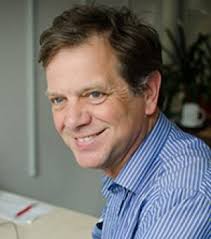 John Ingram合作论文数School of Geography and the Environment, University of Oxford;Somerville College, University of Oxford;Environmental Change Institute, University of Oxford2
 Denis Gautier合作论文数Cirad Tera2
 Georgina Cundill合作论文数Rhodes University;World Wildlife Fund;Wageningen University;New York University;Resourceful Solutions Consulting;Wageningen University, New York University2
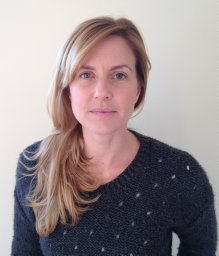 Louisa S. Evans合作论文数University of Exeter2
 Carl Folke合作论文数Beijer Institute of Ecological Economics, Royal Swedish Academy of Sciences;Stockholm Resilience Centre, Stockholm University2
 Paul West合作论文数Department of Applied Economics, College of Food, Agricultural and Natural Resource Sciences, University of Minnesota2
 Anne Pihlanto合作论文数Natural Resources Institute Finland;MTT2
 Maja Schluter合作论文数University of Osnabrück Institute of Environmental Systems Research2
 Anne M. Leitch合作论文数CSIRO Ecosystem Sciences2
 Christo Fabricius合作论文数Nelson Mandela Metropolitan University2
 Karen A. Kotschy合作论文数Johannesburg Centre for Water in the Environment, University of the Witwatersrand2
 William Kaye-Blake合作论文数Lincoln University2
 Tim M. Daw合作论文数Marine Resources Assessment Group2
 Vasilis Dakos合作论文数Dept Aquat Ecol & Water Qual Management, Wageningen Univ2
 Ciara Raudsepp-Hearne合作论文数2




