Tetrahydroquinolines are featured in molecules with wide ranging properties, including those with biological activity and materials applications. This report demonstrates that widely accessible N-alkyl arylamines can be directly coupled with new classes of alkenes to synthesize tetrahydroquinolines. The reaction is facilitated by a commercially available borane catalyst and enables the creation of novel tetrahydroquinoline scaffolds.
The ability to investigate hypervalent iodine(V) fluorides has been limited primarily by their difficult preparation traditionally using harsh fluorinating reagents such as trifluoromethyl hypofluorite and bromine trifluoride. Here, we report a mild and efficient route using Selectfluor to deliver hypervalent iodine(V) fluorides in good isolated yields (72–90%). Stability studies revealed that bicyclic difluoro(aryl)-λ5-iodane 6 was much more stable in acetonitrile-d3 than in chloroform-d1, presumably due to acetonitrile coordinating to the iodine(V) centre and stabilising it via halogen bonding.
A new and efficient strategy for the rapid formation of novel fluorinated tetrahydropyridazines and dihydrooxazines has been developed by fluorocyclisation of β,γ-unsaturated hydrazones and oximes with the fluoroiodane reagent. Mechanochemical synthesis delivered fluorinated tetrahydropyridazines in similar excellent yields to conventional solution synthesis, whereas fluorinated dihydrooxazines were prepared in much better yields by ball-milling.
Activated aromatics were reacted with two different fluoroidoane reagents 1 and 2 in the presence of triflic acid to prepare only the para-substituted diaryliodonium salts. With fluoroiodane 1 the unsymmetrical diaryliodonium salts contained an ortho-propan-2-ol sidearm, whereas the alcohol sidearm was eliminated to form an ortho-styrene sidearm in the reaction with fluoroiodane 2. Only the diaryliodonium salts containing a styrene sidearm were fluorinated successfully to deliver para-fluorinated aromatics in good yields.
Hexafluoroisopropan-2-ol (HFIP) is an excellent solvent for promoting fluorinations with the hypervalent fluoroiodane reagent 1 and crucially, it removes the need for transition metals or TREAT-HF activators. The fluoroiodane reagent 1 was used in HFIP to monofluorinate 1,3-ketoesters and to fluorocyclise unsaturated carboxylic acids in excellent yields under mild reaction conditions.
An entry from the Cambridge Structural Database, the world’s repository for small molecule crystal structures. The entry contains experimental data from a crystal diffraction study. The deposited dataset for this entry is freely available from the CCDC and typically includes 3D coordinates, cell parameters, space group, experimental conditions and quality measures.
Review: synthesis, characterization and application of organometallic complexes functinalized with fluorous substituents; 140 refs.
A new class of fluorinated lactones was prepared by the intramolecular fluorocyclizations of unsaturated carboxylic acids by using the stable fluoroiodane reagent in combination with AgBF4. This unique reaction incorporates a cyclization, an aryl migration, and a fluorination all in one step. The fluoroiodane reagent, prepared easily from fluoride, can also be used without a metal catalyst to give moderate yields within just 1 hour, thus demonstrating that it is a suitable reagent for developing new (18)F-labelled radiotracers for PET imaging.
The synthesis, characterisation and application of organometallic complexes functionalised with fluorous substituents are reviewed.
The isolated iodonium ylide has been reacted successfully with TREAT-HF, hydrochloric acid, acetic acid and p-toluenesulfonic acid to form the 2-fluoro-, 2-chloro-, 2-acetyl- and 2-tosyl-1,3-ketoesters respectively.
Aqueous microdroplets with a volume of a few femtoliters are an ideal sample size for single-molecule fluorescence experiments. In particular, they enable prolonged measurements to be made on individual molecules that can diffuse freely in the surrounding medium. However, the rapid production of monodisperse droplets in a hydrodynamic flow, such as microfluidic flow focusing, will often involve volumes that are typically too large (>0.5 pL) for single-molecule studies. Desired volumes of a few femtoliters, or smaller, can be produced by either tip streaming or step emulsification in a flow-focusing device; however, in both of these methods, the aqueous droplets are dispersed in a large volume of the continuous phase, where individual droplets can diffuse perpendicular to the flow direction, and the monodispersity of droplet size produced by tip streaming is difficult to sustain for more than transient time scales. We show here that the optimized design and fabrication of microfluidic devices with shallow channel depths can result in the reliable production of stable droplets of a few femtoliters at a high rate in the dripping regime of flow focusing. Furthermore, the generated microdroplets are localized in a two-dimensional plane to enable immediate analysis. We have demonstrated the fluorescence monitoring of single molecules of encapsulated green fluorescent protein. The apparatus is straightfoward, inexpensive, and readily assembled within an ordinary laboratory environment.
The air and moisture stable fluoroiodane 8, readily prepared on a 6 g scale by nucleophilic fluorination of the hydroxyiodane 7 with TREAT-HF, has been used as an electrophilic fluorinating reagent for the first time to monofluorinate 1,3-ketoesters and difluorinate 1,3-diketones in good isolated yields.
The recent RV144 trial showed ~30% efficacy. Although the protection was modest, the trial indicated for the first time that a vaccine against HIV is possible. Immune correlate analysis suggests that the observed protection was due to non-neutralizing antibody responses. This efficacy might be improved if a vaccine could elicit broadly neutralizing antibodies (bNAbs). Of particular interest for vaccine design are the potent VRC01- class bNAbs targeting CD4 binding site on Env. Unfortunately, a number of studies have demonstrated that recombinant Env proteins do not bind germline-reverted VRC01 class Abs, indicating that current vaccine strategies using recombinant Env are unable to activate progenitor B cells that ultimately give rise to VRC01 class Abs.
Two approaches have been developed for the enantioselective Reformatsky reaction of ethyl iododifluoroacetate with ketones to form a quaternary carbon centre using (1R,2S)-1-phenyl-2-(1-pyrrolidinyl)-1-propanol as the chiral ligand. Good yields and high enantioselectivities (80-91% ee) were achieved with a range of alkyl aryl ketones in a convenient one-pot protocol using ethyl iododifluoroacetate and diethylzinc to form the difluorinated Reformatsky reagent homogeneously. In the traditional two-step Reformatsky reaction using the preformed Reformatsky reagent generated from ethyl iododifluoroacetate and zinc dust, good yields and good enantioselectivities (75-84% ee) were also obtained.
The first enantioselective Reformatsky-type reaction of ethyl iodofluoroacetate has been accomplished with alkyl aryl ketones. High diastereoselectivities and excellent enantioselectivities for the major diastereomer (93-95% ee) were achieved with large alkyl groups. For smaller alkyl groups the diastereoselectivities were moderate, but excellent enantioselectivities were obtained for both diastereomers (79-94% ee).
AbstractIn most cases, the one‐pot procedure gives lower yields (2—17%) with a higher enantiomeric excess than the classical two‐step procedure.
A new fluorous PCP pincer ligand has been coordinated to Ni(II), Pd(II) and Pt(II). The air stable palladium complex, which promotes Heck reactions between methyl acrylate and either aryl bromides or iodides, can be recovered intact by fluorous solid-phase extraction and was reused four times in the Heck reaction between methyl acrylate and 4-bromoacetophenone without loss in catalytic activity.
series of dibenzo-18-crown-6 lariat ethers containing two C(7)H(15) (11) (CH(2))(2)C(6)F(13) (14) (CH(2))(2)C(8)F(17) (15) NHC(7)H(15) (18) and NHCH(2)C(6)F(13) (19) sidearms were prepared and the single crystal X-ray structure of cis-4 4'-di(1H 1H 2H 2H-perfluorodecyl)-dibenzo-18-crown 6 (15a) is reported The light fluorous dibenzo-18-crown-6 ether (14) has emerged as a stable and robust PTC catalyst which can be recycled efficiently by fluorous solid-phase extraction and gives better PTC catalytic activity compared to the parent non-fluorinated PTC catalyst dibenzo-18-crown-6 and the alkylated derivative (11) in aliphatic and aromatic nucleophilic substitutions (C) 2010 Elsevier B V All rights reserved
The perfluoroalkylated polystyrene resin-supported tri[(heptadecafluorodecyl)phenyl]phosphine palladium complex was prepared and found to promote the Suzuki-Miyaura cross-coupling. Thus, the crosslinked perfluoroalkylated polystyrene beads 1 were prepared from 4-(perfluoro-n-octyl)styrene, divinylbenzene, and styrene via polymerization with AIBN. The reaction of fluoro-resin 1 with {PdCl2[P(4-C6H4C2H4C8F17)3]2} 2 gave the polymer-supported complex 3. The Suzuki-Miyaura cross-coupling of 4-bromoacetophenone (4) and phenylboronic acid (5) was carried out in the presence of polymeric catalyst 3 to give the coupling product 6 with 99% conversion.
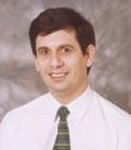 Eric G. Hope合作论文数Department of Chemistry University of Leicester71
 John Fawcett合作论文数18
 Dave J. Adams合作论文数School of Chemistry, University of Glasgow14
 Andrew John West合作论文数12Kuldip Singh合作论文数11David Gudmunsen合作论文数10RDW KEMMITT合作论文数8
 David J. Cole Hamilton合作论文数School of Chemistry, University of St Andrews5Ben Croxtall合作论文数5
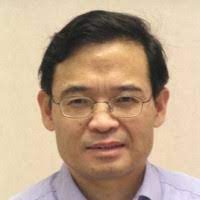 Jianliang Xiao (肖建良)合作论文数Department of Chemistry, University of Liverpool4Geary Gemma C合作论文数4Douglas F. Foster合作论文数4Denis Sinou合作论文数4
 Andrew P. Abbott合作论文数Department of Chemistry, School of Chemistry, University of Leicester4
 Gianluca Pozzi合作论文数4Peter J. Pogorzelec合作论文数4José A. Vidal合作论文数3Martyna Urbonaite合作论文数3Fornalczyk Michal合作论文数3
 J. A. Bennett合作论文数3
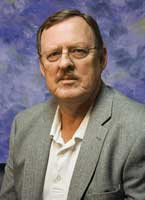 David Russell合作论文数Department of Chemistry, Texas A&M University3Paul L. Coe合作论文数3David J. Moody合作论文数2Samuel Suhard合作论文数2Reena Mistry合作论文数2Weiping Chen合作论文数2William Riley合作论文数2julian vaughanspickers合作论文数2H. Holloway合作论文数2Philip W. Dyer合作论文数2Seiji Takeuchi合作论文数2David R. Russell合作论文数2Danny R. Paige合作论文数2
 David L. Davies合作论文数2
 Steffi Friedrichs合作论文数2Jonathan Hopewell合作论文数2Daniel Duncan合作论文数2
 David J. Hamilton合作论文数2Dan R.W. Wood合作论文数2J Sherrington合作论文数2DJ Birdsall合作论文数2Pravat Bhattacharyya合作论文数2Yutaka Nakamura合作论文数2Joseph Jardine合作论文数1André Mortreux合作论文数1
 Rena Simayi合作论文数1Ian Shepperson合作论文数1Robert Weinmeister合作论文数1Anita M Dreyer合作论文数1




