The proposed work deals with image based solar tracker utilizing raspberry pi 4B. The system works fine with a webcam supporting the digital image processing within the raspberry pi model 4B board which manages to arrest the Sun's Image during hazy days due to clouds. India is the country that acquires Sunlight all-round the year. Sunlight can be utilized as substitute energy to fossil fuels or hydroelectricity for the generation of electricity. There are numerous methods which are available to expand the harvesting of solar energy but few are expensive and others can't provide accurate position of the Sun during hazy Sunlight. Raspberry Pi is the foremost board which is used to replace the CPU (central processing unit) to develop and process the Sun image. The two servo motors consisting of tilt \& pan are helping to position the web camera to track the position of the Sun. The system provides easy execution of Sun followers with the ability to find the centroid of the Sun on sky pictures. The Raspberry board then sends the instruction to the driver and it rotates in line with the trajectory of the Sun. The result states that tracking error reduced to 0.040 on haze or cloudy days with the use of raspberry pi model 4B.
Currently, the utilisation of biometric traits for the authentication of individuals has become widespread. Various biometric features such as fingerprints, iris patterns, and facial characteristics are employed for the purpose of person authentication. Facial recognition technology is widely recognised as a popular method for person authentication. There exists a variety of algorithms, each with its own set of advantages and disadvantages. Dimensionality reduction is a crucial step in facial recognition algorithms due to the presence of multiple facial features within a facial image. The primary objective of this paper is to employ principle component analysis techniques in the face recognition process. Principal Component Analysis (PCA) has been found to yield highly favourable outcomes in the context of dimensionality reduction. Principal Component Analysis (PCA) is a statistical technique that generates eigenvectors. The eigenvectors are combined to form images, which are subsequently used to visualise the eigenfaces.
A complete and rigorous literature evaluation focused on the detection and elimination of artifacts from EEG signals was presented in the preceding chapter. Issue-wise solution approaches and their limitations were also discussed which ultimately resulted in identifying the gaps in the proposed work and scope of the research work. In this chapter, the detailed explanation of system design and its implementation is discussed. The main focus of the anticipated research is to identify and remove the unwanted signals known as artifacts from the recorded EEG signals.
The primary driving force behind the development of fifth-generation (5G) applications is the necessity of Concurrent Multipath Transfer (CMT). Nevertheless, CMT systems that rely on Transport Control Protocol/Internet Protocol (TCP/IP) will continue to be the key point in 5G as multipath transport protocols are not often utilized. In today’s worldwide networks, integrating TCP/IP with asynchronous transfer mode (ATM) is a difficult structural problem since the TCP/IP protocol has to accommodate the special features of ATM. An effective mechanism for the effective use of both approaches will be a detailed characterization of TCP/IP performance via ATM. ATM network performance may be negatively impacted by improper use of TCP error and flow control methods, which were created for best-effort networks. In order to facilitate effective communication, this article offers a comprehensive and standardized examination and analysis of TCP/IP over ATM in the context of the 5G network architecture. It also proposes a tuned energy efficient transmission control protocol (TEETCP) to enhance Quality of Service (QoS) in TCP/IP applications. The performance of the approach is validated against existing recent works based on evaluation metrics such as packet delivery ratio (PDR), average throughput (AP), end-to-end delay (e2e), utilization of energy and computation overhead. The results indicate the better performance of our proposed work in all aspects.
When medical pictures are compressed, valuable information is extracted from the data they contain that is crucial for clinicians to understand clinically. The purpose of the notion of image compression is to enhance the picture content by compressing two images, such as MRI and CT scans, in order to provide doctors accurate and helpful information for their clinical care. In this project, two medical photos were combined using the Discrete Wavelet Transforms (DWT) approach to separate the functional and anatomical images. The compressed picture has no colour alterations and both additional spatial attributes and functional information. According to experimental data, discrete wavelet transformations provide the highest compression performance.
Transformer is an efficient asset, which is used mainly to step up-step down voltage levels in a power system and it is necessary to find its performance parameters such as efficiency and voltage regulation.These OC-SC tests are very effective in finding the regulation and efficiency of a transformer at any load (without loading the transformer) under any power factor condition.Previously, OC and SC experiments were conducted to obtain the excitation and core components of 1-phase transformer using more equations.For that in the proposed method, first TWO matrices based equations are developed separately to obtain excitation resistance(R0) and reactance (X0), primary equivalent core resistance (R01) and reactance (X0) for 1-phase transformer these tests.Then combined these TWO matrices based equations are reduced to SINGLE equation, which is sufficient to obtain OC-SC test results.Further, conventional and newly developed equations for OC-SC tests are compared taking experimental data.The proposed, a single equation contains unit matrix (having 0 and 1) of 4*4 order.The reading of OC-SC tests is easily fix to compute parameters like R0 plus X0, (excitation components) R01 plus X01(core components).The developed Single matrix based equation easy to obtain R0, X0, R01 and X01 in the MATLAB format.Calculation time of students, on these R0, X0, R01 and X01 is compared to previous relations and plotted the efficiency versus % load and power factor versus regulation for 1-phase transformer to validate the result.Overall the single matrix equation based procedure results are very effective for OC-SC tests.
Heart failure is one of the most serious and important diseases to predict between the enzymes. Recently., artificial intelligence has become fundamental for the survival of the medical industry. There are more and more examples every day. We are using artificial intelligence methods to solve this. It has been observed that four people between the ages of 30 and 50 suffer from strokes per minute, which is a problem considering that it is being detected. For this experiment, the heart disease datasets were utilised through the Kaggle tool. This work analyses and visualizes the anticipated occurrence of coronary conditions using a variety of machine learning (ML) methods, including Forest randomization, Bayes with no information, SVM, and other approaches. The stacked ensemble training method improves the subsequent use of our classification models. among other things, diseases, pattern identification, SVM, predicting cardiac conditions, an Artificial Neural Network (ANN), data analysis, and data mining.
In recent years, the convergence of cognitive computing and natural language processing (NLP) has emerged as a critical field of study, promising significant breakthroughs in medical imaging. This research digs into the integration of cognitive computing approaches with NLP to increase the interpretation and comprehension of complicated medical narratives. We offer a unique framework that harnesses the cognitive capacities of computers to process, analyze, and interpret huge quantities of unstructured medical material. Our technique combines deep learning architectures and semantic analysis to extract therapeutically important information from radiology reports, patient histories, and other textual data sources. Preliminary findings suggest a considerable increase in the accuracy and efficiency of medical picture annotations, leading to more accurate diagnostic insights. Furthermore, the system exhibits an adeptness in understanding sophisticated medical jargons, acronyms, and context-dependent interpretations. This discovery not only emphasizes the promise of cognitive computing in changing medical imaging but also establishes a precedent for its use in other sectors needing complex language interpretation.
When medical pictures are compressed, valuable information is extracted from the data they contain that is crucial for clinicians to understand clinically. The purpose of the notion of image compression is to enhance the picture content by compressing two images, such as MRI and CT scans, in order to provide doctors accurate and helpful information for their clinical care. In this project, two medical photos were combined using the Discrete Wavelet Transforms (DWT) approach to separate the functional and anatomical images. The compressed picture has no color alterations and both additional spatial attributes and functional information. According to experimental data, discrete wavelet transformations provide the highest compression performance.
NFT increases EEG's higher alpha band to improve working memory. Five sessions of visual cue feedback instructed patients. Single-channel EEGs collect EEG signals. Each participant's unique alpha frequency band calculated the Higher Alpha band. LabVIEW programme extracted the higher alpha band (10–13hz) signal. The patient was then encouraged to relax by watching the device's nature. Thus, higher alpha waves predominate Relaxation creates alpha waves. Thus, the NFT retrains the brain to make alpha waves on its own and boosts activity. Participants learned and increased alpha band amplitude. Neuro-feedback training using NFT enhanced cognitive processing speed. 60-65-year-olds were selected for this training. This research examined if training improves elderly people's cognitive processing speed. Visual input improves brain control and consistency. Brainwaves were rewarded with visual messages. The training uses Lab View. Finally, mental, physical, and emotional health improves Neuro-feedback system to assess healthy volunteers and the elderly's cognitive performance might be built.
A complete and detailed literature evaluation concentrating on the detection and elimination of artifacts from EEG data was described in the preceding chapter. Issue-wise solution suggestions and their limitations were also studied, which eventually led to finding the gaps in the recommended task and scope of the study activity. In this chapter, the complete explanation of system design and its implementation is addressed. The principal objective of the proposed research is to identify and eliminate the undesired signals known as artifacts from the collected EEG data. This chapter spoke about the design of the system and its implementation. In this chapter specifics of EEG acquisition methods have been discussed. The initial stage in EEG signal processing is recording EEG data from the individuals. It also looks into the categorization of EEG data by sort. The obtained EEG data was sorted into two categories: normal and epileptic.
The fields of artificial intelligence, machine learning, human-machine interaction, etc., have made significant strides in recent years. Using voice commands to engage with machines or instruct them to carry out certain tasks is becoming more and more common. Numerous consumer devices have Siri, Alexa, Cortana, Google Assist, etc. built in. Machines, however, are limited in that they are unable to converse with people in the same way that humans can. It is unable to understand human emotions and respond to them. The discipline of Human Machine Interaction is at the forefront of research in the area of emotion recognition from speech. Given the importance of machines in our daily lives, a more durable man-machine communication system is required. The goal of speech emotion recognition (SER), which is now being worked on by many academics, is to enhance human-machine connection. To do this, a machine must be able to identify emotional states and respond to them in a manner similar to how we humans do. The calibre of the retrieved features and the kind of classifiers used determine how efficient the SER system is. The four main emotions-anger, sorrow, neutrality, and happiness-from speech were the focus of this investigation. As a training and testing dataset, we utilised an audio recording of a brief Manipuri utterance that was extracted from a movie. In this study, CNN is used to extract characteristics from speech using the MFCC (Mel Frequency Cepstral Coefficient) approach to distinguish various moods.
Brain tumours may be either benign or malignant. The highest grade of brain tumours is associated with a very poor survival rate. So, plan your treatments ahead of time. Improve the patients' living conditions on stage. Cancers of the brain, lung, liver, breast, and prostate are often evaluated using imaging modalities such computed tomography (CT), magnetic resonance imaging (MRI), and ultrasound images. In this research, MRI images are employed specifically for the diagnosis of brain cancer. Unfortunately, it is currently difficult to manually categorise a tumour from a non-tumour MRI scan due to the sheer volume of data generated by such scans. There is a limitation, too, in that only a limited number of images can reliably get quantitative information. Thus, reducing the death rate among humans depends critically on a trustworthy and automated categorization system. Brain tumours are notoriously difficult to automatically classify due to the wide variety of tumour locations and surrounding tissues. In this research, the authors propose using CNN classification to quickly and easily identify brain cancers. The underlying architecture is developed using small kernels. There has been a great deal of research towards improving the efficiency with which different kinds of brain tumours may be identified. Segmenting, identifying, and extracting the contaminated tumour region from magnetic resonance (MR) images is a time-consuming and labour-intensive process that relies heavily on the expertise of the clinician doing the procedure. Because of this limitation, it is crucial to use computer-aided technologies. We evaluate the size of the tumour in the brain using the Convolutional Neural Network method, which consistently yields accurate results.
The most difficult task in medicine is making a diagnosis of heart illness. Since the decision is dependent on a huge number of clinical and pathological information, the diagnosis of heart illness is challenging. This is such as resulted in a significant increase in interest among academics and medical professionals in accurate and efficient cardiac disease prediction. Since time is of the essence in cases of heart sickness, getting the appropriate diagnosis quickly is essential. Since heart disease is the leading cause of death globally, early detection of heart disease is crucial. With the proper case of training and testing, machine learning has recently emerged as one of the most advanced, trust worthy, and helpful technologies in the medical industry, offering the most assistance for sickness prediction. The main goal of this endeavor is to examine various heart disease prediction models and choose pertinent heart disease variables using a genetic approach. Genetically optimized prediction models outperform conventional prediction models in terms of performance. Analyzing heart disease using UCI datasets. The Cleveland database is the only one that ML researchers have used thus far. The patient's heart condition is indicated in the “target” field. It is positioned in the target column and has an integer value between 0 (no presence) and 1 (presence). The goal is the dependent variable, while the other factors are the independent variables.
Automation is often employed in today's society to assist people in doing their jobs and improve work efficiency. One kind of automation device that is often employed to assist humans in doing their jobs is the robot. Robots play a variety of functions in human life and are used to make a variety of human tasks easier. Robots are often used because they can make tasks simpler and more productively do them. Robots are used in many different ways to assist people in their work, including drones, welding robots, and agricultural robots. One sort of robot that we come across often is a robot arm, which performs duties comparable to those of a human arm. The robot may be controlled in its application utilizing a variety of techniques, some of which directly use a cable connection and others which utilize a wireless technique. Additionally, a controller-the robot's brain-is required to operate a robot. In order to operate the robot arm via Bluetooth, this research will create a controller based on Arduino, one of the most popular microcontroller boards for use in education, hobbies, and the workplace. The identification of the programme and data collection from various sources, such as a journal or discussion forum, are the first steps in the methodology used in this study. Next, the systems schematic design of the hardware used in this research is done, and then the Arduino programme and smartphone app are added. The select and place activity may be carried out wirelessly utilizing a Bluetooth connection by the Arduino software and the simple Android applications created using App Inventor.
This paper describes the adaptive sliding mode fuzzy logic controller to obtain maximum power from Solar panel and to get desired grid voltage from the battery system. The combination of solar panels and batteries is connected to a single grid called the DC microgrid. In a sliding mode controller with fuzzy logic, solar panels are coupled with a boost converter produce the more power, and batteries are linked to a DC bi-directional converter to provide the grid with the constant voltage. The varying solar current and the varying battery voltage are approximated using the fuzzy logic in adaptive sliding mode fuzzy logic controller. Tuning the control laws done in correspondence with Lyapunov stability analysis to achieve asymptotically stable system. Further, there are a total number of five membership functions that approximate the uncertainty which will be used to design the complex rules. The robustness of the proposed controller is ensured by comparing the sliding mode fuzzy logic controller with the conventional PID controller. For a wide range of variations in the irradiance and grid voltage from simulation results, it is obvious that the proposed controller shows the emphasized transient response with less settling time and overshoot and steady-state response with minimum mistake and high efficiency as compared with conventional PID controller.
In this paper adaptive back stepping fuzzy logic controller is designed to extract the maximum power for PV panel and to get the desired grid voltage for the battery in the PV battery system in order to get the enhanced transient and steady state responses. The control law is designed based on the back stepping procedure in which the asymptotically stable system is achieved by using Lyapunov Control function. In the proposed controller fuzzy logic is employed to approxmate the uncertainties caused by the irradiance and temperature which estimate the varying solar current. Simulations are done for the wide range of variations in the grid voltage and irradiance for the proposed controller. To ensure the robustness of the proposed controller it is compared with the convention PID controller. Based on the results the proposed controller shows the enriched transient and steady state responses with better settling time and minimum overshoot.
In this paper sliding mode backstepping controller is proposed to extract maximum power from PV and to get desired grid voltage from battery of the PV battery system. The use of sliding surface in the backstepping procedure makes the error variable vanishes in quick time, which in turn the desired control law is obtained with enhanced transient and steady state responses. On basis of Lyapunov control function, control law obtained in order to obtain asymptotic stable system. The simulations are done for the wide range of variations at the input and output side. The obtained simulation results of the SMBS controller is compared with PID controller which shows that proposed controller outperforms PID controller in terms of transient and steady state response.
In the present day, visual data transferred in digital imageries is fetching a popular technique of communication, however the picture acquired after transfer communication is frequently distorted by noise. Before it can be used in applications, the received image must be processed. Picture denoising is the process of manipulating picture data in order to create a visibly excellent picture. We can characterize signals with a precise degree of scarcity using wavelet transforms. Wavelet thresholding is a signal estimating approach that uses the wavelet transform's ability to de-noise signals. Noise suppression in medical imaging is a very delicate and challenging endeavour. The trade-off between noise reduction and picture feature preservation must be adjusted in such a way that the diagnostically useful image content is enhanced. The wavelet thresholding method has been widely utilised to de-noise medical images. The goal is to convert the image information into a wavelet basis, where the large coefficients reflect the signal and the smaller coefficients indicate the noise. The noise in the data can be reduced by adjusting these coefficients appropriately. The goal of this thesis is to compare the performance of several thresholding strategies such as Sure Shrink, Visu Shrink, and Bayes Shrink.
 Arunprasad Govindharaj合作论文数Galgotias College of Engineering & Technology12
 R. Kishore Kanna合作论文数10Gajendra Singh合作论文数8Ezhilan T合作论文数5
 Kanhaiya Kumar合作论文数Galgotias University4Logavani Kandasamy合作论文数4
 Gomalavalli Ramesh合作论文数Dept Elect & Commun Engn, Anna Univ4
 Himanshu Singh合作论文数Indian Inst Informat Technol Design & Mfg, Jabalpur, India4
 Lokesh Varshney合作论文数Inst. of Technol., Banaras Hindu Univ.;c;Inst. of Technol., Banaras Hindu Univ.4Mazin Riyadh Al-Hameed合作论文数3Singh Navdeep合作论文数2
 Amit Agrawal合作论文数2V. Subha Ramya合作论文数2Manish Gupta合作论文数2
 Mutheeswaran Umapathi合作论文数2
 Nikhil Kumar Gupta合作论文数Department of Electrical and Electronics Engineering, Galgotias College of Engineering and Technology2
 Prabhakar Tiwari合作论文数National Astronomical Observatories, Chinese Academy of Science2
 Muniandy Sivaram合作论文数2
 Reena Sharma合作论文数2
 Ashish Shrivastava合作论文数Apple2B. Ravi Subrahmanyam合作论文数1
 Mohammed Brayyich合作论文数1Adnan Allwi Ftaiet合作论文数1
 Alaa M. Lafta合作论文数1Anitha Mariappan合作论文数1
 Mohit Sharma合作论文数Department of Computer Science, Indraprastha Institute of Information Technology Delhi;RIKEN Center for Advanced Intelligence Project1
 Amandeep Nagpal合作论文数1Kushagra Singh合作论文数1
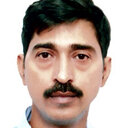 Amit Rai合作论文数1
 Jay Singh合作论文数1
 Deepak Kumar合作论文数1Akarsh Saxena合作论文数1Lochan Varshney合作论文数1Sunita Panda合作论文数1
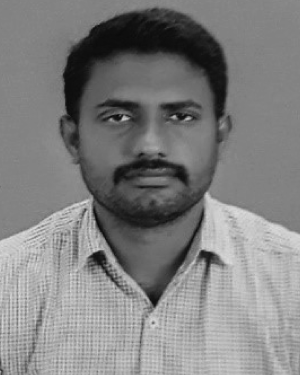 K. Venkatachalam合作论文数1
 Anita Venugopal合作论文数1
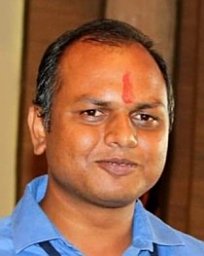 Rajesh Narayan Deo合作论文数1
 Shivakumar Kagi合作论文数1
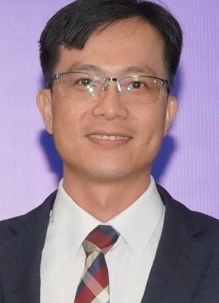 Truong Khang Nguyen合作论文数Faculty of Information Technology, School of Technology, Van Lang University1
 Kripa .N合作论文数1A. Devipriya合作论文数1
 Shubham Yadav合作论文数Chhattisgarh Swami Vivekanand Technical University1G. Jyothi合作论文数1
 S. Arun合作论文数Dept Elect & Commun Engn, Prathyusha Engn Coll1
 Jaganathan Maniraj合作论文数Dept Mech Engn, KIT Kalaignarkarunanidhi Inst Technol1
 Abhishek Mb合作论文数1
 Akhilesh Singh合作论文数Department of Electrical Engineering, Seemant Institute of Technology Pithoragarh1Deepa Beeta合作论文数Dept Teoria Senal & Comunicac, Univ Seville1
 P. Jayaraman合作论文数Annamalai University1




