A model of interconnected socioeconomic and health status based on quantitative evidence and qualitative information was built during the pandemic in Indonesia. The integrated resilience framework was established, which is becoming the basis of analyzing the system's ability to withstand COVID-19 and drawing lessons learned after COVID-19. The system dynamics method was used by integrating quantitative evidence with qualitative information. The system dynamics simulation revealed that first, adaptive health management, which balanced public health concerns with socioeconomic considerations, and second, socioeconomic resilience were characterized by i. a wide range of social initiatives that arose to increase resilience to the social impact of COVID-19, and ii. economic resilience, which demonstrated the diversity of business creativity that emerged to survive the COVID economic impact. The model of integrated resilience as an interconnected system of people's socioeconomics and government-led adaptive health management was able to withstand COVID-19. The lessons learned from the system's ability to withstand COVID-19 are i. the emergence of adaptive health management through experiential learning and ii. people’s innovativeness increased because of digital technology adoption.
Batik small-medium enterprises (SMEs) in Indonesia are recognized for their economic potential in the creative industry sector. Nevertheless, their waste poses significant environmental concerns. Entrepreneurship, digital technology, innovation, and green innovation are understood to potentially enhance SMEs performance and contribute to environmental sustainability. However, empirical research exploring their interrelationship in practice, particularly among batik SMEs, remains scarce. This study aims to examine and construct an interrelationship model of entrepreneurship, digital technology, innovation, and green innovation from the cases of batik SMEs. Using eight case studies of batik SMEs in Cirebon and Pekalongan cities of Indonesia, this research finds that entrepreneurship through digital technology can support innovations, while digital technology can facilitate entrepreneurial activities. Entrepreneurship also promotes the implementation of green innovations supported by other factors, while digital technology enhances green innovations capability. The elaboration of the interrelationship and the role of other factors are detailed in this paper.
The study intends to reveal how Indonesia could facilitate the transition to electric mobility in society viewed from the lens of global innovation system (GIS) to mitigate carbon emissions. This study uses a systemic approach to investigate the overall interaction of GIS elements and actors. The study's findings revealed that Indonesia could facilitate the transition from ICEV to EV by putting the GIS on EV to work in Indonesia, which first necessitates a shift in perspective, recognizing EV diffusion in a broader GIS framework that includes companies, industry, national and global scales. Second, improve sub-systems performance of local suppliers and domestic companies, which is currently at a low level. Third, improve system performance at the company level through: i. from the technology side, the local component industry should carry out technology digestion to boast technology mastery in EV's main components; and ii. from the market side, demand for EVs is necessary to be augmented exponentially to facilitate the transition from ICEV to EV. Moreover, this research highlights the unique facets that emphasize two crucial aspects for making the GIS of EV works effectively: i. upgrading local EV component manufacturing to become global player; and ii. establishing a new EV battery company based on EV battery circularity in the long run. The scientific contribution of this research is a GIS model for EV transition that was built inductively from the real world of the EV automotive industry in Indonesia.
This article explores the relationships among innovation, entrepreneurship, and digital technology, specifically how the management of small and medium enterprises (SMEs) utilise innovation and entrepreneurship to deal with digital technologies and/or how the management leverages digital technologies for innovation and entrepreneurship. A qualitative research approach using a case study was employed to examine the phenomena, focusing on deep observations. The research found that SME owners play crucial roles in three areas: (i) demonstrating entrepreneurial ability through knowledge, experience, talent, and innovation; (ii) performing strategic functions by leveraging external sources of innovation, with the help of digital technology; and iii. acting as digitally minded entrepreneurs to enhance manufacturing processes and establish new marketing channels. The mutual reinforcement of innovation and entrepreneurship in dealing with digital technology, is influenced by both user and demand-driven innovation, knowledge and technology-driven innovation, experiential knowledge-driven innovation, articulation of innovation outcomes, digital network-based marketing, and technical guidance on digital transactions in e-commerce and e-business. This research confirmed that there is a mutual reinforcement between the innovation and entrepreneurship of SMEs in adopting digital technology. New insight for digitally minded entrepreneurs is the use of digital technology to boost business efficiency toward global enterprises' competitiveness and sustainability.
Background This study’s background was inspired by the current COVID-19 handling policy, which focuses on the balance of public health and social economy. However, there is a knowledge gap on the dynamic complexity of balancing public health and social economy during the new normal period of COVID-19 handling policy. A system dynamics simulation of the COVID-19 handling policy could be used to understand that gap. Objective This study aims to uncover the simulation of the COVID-19 handling policy in Indonesia. Methods This study combined quantitative and qualitative modeling methods with a system dynamics tool. Results This study revealed 3 elements in the dynamic balance of public health and social economy in the COVID handling policy system: i) COVID-19 and social-economic control; ii) COVID-19 escalation and de-escalation; iii) people’s immunity enhancement. Such a mix of COVID-19-controlling policy instruments has maintained a dynamic equilibrium between easing economic suppression at the expense of worsening COVID-19 and tightening public health resolution at the expense of more economic suppression. Conclusions The study conclusions are as follows: i) the COVID-19 handling policy worked as a leverage factor in balancing public health resolution and economic interest during the new normal period in Indonesia; ii) experiential creativity to respond to the newly serious public health problems triggered by COVID-19 implies adding public health knowledge; iii) the study’s outcomes imply re-examining the strengths and deficiencies of the entire health system for a better health system.
The research examined technological learning in the developing high-tech industry within the state-owned strategic companies under supervision of the Agency for the Management of Strategic Industries (BPIS). The research has been conducted to date on high-tech development using a technological learning approach as one method of developing the nation's S&T (Science and Technology). This work was completed through desk research using available archives on documented reports for ten strategic industries. The research results confirmed the story of Indonesian innovation policy emphasis on technology-based industrial transformation was a real, staged process with clear concepts and objectives at strategic companies. Short-term innovation traps should be avoided for not repeating innovation discontinuity, which has become the primary concern of short-sight’s actors in technology politics. The key to successful technological learning are: i. continuous without stopping, the innovation continuity should be undertaken by confronting the crisis situation has become a requirement for innovative industrialists engaged in innovative economic activities, and; ii. companies could take alternative paths in continuous technological learning to climb the technological ladder by continuously engaging in R&D and engineering capability upgrading in the global competition sphere, because a company cannot survive without building a strong foundation of technological capabilities. Keywords: high-tech development, economic crisis, technological learning, innovation discontinuity, R&D governance.
This article discusses industrial development on EV di Indonesia, viewed from Sectoral system of innovation (SSI) perspective. The objective of this study is to map challenges in connecting the elements of SSI for developing EV industry. The method of study is a desk research, where the information input relies on secondary sources, consisting of statistical data, official documents and scientific references. This study found eight challenges to develop EV industry. The institutional challenges include: i. fiscal programs are still less effective to promote industrial collaboration on EV innovation with universities and R&D institutions; ii. Local content target is still difficult to fulfill; iii. unreadiness of local industry to be involved in the EV supply chain; and iv. Slow consumer response towards EV program incentives. On the knowledge and technology challenges are: i) the quality and standards of EVs from domestic R&D are still inadequate for commercial scale; and ii. potential investors have not shown adequate interest in local EV development. The demand challenges are: i. the plan to make Indonesia as EV hub in ASEAN region is far from reality due to lack of investors; and ii. the lack of ECS accessibility is a barrier to the domestic EV market. Keywords: electric vehicle, sectoral system of innovation, institutions, knowledge and technology, demand
The study examined the interactive components of digital micro and small medium enterprise (MSMEs) ecosystem for inclusive digital economy, more specifically found ways to put the digital MSMEs ecosystem to work for accelerating the MSMEs digitalization. The multiple cases studies’ findings and discussion supported the model building. The model of digital MSMEs ecosystem was formulated as the surrounding interactive components of ecosystem, enabling digital MSMEs to realize and accelerate toward the digital economy. The novelty of model represented the reality of digital MSMEs ecosystem in Indonesia. There were three main constraints of digital MSMEs ecosystem to work: (i) human capital in digital talent, (ii) socio-technical adaptation, and (iii) government support for MSMEs going digital. Putting the digital MSMEs ecosystem to work needs three ecosystem resolutions: (i) building the MSMEs human capital in digital talent; (ii) acceleration of socio-technical adaptation to the digital application; and (iii) the sustainability of existing government support for MSMEs going digital to create inclusive digital economy. The recommendation for three digital MSMEs ecosystem resolutions needs to consider sectoral and regional characteristics in practices.
This article examines policy innovation, emergence of innovative health technology and its implication for a health system. The complexity of policy innovation implementation resulting from mixing public health resolution and economic interest will trigger the emergence of innovative health technology, which implies a health system improvement. The findings revealed that: First, policy innovation based on a science-mix category created the complexity of policy enforcement, affected the scale and speed of COVID-19 transmissions, and triggered the emergence of health innovative technology. Second, despite policy innovation in early COVID-19, handling was relatively less successful due to restricting factors in policy implementation but provided a new market for the emergence of innovative health technology. Third, the emergence of innovative health technology has strengthened health system preparedness during the pandemic, and provide an opportunity to re-examine the strengths and deficiencies of an entire health system for better health care.
This paper is a system analysis of STI policy and R&D governance for the attainment of SDGs. The objective was to articulate a holistic model of STI policies and R&D governance for meeting the SDGs' agenda 2030's. It was analysed by using the model of STI policy and R&D governance to attain SDGs. The model dealt with: i) STI policy direction by the function of STI policy council, which sets STI policy directions and resources allocation for national goals, ii) the instrument of STI policy by the function of integrating body for R&D governance, which executes the coordinated and synergized national R&D program and projects involving across sectoral ministries/institutions. The model implementation would contribute to: i) STI-based economy in the long run, where STI-based industrialization should be pursued by the application of industrial policy to promote innovative industries driven by R&D in strategic area focus; and ii) meeting the SDGs' targets through STI, where STI policy, organizational coordination and R&D governance for economic prosperity should shift towards transformative innovation policy, which is inspired by social ecology and environmental protection. The leverage factor for effective STI policy and productive R&D governance in Indonesia is the availability of highly qualified researchers.
This paper attempts to explain how technological innovation can soften pressure and enlarge opportunity to gain the benefit of free market competition. The free market operation becomes uncertain in relation to the domestic affairs and global circumstances. The accelerated process of moving toward free market under a domestically worsening economic situation may backfire, while slowing it down becomes backward under the globally progressing free market circumstances. In dealing with the complexity of building up competitiveness under the pressure of free market competition, we propose a model; the so-called 'adaptive innovation policy'. The model is drawn from the metaphor of living system and its environment. The adaptive innovation is continuous enrichment of technology as the nutrition of living economic system to evolve in gaining the benefit of free market competition. The simulation results from the model imply that: i) dealing with the complexity of free market competition requires understanding the behavior of multiple feedback inside the complex economic system; ii) spurring the economic growth by capital investment beyond the carrying capacity of market could bring about economic instability; iii) enlarging the carrying capacity of market needs to increasing the added-value of marketed goods through technological innovation; iv) developing countries require innovator as well as seriously need investor in facing the free market competition, and; v) a clear design of industrial and technology policy for the promotion of innovative activities are still relevant to ensure that developing countries will participate in global market economy.
The objective of the study is to reveal factors that are internal and external to firms that affect the use of network relations for innovation, with a focus on mapping the policy role in innovation networks. The study was undertaken through case analysis in four different firms. The study found that the number of actors in network relations affects upgrading of value of a good or service. The upgrading is activated by learning events, which are related to organizational changes, namely, refocusing on the core business, restructuring the internal organization, undertaking management change, and applying responsive management practices. The specific policy role in stimulating the network effect for innovation are: (i) government facilities for the ease of doing business by continuing to reduce bureaucratic processes to regulate standard requirements, (ii) strengthening government agencies–industry relations by establishing promotion of representatives of Indonesian food products overseas, (iii) government brokerage and matching services for global trading by arranging trade fairs, business seminars, or supporting modern information technologies, and (iv) government relaxation on import restriction to maintain a stable supply of raw materials for food processing. The substantive contribution of this scientific study is the provision of the concept of policy role in innovation networks viewed from the sectoral system of innovation. Keywords: innovation network, policy role, organizational change, upgrading, sectoral system of innovation
This paper intends to forecast conventional cigarette substitution by e-cigarette in the context of disruptive innovation. E-cigarette as disruptive innovation has been driven by technology innovation to create e-cigarette products for global market. The advancement of e-cigarette technology innovation would continue to create smart and less harmfull e-cigarette as alternative tobacco products in future. The results of forecasting show that the replacement of conventional cigarette would be in line with the increase of e-cigarette consumption. The future increase of e-cigarette consumption would be influenced by three factors: (i) technology advancement, (ii) excise tax incentives, (iii) and tobacco regulation. The diffusion of e-cigarette products in domestic market have raised the level of public acceptance, despite still reaped some rejections, especially from the health community in Indonesia. The scientific contribution of paper is a system dynamics model on conventional cigarette substitution by e-cigarette’s disruptive innovation. The model is systemic interaction among cigarette consumption, regulators, and public responses both health community and consumers of e-cigarette in Indonesia. Keywords: disruptive innovation, product substitution, electric-cigarette, system perspective, forecasting.
The objective of this study is to have deep understanding on why and how firms engaging in innovation without formal R&D. Three cases of firms in machinery and food processing sectors were studied. The cross cases analysis found that types and sources of innovation vary according to business areas, technology field, and technological capability level of each firms. Firms innovate without formal R&D through it’s particular ways, and it is driven by firm’s specific resources namely management vision and leadership, integrated business system, and entrepreneurship and networking. The conceptual contribution of this study is an enrichment to “learning by using” with a new variant the so called “mastering from using”. Nevertheless, innovation without formal R&D is deficient in absorptive capacity (AC), it implies that non-R&D and informal R&D firms should invest in R&D to develop AC and increase technology adoption. Goverment policy by using R&D financing support and tax incentives should be directed at the innovative low-tech (LT) as well as low and medium-tech (LMT) industries, which will have produced higher results through innovation with informal and/or non R&D actvities. Keywords: innovation drivers, innovation types, innovation sources, non-R&D, informal R&D
This paper attempt to elucidate the postulation that there is a continuous trajectory from the network interaction in scientific research towards the systemic transformation in innovation capacity building. This study will expose that the availability of research capacity in certain areas can be developed into innovation capacity through R&D consortia, where building research capacity is a long term process of scientific accumulation. This study utilizes two techniques scientometrics and case study in stem cell and vaccine research in understanding innovation capacity. The research capacity in the area of vaccines has been long started from individual research conducted by researcher. It has been continued into organization research, and then developed into building innovation capacity through R&D consortia. However, in areas of stem cell there is still lack of evidence but it directly leaps to build innovation capacity through R&D consortia. Therefore further empirical evidence is needed to support the continuous trajectory.
This paper attempts to explain human capital enhancement (HCE) practices in upgrading human skills, knowledge and ability, specifically (i) how firms' internal upgrading mechanisms are implemented and (ii) how firms enhance human capital through interactions with external parties. Through case studies of Indonesian herbal medicine firms, this study reveals that HCE for innovative activities in herbal medicine firms occurred through innovative learning - by using and interacting. Companies show learning by using traditional herbal ingredients to redesign innovative products; managing continuously internal learning by interacting across functional teams to create new, innovative products; and managing external learning by interacting with external parties in the search for new, innovative products. The effective use of internal and external sources of innovation is coordinated by, respectively, top management direction inside the company without research and development (R & managers of cross-functional teams within the company with in-house R&D activities; and top-level management meetings within the company with limited R&D activities.
This paper intends to reveal the interactive learning for upgrading and growth in Indonesian fishery firms. The main question is how learning and innovation have occurred in Indonesian fishery firms. The study was conducted in two categories of fishery firms: fish processing and aquaculture (shrimp). The interfirm interactions contain knowledge flows and feedback in local production network involving local suppliers and foreign buyers. The study found that the model of interactive learning for upgrading and growth work as a coupling of three loops: the upgrading capability, the growth formation, and limiting elements. The upgrading capability is subject to growth formation, which is determined by limiting elements. The limiting elements will control the quantity and quality of materials supply that affect inter-firm interaction. The model suggests that the dynamics of upgrading and growth through interactive leraning will continue in a stable manner by easing the constraints of limiting elements through: combating illegal fishing, encouraging interaction with universities, shifting to higher added value products, institutional support for global trading, preventing shrimp disease, providing infrastructure, business facilities, and regulation information.
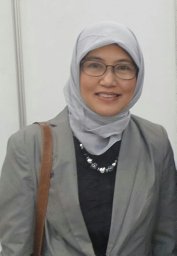 Trina Fizzanty合作论文数the Indonesian Institute of Sciences (LIPI)13
 Hermawati, W.合作论文数5
 Rendi Febrianda合作论文数PAPPIPTEK LIPI, Indonesian Institute of Science4
 Erwiza Erman合作论文数3
 Luthfina Ariyani合作论文数Res Ctr Econ Ind Trade & Serv, Natl Res & Innovat Agcy3Nadhiroh, I.M.合作论文数3Rizka Rahmaida合作论文数2
 Nur Laili合作论文数Indonesian Institute of Sciences2
 Indri Juwita Asmara合作论文数Indonesian Institute of Sciences2
 Galuh Syahbana Indraprahasta合作论文数Natl Res & Innovat Agcy BRIN, Jakarta, Indonesia2Wijayanti, R.合作论文数Res. Center for Dev. of Sci. & Technol., Indonesian Inst. of Sci.;c;Res. Center for Dev. of Sci. & Technol., Indonesian Inst. of Sci.2
 Budi Triyono合作论文数2
 Chichi Shintia Laksani合作论文数Center For Science and Technology;Indonesia Institute of Sciences;Center For Science and Technology, Indonesia Institute of Sciences2Dian Prihadyanti合作论文数Center For Science and Technology;Indonesia Institute of Sciences;Gatot Subroto Kav;Center For Science and Technology, Indonesia Institute of Sciences2Aisah Putri合作论文数1Nika Pranata合作论文数Econ Res Ctr, Natl Res & Innovat Agcy BRIN1
 Ria Hardiyati合作论文数Indonesian Institute of Sciences1
 Husein Avicenna Akil合作论文数Research Center for Policy and Management of Science, Technology and Innovation-Indonesian Institute of Sciences1
 Qinan Maulana Binu Soesanto合作论文数Indonesian Inst Sci LIPI1
 Adityo Wicaksono合作论文数Res Ctr Policy & Management Sci Technol & Innovat, Indonesian Inst Sci1
 Ikval Suardi合作论文数1
 Yan Rianto合作论文数Badan Riset & Inovasi Nasl Republ Indonesia1Dudi Hidayat合作论文数Indonesian Institute of Sciences1Karlina Sari合作论文数1
 Tri Edhi Budhi Soesilo合作论文数School of Environmental Science, University of Indonesia1
 Prakoso Bhairawa Putera合作论文数Badan Riset & Inovasi Nasl Republ Indonesia1
 Tri H. Handayani合作论文数1
 Laksana Tri Handoko合作论文数Department of Physics;Hiroshima University;Department of Physics, Hiroshima University1Siti Meiningsih合作论文数1
 Ricardi Adnan合作论文数1
 Peter Gammeltoft合作论文数Department of Intercultural;Communication and Management;Copenhagen Business School;Department of Intercultural|Communication and Management, Copenhagen Business School1




