Information tasks such as writing surveys or analytical reports require complex search and reasoning, and have recently been grouped under the umbrella of _deep research_ --- a term also adopted by recent models targeting these capabilities. Despite growing interest, the scope of the deep research task remains underdefined and its distinction from other reasoning-intensive problems is poorly understood. In this paper, we propose a formal characterization of the deep research (DR) task and introduce a benchmark to evaluate the performance of DR systems. We argue that the core defining feature of deep research is not the production of lengthy report-style outputs, but rather the high fan-out over concepts required during the search process, i.e., broad and reasoning-intensive exploration.To enable objective evaluation, we define DR using an intermediate output representation that encodes key claims uncovered during search—separating the reasoning challenge from surface-level report generation. Based on this formulation, we propose a benchmark LiveDRBench with 100 challenging tasks over scientific topics (e.g., datasets, materials discovery, prior art search) and public interest events (e.g., flight incidents, movie awards). Across state-of-the-art DR systems, F1 score ranges between 0.02 and 0.72 for any sub-category. OpenAI's model performs the best with an overall F1 score of 0.55. Analysis of the reasoning traces reveals that systems cover only about half of the necessary search queries, with proprietary models issuing broader and and deeper queries than open source models, highlighting gaps in both coverage and reasoning depth.
We study the problem of auditing the fairness of a given classifier under partial feedback, where true labels are available only for positively classified individuals, (e.g., loan repayment outcomes are observed only for approved applicants). We introduce a novel cost model for acquiring additional labeled data, designed to more accurately reflect real-world costs such as credit assessment, loan processing, and potential defaults. Our goal is to find optimal fairness audit algorithms that are more cost-effective than random exploration and natural baselines. In our work, we consider two audit settings: a black-box model with no assumptions on the data distribution, and a mixture model, where features and true labels follow a mixture of exponential family distributions. In the black-box setting, we propose a near-optimal auditing algorithm under mild assumptions and show that a natural baseline can be strictly suboptimal. In the mixture model setting, we design a novel algorithm that achieves significantly lower audit cost than the black-box case. Our approach leverages prior work on learning from truncated samples and maximum-a-posteriori oracles, and extends known results on spherical Gaussian mixtures to handle exponential family mixtures, which may be of independent interest. Moreover, our algorithms apply to popular fairness metrics including demographic parity, equal opportunity, and equalized odds. Empirically, we demonstrate strong performance of our algorithms on real-world fair classification datasets like Adult Income and Law School, consistently outperforming natural baselines by around 50% in terms of audit cost.
Previous work in fair machine learning has characterised the Fair Bayes Optimal Classifier (BOC) on a given distribution for both deterministic and randomized classifiers. We study the robustness of the Fair BOC to adversarial noise in the data distribution. Kearns & Li (1988) implies that the accuracy of the deterministic BOC without any fairness constraints is robust (Lipschitz) to malicious noise in the data distribution. We demonstrate that their robustness guarantee breaks down when we add fairness constraints. Hence, we consider the randomized Fair BOC, and our central result is that its accuracy is robust to malicious noise in the data distribution. Our robustness result applies to various fairness constraints---Demographic Parity, Equal Opportunity, Predictive Equality. Beyond robustness, we demonstrate that randomization leads to better accuracy and efficiency. We show that the randomized Fair BOC is nearly-deterministic, and gives randomized predictions on at most one data point, hence availing numerous benefits of randomness, while using very little of it.
A general belief in fair classification is that fairness constraints incur a trade-off with accuracy, which biased data may worsen. Contrary to this belief, Blum & Stangl (2019) show that fair classification with equal opportunity constraints even on extremely biased data can recover optimally accurate and fair classifiers on the original data distribution. Their result is interesting because it demonstrates that fairness constraints can implicitly rectify data bias and simultaneously overcome a perceived fairness-accuracy trade-off. Their data bias model simulates under-representation and label bias in underprivileged population, and they show the above result on a stylized data distribution with i.i.d. label noise, under simple conditions on the data distribution and bias parameters. We propose a general approach to extend the result of Blum & Stangl (2019) to different fairness constraints, data bias models, data distributions, and hypothesis classes. We strengthen their result, and extend it to the case when their stylized distribution has labels with Massart noise instead of i.i.d. noise. We prove a similar recovery result for arbitrary data distributions using fair reject option classifiers. We further generalize it to arbitrary data distributions and arbitrary hypothesis classes, i.e., we prove that for any data distribution, if the optimally accurate classifier in a given hypothesis class is fair and robust, then it can be recovered through fair classification with equal opportunity constraints on the biased distribution whenever the bias parameters satisfy certain simple conditions. Finally, we show applications of our technique to time-varying data bias in classification and fair machine learning pipelines.
In learning-to-rank (LTR), optimizing only the relevance (or the expected ranking utility) can cause representational harm to certain categories of items. Moreover, if there is implicit bias in the relevance scores, LTR models may fail to optimize for true relevance. Previous works have proposed efficient algorithms to train stochastic ranking models that achieve fairness of exposure to the groups ex-ante (or, in expectation), which may not guarantee representation fairness to the groups ex-post, that is, after realizing a ranking from the stochastic ranking model. Typically, ex-post fairness is achieved by post-processing, but previous work does not train stochastic ranking models that are aware of this post-processing. In this paper, we propose a novel objective that maximizes expected relevance only over those rankings that satisfy given representation constraints to ensure ex-post fairness. Building upon recent work on an efficient sampler for ex-post group-fair rankings, we propose a group-fair Plackett-Luce model and show that it can be efficiently optimized for our objective in the LTR framework. Experiments on three real-world datasets show that our group-fair algorithm guarantees fairness alongside usually having better relevance compared to the LTR baselines. In addition, our algorithm also achieves better relevance than post-processing baselines, which also ensures ex-post fairness. Further, when implicit bias is injected into the training data, our algorithm typically outperforms existing LTR baselines in relevance.
For machine learning models to be reliable and trustworthy, their decisions must be interpretable. As these models find increasing use in safety-critical applications, it is important that not just the model predictions but also their explanations (as feature attributions) be robust to small human-imperceptible input perturbations. Recent works have shown that many attribution methods are fragile and have proposed improvements in either these methods or the model training. We observe two main causes for fragile attributions: first, the existing metrics of robustness (e.g., top-k intersection) overpenalize even reasonable local shifts in attribution, thereby making random perturbations to appear as a strong attack, and second, the attribution can be concentrated in a small region even when there are multiple important parts in an image. To rectify this, we propose simple ways to strengthen existing metrics and attribution methods that incorporate locality of pixels in robustness metrics and diversity of pixel locations in attributions. Towards the role of model training in attributional robustness, we empirically observe that adversarially trained models have more robust attributions on smaller datasets, however, this advantage disappears in larger datasets. Code is made available at https://github.com/ksandeshk/LENS.
Recent work shows that in-context learning and optimization of in-context examples (ICE) can significantly improve the accuracy of large language models (LLMs) on a wide range of tasks, leading to an apparent consensus that ICE optimization is crucial for better performance. However, most of these studies assume a fixed or no instruction provided in the prompt. We challenge this consensus by investigating the necessity of optimizing ICE when task-specific instructions are provided and find that there are many tasks for which it yields diminishing returns. In particular, using a diverse set of tasks and a systematically created instruction set with gradually added details, we find that as the prompt instruction becomes more detailed, the returns on ICE optimization diminish. To characterize this behavior, we introduce a task-specific metric called Normalized Invariability to Choice of Examples (NICE) that quantifies the learnability of tasks from a given instruction, and provides a heuristic to help decide whether to optimize instructions or ICE for a new task. Given a task, the proposed metric can reliably predict the utility of optimizing ICE compared to using random ICE. Our code is available at https://github.com/microsoft/nice-icl.
In many classification datasets, the task labels are spuriously correlated with some input attributes. Classifiers trained on such datasets often rely on these attributes for prediction, especially when the spurious correlation is high, and thus fail to generalize whenever there is a shift in the attributes' correlation at deployment. If we assume that the spurious attributes are known a priori, several methods have been proposed to learn a classifier that is invariant to the specified attributes. However, in real-world data, information about spurious attributes is typically unavailable. Therefore, we propose a method to automatically identify spurious attributes by estimating their causal effect on the label and then use a regularization objective to mitigate the classifier's reliance on them. Compared to a recent method for identifying spurious attributes, we find that our method is more accurate in removing the attribute from the learned model, especially when spurious correlation is high. Specifically, across synthetic, semi-synthetic, and real-world datasets, our method shows significant improvement in a metric used to quantify the dependence of a classifier on spurious attributes ($\Delta$Prob), while obtaining better or similar accuracy. In addition, our method mitigates the reliance on spurious attributes even under noisy estimation of causal effects. To explain the empirical robustness of our method, we create a simple linear classification task with two sets of attributes: causal and spurious. We prove that our method only requires that the ranking of estimated causal effects is correct across attributes to select the correct classifier.
The $k$-means is a popular clustering objective, although it is inherently non-robust and sensitive to outliers. Its popular seeding or initialization called $k$-means++ uses $D^{2}$ sampling and comes with a provable $O(\log k)$ approximation guarantee \cite{AV2007}. However, in the presence of adversarial noise or outliers, $D^{2}$ sampling is more likely to pick centers from distant outliers instead of inlier clusters, and therefore its approximation guarantees \textit{w.r.t.} $k$-means solution on inliers, does not hold. Assuming that the outliers constitute a constant fraction of the given data, we propose a simple variant in the $D^2$ sampling distribution, which makes it robust to the outliers. Our algorithm runs in $O(ndk)$ time, outputs $O(k)$ clusters, discards marginally more points than the optimal number of outliers, and comes with a provable $O(1)$ approximation guarantee. Our algorithm can also be modified to output exactly $k$ clusters instead of $O(k)$ clusters, while keeping its running time linear in $n$ and $d$. This is an improvement over previous results for robust $k$-means based on LP relaxation and rounding \cite{Charikar}, \cite{KrishnaswamyLS18} and \textit{robust $k$-means++} \cite{DeshpandeKP20}. Our empirical results show the advantage of our algorithm over $k$-means++~\cite{AV2007}, uniform random seeding, greedy sampling for $k$ means~\cite{tkmeanspp}, and robust $k$-means++~\cite{DeshpandeKP20}, on standard real-world and synthetic data sets used in previous work. Our proposal is easily amenable to scalable, faster, parallel implementations of $k$-means++ \cite{Bahmani,BachemL017} and is of independent interest for coreset constructions in the presence of outliers \cite{feldman2007ptas,langberg2010universal,feldman2011unified}.
Rankings on online platforms help their end-users find the relevant information—people, news, media, and products—quickly. Fair ranking tasks, which ask to rank a set of items to maximize utility subject to satisfying group-fairness constraints, have gained significant interest in the Algorithmic Fairness, Information Retrieval, and Machine Learning literature. Recent works, however, identify uncertainty in the utilities of items as a primary cause of unfairness and propose introducing randomness in the output. This randomness is carefully chosen to guarantee an adequate representation of each item (while accounting for the uncertainty). However, due to this randomness, the output rankings may violate group fairness constraints. We give an efficient algorithm that samples rankings from an individually-fair distribution while ensuring that every output ranking is group fair. The expected utility of the output ranking is at least α times the utility of the optimal fair solution. Here, α depends on the utilities, position-discounts, and constraints—it approaches 1 as the range of utilities or the position-discounts shrinks, or when utilities satisfy distributional assumptions. Empirically, we observe that our algorithm achieves individual and group fairness and that Pareto dominates the state-of-the-art baselines.
Center-based clustering (e.g., k-means, k-medians) and clustering using linear subspaces are two most popular techniques to partition real-world data into smaller clusters. However, when the data consists of sensitive demographic groups, significantly different clustering cost per point for different sensitive groups can lead to fairness-related harms (e.g., different quality-of-service). The goal of socially fair clustering is to minimize the maximum cost of clustering per point over all groups. In this work, we propose a unified framework to solve socially fair center-based clustering and linear subspace clustering, and give practical, efficient approximation algorithms for these problems. We do extensive experiments to show that on multiple benchmark datasets our algorithms either closely match or outperform state-of-the-art baselines.
We consider the problem of subset selection for ℓ _p subspace approximation and ( k , p )-clustering. Our aim is to efficiently find a small subset of data points such that solving the problem optimally for this subset gives a good approximation to solving the problem optimally for the original input. For ℓ _p subspace approximation, previously known subset selection algorithms based on volume sampling and adaptive sampling proposed in Deshpande and Varadarajan (STOC’07, 2007), for the general case of p ∈ [1, ∞ ) , require multiple passes over the data. In this paper, we give a one-pass subset selection with an additive approximation guarantee for ℓ _p subspace approximation, for any p ∈ [1, ∞ ) . Earlier subset selection algorithms that give a one-pass multiplicative (1+ϵ ) approximation work under the special cases. Cohen et al. (SODA’17, 2017) gives a one-pass subset section that offers multiplicative (1+ϵ ) approximation guarantee for the special case of ℓ _2 subspace approximation. Mahabadi et al. (STOC’20, 2020) gives a one-pass noisy subset selection with (1+ϵ ) approximation guarantee for ℓ _p subspace approximation when p ∈{1, 2} . Our subset selection algorithm gives a weaker, additive approximation guarantee, but it works for any p ∈ [1, ∞ ) . We also focus on ( k , p )-clustering, where the task is to group the data points into k clusters such that the sum of distances from points to cluster centers (raised to the power p ) is minimized for p∈ [1, ∞ ) . The subset selection algorithms are based on D^p sampling due to Wei (NIPS’16, 2016) which is an extension of D^2 sampling proposed in Arthur and Vassilvitskii (SODA’07, 2007). Due to the inherently adaptive nature of the D^p sampling, these algorithms require taking multiple passes over the input. In this work, we suggest one pass subset selection for ( k , p )-clustering that gives constant factor approximation with respect to the optimal solution with an additive approximation guarantee. Bachem et al. (NIPS’16, 2016) also gives one pass subset selection for k -means for p=2 ; however, our result gives a solution for a more generic problem when p ∈ [1,∞ ) . At the core, our contribution lies in showing a one-pass MCMC-based subset selection algorithm such that its cost incurred due to the sampled points closely approximates the corresponding optimal cost, with high probability.
In this paper, we consider a theoretical model for injecting data bias, namely, under-representation and label bias (Blum & Stangl, 2019). We empirically study the effect of varying data biases on the accuracy and fairness of fair classifiers. Through extensive experiments on both synthetic and real-world datasets (e.g., Adult, German Credit, Bank Marketing, COMPAS), we empirically audit pre-, in-, and post-processing fair classifiers from standard fairness toolkits for their fairness and accuracy by injecting varying amounts of under-representation and label bias in their training data (but not the test data). Our main observations are: 1. The fairness and accuracy of many standard fair classifiers degrade severely as the bias injected in their training data increases, 2. A simple logistic regression model trained on the right data can often outperform, in both accuracy and fairness, most fair classifiers trained on biased training data, and 3. A few, simple fairness techniques (e.g., reweighing, exponentiated gradients) seem to offer stable accuracy and fairness guarantees even when their training data is injected with under-representation and label bias. Our experiments also show how to integrate a measure of data bias risk in the existing fairness dashboards for real-world deployments.
For machine learning models to be reliable and trustworthy, their decisions must be interpretable. As these models find increasing use in safety-critical applications, it is important that not just the model predictions but also their explanations (as feature attributions) be robust to small human-imperceptible input perturbations. Recent works have shown that many attribution methods are fragile and have proposed improvements in either the attribution methods or the model training. Existing works measure attributional robustness by metrics such as top-$k$ intersection, Spearman's rank-order correlation (or Spearman's $\rho$) or Kendall's rank-order correlation (or Kendall's $\tau$) to quantify the change in feature attributions under input perturbation. However, we show that these metrics are fragile. That is, under such metrics, a simple random perturbation attack can seem to be as significant as more principled attributional attacks. We instead propose Locality-sENSitive (LENS) improvements of the above metrics, namely, LENS-top-$k$, LENS-Spearman and LENS-Kendall, that incorporate the locality of attributions along with their rank order. Our locality-sensitive metrics provide tighter bounds on attributional robustness and do not disproportionately penalize attribution methods for reasonable local changes. We show that the robust attribution methods proposed in recent works also reflect this premise of locality, thus highlighting the need for a locality-sensitive metric for progress in the field. Our empirical results on well-known benchmark datasets using well-known models and attribution methods support our observations and conclusions in this work.
Randomized rankings have been of recent interest to achieve ex-ante fairer exposure and better robustness than deterministic rankings. We propose a set of natural axioms for randomized group-fair rankings and prove that there exists a unique distribution D that satisfies our axioms and is supported only over ex-post group-fair rankings, i.e., rankings that satisfy given lower and upper bounds on group-wise representation in the top-k ranks. Our problem formulation works even when there is implicit bias, incomplete relevance information, or only ordinal ranking is available instead of relevance scores or utility values. We propose two algorithms to sample a random group-fair ranking from the distribution D mentioned above. Our first dynamic programming-based algorithm samples ex-post group-fair rankings uniformly at random in time O(k^2 ell), where "ell" is the number of groups. Our second random walk-based algorithm samples ex-post group-fair rankings from a distribution epsilon-close to D in total variation distance and has expected running time O*(k^2 ell^2), when there is a sufficient gap between the given upper and lower bounds on the group-wise representation. The former does exact sampling, but the latter runs significantly faster on real-world data sets for larger values of k. We give empirical evidence that our algorithms compare favorably against recent baselines for fairness and ranking utility on real-world data sets.
Fair classification and fair representation learning are two important problems in supervised and unsupervised fair machine learning, respectively. Fair classification asks for a classifier that maximizes accuracy on a given data distribution subject to fairness constraints. Fair representation maps a given data distribution over the original feature space to a distribution over a new representation space such that all classifiers over the representation satisfy fairness. In this paper, we examine the power of randomization in both these problems to minimize the loss of accuracy that results when we impose fairness constraints. Previous work on fair classification has characterized the optimal fair classifiers on a given data distribution that maximize accuracy subject to fairness constraints, e.g., Demographic Parity (DP), Equal Opportunity (EO), and Predictive Equality (PE). We refine these characterizations to demonstrate when the optimal randomized fair classifiers can surpass their deterministic counterparts in accuracy. We also show how the optimal randomized fair classifier that we characterize can be obtained as a solution to a convex optimization problem. Recent work has provided techniques to construct fair representations for a given data distribution such that any classifier over this representation satisfies DP. However, the classifiers on these fair representations either come with no or weak accuracy guarantees when compared to the optimal fair classifier on the original data distribution. Extending our ideas for randomized fair classification, we improve on these works, and construct DP-fair, EO-fair, and PE-fair representations that have provably optimal accuracy and suffer no accuracy loss compared to the optimal DP-fair, EO-fair, and PE-fair classifiers respectively on the original data distribution.
In the past few years, Artificial Intelligence (AI) has garnered attention from various industries including financial services (FS). AI has made a positive impact in financial services by enhancing productivity and improving risk management. While AI can offer efficient solutions, it has the potential to bring unintended consequences. One such consequence is the pronounced effect of AI-related unfairness and attendant fairness-related harms. These fairness-related harms could involve differential treatment of individuals; for example, unfairly denying a loan to certain individuals or groups of individuals. In this paper, we focus on identifying and mitigating individual unfairness and leveraging some of the recently published techniques in this domain, especially as applicable to the credit adjudication use case. We also investigate the extent to which techniques for achieving individual fairness are effective at achieving group fairness. Our main contribution in this work is functionalizing a two-step training process which involves learning a fair similarity metric from a group sense using a small portion of the raw data and training an individually "fair" classifier using the rest of the data where the sensitive features are excluded. The key characteristic of this two-step technique is related to its flexibility, i.e., the fair metric obtained in the first step can be used with any other individual fairness algorithms in the second step. Furthermore, we developed a second metric (distinct from the fair similarity metric) to determine how fairly a model is treating similar individuals. We use this metric to compare a "fair" model against its baseline model in terms of their individual fairness value. Finally, some experimental results corresponding to the individual unfairness mitigation techniques are presented.
Deep learning models are known to be vulnerable not only to input-dependent adversarial attacks but also to input-agnostic or universal adversarial attacks. Dezfooli et al. [8, 9] construct universal adversarial attack on a given model by looking at a large number of training data points and the geometry of the decision boundary near them. Subsequent work [5] constructs universal attack by looking only at test examples and intermediate layers of the given model. In this paper, we propose a simple universalization technique to take any input-dependent adversarial attack and construct a universal attack by only looking at very few adversarial test examples. We do not require details of the given model and have negligible computational overhead for universalization. We theoretically justify our universalization technique by a spectral property common to many input-dependent adversarial perturbations, e.g., gradients, Fast Gradient Sign Method (FGSM) and DeepFool. Using matrix concentration inequalities and spectral perturbation bounds, we show that the top singular vector of input-dependent adversarial directions on a small test sample gives an effective and simple universal adversarial attack. For standard models on CIFAR10 and ImageNet, our simple universalization of Gradient, FGSM, and DeepFool perturbations using a test sample of 64 images gives fooling rates comparable to state-of-the-art universal attacks [5, 9] for reasonable norms of perturbation.
We consider the problem of subset selection for $\ell_{p}$ subspace approximation, i.e., given $n$ points in $d$ dimensions, we need to pick a small, representative subset of the given points such that its span gives $(1+\epsilon)$ approximation to the best $k$-dimensional subspace that minimizes the sum of $p$-th powers of distances of all the points to this subspace. Sampling-based subset selection techniques require adaptive sampling iterations with multiple passes over the data. Matrix sketching techniques give a single-pass $(1+\epsilon)$ approximation for $\ell_{p}$ subspace approximation but require additional passes for subset selection. In this work, we propose an MCMC algorithm to reduce the number of passes required by previous subset selection algorithms based on adaptive sampling. For $p=2$, our algorithm gives subset selection of nearly optimal size in only $2$ passes, whereas the number of passes required in previous work depend on $k$. Our algorithm picks a subset of size $\mathrm{poly}(k/\epsilon)$ that gives $(1+\epsilon)$ approximation to the optimal subspace. The running time of the algorithm is $nd + d~\mathrm{poly}(k/\epsilon)$. We extend our results to the case when outliers are present in the datasets, and suggest a two pass algorithm for the same. Our ideas also extend to give a reduction in the number of passes required by adaptive sampling algorithms for $\ell_{p}$ subspace approximation and subset selection, for $p \geq 2$.
In supervised learning, it is known that overparameterized neural networks with one hidden layer provably and efficiently learn and generalize, when trained using stochastic gradient descent with a sufficiently small learning rate and suitable initialization. In contrast, the benefit of overparameterization in unsupervised learning is not well understood. Normalizing flows (NFs) constitute an important class of models in unsupervised learning for sampling and density estimation. In this paper, we theoretically and empirically analyze these models when the underlying neural network is a one-hidden-layer overparametrized network. Our main contributions are two-fold: (1) On the one hand, we provide theoretical and empirical evidence that for constrained NFs (this class of NFs underlies many NF constructions) with the one-hidden-layer network, overparametrization hurts training. (2) On the other hand, we prove that unconstrained NFs, a recently introduced model, can efficiently learn any reasonable data distribution under minimal assumptions when the underlying network is overparametrized and has one hidden-layer.
 Sandesh Kamath合作论文数Computer Vision Center, Universitat Autonoma de Barcelona8
 Anand Louis合作论文数Department of Computer Science and Automation
Indian Institute of Science7
Anand Louis合作论文数Department of Computer Science and Automation
Indian Institute of Science7 Tarun Kathuria合作论文数UC Berkeley6
 Amit Sharma合作论文数Microsoft Research India5
 Rakesh Venkat合作论文数5
 Sruthi Gorantla合作论文数Amazon5
 Vineeth N Balasubramanian合作论文数Department of Computer Science and Engineering, Indian Institute of Technology, Hyderabad;Department of Artificial Intelligence, Indian Institute of Technology, Hyderabad5
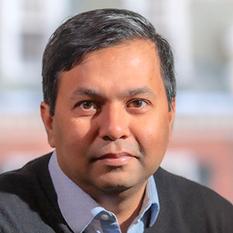 Nisheeth K. Vishnoi合作论文数School of Engineering & Applied Science, Yale University;Department of Computer Science, Yale University;Institution for Social and Policy Studies, Yale University5
 Rameshwar Pratap合作论文数Chennai Mathematical Institute5
 K. V. Subrahmanyam合作论文数Chennai Mathematical Insitute5
 Prahladh Harsha合作论文数Toyota Technological Institute at Chicago (TTI-Chicago)4
 Mohit Sharma合作论文数Department of Computer Science, Indraprastha Institute of Information Technology Delhi;RIKEN Center for Advanced Intelligence Project3
 Ravi Kannan合作论文数Simons Institute, UC Berkeley3
 Santosh S. Vempala合作论文数School of Computer Science, College of Computing, Georgia Institute of Technology3
 Navin Goyal合作论文数Microsoft3
 Damian Straszak合作论文数École Polytechnique Fédérale de Lausanne (EPFL3
 Luis Rademacher合作论文数Department of Mathematics, MIT3
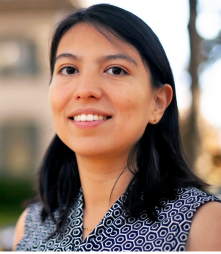 Elisa Celis合作论文数Department of Statistics and Data Science, Yale University3
 Kulin Shah合作论文数Computer Science Department, University of Texas at Austin2
 Apoorv Singh合作论文数Dept Comp Sci & Engn, NYU2
 Sushrut Karmalkar合作论文数Department of Computer Science, University of Wisconsin–Madison2
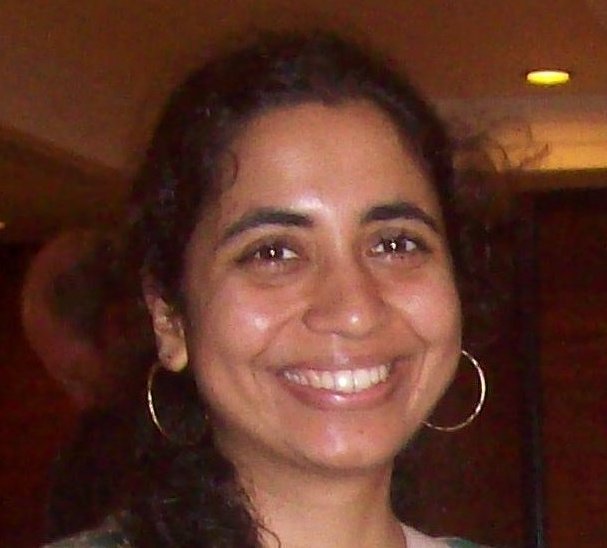 Kavitha Telikepalli合作论文数School of Technology & Computer Science, Tata Institute of Fundamental Research2
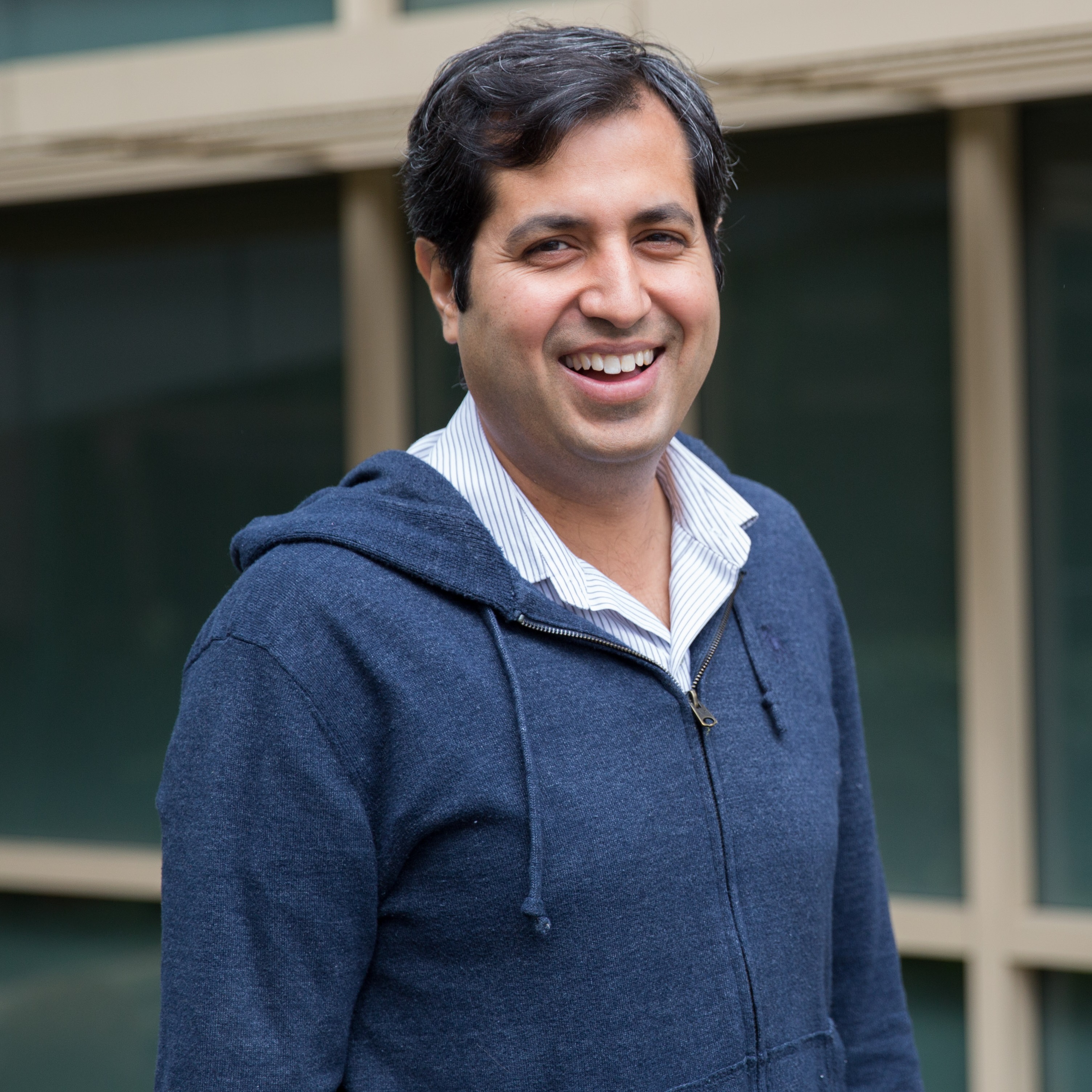 Ashish Kapoor合作论文数Scaled Foundations2
 Jaikumar Radhakrishnan合作论文数Tata Inst Fundamental Res2
 Anish Das Sarma合作论文数ClearList Inc.;Airbnb2
 Satyanarayana V. Lokam合作论文数2
 Sushant Agarwal合作论文数Computer Science Department, Northeastern University2Sankalp Mittal合作论文数1
 Dravyansh Sharma合作论文数Toyota Technological Institute at Chicago1
 Abhinav Java合作论文数Microsoft Research1Satvik Golechha合作论文数1Pragya Srivastava合作论文数1Priya Ravi合作论文数1Eshaan Bhansali合作论文数1Mario Schlener合作论文数1Jithu Chandran合作论文数1Rasoul Shahsavarifar合作论文数1
 Anay Mehrotra合作论文数Yale University1
 Kishen N. Gowda合作论文数Indian Institute of Technology1
 Abhinav Kumar合作论文数Laboratory for Information and Decision Systems, Massachusetts Institute of Technology1Mario Inchiosa合作论文数Microsoft, One Microsoft Way, Redmond, WA 98052 USA1
 Pooja Gupta合作论文数RNAi and Functional Genomics Lab, National Institute of TechnologyRourkela1
 Madhur Tulsiani合作论文数Department of Computer Science, The University of Chicago1
 Naman Goel合作论文数Department of Computer Science, University of Oxford;Human Centered Computing Group, University of Oxford1
 Arpita Biswas合作论文数Department of Computer Science, Rutgers University1
 Ramachandran Ramjee合作论文数Microsoft Research1Yara Elias合作论文数1
 Pierre Hansen合作论文数Universite de Montreal1




