With the advancement of digital technologies and gadgets, online content has become easily accessible. At the same time, harmful content also spread widely. There are different harmful content types present on various platforms in multiple languages. The topic of harmful content is broad and covers multiple research directions. Users of platforms are affected by all of them. In research, the different forms are mostly analysed separately, e.g. misinformation, cyber-bullying and hate speech. Most research has been conducted for only one platform, for a monolingual situation or on a particular issue. Counter-measures like blocking are down-ranking can make harmful content spreaders to switch platforms and languages to continuously reach a user base. Harmful content does not only appear on social media but also on news media. Spreader share harmful content in posts, news articles, comments and hyperlinks. There is a great need to study harmful content across platforms, languages, and topics. We plan to bring the research on harmful content under one umbrella such that different approaches and novel methods can be shared. The workshop will also cover the currently ongoing issues of war and elections. We propose the workshop, DHOW: Diffusion of Harmful Content on Online Web, which brings together the research on different topics of harmful content. We expect to discuss innovative research work and future research directions. The proposed workshop is the next iteration of DHOW 20241 previously organized at ACM WebSci 2024 in Stuttgart, Germany.
Textual descriptions for multimodal inputs entail recurrent refinement of queries to produce relevant output images. Despite efforts to address challenges such as scaling model size and data volume, the cost associated with pre-training and fine-tuning remains substantial. However, pre-trained large multimodal models (LMMs) encounter a modality gap, characterised by a misalignment between textual and visual representations within a common embedding space. Although fine-tuning can potentially mitigate this gap, it is typically expensive and impractical due to the requirement for extensive domain-driven data. To overcome this challenge, we propose a lightweight training-free approach utilising Retrieval-Augmented Generation (RAG) to extend across the modality using a linear mapping, which can be computed efficiently1. During inference, this mapping is applied to images embedded by an LMM enabling retrieval of closest textual descriptions from the training set. These textual descriptions, in conjunction with an instruction, cater as an input prompt for the language model to generate new textual descriptions. In addition, we introduce an iterative technique for distilling the mapping by generating synthetic descriptions via the language model facilitating optimisation for standard utilised image description measures. Experimental results on two benchmark multimodal datasets demonstrate significant improvements.
With the advancement of digital technologies and gadgets, online content has become easily accessible by users. At the same time, harmful content also spread widely. There are different harmful content types present on various platforms in multiple languages. The topic of harmful content is broad and covers multiple research directions. In research, the different forms are mostly analyzed separately, e.g., misinformation, cyberbullying, and hate speech. Most research has been conducted for a specific platform, monolingual situation, or particular topics. Counter-measures like blocking or down-ranking can make harmful content spreaders switch platforms and languages to continuously reach a user base. Harmful content does not only appear on social media but also on news media. Spreaders share harmful content in posts, news articles, comments, and hyperlinks. There is a great need to study harmful content across platforms, languages, and topics. We plan to bring the research on harmful content under one umbrella so that different approaches and novel methods can be shared. We organized the 1st workshop on DHOW: Diffusion of Harmful Content on Online Web at WebSci 2024, which brings together research on different topics related to harmful content. We expect to discuss innovative research work and future research directions.
Large Language Models (LLMs) have revolutionised the capability of AI models in comprehending and generating natural language text. They are increasingly being used to empower and deploy agents in real-world scenarios, which make decisions and take actions based on their understanding of the context. Therefore researchers, policy makers and enterprises alike are working towards ensuring that the decisions made by these agents align with human values and user expectations. That being said, human values and decisions are not always straightforward to measure and are subject to different cognitive biases. There is a vast section of literature in Behavioural Science which studies biases in human judgements. In this work we report an ongoing investigation on alignment of LLMs with human judgements affected by order bias. Specifically, we focus on a famous human study which showed evidence of order effects in similarity judgements, and replicate it with various popular LLMs. We report the different settings where LLMs exhibit human-like order effect bias and discuss the implications of these findings to inform the design and development of LLM based applications.
The visitor economy is responsible for a substantial percentage of the global carbon footprint. The mechanisms used to decarbonize it are insufficient, and the industry is relying on carbon trading with substandard credits that allow businesses to outsource the responsibility to decarbonize. We aim to transform carbon markets, help finance climate investments, and support decarbonization strategies. We identify and define the problem, outline the components and their interactions, and develop a conceptual model to transform carbon markets. The new, blockchain-based Carbon Tokenomics Model rolls out a decentralized database to store, trade, and manage carbon credits, with the goal of enabling sustainable climate finance investment. We outline the criteria needed for an industry-wide carbon calculator. We explain the process needed to increase rigor in climate investments in the visitor economy and introduce a delegated Proof of Commitment consensus mechanism. Our inclusive and transparent model illustrates how to reduce transaction costs and how to build consumer and industry trust, generating much-needed investments for decarbonization.
We contribute the first publicly available dataset of factual claims from different platforms and fake YouTube videos on the 2023 Israel-Hamas war for automatic fake YouTube video classification. The FakeClaim data is collected from 60 fact-checking organizations in 30 languages and enriched with metadata from the fact-checking organizations curated by trained journalists specialized in fact-checking. Further, we classify fake videos within the subset of YouTube videos using textual information and user comments. We used a pre-trained model to classify each video with different feature combinations. Our best-performing fine-tuned language model, Universal Sentence Encoder (USE), achieves a Macro F1 of 87%, which shows that the trained model can be helpful for debunking fake videos using the comments from the user discussion.
Production-grade recommender systems rely heavily on a large-scale corpus used by online media services, including Netflix, Pinterest, and Amazon. These systems enrich recommendations by learning users' and items' embeddings projected in a low-dimensional space with two-stage models (two deep neural networks), which facilitate their embedding constructs to predict users' feedback associated with items. Despite its popularity for recommendations, its theoretical behaviors remain comprehensively unexplored. We study the asymptotic behaviors of the two-stage recommender that entail a strong convergence to the optimal recommender system. We establish certain theoretical properties and statistical assurance of the two-stage recommender. In addition to asymptotic behaviors, we demonstrate that the two-stage recommender system attains faster convergence by relying on the intrinsic dimensions of the input features. Finally, we show numerically that the two-stage recommender enables encapsulating the impacts of items' and users' attributes on ratings, resulting in better performance compared to existing methods conducted using synthetic and real-world data experiments.
The shape of erythrocytes or red blood cells is altered in several pathological conditions. Therefore, identifying and quantifying different erythrocyte shapes can help diagnose various diseases and assist in designing a treatment strategy. Machine Learning (ML) can be efficiently used to identify and quantify distorted erythrocyte morphologies. In this paper, we proposed a customized deep convolutional neural network (CNN) model to classify and quantify the distorted and normal morphology of erythrocytes from the images taken from the blood samples of patients suffering from Sickle cell disease ( SCD). We chose SCD as a model disease condition due to the presence of diverse erythrocyte morphologies in the blood samples of SCD patients. For the analysis, we used 428 raw microscopic images of SCD blood samples and generated the dataset consisting of 10, 377 single-cell images. We focused on three well-defined erythrocyte shapes, including discocytes, oval, and sickle. We used 18 layered deep CNN architecture to identify and quantify these shapes with 81% accuracy, outperforming other models. We also used SHAP and LIME for further interpretability. The proposed model can be helpful for the quick and accurate analysis of SCD blood samples by the clinicians and help them make the right decision for better management of SCD.
Traditional neural word embeddings are usually dependent on a richer diversity of vocabulary. However, the language models recline to cover major vocabularies via the word embedding parameters, in particular, for multilingual language models that generally cover a significant part of their overall learning parameters. In this work, we present a new compact embedding structure to reduce the memory footprint of the pre-trained language models with a sacrifice of up to 4% absolute accuracy. The embeddings vectors reconstruction follows a set of subspace embeddings and an assignment procedure via the contextual relationship among tokens from pre-trained language models. The subspace embedding structure1 calibrates to masked language models, to evaluate our compact embedding structure on similarity and textual entailment tasks, sentence and paraphrase tasks. Our experimental evaluation shows that the subspace embeddings achieve compression rates beyond 99.8% in comparison with the original embeddings for the language models on XNLI and GLUE benchmark suites.
Item representation holds significant importance in recommendation systems, which encompasses domains such as news, retail, and videos. Retrieval and ranking models utilise item representation to capture the user-item relationship based on user behaviours. While existing representation learning methods primarily focus on optimising item-based mechanisms, such as attention and sequential modelling. However, these methods lack a modelling mechanism to directly reflect user interests within the learned item representations. Consequently, these methods may be less effective in capturing user interests indirectly. To address this challenge, we propose a novel Interest-aware Capsule network (IaCN) recommendation model, a model-agnostic framework that directly learns interest-oriented item representations. IaCN serves as an auxiliary task, enabling the joint learning of both item-based and interest-based representations. This framework adopts existing recommendation models without requiring substantial redesign. We evaluate the proposed approach on benchmark datasets, exploring various scenarios involving different deep neural networks, behaviour sequence lengths, and joint learning ratios of interest-oriented item representations. Experimental results demonstrate significant performance enhancements across diverse recommendation models, validating the effectiveness of our approach.
Blockchain is the new disruptive technology which is gaining momentum in several domains of real-world applications such as Bitcoin—the most well-known example, and primarily in the financial sector. Distributed ledger system which is the main feature of blockchain technology protected across harmful updates using cryptographic techniques, e.g. hashing and digital signatures, is spread over the network so that no one is the owner of the ledger. This poses a significant challenge in the areas of performance, security, and privacy using this emerging technology. We propose an algorithm to provide a secure mechanism for performing transactions on the Blockchain network by adopting quantum digital signatures (QDS) and quantum teleportation phenomenon of quantum computing. The proposed algorithm uses key pairs to generate private keys and corresponding public keys; the quantum digital signatures are used to sign the message which are then distributed over the blockchain network using the teleportation phenomenon. The security of the keys is dependent on the fundamental principles of quantum mechanics that doesn’t allow forging. The Einstein–Podolsky–Rosen (EPR) pair of particles is used to communicate the quantum information via a quantum channel for teleportation, which is generated by operating Bell measurements with corresponding EPR pairs. The original state of the particle (sender) is destroyed once the information is transported to the other particle (receiver) and the QDS scheme also validates the qubits received. The twofold validation process thereby provides high-level security in the transactions.
Item representation holds significant importance in recommendation systems, which encompasses domains such as news, retail, and videos. Retrieval and ranking models utilise item representation to capture the user-item relationship based on user behaviours. While existing representation learning methods primarily focus on optimising item-based mechanisms, such as attention and sequential modelling. However, these methods lack a modelling mechanism to directly reflect user interests within the learned item representations. Consequently, these methods may be less effective in capturing user interests indirectly. To address this challenge, we propose a novel Interest-aware Capsule network (IaCN) recommendation model, a model-agnostic framework that directly learns interest-oriented item representations. IaCN serves as an auxiliary task, enabling the joint learning of both item-based and interest-based representations. This framework adopts existing recommendation models without requiring substantial redesign. We evaluate the proposed approach on benchmark datasets, exploring various scenarios involving different deep neural networks, behaviour sequence lengths, and joint learning ratios of interest-oriented item representations. Experimental results demonstrate significant performance enhancements across diverse recommendation models, validating the effectiveness of our approach.
This paper focuses on affective emotion recognition, aiming to perform in the subject-agnostic paradigm based on EEG signals. However, EEG signals manifest subject instability in subject-agnostic affective Brain-computer interfaces (aBCIs), which led to the problem of distributional shift. Furthermore, this problem is alleviated by approaches such as domain generalisation and domain adaptation. Typically, methods based on domain adaptation confer comparatively better results than the domain generalisation methods but demand more computational resources given new subjects. We propose a novel framework, meta-learning based augmented domain adaptation for subject-agnostic aBCIs. Our domain adaptation approach is augmented through meta-learning, which consists of a recurrent neural network, a classifier, and a distributional shift controller based on a sum-decomposable function. Also, we present that a neural network explicating a sum-decomposable function can effectively estimate the divergence between varied domains. The network setting for augmented domain adaptation follows meta-learning and adversarial learning, where the controller promptly adapts to new domains employing the target data via a few self-adaptation steps in the test phase. Our proposed approach is shown to be effective in experiments on a public aBICs dataset and achieves similar performance to state-of-the-art domain adaptation methods while avoiding the use of additional computational resources.
Self-attention mechanisms have recently been embraced for a broad range of text-matching applications. Self-attention model takes only one sentence as an input with no extra information, i.e., one can utilize the final hidden state or pooling. However, text-matching problems can be interpreted either in symmetrical or asymmetrical scopes. For instance, paraphrase detection is an asymmetrical task, while textual entailment classification and question-answer matching are considered asymmetrical tasks. In this article, we leverage attractive properties of self-attention mechanism and proposes an attention-based network that incorporates three key components for inter-sequence attention: global pointwise features, preceding attentive features, and contextual features while updating the rest of the components. Our model follows evaluation on two benchmark datasets cover tasks of textual entailment and question-answer matching. The proposed efficient Self-attention-driven Network for Text Matching outperforms the state of the art on the Stanford Natural Language Inference and WikiQA datasets with much fewer parameters.
Healthcare systems have significantly benefited from Artificial Intelligence (AI) and the Internet of Things (IoT). The vital signs of patients can be continuously monitored using the technologies mentioned above, and timely treatment can be provided. To this end, this paper proposes a scalable, responsive, and reliable AI-enabled IoT and edge computing-based healthcare solution with low latency when serving patients. The system comprises the collection of health-related data, data processing and analysis at edge nodes, and permanent storage and sharing at edge data centers. The edge nodes and edge controller schedule patients and provide resources in real time. Simulations were conducted to test system performance. The results for end-to-end time, computing, optimization, and transmission latency prove to be very promising. To determine system performance in a real-world scenario, a neural network was used to model transmission latency. The system is extremely useful for those who are disabled or elderly, as well as in pandemic situations.
Deep Learning-based Smart Healthcare is getting so much attention due to real-time applicability in everyone life's, and It has obtained more attention with the convergence of IoT. Diabetic eye disease is the primary cause of blindness between working aged peoples. The major populated Asian countries such as India and China presently account for millions of people and at the verge of an eruption of diabetic inhabitants. These growing number of diabetic patients posed a major challenge among trained doctors to provide medical screening and diagnosis. Our goal is to leverage the deep learning techniques to automate the detection of blind spot in an eye and identify how severe the stage may be. In this paper, we propose an optimized technique on top of recently released pre-trained EfficientNet models for blindness identification in retinal images along with a comparative analysis among various other neural network models. Our fine-tuned EfficientNet-B5 based model evaluation follows the benchmark dataset of retina images captured using fundus photography during varied imaging stages and outperforms CNN and ResNet50 models.
With the growth of social media, the spread of hate speech is also increasing rapidly. Social media are widely used in many countries. Also Hate Speech is spreading in these countries. This brings a need for multilingual Hate Speech detection algorithms. Much research in this area is dedicated to English at the moment. The HASOC track intends to provide a platform to develop and optimize Hate Speech detection algorithms for Hindi, German and English. The dataset is collected from a Twitter archive and pre-classified by a machine learning system. HASOC has two sub-task for all three languages: task A is a binary classification problem (Hate and Not Offensive) while task B is a fine-grained classification problem for three classes (HATE) Hate speech, OFFENSIVE and PROFANITY. Overall, 252 runs were submitted by 40 teams. The performance of the best classification algorithms for task A are F1 measures of 0.51, 0.53 and 0.52 for English, Hindi, and German, respectively. For task B, the best classification algorithms achieved F1 measures of 0.26, 0.33 and 0.29 for English, Hindi, and German, respectively. This article presents the tasks and the data development as well as the results. The best performing algorithms were mainly variants of the transformer architecture BERT. However, also other systems were applied with good success.
The paper introduces a model for interactive image retrieval utilising the geometrical framework of information retrieval (IR). We tackle the problem of image retrieval based on an expressive user information need in form of a textual-visual query, where a user is attempting to find an image similar to the picture in their mind during querying. The user information need is expressed using guided visual feedback based on Information Foraging which lets the user perception embed within the model via semantic Hilbert space (SHS). This framework is based on the mathematical formalism of quantum probabilities and aims to understand the relationship between user textual and image input, where the image in the input is considered a form of visual feedback. We propose SHS, a quantum-inspired approach where the textual-visual query is regarded analogously to a physical system that allows for modelling different system states and their dynamic changes thereof based on observations (such as queries, relevance judgements). We will be able to learn the input multimodal representation and relationships between textual-image queries for retrieving images. Our experiments are conducted on the MIT States and Fashion200k datasets that demonstrate the effectiveness of finding particular images autocratically when the user inputs are semantically expressive.
 Haiming Liu合作论文数Centre for Machine Intelligence, University of Southampton;Web and Internet Science Research Group, School of Electronics and Computer Science, Faculty of Engineering and Physical Science, University of Southampton13
 Prayag Tiwari合作论文数School of Information Technology, Halmstad University12
 Ingo Frommholz合作论文数Department of Computer Science and Technology, University of Bedfordshire7
 Vipin Kumar Rathi合作论文数Ramanujan Coll, Univ Delhi6
 Gautam Kishore Shahi合作论文数Department of Computer Science and Applied Cognitive Science, University of Duisburg-Essen6
 Thomas Mandl合作论文数Institut für Informationswiss. & Sprachtechnologie, Universität Hildesheim6
 Durgesh Nandini合作论文数5Nikhil Kumar Rajput合作论文数4
 Hari Mohan Pandey合作论文数Knowledge Oasis, Middle East College4
 M. Shamim Hossain合作论文数Department of Software Engineering, College of Computer and Information Sciences, King Saud University;School of Electrical Engineering and Computer Science, University of Ottawa3
 Sachin Kumar合作论文数2
 Sahil Garg合作论文数Ultra Intelligence and Communications2
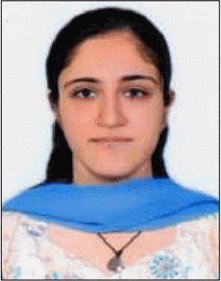 Bhavya Ahuja合作论文数Ramanujan College, University of Delhi2
 Sandip Modha合作论文数DA-IICT, Gandhinagar, India2
 Jia Qian合作论文数Univ Padua, Dept Informat Engn, Padua, Italy2
 Deepak K. Gupta合作论文数AIQ;Indian Institute of Technology2
 Yu Xiong合作论文数Surrey Business School, University of Surrey;Surrey Centre for Innovation and Commercialisation, University of Surrey2
 Shrey Satapara合作论文数Department of Artificial Intelligence, Indian Institute of Technology Hyderabad1
 Ashish Khanna合作论文数1
 Mohammad Hammoudeh合作论文数1
 Debasis Ganguly合作论文数School of Computing Science, University of Glasgow1Johannes Schäfer合作论文数1
 Sheetal Singh合作论文数1
 Xun Zhou (周迅)合作论文数Dept Environm & Geog, Univ York1
 Shubham Mishra合作论文数Energy Centre, Maulana Azad National Institute of Technology1
 Daksh Patel合作论文数LDRP-ITR1
 Wei Tan合作论文数1
 Sujit Bebortta合作论文数Ravenshaw Univ, Dept Comp Sci, Cuttack 753003, India1
 Dilip Senapati合作论文数Ravenshaw Univ, Dept Comp Sci, Cuttack 753003, India1
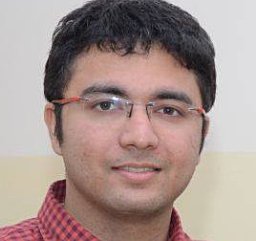 Sagar Uprety合作论文数The Open University Milton Keynes1
 Ya-Yen Sun合作论文数School of Business, Faculty of Business, Economics and Law, The University of Queensland1
 Mohamed Elhoseny合作论文数College of Computing and Informatics, University of Sharjah1
 Parth Mehta合作论文数Dhirubhai Ambani Inst Informat & Commun Technol1
 Mabrook Alrakhami合作论文数1
 Mubarak Alrashoud合作论文数1
 Senmao Xia合作论文数Chongqing University, Chongqing University1
 Susanne Becken合作论文数Department of Tourism, Sport and Hotel Management, Griffith University1
 Ajay Kumar合作论文数Division of Pharmacology, Indian Institute of Integrative Medicine (Council of Scientific and Industrial Research),1
 Joel Rodrigues合作论文数Instituto de Telecomunicações1
 Dawei Song (宋大为)合作论文数Tianjin University1
 Jonathan Lee Chenoweth合作论文数1
 Gabriella Pasi合作论文数Dipartimento di Informatica Sistemistica e Comunicazione, Università degli Studi di Milano Bicocca;Information and Knowledge Representation, Retrieval, and Reasoning LAB1
 Ilsun You合作论文数School of Information Science, Korean Bible University1
 Catarina Moreira合作论文数Machine Learning at the Data Science Institute, University of Technology Sydney;Charles University1Victor Hugo C. De Albuquerque合作论文数Department of Teleinformatics Engineering, Universidade Federal do Ceará1
 Horst Treiblmaier合作论文数Department of International Management, Modul University Vienna1
 Nagender Aneja合作论文数Tecnia Institute of Advance Studies1
 Pekka Marttinen合作论文数Helsinki Institute for Information Technology, Department of Computer Science, Aalto University1
 Prasenjit Majumder合作论文数IR&NLP Lab, Dhirubhai Ambani Institute of Information and Communication Technology1




