Spa and wellness centres constitute a fundamental aspect of contemporary health and lifestyle infrastructure, yet their environmental impacts remain under-assessed. This study presents a dynamic emissions calculator tailored to spa and wellness facilities, designed to generate transparent per-visitor emissions and support decarbonisation and benchmarking. By combining metered data such as energy and water with normalised non-metered sources including waste and staff travel, the model quantifies per-visitor emissions across Scopes 1, 2, and 3 and provides time-resolved profiles showing daily and seasonal patterns. Validation uses data from a large wellness resort and a small university sports park wellness zone. The results show that a typical visit results in average emissions of ~5 kilograms of carbon dioxide equivalent at the large facility and ~3.5 kilograms at the small facility, with on-site renewable energy in 2024 reducing emissions by ~33% and ~14% respectively.
Pension funds are the largest combined institutional investors in the world. The integration of ESG (Environmental, Social and Governance) criteria into defined contribution (DC) pension investments by pension funds can result in sustainable pensions that are in line with pension beneficiary preferences and help achieve Sustainable Development Goals. In many cases, ESG investment choice decisions are taken on behalf of pension beneficiaries. This raises important questions such as whether pension beneficiary and pension fund and asset manager investment decisions align on ESG and remuneration preferences and what is the impact of any mismatch? To answer these questions, this research sets out to analyse pension beneficiary ESG voting preferences on ESG polls presented to them. The results suggest that there are differences between the pension beneficiary ESG preferences and those recommended. Pension beneficiaries are vocal in wishing to influence their pension investments; shareholder activism is evident; however, management recommendations dominate.
Digitalization has transformed the book market with significant environmental consequences. Various life cycle assessments (LCAs) compare the per-unit greenhouse gas (GHG) impacts of reading paper books and e-books. However, they do not capture the net GHG effects of digitalization, which also depend on changes in production and consumption volumes in both formats. This article assesses whether digitalization has increased or decreased the GHG footprint of the book market by combining evidence from LCAs with economic insights on how digitalization affects book supply and demand. Our results show that e-books can lower emissions for heavy readers, while paper books may be more climate-friendly when they are widely shared. While e-books offer advantages such as accessibility and portability that support substitution, many digitalization-driven supply and demand effects expand the overall book market by improving discoverability, lowering costs and prices, and accelerating publication and distribution. Our quantitative analysis indicates that e-books reduce emissions only if they substantially displace print, yet evidence suggests substitution rates are low and emissions may therefore increase. This shows that treating e-books as simple substitutes for paper books is overly simplistic, and that integrated environmental and economic perspectives are needed to assess their net sustainability impact.
The UK government is seeking new food trade partners post-Brexit, with a focus on international meat trade to ensure supply chain stability while minimizing economic, environmental, and social damages. A UK Meat Trade- centred World Input-Output Model (UK-MTWIO) is developed with an innovative RAS method to assess the multiple impacts of different meat import scenarios. The results highlight the interdependence of meat types within the UK agricultural sector and the effects on other countries. Environmentally, most scenarios show the potential for reducing GHG emissions in the global agricultural sector. As for animal welfare, the UK can get higher animal welfare performance under beef import scenarios but suffer animal welfare losses with other scenarios. These findings underscore the intricate relationship between environmental, economic, and animal welfare impacts of global food trade. Policymakers should take a comprehensive approach and collaborate with all trading partners toward a more ethical and sustainable future.
The United Kingdom (UK), a high consumer of meat, has traditionally relied heavily on the European Union for its meat imports. However, with the advent of Brexit, the UK now faces the imperative of identifying potential meat-importing nations. The choices of different meat import countries not only impact the economy and environment of the UK but also other countries around the world. This study builds the UK Meat Trade-centred World Input-Output Model (UK-MTWIO), incorporating diverse import data within various scenarios. With different scenarios considering costs, GHG emission and animal welfare, this study analyzes the economic, environmental and animal welfare impacts on the UK and other countries worldwide. The novelty involves the comprehensive consideration of scenario setting, the application of RAS method as well as the animal welfare analysis with the method of world input-output model. The study reveals that beef imports have the most significant impact on the imports of the lamb and pork. Meanwhile, the changes in the UK's meat trade may change the trade partners of some major meat-importing countries. In terms of environment, some import scenarios have the potential to contribute to GHG emissions reduction in the global agricultural sector: CHN, MEX, and JPN are typical countries that are significantly impacted. The results of this study provides valuable insights for policymakers making meat trade decisions post-Brexit.
Passenger aviation carbon footprint calculators often lack breadth, accuracy, transparency, and communication effectiveness, leading to underestimations of environmental impact and mistrust. This study addresses these gaps by developing a comprehensive methodology that broadens scope and improves accuracy. It incorporates nitrogen oxides, water vapour, contrail-induced cloudiness, upstream emissions from in-flight services, and life cycle emissions from aircraft and airports, offering a complete carbon footprint assessment. Accuracy is improved through detailed modelling of flight distance, fuel consumption, and emissions allocation adjusted for passenger class, luggage, and cargo. Historical adjustment factors refine pre-flight estimates by integrating real-world variations. The tool outputs a full emissions breakdown by source, offering unparalleled granularity and clarity. Validated against over 30,000 historical flights, the historical adjustment factor model achieves ~0.5% mean squared percentage error and shows current methods underestimate emissions. This study sets a standard for aviation carbon footprint calculators by enabling transparent, dynamic assessments for industry stakeholders.
The visitor economy is responsible for a substantial percentage of the global carbon footprint. The mechanisms used to decarbonize it are insufficient, and the industry is relying on carbon trading with substandard credits that allow businesses to outsource the responsibility to decarbonize. We aim to transform carbon markets, help finance climate investments, and support decarbonization strategies. We identify and define the problem, outline the components and their interactions, and develop a conceptual model to transform carbon markets. The new, blockchain-based Carbon Tokenomics Model rolls out a decentralized database to store, trade, and manage carbon credits, with the goal of enabling sustainable climate finance investment. We outline the criteria needed for an industry-wide carbon calculator. We explain the process needed to increase rigor in climate investments in the visitor economy and introduce a delegated Proof of Commitment consensus mechanism. Our inclusive and transparent model illustrates how to reduce transaction costs and how to build consumer and industry trust, generating much-needed investments for decarbonization.
The National Infrastructure Commission (NIC) has called for a framework that “better anticipates future shocks and stresses…, values resilience properly, drives adaptation before it is too late”. This call is echoed within academic literature and by the Ministry of Defence (MOD). Furthermore, the National Resilience Strategy (NRS) sets out the need for an evaluation of socio-economic resilience to inform decision-making around societal stability. A resilience assessment framework (RAF) or tool that holistically addresses the vulnerabilities of infrastructure to the hazards of climate change is called for. This scoping review builds upon existing research through comparing and tabulating 110 resilience tools. The aim is to determine if any existing framework, or elements of any framework, could be used as components of an RAF formulated to address the calls of the NIC, MOD, NRS, and wider literature. The wider objective is to contribute to literature around infrastructure resilience and the early-stage development of a practically applicable holistic framework that enables resilience forecasting to inform infrastructure design and adaptation, increasing resilience while preventing infrastructure overcapitalization, resource overconsumption, or maladaptation.
OBJECTIVE:To explore changes in plant-based and meat product sales during and after implementation of a multi-component in-store intervention implemented by a major UK food retailer. Secondary objectives included exploring differences by store format and area affluence.DESIGN:The intervention increased the visibility, accessibility, affordability and availability of a selection of plant-based products. Unit sales of plant-based and meat products during the intervention (January 2021) were compared with pre- (November 2020) and post-intervention (February and March 2021). Non-meat product sales were assessed as a control. Negative binomial mixed models were used to explore sales changes and differences by store format or affluence.SETTING:The intervention was applied in a real-world supermarket setting during Veganuary.PARTICIPANTS:Stores that applied the full intervention (n 154) were included for analysis. Weekly sales data for each store were obtained from the retailer.RESULTS:Average weekly unit sales of plant-based products increased significantly (57 %) during the intervention period (incidence rate ratio (IRR) 1·52 (95 % CI1·51, 1·55)). Plant-based product sales decreased post-intervention but remained 15 % higher than pre-intervention (IRR 1·13 (95 % CI 1·12, 1·14)). There was no significant change in meat sales according to time period. The increase in plant-based product sales was greatest at superstores (58 %), especially those located in below average affluence areas (64 %).CONCLUSIONS:Results suggest that increasing visibility, accessibility, affordability and availability of plant-based products led to increased sales, with evidence of lasting effects. No significant changes in meat sales were observed. Variation according to store format and area affluence indicates targeted intervention approaches are needed.
An abstract is not available for this content. As you have access to this content, full HTML content is provided on this page. A PDF of this content is also available in through the ‘Save PDF’ action button.
This study looks at the application of delayed action Passive Infrared (PIR) sensors in the control of water use for urinal flushing. In this we briefly review the literature on urinal controls before reviewing four different approaches to PIR urinal controls. Existing literature discusses some of the pros and cons of different types of urinal control. However, the literature does not consider the differences that occur within individual approaches, based on the way controls operate. This study was initiated at the University of Surrey during 2019 following a water saving audit, in an attempt to bring down one of their largest users of water. This paper therefore aims to identify the most effective way to reduce water consumption of urinal systems, through retro-fitting PIR control systems within the variety of settings across university campuses. This paper also reviews the different reductions achieved over periods of differing use, during term-time, holidays, COVID-19 lockdowns, and the ‘new normal’. It found that grouped delayed action flushing was the most effective form of urinal control for reducing water use. It, achieved a 59–64% adjusted reduction during non-COVID-19 periods, and a 35% reduction against the control group during lockdowns saving 98,000 L/day on average across the study.
Facilitating the adoption of more sustainable food behaviors is key in order to reduce pressure on nature and improve public health. Food businesses that interact directly with consumers are well placed to enable a positive change in food behaviors. The present study evaluates the effectiveness of a 9-week multi-component behavioral intervention implemented by a large UK food retailer. Three food behaviors were explored: meat consumption, food waste and scratch cooking. Evaluation methods comprise of surveys issued pre-intervention, at interventionend and at delayed follow-up (3 months after intervention end), and focus groups where participants were divided according to life-stage (pre-family, family, retired). Results show the intervention mitigated individual barriers to change and had a positive impact on awareness, intention and behavior which lasted beyond intervention-end. Participants reported reducing their meat consumption and food waste and cooking more frequently from scratch. Findings indicate that the online community, 'ask the expert' videos and product samples were the most impactful intervention components, while recipes and cook-alongs were less effective. This study provides an effective and feasible intervention which could be implemented and scaled by food companies. While behavioral interventions offer a positive opportunity for companies to drive consumer behavior change, structural and cultural changes to the food environment will be needed to facilitate long-term change at scale.
Global desalination capacity is set to increase substantially due to growing water demands globally. The impact of desalination plant discharges on local marine environments is a concern but can be partially mitigated by good plant design to rapidly dilute released brine. For some water bodies with restricted connections to the ocean further concerns have been raised as to whether large-scale desalination risks raising salinity levels of the water body as a whole. Here we assess whether the maximum likely desalination growth by 2050 around the Rea Sea and Gulf of Aqaba could raise salinity levels in these restricted water bodies. The cumulative effect of desalination on salinity levels in the Red Sea will be insignificant compared to natural evaporation. The cumulative effect of desalination on salinity levels in the Gulf of Aqaba may be detectable but within the bounds of natural variability. Careful design and management of the desalination plant outfalls will still be required if the ecological impacts of large-scale desalination are to be manageable.
There is growing coordination and cooperation between the water and energy sectors in Jordan. However, a water-energy nexus approach is seen as a useful management tool by the water sector more than it is by the energy sector. Strong political leadership will be required for a far-reaching adoption of the nexus approach. Increasing policy connections between Jordan's water and energy sectors will lead to improved technical decision-making but major resource allocation decisions at the national level remain inherently political, regardless of how government departments and authorities are structured. Adopting a water-energy nexus approach in Jordan increases the potential for transboundary nexus cooperation with Israel and Palestine to exploit the potential of solar electricity production in Jordan and desalinated water production in Israel. Transboundary nexus co-operation in the medium term is desirable and even likely, but only to the extent that a break down in cooperation would not threaten the security of either country. Security concerns mean that such cooperation is likely to be limited in scale initially but via a nexus approach could build overtime to form a minority of water or energy supplies, occurring in parallel to other water and energy supply augmentation schemes. The case study of Jordan shows that adopting a water-energy nexus approach can assist in ensuring water and energy management occurs more on the basis of technical and economic criteria, however, major water and energy decisions remain political in nature and thus politics will continue to exert significant influence.
This paper uses logistic regression to uncover drivers of dissatisfaction with sanitation in informal settlements in East Africa. Smell, dirty sanitation facilities, safety and accessibility, filling quickly and too many users are major drivers. The households with toilets that meet the JMP definition of improved sanitation are the most satisfied and those that use public toilets are the least satisfied. Where public or communal sanitation is the only option due to space limitations, costs need to be affordable and facilities need to be emptied regularly so that most residents are satisfied with the available services and make use of them.
Retailers can play an important role in facilitating a transition to sustainable diets in the UK. They have been implementing strategies aimed at helping customers make healthier choices and are now considering how to broaden this to include sustainability, which is a live discussion in the UK retail sector. Focusing on 'less and better' meat and dairy as a core component of sustainable diets, this study investigates retailer perceptions of sustainable diets and their strategies and challenges to provide and promote customer purchasing of 'less and better' meat and dairy. Results from a series of semi-structured interviews with senior health and sustainability professionals within the UK retail sector indicate that retailers have a diverse understanding of sustainable diets that seldom includes 'less and better' meat and dairy. Retailers are adopting a range of different strategies linked to 'less and better' meat and dairy – from improving the sustainability of their meat and dairy supply chains to influencing customer purchasing through 'nudge' interventions. While strategies related to 'better' meat and dairy are being adopted, no retailer is implementing interventions focused on reducing purchasing of meat products. The promotion of sustainable diets is seen by some retailers as a way of positively engaging with customers and improving brand loyalty, but there are external barriers to reducing purchasing of meat and dairy products that are beyond the direct control of the retailer.
To enable a transition to a more sustainable food future, it is crucial policymakers consider and address livestock production and meat consumption holistically. The concept of ‘less and better’ meat and dairy offers an alternative approach to industrial livestock production. This study explores perspectives of UK stakeholders engaged in political advocacy and implementation on policy priorities and specific policy measures aimed at facilitating a transition to ‘less and better’ meat in the UK. 16 UK experts on food and farming from the research, civil society, business and farming sectors were interviewed. Thematic analysis was conducted to identify convergence and divergence on views related to policy priorities and the potential for impact, political feasibility and unintended consequences of specific policy measures aimed at increasing the sustainability of livestock production or reducing meat consumption. Experts agreed on policy priorities but held divergent views on the potential for impact of specific policy measures. Economic structures including incentives, disincentives and food prices were highlighted as having the greatest influence over meat production and consumption practices.
 Stephen Morse合作论文数Centre for Environmental Strategy, University of Surrey13
 Aime Tsinda合作论文数Faculty of Engineering and Physical Sciences, University of Surrey9
 Angela Druckman合作论文数Centre for Environmental Strategy;University of Surrey;Centre for Environmental Strategy, University of Surrey9
 Pamela Abbott合作论文数Glasgow Caledonian University8
 Pedley Steve合作论文数7Ian Christie合作论文数Centre for Environment and Sustainability, University of Surrey6Roland Clift合作论文数Centre for Environment and Sustainability, University of Surrey6
 Walter Wehrmeyer合作论文数6
 Michalis Hadjikakou合作论文数Centre for Environmental Strategy, University of Surrey6
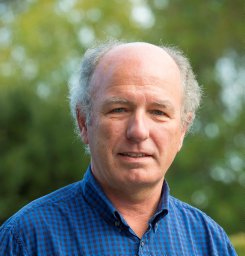 Chris Fife-Schaw合作论文数Department of Psychology, University of Surrey6
 Joanna Trewern合作论文数5Kenan Okurut合作论文数5Tanika Kelay合作论文数5
 Rosalind Malcolm合作论文数University of Surrey5
 Lorna-Grace Okotto合作论文数4Steve Pedley合作论文数4
 Eran Feitelson合作论文数Department of Geography, Faculty of Social Sciences, Hebrew University of Jerusalem4
 Xavier Font合作论文数Surrey Business School, University of Surrey4
 Jhuma Sadhukhan合作论文数School of Chemical Engineering and Analytical Science, The University of Manchester4Mulugeta Ayalew合作论文数4
 Katrina Charles合作论文数Oxford Martin School, University of Oxford;School of Geography and the Environment, University of Oxford4
 Devendra P. Saroj合作论文数Department of Civil Engineering, Indian Institute of Technology Kanpur4Raya A. Al-Masri合作论文数3
 Rosanna Kleemann合作论文数School of Biosystems and Food Engineering, University College Dublin3Al Zadjali Said合作论文数3
 Graham Miller合作论文数University of Surrey3
 Llorenc Mila i Canals合作论文数3
 Julie Barnett合作论文数Department of Information Systems and Computing, Brunel University3
 M. L. Deadman合作论文数Department of Crop Sciences;College of Agricultural and Marine Sciences;Sultan Qaboos University;College of Agricultural and Marine Sciences, Sultan Qaboos University3T. Kaime合作论文数2Pete Pearce合作论文数2
 Tereza Capelos合作论文数2
 Almoayied Assayed∗合作论文数2Sarah Halevy合作论文数2
 Assumpcio Anton合作论文数2Gregory M. Morrison合作论文数2
 Yacob Mulugetta合作论文数Department of Science, Technology, Engineering and Public Policy, University College London2
 Lars Rosen合作论文数Chalmers University of Technology2
 Mikael Mangold合作论文数Watsan, MSF-OCB2Pedley Steven合作论文数2Adogo Jane合作论文数2Murphy Richard J合作论文数2
 Stuart Orr合作论文数WWF-UK2
 Ashok K. Chapagain合作论文数Department of Water Engineering and Management, University of Twente2
 Panos Hadjinicolaou合作论文数Environment and Water Research Center, Cyprus Institute2
 Andreas Lindhe合作论文数Department of Civil and Environmental Engineering;Chalmers University of Technology;Department of Civil and Environmental Engineering, Chalmers University of Technology2Robinah Kulabako合作论文数2
 Kalliope Pediaditi合作论文数2
 Christos Zoumides合作论文数Department of Environmental Management;Cyprus University of Technology;Department of Environmental Management, Cyprus University of Technology2




