Deciphering disease-specific progression from low sample size, high-dimensional omic profiles remains challenging. Traditional biomarker discovery methods are costly and limited, while Nonnegative Matrix Factorization (NMF), though popular, suffers from instability and lack of biologically relevant solutions. This study aims to overcome these limitations by introducing a more robust framework. This article proposes TopConNMF, a topology-constrained extension of NMF which incorporates structural constraints, ensures stability, accuracy, and faster performance while maintaining biological interpretability. The method was evaluated on two publicly available time-varying omic datasets with established ground truths and compared against other state-of-the-art approaches. The TopConNMF consistently demonstrated stable performance across both the datasets, delivering superior accuracy and biologically relevant factorization compared to conventional NMF and other benchmark methods. The exhaustive evaluation confirmed its robustness in capturing disease-specific profiles and its efficiency in handling complex, high-dimensional data. Thus, TopConNMF provides a deeper understanding of complex biological systems by producing stable and interpretable factorization. Its broad applicability across multiple disease manifestations highlights its potential as a valuable tool for advancing omic data analysis and biomarker discovery. Clinical Impact: TopConNMF enables reliable biomarker discovery from limited omic data, supporting early diagnosis, patient stratification, and personalized treatment, thereby bridging computational findings with clinical applications.
Integration of intermittent wind and solar power systems causes increased grid instability and enhanced disturbances and nonlinearity in the power system. Hydro-turbine (HT) power system plays a significant role in grid stability with the capability of providing part-load-operation, fast startup, shut-down, and load-change. The HT power systems frequently experience parametric uncertainty and external disturbance due to imposed nonlinearity from mechanical, actuating, and power systems. Further, the nonlinearities are enhanced due to the connectivity of multiple power generation and consumer areas with grid-load change. For such challenging situations, implementing sophisticated nonlinear robust controllers remains a thrust area of research for the stable operation of a hydropower system. For the problem at hand, a fast-nonsingular-terminal-sliding-mode-controller (FNTSMC), utilizing the concept of terminal-sliding-mode-reaching-law (TSMRL), is proposed to simultaneously achieve precise tracking, finite-time convergence, and attenuation of the chattering phenomenon. To further enhance these performance objectives, a superior reaching law, called adaptive-terminal-sliding-mode-reaching-law (ATSMRL), has been used along with FNTSMC to design a more efficient controller. A laboratory-scale FT system with a low-cost electrohydraulic IGV-actuating system is indigenously developed, and the above-mentioned controllers are implemented in real practice. The ITAE obtained as 1.38 x 10³, 1.10 x 10³, and 0.86 x 10³ Ws2 for power error with FPID, TSMRL-FNTSMC, and ATSMRL-FNTSMC, respectively. The actuator position ITAE is obtained as 0.052, 0.045, and 0.036 ms2 FPID, TSMRL-FNTSMC, and ATSMRL-FNTSMC, respectively. Further 0.27rads, 0.15rads, and 0.12rads for turbine speed error with FPID, TSMRL-FNTSMC, and ATSMRL-FNTSMC, respectively obtained. The control energy obtained by reported FPID, TSMRL-FNTSMC, and ATSMRL-FNTSMC is 4.56 x 10², 7.08 x 10², and 3.78 x 10², respectively. Furthermore, comparison of the ATSMRL-TSMC with second order sliding mode controller (SOSMC) and barrier function based adaptive sliding mode controller (BFASMC) is also performed.
Hand-related impairments from stroke and neuromuscular diseases are rising globally, increasing the demand for prosthetic hands using surface electromyography (sEMG) for hand movement and grasp activities. sEMG systems also support human-robot interaction (HRI), aiding assistive robots in manipulator tasks. However, sEMG sensors often struggle to capture comprehensive muscle activity and are vulnerable to external hazards. In such scenarios, classical dimensionality reduction techniques often underperform, particularly when the intrinsic spatial structure of the data is overlooked. Addressing this limitation, local manifold-inspired learning techniques, such as locality preserving projection (LPP), are investigated in this study. In particular, orthogonal LPP (OLPP) helps extracting features from high-dimensional data by leveraging the orthogonal properties of nonlinear mappings from input to feature space. Nevertheless, traditional projection kernels are typically constructed based on Euclidean similarity between data points, making them highly sensitive to noise and outliers. To overcome this challenge, we have incorporated two additional similarity measures derived from the complex Euler space and Grassmannian manifold, which effectively explore the local structure in Riemannian spaces. A novel uncertainty-aware Bayesian model averaging (UaBMA) approach is proposed for integrating similarity weights from various manifolds, thereby enhancing the projection discriminability. Extensive experimental studies on both laboratory-acquired and benchmark NinaPro datasets demonstrate superior performance of the proposed technique over existing methods.
Early detection of incipient faults in inverter-fed induction motor (IM) drives is essential for ensuring system reliability in industrial environments. Sparse representation techniques have shown effectiveness in fault diagnosis due to their ability to extract informative signal structures. Notably, robust sparse coding (RSC) introduces samplespecific weighting to suppress noise and outliers during signal reconstruction. However, RSC employs sigmoid-based weighting functions with fixed curvature, which restrict their adaptability to minor residual variations. To address this limitation, a hyperbolastic-weighted RSC (HW-RSC) model is proposed, incorporating a nonlinear and tunable hyperbolastic weighting function that dynamically adjusts sensitivity to residual errors. This adaptive weighting mechanism enhances the model's ability to suppress outliers and separate fault-induced distortions from noise in low-SNR environments. Three-phase current signals collected under multiple fault severity levels are analyzed using a hybrid feature set comprising power spectral density (PSD), short-time Fourier transform (STFT), and statistical descriptors. The experimental validation demonstrates that the proposed HW-RSC model achieves 98.89% classification accuracy under nominal conditions and maintains over 76% accuracy at the lowest SNR considered, outperforming state-of-the-art sparse coding approaches.
In recent times, the rapid growth of human-robot interaction (HRI)-based utilities can be observed in industrial and domestic applications. To ensure seamless operation in daily life HRI spaces, several aspects of environmental hazards need to be taken care of. Vision-based systems, in particular, are prone to challenges such as degradation in ambient illumination and noise in the sensor accessories. For high-dimensional vision sensor data, manifold learning-based dimensionality reduction (DR) techniques like locality preserving projection (LPP) have shown promising results. To handle the sensitivity of LPP toward noise and outliers arising from such adversities, methods like 2D-LPP and robust 2D-LPP (2DRLPP) have been introduced further. However, in these methods also, the projection maps remain susceptible to the spatial perturbations in the data. To address these limitations, this article proposes a granular feature-aided 2DRLPP scheme to enhance robustness against noise, intensity variations, and spatial outliers. To obtain the robust feature information, a new granular computing (GrC)-based technique is introduced. A novel density-based neighborhood granulation (dNG) algorithm is proposed for extracting granular information from real-world vision sensor data. Additionally, an RGB-channel fuzzy decoding scheme is developed to decode the granular information and utilize it for constructing a robust projection kernel. The proposed technique is validated in a real-world assistive robotic environment, where flagstick visual cues are used by human participants to supervise an assistive mobile robot in performing necessary tasks.
A significant challenge in visual understanding-based assistive robotics has been targeted action recognition in human–robot collaborative (HRC) spaces. With vision-based data, there exist certain irregularities and variabilities in the working environment that can considerably influence recognition performance. In most cases, high-dimensional vision sensor data is first projected to a low-dimensional manifold and then analyzed for supervised or unsupervised recognition. Classical dimensionality reduction (DR) techniques are mostly affected by such variations in the data, whereas the family of local structure-sensitive manifold learning techniques such as the 2D locality preserving projections (2DLPP) offers a better alternative. However, the projection map generated by 2DLPP also heavily relies on the spatial structure and intensity variation in the visual data. To overcome these concerns, a cosine similarity measure is introduced for calculating similarity information between data points in the originally structured image space, with enhanced efficiency. Additionally, a granular computing-based local, intrinsic structure encoding mechanism is incorporated that works on granular information fusion and rough entropy maximization. The granular fusion scheme considers RGB color spaces separately to allow individual channel granular encoding from the images. Extensive experimental studies demonstrate the proposed approach to be an effective visual cue detection method, especially in shape and color-varying scenarios.
Structural sparse representation (SSR) prior and quantization constraint (QC) prior have recently been successfully employed to overcome problems associated with block discrete cosine transform-based image compression. By formulating the image de-blocking exercise as a maximum posteriori-based optimization problem, the image artifacts can be adequately reduced. However, the success of this approach depends on a Gaussian-based quantization noise model which relies on empirically tuned parameters that may not be optimal for a wide variety of images and for images chosen from other genres, e.g. medical images. The present work proposes to optimize the performance of SSR and QC prior based image de-blocking algorithms by utilizing metaheuristic optimization to optimize the quantization noise model. Gray wolf optimization (GWO) and improved GWO algorithms have been suitably utilized here to solve this new problem, and extensive experiments carried out for medical images firmly establish the utility of our proposed algorithms over the state-of-the-art available.
The present work proposes a state-of-the-art terminal sliding mode control (TSMC) strategy for blade pitch control to mitigate the cyclic aerodynamics load and rated power, considering a 63m blade horizontal axis wind turbine (HAWT) comprising rotary electrohydraulic actuation. This TSMC has been designed using a generalized power exponential rate reaching law, termed as GPERRL-TSMC. The work has employed blade element momentum theory for modeling system dynamics. It has been conclusively proven that the proposed GPERRL-TSMC can achieve simultaneous enhancement in transient performance as well as reduce the detrimental effect of chattering. This controller design is at first further enhanced by optimizing its free parameters using Harris Hawks optimization (HHO), termed as HHO-GPERRL-TSMC. Then a further enhancement of this GPERRL-TSMC design is proposed using a recent variation of HHO, termed here NCM-HHO, i. e. a nonlinear-based chaotic HHO that includes a mutation mechanism to refine the controller design. This NCM-HHO based GPERRL-TSMC is termed here as NCM-HHO-GPERRL-TSMC, Extensive performance evaluations have been carried out to demonstrate that all three variants of GPERRL-TSMC proposed in this work could sufficiently outperform contemporary GPERRL-SMC, for a variety of wind profiles, with NCM-HHO-GPERRL-TSMC consistently showing the best performance. The proposed GPERRL-TSMC, HHO-GPERRL-TSMC, and NCM-HHO-GPERRL-TSMC could achieve a reduction in integral time absolute error of 15.16%, 26.74%, and 30.23% respectively and a reduction in control energy of 64.71%, 72.66%, and 77.85% respectively, with respect to the contemporary reported GPERRL-SMC.
Nowadays, research on human movement related to Brain-Computer Interface (BCI) technology is increasing significantly. The objective of this research is primarily on improving neurological rehabilitation. The complexity and non-linearity of electroencephalogram (EEG) data present challenges for conventional signal processing techniques. The present study addresses these challenges by analyzing the dynamic nature of EEG signals. The Variational Mode Decomposition (VMD) method is used non-recursively to decompose the EEG signals into four different band-limited intrinsic mode functions (IMFs), specifically IMFs $8,9,10$, and 11. To reduce computational load and enhance system performance, 16 motor-cortex-based channels are chosen from a total of $\mathbf{1 1 8}$ channels. Approximate entropy and sample entropy are computed from the IMFs to form a feature vector. This generated feature vector is then fed into different classification algorithms such as LDA, SVM, Decision Tree, and Naive Bayes for classification. The highest average accuracy achieved across all classifiers using approximate entropy is $100 \%$ and corresponding F 1 score are $\mathbf{9 8. 6 7 \%}, \mathbf{9 5. 3 5 \%}$, $\mathbf{9 8. 6 7 \%}, \mathbf{9 7. 5 0 \%}$ respectively, while the sample entropy feature yields classification performances of $\mathbf{9 8. 7 5 \%}, \mathbf{9 9. 3 8 \%}, \mathbf{1 0 0 \%}$, $\mathbf{1 0 0 \%}$ and corresponding F1 score are $\mathbf{9 9. 3 5 \%}, \mathbf{9 8. 7 1 \%}, \mathbf{1 0 0 \%}$, $\mathbf{1 0 0 \%}$ respectively. VMD allows for more accurate decomposition of the signal for precise analysis. Both ApEn and SampEn yield state-of-the-art results when applied to the decomposed signals. This study demonstrates exceptionally well in feature extraction and classification compare to the recent study and making more efficient for real-time application.
The paper provides a novel approach to extended state observer design for disturbance rejection in sliding mode attitude control problem of a quadrotor. The original contribution of the work lies in employing Takagi-Sugeno fuzzy logic to improve the robustness in the observer design for the proposed system. The well-known Particle Swarm Optimization algorithm is employed in the quadrotor control system to optimize the observed states and parameters of used fuzzy sets, with an aim to improve both the tracking performance and noise figure of the observer response in presence of external disturbance and parametric noise. Additional contribution includes a data-driven approach to knowledge discovery in the design of Takagi-Sugeno fuzzy observer. The present study also examines the scope of replacing traditional extended state observer by the proposed fuzzy observer in a dual channel disturbance rejection proposal of a recent seminal work. The study reveals that high frequency disturbances are better compensated by the fuzzy observer than its traditional model. Experiments undertaken with Gaussian noise as disturbance inputs further reveal that the fuzzy state observer in the presence of the existing low frequency disturbance compensator, proposed in the seminal work, exhibits relatively improved noise figure and tracking performance in comparison to the seminal work itself. The chattering in the control signal is also significantly reduced by the incorporation of the proposed Takagi-Sugeno fuzzy extended state observer in the sliding mode control architecture. Because of high robustness of the proposed extended fuzzy state observer, it exhibits amazing performance in sliding mode control architecture of quadrotors, outperforming the existing approaches in both tracking and noise rejection.
With the development of autonomous robotics, the ability of a robot to perform SLAM with the highest accuracy and convey reliable data is becoming an inevitable requirement. A key aspect in this respect is the consistency of the estimator which follows that the state estimations produced by it are centered at zero and have a value of covariance matrix lower than that assessed by the filter. However analytical evaluations prove that the EKF-SLAM is an inconsistent estimator as the linearized error state model produced by it has an unobservable subspace having a dimension lower than that of the real-world non-linear SLAM system. As a solution to this problem the First-Estimates Jacobian SLAM (FEJ-SLAM) algorithm was developed where an error state model with similar dimensions as the SLAM system is being used. However, the FEJ-SLAM fails to perform satisfactorily in certain cases. Hence a window-based moving average algorithm (W-MA-FEJ-SLAM) has been proposed as a modification of FEJ-SLAM which can maintain the beauty of the algorithm in noisy environments. The proposed approach has been tested and evaluated extensively to prove that it outperforms the traditional aristocratic algorithms such as Standard EKF-SLAM and the FEJ-SLAM.
In collaborative robotics, human tracking problems are considered as one of the major problems. In some of our recent works, we demonstrated the ways to address this problem by the use of CFAsT-Match algorithm in our real-world shoe detection problem. This paper focuses on a study of performance of CFAsT-Match algorithm with respect to the change of parameters values used in CFAsT-Match. Instead of using a particular scaling factor for dimensions of affine transformations, we set four different parameters taking different values, and tried to find how sensitive are those parameters for CFAsT-Match algorithm, while dealing with our challenging and characteristically diverse datasets. Study of performance of the algorithm for different values of parameters and for different characteristics of images shows the varying sensitivity of those parameters under different challenging scenarios.
For optical vision-based systems in human-robot interaction (HRI), the recognition performance is largely affected by environmental calamities e.g., photometric hazards and spatio-structural disruptions. Accounting for this vulnerability of optical RGB cameras, we propose a far infrared thermal imaging-based system in this work. Sign language (SL) plays a crucial role in bridging the communication gaps for individuals with hearing or speech impairments, enabling more inclusive interactions. We have considered the American manual alphabet (AMA) library-based SL images here. For modeling the distribution of coding error residuals effectively, we propose a novel Student's t-uniform mixture error distribution framework. The corresponding sparse optimization problem is solved by an iteratively reweighted robust minimization algorithm. The property of Student's t-distribution of having a strong peak at zero and an elongated tail on both sides makes it robust against higher coding residuals. The inclusion of a uniform distribution offers a flexible framework to accommodate data outliers e.g., random, unstructured errors, which may not conform to any specific patterns. This combined distribution allows the proposed model to more effectively handle the mixed presence of inliers and unpredictable outliers in the data. To validate this, extensive case studies are conducted using the normal- conditioned and pixel-degraded thermal sign images under various environmental challenges, such as low-light conditions, block occlusion, partial object occlusion, and noise corruption. Additional experiments are carried out with two benchmark hand gesture datasets as well. Together, these studies demonstrate the proposed technique to be an effective and robust sparse coding model under such challenging scenarios.
In the modern world, the use of alcohol is increasing day by day in a variety of products across different industries like medical and pharmaceutical, food and beverage, cosmetics and personal care, automotive industries, etc. As a consequence, it becomes significantly important to classify the presence of these alcohols to reduce their harmful effects in a very sophisticated way. Hence, the significance of the research in developing an intelligent system to recognize the presence of alcohol is drawing the researchers’ attention in modern times. On the other hand, the development of dictionary learning (DL) based approach and sparse modeling has emerged as a precursor in the machine learning based research domain over the past few years. Numerous DL based sparse solutions have been successfully proposed for solving different signal processing and image processing problems in recent times. In some of our previous work, we have demonstrated how supervised and unsupervised DL based approaches can effectively be employed for solving different problems in the domain of ambient assisted living. Advancing the scope of our studies, in this work, we have shown how DL based approach can be successfully employed for effectively classifying different alcohol categories, based on sensory signals acquired from five Quartz Crystal Microbalance (QCM) sensors. In this work, we first investigate the effectiveness of one prominent category of supervised DL based approach, called dictionary learning with structured incoherence and shared atoms (DLSI) for an available benchmark alcohol dataset, in detail. To improve the performance of the DLSI approach further, we propose a modified version of DLSI by introducing an intelligent threshold selection strategy for handling the sharing features among all dictionaries in a novel manner, which is the most significant issue in maintaining incoherence. The performance evaluation establishes that our proposed novel threshold selection strategy based on a modified DLSI approach outperforms other recent competing approaches.
The recent increased demand for power with improved technological and social status of human beings has led to the development of renewable power generation systems. The wind power system is one of the fastest-growing sectors among renewable power generation systems. In the last few decades, researchers have focused on the development of large wind turbines and studied their operation and control. However small wind turbines are effective where less wind speed potential is available like in northeast India. Therefore, improving the efficiency of the small wind turbines is one of the major tasks to enhance power generation in low-intensity wind conditions. In the present study effect of the chord solidity on the pitch control of a small wind turbine is studied. A novel integral terminal sliding mode controller is designed here using damping sinusoidal-based reaching law (termed as DSRL-ITSMC) for wind turbine pitch control with variations in blade shapes. Comprehensive performance evaluations have been carried out over a wide range of speed variations, with sinusoidal and random variations in wind speed. The performance of the proposed DSRL-ITSMC controller is tested using different turbine blades and compared using established performance indices. Finally, the proposed controller performance is compared vis-à-vis a fractional order proportional-integral-derivative controller (FO-PID) controller to demonstrate the utility of our proposal.
In today's world, having the ability to drive has become of significant importance, especially while traveling. As a consequence, the importance of studying road safety is rising. Hence, the importance of research in designing intelligent systems to aid drivers in providing comfort, security, and safety is also gaining much momentum in recent times. On the other hand, designing Dictionary learning (DL) algorithms in conjunction with sparse representation/coding has become a forerunner in machine learning based research problems in the current decade. Many such DL based sparse solutions have been effectively proposed for a variety of signal processing and image processing algorithms. In some of our earlier works, we have shown how various dictionary learning based algorithms and system solutions can be successfully developed for home automation and ambient assisted leaving problems. Taking our research efforts in DL algorithms further, in this work we show how DL algorithms can be effectively used to categorize four common road types: urban roads, highways, residential areas, and rural areas. The algorithms have been developed based on sensory signals acquired by a driver wearing smart glasses, while driving in those road conditions. The DL based system developed can help providing guidance to a driver during driving. Three prominent varieties of DL algorithms, called K-singular value decomposition (K-SVD) algorithm, approximate K-SVD algorithm, and discriminative K-SVD algorithm, have been successfully implemented here for a benchmark, open dataset available for this problem and their suitable effectiveness has been investigated in detail. Although all the three varieties of K-SVD algorithms showed encouraging performances under different recognition problems, the discriminative K-SVD algorithm, employing orthogonal matching pursuit (OMP) algorithm at its core for sparse coding purposes, emerged as the best overall performer.
Estimating unknown inputs in indoor heating, ventilation, and air conditioning (HVac) systems, particularly under the influence of diverse environmental constraints and time-varying relative humidity, presents a significant challenge. A viable solution is to use a weighted least-squares (WLS) approach for estimating unknown inputs, which uses an unbiased minimum variance (UMV) estimator in conjunction with an unscented Kalman filter (UKF)-based nonlinear filtering technique. This allows for the simultaneous estimation of the system's state and the unknown inputs. To accurately represent the real-life nonlinear thermal profile influenced by these uncertain inputs, it is essential to adopt an RC network-based mathematical modeling approach that captures the system's dynamic behavior over time. The integration of the UMV-based optimal estimator with the UKF culminates in the proposed UKF with UMV for unknown inputs (UKF-UMV-UI) estimation algorithm. Extensive experimentation with the proposed UKF-UMV-UI algorithm has been conducted in a laboratory-scale realistic environment, dealing with uncertain and challenging unknown inputs. The results of the investigation indicate that the proposed method outperforms the UKF with unknown input (UKF-UI) by 41.64% and 35.85% in cumulative mean squared error (CuMSE) for two distinct measurement conditions, respectively.
Photoacoustic tomography (PAT) is a promising non-invasive biomedical imaging technique that combines optical contrast with acoustic resolution. However, accurate image reconstruction remains challenging, particularly in sparse-view scenarios and in the presence of high-intensity Gaussian noise. Traditional analytical methods and Total Variation (TV) based regularization often fail to preserve fine structures and are prone to artifacts such as staircasing and patchy results. These limitations are overcome by using an edge-guided Second-Order Total Generalized Variation (ESTGV) regularization with Wavelet Transform (WT), Discrete Cosine Transform (DCT), and a data fidelity term. In our earlier work, the ESTGV-based reconstruction methods have been proposed and evaluated for high SNR conditions. In this study, the ESTGV-based algorithm has been extensively studied for severe noise conditions. This method enhances sparsity, suppresses noise, and preserves structural details in the reconstructed PAT images under severe noise conditions. The performance of the method under negative signal-to-noise ratio (SNR) conditions has been evaluated. A comprehensive hyperparameter sensitivity analysis is conducted using the Structural Similarity Index Measure (SSIM) and Peak Signal-to-Noise Ratio (PSNR) as evaluation metrics. The ESTGV method yielded 1.09% improvement in SSIM and 3.14% improvement in PSNR over the Second-order Total Generalized Variation (TGV) method at a negative SNR level of -5 dB. The results demonstrate the effectiveness of the ESTGV-based method in producing high-quality, artifact-free PAT images when the signal is deeply buried in noise.
In the present study 5MW NREL horizontal axis wind turbine (HAWT) has been considered for pitch control to reduce fatigue loads and maintain rated power in region III of operation, that is, above rated wind condition. An electrohydraulic linear actuation system has been considered for blade-pitch revolve-motion of the rotor blade, based upon available wind speed. An augmented state improved exponential reaching law integral sliding mode controller (ASIERL-ISMC) has been designed for the HAWT pitch control application. In contrast to the previously reported improved exponential reaching law based controllers, in our ASIERL-ISMC, all state variables and the sliding variable have been considered together to define an augmented reaching law that can enhance the degree of freedom of the controller. Further, hyperparameters of the proposed ASIERL-ISMC have been optimized using Harris hawks optimization (HHO), to achieve superior control performance. The performances of this proposed HHO-ASIERL-ISMC have been compared with existing dynamic exponential term reaching law integral sliding mode controller (DETRL-ISMC) and improved exponential reaching law integral sliding mode controller (IERL-ISMC). The robustness and sensitivity of the proposed ASIERL-ISMC and HHO-ASIERL-ISMC have also been tested with three different available wind data. The proposed HHO-ASIERL-ISMC has been found to provide the most superior performance, in terms of both blade-pitch angle error (computed using integral absolute error (IAE)) and control energy (CE).
The present paper shows how the dynamic indoor temperature profile of an HVAC (Heating, Ventilation, and Air Conditioning) system in a building can be developed using Kalman filters, in presence of unknown inputs. An RC network based dynamic, nonlinear thermal model is first developed for the indoor environment with a novel consideration of relative humidity factor. Then an extended Kalman Filter based algorithm in presence of unknown inputs (called EKF-UI ) and an adaptive variation of this EKF-UI algorithm (called AdEKF-UI ) are developed for the real indoor environment under consideration. Next, a particle swarm optimization ( PSO ) guided adaptive extended Kalman filter with unknown inputs ( PSOgAdEKF-UI ) algorithm is proposed to overcome limitations of the EKF-UI and AdEKF-UI algorithms, especially under bad initialization situations. This PSOgAdEKF-UI algorithm proposes an effective utilization of regularizer based initializations for the initial state estimation error covariance matrix and the measurement noise covariance matrix. Extensive experiments showed that, overall, PSOgAdEKF-UI algorithm could outperform EKF-UI and AdEKF-UI algorithms by 46.59% and 20.66%, respectively, in terms of mean square error, while estimating an unknown state. Note to Practitioners —This paper was motivated to estimate the nonlinear dynamics of indoor HVAC thermal profile in presence of unknown inputs. The study explores a proposed Kalman filter-based heuristic regularizer-assisted adaptive filtering methodology for nonlinear state estimation that can circumvent the constraints imposed by current approaches. The proposed method demonstrates its applicability in actual nonlinear physical systems since many matrices needed for such state estimation algorithms do not have accurate initialization information. The nature of inferential stochastic inputs in practical HVAC system can be evaluated utilizing our novel state estimation method of the altering relative humidity coupled nonlinear dynamic thermal model. The thermal profile of a practical HVAC system, in presence of varying unknown inputs, can be more accurately modeled when temporal variations in relative humidity are included in the nonlinear dynamic model, as an additional influencing factor.
 Anjan Rakshit合作论文数Electrical Engineering Department, Jadavpur University73
 Kaushik Das Sharma合作论文数Future Institute of Engineering and Management, West Bengal University of Technology and Jadavpur University29
 Patrick Siarry合作论文数Laboratoire Images, Signaux et Systemes Intelligents (LISSI), Universite Paris-Est Creteil Val de Marne - Universite Paris 1224
 S. Munshi合作论文数Department of Electrical Engineering, Jadavpur University24
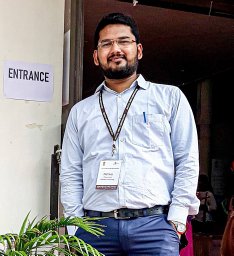 Paral, P.合作论文数20
 Pubali De合作论文数Department of Electrical Engineering, Techno India-Batanagar, Kolkata, India14
 Saibal Ghosh合作论文数Department of Electrical Engineering, Jadavpur University12
 Nirmal Singh合作论文数Guru Angad Dev Veterinary and Animal Sciences University12
 Madhubanti Maitra合作论文数Dept. EE., Jadavpur University11
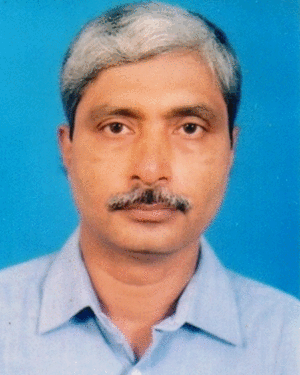 Swapan Kumar Goswami合作论文数Department of Electrical Engineering, Jadavpur University10
 Bikash Kumar Sarkar合作论文数7
 Sandip Joardar合作论文数Haldia Petrochemicals Ltd.7
 Dipankar Sanyal合作论文数Department of Mechanical Engineering, Jadavpur University7
 Saikat Mookherjee合作论文数Department of Mechanical Engineering7
 Nandita Sanyal合作论文数Department of Electrical Engineering, B.P. Poddar Institute of Management & Technology6
 Ilhem Quenel Boussaid合作论文数Electrical Engineering and Computer Science Department, Université des sciences et de la technologie Houari Boumediene6
 Fumitoshi Matsuno合作论文数5
 Paladugu Venkaiah合作论文数Dept Mech Engn, NIT Meghalaya5
 Soma Biswas合作论文数dept. of Electrical Engineering, Academy of Technology5
 Rana Saha合作论文数5Mohamed Ahmed-Nacer合作论文数Faculty of Electronic and Computer Science, USTHB5
 Gautam Sarkar合作论文数Department of Applied Physics, University of Calcutta5
 Shouvik Chaudhuri合作论文数4
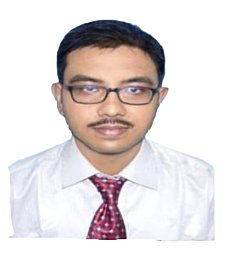 Bed Prakash Das合作论文数Dept Appl Phys, Univ Calcutta4
 Dutta Saibal合作论文数Electrical Engineering Department, Heritage Institute of Technology4
 Kiyotaka Izumi合作论文数Department of Mechanical Engineering, Graduate School of Science and Engineering, Faculty of Science and Engineering, Saga University4
 Sankar Kumar Pal合作论文数Center for Soft Computing Research, Indian Statistical Institute4
 Koliya Pulasinghe合作论文数Graduate School of Science and Engineering 1-Ho, Saga University4Jitendranath Bera合作论文数Department of Applied Physics;University of Calcutta;Department of Applied Physics, University of Calcutta4
 Anirban Dey合作论文数3
 Pritha Bhattacharjee合作论文数3Debarshi Brahma合作论文数3
 Sayan Banerjee合作论文数Indian Institute of Technology, Bombay (India)3
 Devraj Mandal合作论文数Rakuten Institute of Technology3
 Tapabrata Chakraborty合作论文数3
 Kazuo Kiguchi (木口量夫)合作论文数Department of Mechanical engineering, Faculty of Engineering, Kyushu University3
 Ankush Chakrabarty合作论文数Electrical Engineering Department, Jadavpur University3
 Avishek Chatterjee合作论文数Electrical Engineering Department, Jadavpur University3
 Keigo Watanabe合作论文数Graduate School of Natural Science and Technology, Okayama University;Beijing Advanced Innovation Center for Intelligent Robots and Systems, Beijing Institute of Technology3
 Kesab Bhattacharya合作论文数3Alexander Pasik合作论文数2Matthew Loeb合作论文数2Peter Tuohy合作论文数2Douglas Gorham合作论文数2Junior Past合作论文数2R. Saha合作论文数2Dwaipayan Sen合作论文数2
 Diparnab Sen合作论文数2
 Ray, Olive合作论文数Department of Electrical Engineering, Indian Institute of Technology Kanpur;c;Department of Electrical Engineering, Indian Institute of Technology Kanpur2




