Crowdsourcing involves employing a large number of workers, creating HITs (Human Intelligent Tasks), submitting them to a crowdsourcing platform and providing a monetary reward for each HIT. One of the advantages of using crowdsourcing is that the tasks can be highly parallelized, that is, the work is performed by a high number of people in a decentralized setting. The design also offers a means to cross-check the accuracy of the answers by assigning each task to more than one person thus relying on majority consensus as well as rewarding the workers according to their performance and productivity. Since each worker is paid per task, the costs can significantly increase, irrespective of the overall accuracy of the results. Thus, one important question when designing such crowdsourcing tasks that arise is can we estimate apriori - before launching the experiment - how many workers to employ and how many tasks to assign to each worker when dealing with large amounts of tasks. Thus, the main research question we aim to answer is: ‘Can we a-priori estimate optimal workers and tasks’ assignment to obtain maximum accuracy on all tasks?’.We introduce a two-staged statistical guideline, CrowdED, for optimal crowdsourcing experimental design in order to a-priori, via simulations, estimate optimal workers and tasks’ assignment to obtain maximum accuracy for crowdsourcing tasks. We describe the methodology and evaluate it by comparing with real-world experiments and show that the method performs better than random selection of values.
The quality of a Knowledge Graph (also known as Linked Data) is an important aspect to indicate its fitness for use in an application.Several quality dimensions are identified, such as accuracy, completeness, timeliness, provenance, and accessibility, which are used to assess the quality.While many prior studies offer a landscape view of data quality dimensions, here we focus on presenting a systematic literature review for assessing the completeness of Knowledge Graph.We gather existing approaches from the literature and analyze them qualitatively and quantitatively.In particular, we unify and formalize commonly used terminologies across 56 articles related to the completeness dimension of data quality and provide a comprehensive list of methodologies and metrics used to evaluate the different types of completeness.We identify seven types of completeness, including three types that were not previously identified in previous surveys.We also analyze nine different tools capable of assessing Knowledge Graph completeness.The aim of this Systematic Literature Review is to provide researchers and data curators a comprehensive and deeper understanding of existing works on completeness and its properties, thereby encouraging further experimentation and development of new approaches focused on completeness as a data quality dimension of Knowledge Graph.
While there exists an abundance of open biomedical data, the lack of high-quality metadata makes it challenging for others to find relevant datasets and to reuse them for another purpose. In particular, metadata are useful to understand the nature and provenance of the data. A common approach to improving the quality of metadata relies on expensive human curation, which itself is time-consuming and also prone to error. Towards improving the quality of metadata, we use scientific publications to automatically predict metadata key:value pairs. For prediction, we use a Convolutional Neural Network (CNN) and a Bidirectional Long-short term memory network (BiLSTM). We focus our attention on the NCBI Disease Corpus, which is used for training the CNN and BiLSTM. We perform two different kinds of experiments with these two architectures: (1) we predict the disease names by using their unique ID in the MeSH ontology and (2) we use the tree structures of MeSH ontology to move up in the hierarchy of these disease terms, which reduces the number of labels. We also perform various multi-label classification techniques for the above-mentioned experiments. We find that in both cases CNN achieves the best results in predicting the superclasses for disease with an accuracy of 83%.
BACKGROUND:The amount of available data, which can facilitate answering scientific research questions, is growing. However, the different formats of published data are expanding as well, creating a serious challenge when multiple datasets need to be integrated for answering a question.RESULTS:This paper presents a semi-automated framework that provides semantic enhancement of biomedical data, specifically gene datasets. The framework involved a concept recognition task using machine learning, in combination with the BioPortal annotator. Compared to using methods which require only the BioPortal annotator for semantic enhancement, the proposed framework achieves the highest results.CONCLUSIONS:Using concept recognition combined with machine learning techniques and annotation with a biomedical ontology, the proposed framework can provide datasets to reach their full potential of providing meaningful information, which can answer scientific research questions.
The issue of climate change has become increasingly noteworthy in the past years, the transition towards a renewable energy system is a priority in the transition to a sustainable society. In this document, we explore the definition of green energy transition, how it is reached, and what are the driven factors to achieve it. To answer that firstly, we have conducted a literature review discovering definitions from different disciplines, secondly, gathering the key factors that are drivers for energy transition, finally, an analysis of the factors is conducted within the context of European Union data. Preliminary results have shown that household net income and governmental legal actions related to environmental issues are potential candidates to predict energy transition within countries. With this research, we intend to spark new research directions in order to get a common social and scientific understanding of green energy transition.
AbstractThis editorial summarizes the content of the Special Issue on Quality Assessment of Knowledge Graphs of the Journal of Data and Information Quality (JDIQ). We dedicate this special issue to the memory of our colleague and friend Amrapali Zaveri.
To reuse the enormous amounts of biomedical data available on the Web, there is an urgent need for good quality metadata. This is extremely important to ensure that data is maximally Findable, Accessible, Interoperable and Reusable. The Gene Expression Omnibus (GEO) allow users to specify metadata in the form of textual key: value pairs (e.g. sex: female). However, since there is no structured vocabulary or format available, the 44,000,000+ key: value pairs suffer from numerous quality issues. Using domain experts for the curation is not only time consuming but also unscalable. Thus, in our approach, MetaCrowd, we apply crowdsourcing as a means for GEO metadata quality assessment. Our results show crowdsourcing is a reliable and feasible way to identify similar as well as erroneous metadata in GEO. This is extremely useful for data consumers and producers for curating and providing good quality metadata.
This contribution explores the application of data science and artificial intelligence to legal research, more specifically an element that has not received much attention: the research infrastructure required to make such analysis possible. In recent years, EU law has become increasingly digitised and published in online databases such as EUR-Lex and HUDOC. However, the main barrier inhibiting legal scholars from analysing this information is lack of training in data analytics. Legal analytics software can mitigate this problem to an extent. However, current systems are dominated by the commercial sector. In addition, most systems focus on search of legal information but do not facilitate advanced visualisation and analytics. Finally, free to use systems that do provide such features are either too complex to use for general legal scholars, or are not rich enough in their analytics tools. In this paper, we motivate the case for building a software platform that addresses these limitations. Such software can provide a powerful platform for visualising and exploring connections and correlations in EU case law, helping to unravel the “DNA” behind EU legal systems. It will also serve to train researchers and students in schools and universities to analyse legal information using state-of-the-art methods in data science, without requiring technical proficiency in the underlying methods. We also suggest that the software should be powered by a data infrastructure and management paradigm following the seminal FAIR (Findable, Accessible, Interoperable and Reusable) principles.
In this paper we examine the use of crowdsourcing as a means to detect Linked Data quality problems that are difficult to uncover automatically. We base our approach on the analysis of the most common errors encountered in the DBpedia dataset, and a classification of these errors according to the extent to which they are likely to be amenable to crowdsourcing. We then propose and study different crowdsourcing approaches to identify these Linked Data quality issues, employing DBpedia as our use case: (i) a contest targeting the Linked Data expert community, and (ii) paid microtasks published on Amazon Mechanical Turk. We secondly focus on adapting the Find-Fix-Verify crowdsourcing pattern to exploit the strengths of experts and lay workers. By testing two distinct Find-Verify workflows (lay users only and experts verified by lay users) we reveal how to best combine different crowds' complementary aptitudes in Linked Data quality issue detection. Empirical results show that a combination of the two styles of crowdsourcing is likely to achieve more effective results than each of them used in isolation, and that human computation is a promising and affordable way to enhance the quality of DBpedia.
This editorial summarizes the content of the Special Issue on Quality Management of Semantic Web Assets (Data, Services and Systems) part of the Semantic Web Journal.
Crowdsourcing involves the creating of HITs (Human Intelligent Tasks), submitting them to a crowdsourcing platform and providing a monetary reward for each HIT. One of the advantages of using crowdsourcing is that the tasks can be highly parallelized, that is, the work is performed by a high number of workers in a decentralized setting. The design also offers a means to cross-check the accuracy of the answers by assigning each task to more than one person and thus relying on majority consensus as well as reward the workers according to their performance and productivity. Since each worker is paid per task, the costs can significantly increase, irrespective of the overall accuracy of the results. Thus, one important question when designing such crowdsourcing tasks that arise is how many workers to employ and how many tasks to assign to each worker when dealing with large amounts of tasks. That is, the main research questions we aim to answer is: 'Can we a-priori estimate optimal workers and tasks' assignment to obtain maximum accuracy on all tasks'. Thus, we introduce a two-staged statistical guideline, CrowdED, for optimal crowdsourcing experimental design in order to a-priori estimate optimal workers and tasks' assignment to obtain maximum accuracy on all tasks. We describe the algorithm and present preliminary results and discussions. We implement the algorithm in Python and make it openly available on Github, provide a Jupyter Notebook and a R Shiny app for users to re-use, interact and apply in their own crowdsourcing experiments.
Patents are widely used to protect intellectual property and a measure of innovation output. Each year, the USPTO grants over 150,000 patents to individuals and companies all over the world. In fact, there were more than 280,000 patent grants issued in the US in 2015. However, accessing, searching and analyzing those patents is often still cumbersome and inefficient. To overcome those problems, Google indexes patents and converts them to Extensible Markup Language (XML) files using Optical Character Recognition (OCR) techniques. In this article, we take this idea one step further and provide semantically rich, machine-readable patents using the Linked Data principles. We have converted the data spanning 12 years - i.e. 2005-2017 from XML to Resource Description Framework (RDF) format, conforming to the Linked Data principles and made them publicly available for re-use. This data can be integrated with other data sources in order to further simplify use cases such as trend analysis, structured patent search & exploration and societal progress measurements. We describe the conversion, publishing, interlinking process along with several use cases for the USPTO Linked Patent data.
This book includes a selection of thoroughly refereed papers accepted at the Satellite Events of the 17th Internal Semantic Web Conference, ISWC 2018, held in Monterey, CA in October 2018. The key areas addressed by these events include the core Semantic Web technologies such as knowledge graphs and scalable knowledge base systems, ontology design and modelling, semantic deep learning and statistics. Furthermore, several novel applications of semantic technologies to the topics of Internet of Things (IoT), healthcare, social media and social good are discussed. Finally, important topics at the interface of the Semantic Web technologies and their human users are addressed, including visualization and interaction paradigms for Web Data as well as crowdsourcing applications.
Crowdsourcing involves the creating of HITs (Human Intelligent Tasks), submitting them to a crowdsourcing platform and providing a monetary reward for each HIT. One of the advantages of using crowdsourcing is that the tasks can be highly parallelized, that is, the work is performed by a high number of workers in a decentralized setting. The design also offers a means to cross-check the accuracy of the answers by assigning each task to more than one person and thus relying on majority consensus as well as reward the workers according to their performance and productivity. Since each worker is paid per task, the costs can significantly increase, irrespective of the overall accuracy of the results. Thus, one important question when designing such crowdsourcing tasks that arise is how many workers to employ and how many tasks to assign to each worker when dealing with large amounts of tasks. That is, the main research questions we aim to answer is: 'Can we a-priori estimate optimal workers and tasks' assignment to obtain maximum accuracy on all tasks'. Thus, we introduce a two-staged statistical guideline, CrowdED, for optimal crowdsourcing experimental design in order to a-priori estimate optimal workers and tasks' assignment to obtain maximum accuracy on all tasks. We describe the algorithm and present preliminary results and discussions. We implement the algorithm in Python and make it openly available on Github, provide a Jupyter Notebook and a R Shiny app for users to re-use, interact and apply in their own crowdsourcing experiments.
Chemical substance resources on the Web are often made accessible to researchers through public APIs (Application Programming Interfaces). A significant problem of missing provenance information arises when extracting and integrating data in such APIs. Even when provenance is stated, it is usually not done with any prescribed templates or terminology. This creates a burden on data producers and makes it challenging for API developers to automatically extract and analyse this information. Downstream, these consequences hinder efforts to automatically determine the veracity and quality of extracted data, critical for proving the integrity of associated research findings. In this paper, we propose a model for capturing provenance of assertions about chemical substances by systematically analyzing three sources: (i) Nanopublications, (ii) Wikidata and (iii) selected Minimal Information Standards (MISTS) for reporting biomedical studies\footnote{Reported in FAIRsharing.org \url{https://fairsharing.org}}. We analyse provenance terms used in these sources along with their frequency of use and synthesize our findings into a preliminary model for capturing provenance.
 Jens Lehmann合作论文数Amazon;Technische Universität Dresden;SDA Research18
 Michel Dumontier (M.J.)合作论文数Department of Advanced Computing Sciences, Maastricht University;Institute of Data Science, Maastricht University17
 Ricardo Pietrobon合作论文数Durham VA Medical Center;SporeData Inc14
 Sören Auer合作论文数Leibniz Information Centre for Science and Technology, Leibniz University of Hannover;L3S Research Center11
 Jatin Shah合作论文数6
 Pedro V. Hernandez Serrano合作论文数Institute of Data Science, Maastricht University, Maastricht, Netherlands6
 Elena Simperl合作论文数Open Data Institute;Department of Informatics, Faculty of Natural, Mathematical & Engineering Sciences, King’s College London5
 Dimitris Kontokostas合作论文数Medidata Knowledge Graph;Medidata Solutions5
 Anisa Rula合作论文数Department of Information Engineering, University of Brescia5
 Andrea Maurino合作论文数Politecnico di Milano;Dipartimento di Elettronica ed informazione4Jacson Barros合作论文数Research on Research Group, Duke University Medical Center4Luciana Cofiel合作论文数4
 Michael Martin合作论文数University of Leipzig3
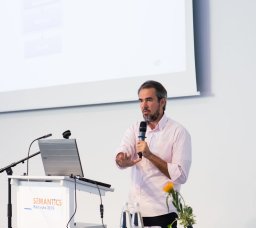 Edgard Marx合作论文数University of Leipzig, Leipzig, Germany3
 Elena Demidova合作论文数Institute of Computer Science, Rheinische Friedrich-Wilhelms-Universität Bonn;Data Science and Intelligent Systems Group, Rheinische Friedrich-Wilhelms-Universität Bonn3Shreyasee Pradhan合作论文数3
 Timofey Ermilov合作论文数Institut für Informatik, Universität Leipzig3Pedro Assis合作论文数2Clarissa G Rodrigues合作论文数2Andreea Grigoriu合作论文数2
 Raymond Terryn合作论文数Univ Miami, Miller Sch Med, Miami, FL 33136 USA2Trish Whetzel合作论文数T2 Labs, Sunnyvale, CA USA2Gabor Korodi合作论文数Harvard Med Sch, Boston, MA 02115 USA2
 Joao Ricardo Nickenig Vissoci合作论文数Division of Emergency Medicine, Department of Surgery, School of Medicine, Duke University;Division of Translational Health Science, Department of Emergency Medicine, School of Medicine, Duke University;Duke Global Health Institute, Duke University2
 Diego Moussallem合作论文数Paderborn University;Jusbrasil2
 Wei Hu (胡伟)合作论文数Department of Computer Science and Technology, School of Computer Science, Nanjing University2
 Axel-Cyrille Ngonga Ngomo合作论文数Paderborn University2
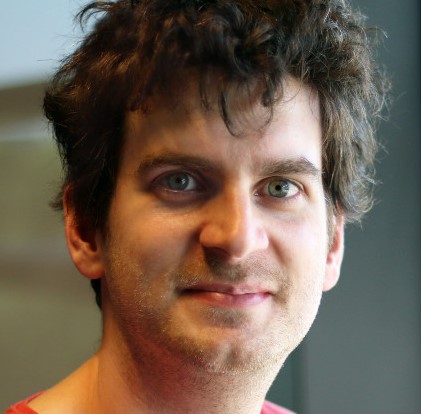 Ruben Verborgh合作论文数Internet Technology and Data Science Lab, Ghent University2
 Sherif Mohamed合作论文数School of Engineering and Built Environment, Griffith University2
 Helena Brentani合作论文数Ludwig Institute for cancer research2
 Sandro Rautenberg合作论文数UFSC), Universidade Federal de Santa Catarina2
 Jeremy Debattista合作论文数2
 Manisha Desai合作论文数Department of Biomedical Data Science, School of Medicine, Stanford University2
 Mofeed Hassan合作论文数2
 Chunlei Wu (吴春雷)合作论文数College of Computer Science and Technology, China University of Petroleum2
 Sebastian Hellmann合作论文数Institute for Applied Informatics, Leipzig University;AKSW2
 Norman Heino合作论文数Institut für Informatik, Universität Leipzig2
 Jürgen Umbrich合作论文数ONLIM GmbH2
 Kathleen M. Jagodnik合作论文数2
 Maribel Acosta Deibe合作论文数School of Computation, Information and Technology, Technical University of Munich2
 Kody Moodley合作论文数Intelligence Research, Centre for Artificial,2
 Shima Dastgheib合作论文数2Dimple Rajgor合作论文数2Beng Ti Ang合作论文数Department of Neurosurgery 11, National Neuroscience Institute2
 Paul Avillach合作论文数Faculté de Médecine, Université de la Méditerranée LERTIM2Finola M Delamere合作论文数1A Dimou合作论文数1JD Fernández合作论文数1
 Helmut Nagy合作论文数1




