Solid base metal oxide catalysts such as MgO offer utility in a wide variety of syntheses from pharmaceuticals to fuels. The (111) facet of MgO shows enhanced, unique properties relative to the other facets. Carbon coatings have emerged as a promising modification to impart metal oxide catalyst stability. Here, we report the synthesis, characterization, and catalytic properties of commercial MgO, MgO(111), and carbon coated derivatives thereof for 2-pentanone condensation. The dimer and trimer products of this reaction can be used as precursors for biofuels upon oxygen removal and thus have relevance in environmental sustainability. MgO(111) maintained impressive selectivity towards the dimer product after carbon coating, whereas the other catalysts experienced a decrease in conversion and selectivity as a consequence of the carbon coating. Our findings highlight the catalytic efficacy of MgO(111), provide insight into carbon coating for catalyst stability, and pave the way for continued mechanistic investigations.
In the context of the growing hydrogen (H-2) economy, the demand for H2 storage materials is high, and metal borohydrides are of particular interest. Magnesium borohydride, Mg(BH4)(2), has one of the highest hydrogen capacities of all known metal hydrides (14.9 wt % H) but suffers from high operating temperatures, slow kinetics for (de)hydrogenation, and the loss of capacity upon cycling. Strategies to address these challenges include nanoencapsulation and the use of chemical additives. This work is the first to utilize these two strategies simultaneously by using atomic layer deposition (ALD). For this new approach to modify borohydrides, we chose the well-studied Al2O3 ALD process using trimethylaluminum and water. Although there has been limited use of aluminum-based additives for Mg(BH4)(2), we demonstrate that the low-temperature H-2 capacity was doubled, desorption kinetics were increased by a factor of 3, and 100 cycles of Al2O3 suppressed the release of diborane compared to the uncoated Mg(BH4)(2). We identified that the use of trimethylaluminum and water in the ALD process affected the decomposition pathway and that the Al2O3 film growth is dominated by infiltration due to the high porosity of the gamma-phase Mg(BH4)(2). From these results, the potential of ALD as a method to functionalize solid-state H-2 storage materials is inferred, and recommendations for future ALD processes are presented.
Applying a rational design approach to produce a high-quality, low-sooting hydrocarbon diesel blendstock from lignocellulosic biomass-derived short-chain carboxylic acids.
Inverse bimetallic catalysts (IBCs), synthesized by sequential deposition of noble and oxophilic metals, offer potential reactivity enhancements to various reactions, including the reduction of carboxylic acids for renewable fuels and chemicals. Here, we demonstrate that an IBC comprising RuSn exhibits high selectivity for propionic acid reduction to 1-propanol, while Ru alone results in cracking. On RuSn, X-ray absorption spectroscopy identified Ru-0 nanoparticles with a near-surface bimetallic (RuSn0)-Sn-0 alloy and small SnOx domains. Corresponding model surfaces were examined with density functional theory to elucidate the observed selectivity difference. Only selective hydrogenation is predicted to be favorable on SnOx/Ru, with the SnOx clusters facilitating C-OH scission and Ru enabling hydrogen activation. Intrinsic barriers along nonselective pathways suggest that the RuSn alloy and SnOx resist cracking. SnOx/Ru hydrogenation activity was supported experimentally by inhibiting hydrogenation with phenylphosphonic acid, differentiating the system from fully alloyed RuSn metallic nanoparticles. Overall, this work demonstrates a plausible mechanism for selective reduction of carboxylic acids and proposes a roadmap for rational design of IBCs.
Atomic layer deposition (ALD) improves the durability of metal catalysts using nanoscale metal oxide coatings. However, targeted coating strategies and economic models are lacking for process-specific deactivation challenges that account for implications at scale. Herein, we apply Al2O3 ALD to Pd/TiO2 to increase durability during hydrogenation of muconic acid, a bio-based platform chemical, to adipic acid. Initial coating development and characterization are performed on the milligram scale using stop-flow ALD. Subsequently, ALD coating scale is increased by 3 orders of magnitude using fluidized bed ALD. Activity, leaching resistance, and thermal stability are evaluated at each synthesis scale. ALD-coated catalysts retain up to 2-fold greater muconic acid hydrogenation activity and undergo significantly less physical restructuring than uncoated Pd/TiO2 after high-temperature treatments, while reducing Pd leaching by over 4-fold. Techno-economic analysis for an adipic acid biorefinery supports increased ALD material costs through catalyst lifetime extension, underscoring the potential viability of this technology.
The Cover Feature illustrates iodine-catalyzed isomerization of the biomass-derived platform chemical, cis,cis-muconic acid, to trans,trans-muconic acid, a relevant isomer for upgrading to commodity chemical products. More information can be found in the Full Paper by Settle and Berstis et al. on page 1768 in Issue 11, 2018 (DOI: 10.1002/cssc.201800606).
cis,cis-Muconic acid is a platform bio-based chemical that can be upgraded to drop-in commodity and novel monomers. Among the possible drop-in products, dimethyl terephthalate can be synthesized via esterification, isomerization, Diels-Alder cycloaddition, and dehydrogenation. The isomerization of cis,cis-dimethyl muconate (ccDMM) to the trans,trans-form (ttDMM) can be catalyzed by iodine; however, studies have yet to address (i) the mechanism and reaction barriers unique to DMM, and (ii) the influence of solvent, potential for catalyst recycle, and recovery of high-purity ttDMM. To address this gap, we apply a joint computational and experimental approach to investigate iodine-catalyzed isomerization of DMM. Density functional theory calculations identified unique regiochemical considerations owing to the large number of halogen-diene coordination schemes. Both transition state theory and experiments estimate significant barrier reductions with photodissociated iodine. Solvent selection was critical for rapid kinetics, likely because of solvent complexation with iodine. Under select conditions, ttDMM yields of 95 % were achieved in <1 h with methanol, followed by high purity recovery (>98 %) with crystallization. Lastly, post-reaction iodine can be recovered and recycled with minimal loss of activity. Overall, these findings provide new insight into the mechanism and conditions necessary for DMM isomerization with iodine to advance the state-of-the-art for bio-based chemicals.
This review highlights Diels–Alder heterogeneous catalysis for the production of biomass-derived aromatic compounds.
Succinic acid is a biomass-derived platform chemical that can be catalytically converted in the aqueous phase to 1,4-butanediol (BDO), a prevalent building block used in the polymer and chemical industries. Despite significant interest, limited work has been reported regarding sustained catalyst performance and stability under continuous aqueous-phase process conditions. As such, this work examines Ru-Sn on activated carbon (AC) for the aqueous-phase conversion of succinic acid to BDO under batch and flow reactor conditions. Initially, powder Ru-Sn catalysts were screened to determine the most effective bimetallic ratio and provide a comparison to other monometallic (Pd, Pt, Ru) and bimetallic (Pt-Sn, Pd-Re) catalysts. Batch reactor tests determined that a ∼1:1 metal weight ratio of Ru to Sn was effective for producing BDO in high yields, with complete conversion resulting in 82% molar yield. Characterization of the fresh Ru-Sn catalyst suggests that the sequential loading method results in Ru sites that ...
 Derek Richard Vardon合作论文数mark Civil Engineering Laboratory, University of Illinois at Urbana-Champaign22
 Gregg Beckham合作论文数National Renewable Energy Laboratory;Department of Chemical and Biological Engineering, College of Engineering and Applied Science, University of Colorado Boulder18
 Nicholas S. Cleveland合作论文数9
 Todd R. Eaton合作论文数Natl Renewable Energy Lab, Natl Bioenergy Ctr8
 Ryan M. Richards合作论文数Department of Chemistry, Colorado School of Mines7vassili vorotnikov合作论文数6
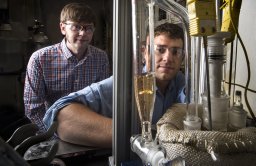 Rorrer Nicholas A合作论文数Chemical and Biological Engineering Department, Colorado School of Mines5
 Laura Berstis合作论文数University of Z��rich, Universit?t Z��rich5Allyson York合作论文数Natl Renewable Energy Lab, Natl Bioenergy Ctr4Haiming Hu合作论文数4
 Michael Crowley合作论文数Child Study Center, Yale School of Medicine, Yale University4
 Ce Yang (杨策)合作论文数Argonne National Laboratory4
 Jeffrey T. Miller合作论文数Davidson School of Chemical Engineering, Purdue University;Department of Chemical Engineering, Purdue University4Martin J. Menart合作论文数3Evan C. Wegener合作论文数Argonne Natl Lab, Chem Sci & Engn Div, Lemont, IL 60439 USA3
 Michael B. Griffin合作论文数Catalytic Carbon Transformation and Scale-up Center, National Renewable Energy Lab, Golden, Colorado 80401, USA3
 Xiangchen Huo合作论文数College of Environmental Science and Engineering, Tongji University3Katherine E. Hurst合作论文数National Institute of Standards and Technology3
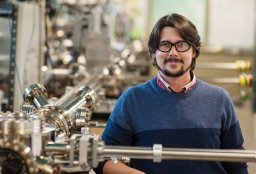 K. Xerxes Steirer合作论文数3
 Steven T. Christensen合作论文数Energy Systems Division, Argonne National Laboratory3
 Karthikeyan Ramasamy合作论文数Pacific Northwest National Laboratory2Shuting Zhang合作论文数2
 Elizabeth J. Kautz合作论文数Pacific Northwest Natl Lab2
 Davis R. Conklin合作论文数Natl Renewable Energy Lab, Natl Bioenergy Ctr2
 Eric C. D. Tan合作论文数Natl Renewable Energy Lab, Catalyt Carbon Transformat & Scale Up Ctr2
 Kellene Ann Orton合作论文数2
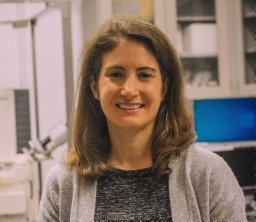 Kathleen Moyer合作论文数2
 Salvachúa Davinia合作论文数Centro de Investigaciones Biológicas, CSIC2
 Arun Devaraj合作论文数Phys & Computat Sci Directorate, Pacific Northwest Natl Lab2
 Carrie A. Farberow合作论文数University of Wisconsin Madison, University of Wisconsin-Madison2
 Kinga A. Unocic合作论文数Oak Ridge National Laboratory2Matt Sleck合作论文数1Patrick A. Cherry合作论文数1kellene mckinney合作论文数1David R Weinberg合作论文数1Jim Stunkel合作论文数1Raiven I. Balderas合作论文数1Ryon W. Tracy合作论文数1Thomas Stutzriem合作论文数1Shiloh Summi合作论文数1Daniel Ohlson合作论文数1
 Madison Martinez合作论文数1
 Eric Bradford合作论文数1Alexander Brown合作论文数1Josh Thompson合作论文数1Robert Nelson合作论文数1
 Xiaoqing Wang合作论文数1
 Nabila A. Huq合作论文数Colorado State Univ, Dept Chem & Biol Engn, Ft Collins, CO 80521 USA1
 Peter Metz合作论文数Alfred Univ, Kazuo Inamori Sch Engn, Alfred, NY 14802 USA1




