Future Gate is a country-wide, large-scale initiative that aims to upgrade the quality of school education for all, in the Kingdom of Saudi Arabia, with an optimal combination of educational technologies and change management. Future Gate implements a continuous measurement and monitoring of human behavior towards the delivery of a successful digital transformation in the Saudi K-12 Education. This paper presents an overview of the results of a comprehensive empirical evaluation for the 1st year of Future Gate. The paper focuses on the interpretation of the human behavior in relation to the technologies and equipment introduced to Future Gate beneficiaries. Through this, the aim is to optimise the compatibility amongst all FG actors, technology, and environment. Overall, teachers and students are adopting the FG services, thus embracing the change brought about by the initiative.
This work presents a case study for the integration of two web-based systems, the "Kaltura" video platform and the "Photodentro Video" digital repository. The integration is based on the Open Archives Initiative Protocol for Metadata Harvesting and an associated automation, transformation, and push/pull notification strategy. Kaltura is a video management platform, which allows publishers and content producers to distribute, manage, and monetize their videos and other rich-media content. Photodentro Video is the Greek Educational Video Repository for primary and secondary education, based on the DSpace open source digital repository management system. The architecture and the orchestrated workflow of the integration of Kaltura and Photodentro Video are presented, with emphasis on the addressed challenges. Furthermore, the technologies for scaling up the video service provided by Kaltura to a massive number of end-users are reviewed and discussed along with the proposed solution. Finally, the performance of the overall integrated platform is evaluated.
The “Photodentro SaaS” initiative drives the expansion of the Photodentro ecosystem of Open Educational Resource (OER) repositories. The initiative is based on the “Software as a Service” model (SaaS), allowing for all interested organisations to implement a Photodentro repository to manage, describe, and publish their digital artefacts. The benefits are twofold: (i) the new content provider gains exclusive access to a standards-based digital repository, integrating the best practices and workflows specifically designed to meet the needs of OER for K12 education; (ii) being part of the Photodentro ecosystem, all resources of the new repository are readily available and profit of high visibility through the web portal of the Photodentro Greek National Educational Content Aggregator.
"e-me" is the Hellenic Digital Educational Platform to be provided by the Ministry of Education to the Greek K-12 community that includes more than 1,100,000 pupils and 120,000 teachers. It is currently under development by CTI Diophantus. e-me implements a social learning environment with a modern and intuitive user interface, where certified members of the primary and secondary education community can safely share content, connect and collaborate with peers, publish their work, use a large number of embedded applications, and interact with a wealth of digital learning resources. The article introduces the core concepts of e-me, the main goal and objectives for its implementation, and highlights the key elements of its software design and development.
The ODS Vocabulary Bank is a component of the Open Discovery Space socially-powered federated architecture for repositories of learning resources. It implements a single point of reference for all authoritative sets of terms, concepts and named entities as well as the network of relations between them, using an innovative, semantic web approach. This paper provides an overview of the ODS Vocabulary Bank, the software requirements, the research of the state of the art, the selected implementation approach and some considerations regarding future work towards the evolution of the system.
This paper presents an ontology-driven approach for implementing Linked Open Data services for scholarly and research artifacts, to facilitate the dissemination of research results. The resulting ontology and the associated metadata Application Profile, built upon the Singapore Framework for Dublin Core Application Profiles, have been used to enable the development of interoperable systems and services for the research community in the agriculture and aquaculture domains. The paper describes the implementation approach for the AgRes ontology, the ontology itself as well as the interoperability levels of the AgRes application profile. Furthermore, it outlines the creation and the management of the ontology with the MoKi collaborative Media Wiki-based tool.
The agricultural education covers all levels of formal education but focuses mostly on the higher ones as well as the vocational education and training. Online courses play an important role in the educational context and compared to traditional courses they eliminate the location and time restrictions and allow a self-paced attendance of a curriculum. At the same time, the existence of online courses raised the need for the design and implementation of the appropriate platforms which may be used for the organization and deployment of online courses. This paper presents the case of agriMoodle, a course management platform based on the widely used Moodle platform, which provides a number of enhancements in the form of modules or widgets specialized for the agricultural domain. These modules aim to enhance the user experience and the functionalities of a standard Moodle installation.
This paper describes a semi-structured approach for the development of metadata architectures to facilitate the description, dissemination and reuse of interlinked resources within a federation of open access repositories. This approach, building upon the methodology and components of the Singapore Framework for Dublin Core Application Profiles, results in rich metadata architectures that bundle together functional requirements, domain model(s), a description set profile, usage guidelines and data formats. Maximum interoperability, reuse of existing mature metadata standards, long-term quality control and extensibility for addressing further community needs constitute the main benefits of such metadata architectures. The paper details the phased implementation of the proposed approach, along with a specific case study, based on a European-wide research initiative to deploy a community-focused integrated platform for the retrieval of open content, supporting explicit models of the scholarly life cycle and the practical tasks targeted by the agricultural research domain.
Agile software development methodologies are increasingly adopted by organizations because they focus on the client’s needs, thus safeguarding business value for the final product. At the same time, as the economy and society move toward globalization, more organizations shift to distributed development of software projects. From this perspective, while adopting agile techniques seems beneficial, there are still a number of challenges that need to be addressed; among these notable is the effective cooperation between the stakeholders and the geographically distributed development team. In addition, data collection and validation for requirements engineering demands efficient processing techniques in order to handle the volume of data as well as to manage different inconsistencies, when the data are collected using online tools. In this paper, we present “PBURC,” a patterns-based, unsupervised requirements clustering framework, which makes use of machine-learning methods for requirements validation, being able to overcome data inconsistencies and effectively determine appropriate requirements clusters for optimal definition of software development sprints.
Opening up the access to scientific information is an increasing demand and crucial need for researchers and also for all citizens, communities and societies: VOA3R, the European initiative for the Virtual Open Access Agriculture & Aquaculture Repository, has established the online platform connecting digital libraries and facilitating virtual communities with unique opportunities for sharing scientific and scholarly research related to agriculture, food, and environment. This publication presents the main outcomes and recommendations of VOA3R, the European initiative for the Virtual Open Access Agriculture & Aquaculture Repository. This flagship project supported by the European Commission facilitated, improved and sustained the open access to all European and international digital contents, scientific information and research results as well as their online discussion and exchange. The main recommendations derived and drawn from the selected five key tasks and activities (quality management, elicitation of the user requirements, social networking services, content population, and evaluation by experiments and trials) were presented in brief: They were also identified by the evaluation of the experiments and trials and and their relation between the two dimensions required efforts (indicated by the realization type from easy to difficult) and expected effects (indicated by the impact from short- to long-term) were indicated in a first overview. That allows also other and future initiative to benefit from the achieved VOA3R results and insights. VOA3R has achieved successfully its objectives and went beyond them, also analysed and evaluated through the experiments and trials: VOA3R could establish the online platform connecting digital libraries and facilitate services and social networking including virtual communities. Thus, it can be summarized that VOA3R provided and continuously provides through the sustainability strategy unique opportunities for sharing scientific and scholarly research related to agriculture, food, and environment. For open access to the best scientific information in Europe and worldwide!
This paper presents a framework for introducing multilingualism into web portals, aiming to facilitate bringing down the language barriers, bridging the language divide between information seekers and the wealth of resources from around the world that are made available through such portals. The main research question addressed is the definition of the problem itself and the description of design affordances that shall allow web portals to meet different linguistic profiles, needs and expectations from users around the globe. The paper describes the methodology used for the analysis of user requirements of the international user base of a thematic web portal aiming to promote discovery of educational resources and concludes with some initial results, discussion of the findings and suggestions for future work.
This paper includes research results from work that has been funded with support of the European Commission, and more specifically the project CIP-ICT-PSP-270999 “Organic.Lingua: Demonstrating the potential of a multilingual Web portal for Sustainable Agricultural & Environmental Education” of the ICT Policy Support Programme (ICT PSP).
Organic.Lingua is a 36-month project demonstrating the potential of a multilingual Web portal for sustainable agricultural & environmental education. The project started in March 2011 and is aiming to enhance the existing Organic.Edunet portal (http://www.organicedunet.eu), introducing automated multilingual services that will further support the uptake of the portal and the aggregated content and further extend the portal's geographical reach and linguistic coverage. This short paper provides insight on our approach for capitalizing on the European and international demand for educational content on Organic Agriculture and Agroecology by transforming the Organic.Edunet portal into a truly international platform with multilingual services, tools and content.
An ever increasing number of members of educational communities engage in creating new digital resources within all fields of science and practice at all educational level within Learning Object Repositories, which, in terms, allows for even more efficient identification and delivery of existing material. This has in effect shaped a new type of activities related to the creation, sharing and re-use of learning objects through distributed repositories, associated within a federation with common policies, protocols and formats, which gave rise to an exponential growth of available material. However, this great success brings along a set of challenges, the most important being the demand for a quality controlled process, eliminating the information overload and safeguarding the added-value of learning object repositories, through models such as peer review and validation of learning objects and associated metadata. The authors of this paper provide insight on the approach for capitalizing on the European and international demand for quality-controlled educational content on Organic Agriculture and Agroecology, describing a framework and the associated quality issues for modeling the publication lifecycle of digital learning objects within a federation of learning object repositories.
Recent advances in networking and telecommunications technologies combined with the vast load of readily available scientific data, urge towards the implementation of software systems that are able to collect, combine and present information from distributed repositories. At the same time, scientists, researchers, academics and experts demand flexible infrastructures that provide just-in-time information, with reliable, peer-reviewed data, through ubiquitous interfaces. Towards this direction, several international organizations including the European Commission, promote the development of software platforms that will facilitate universal access to information aggregated from open access repositories. In this paper we discuss the requirements engineering process and the key functionality for a system that supports knowledge extraction and dissemination from distributed repositories, while at the same time enabling and integrating the social interaction of its users.
 Cleo Sgouropoulou合作论文数Technological Education Institute of Athens14
 Vassilis Protonotarios合作论文数7
 Nikolaos Papaspyrou合作论文数School of Electrical and Computer Engineering7
 Symeon Retalis合作论文数Department of Technology Education and Digital Systems
University of Piraeus5
Symeon Retalis合作论文数Department of Technology Education and Digital Systems
University of Piraeus5 Petros Belsis合作论文数Technological Educational Institute of Athens5
 Salvador Sánchez Alonso合作论文数Pontifical University of Salamanca4
 Emmanuel Skordalakis合作论文数National Technical University of Athens
Division of Computer Science4Alexios Dimitropoulos合作论文数4
Emmanuel Skordalakis合作论文数National Technical University of Athens
Division of Computer Science4Alexios Dimitropoulos合作论文数4 Elina Megalou合作论文数4
 Miguel Ángel Sicilia Urbán合作论文数Departamento of Ciencias de la Computacion, Universidad de Alcala4
 Cornelia Helmstedt合作论文数3jenny beyer合作论文数3rodriguez toquero合作论文数3camilla mathiesen合作论文数3
 Despoina Bouza合作论文数Laboratory of Viticulture, Agricultural University of Athens3
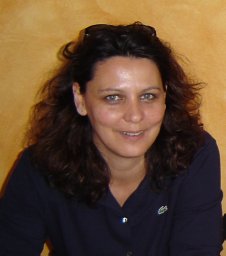 Katerina Biniari合作论文数Faculty of Crop Science, Agricultural University of Athens3
 Maritina Stavrakaki合作论文数School of Plant Sciences, Agricultural University of Athens3
 David Martín-Moncunill合作论文数3
 Nikos Manouselis合作论文数Greek Research & Technology Network (GRNET)3
 Allan Leck Jensen合作论文数Danish Institute of Agricultural Sciences;Department of Agricultural Systems;Department of Agricultural Systems, Danish Institute of Agricultural Sciences3Effie Tsiflidou合作论文数3
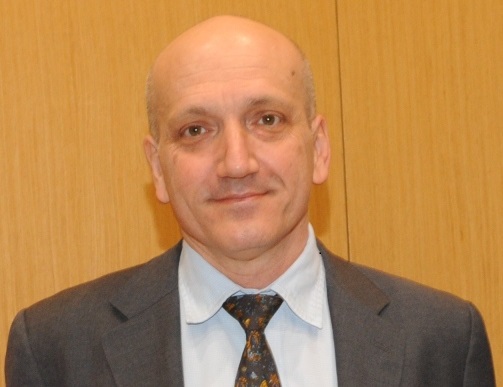 Christos Kaklamanis合作论文数Division of Applications and Foundations of Computer Science, Department of Computer Engineering and Informatics, University of Patras3
 Christian M. Stracke合作论文数Institut für Informatik und Wirtschaftsinformatik, Universität Duisburg-Essen3Diane Le Hénaff合作论文数2yannis psochios合作论文数2
 Peter Goodyear合作论文数Sydney School of Education and Social Work, Faculty of Arts and Social Sciences, The University of Sydney2
 Paris Avgeriou合作论文数Faculty of Science and Engineering, University of Groningen;Bernoulli Institute for Mathematics, Computer Science and Artificial Intelligence, University of Groningen2Sonia Bartoluzzi合作论文数2Bodil Ask合作论文数2
 Nikos Palavitsinis合作论文数Greek Research and Technology Network (GRNET), Athens, Greece2
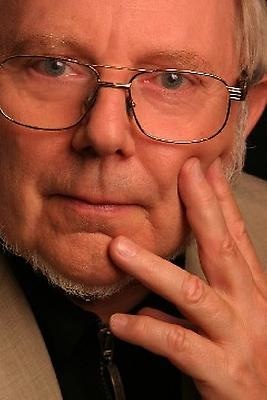 Hermann Maurer合作论文数Institute for Information Systems and Computer Media, Graz University of Technology2Maria Toader合作论文数2m n stavrakakis合作论文数1Manolis Skordalakis合作论文数1S. Sanchez-Alonso合作论文数1
 mohammed ibrahim a alhojailan合作论文数Dept Educ Technol, King Saud Univ1
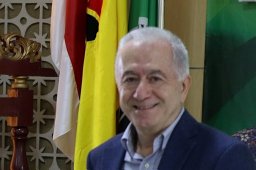 Vassilios Makrakis合作论文数Department of Education and Social Sciences, Frederick University1Harald Haugen合作论文数1Vasileios Gkamas合作论文数Department of Computer Engineering and Informatics, University of Patras1Charilaos Tsetsekas合作论文数1
 Gabriella Scipione合作论文数1
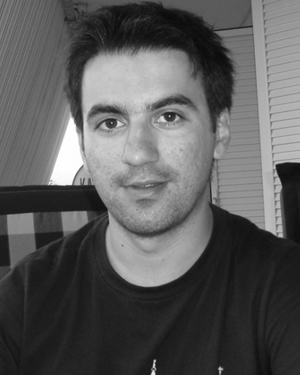 John Stoitsis合作论文数1N. Papaspyrou合作论文数School of Electrical and Computer Engineering1
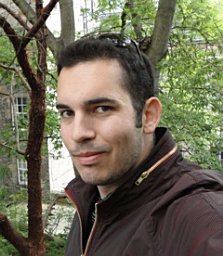 Andreas Drakos合作论文数University of Peloponnese Karaiskaki St1
 P. Goodyear合作论文数CoCo Research Centre , University of Sydney1
 Yousef Al-Ohali合作论文数1Evangelia Triperina合作论文数Technological Education Institute of Athens1




